





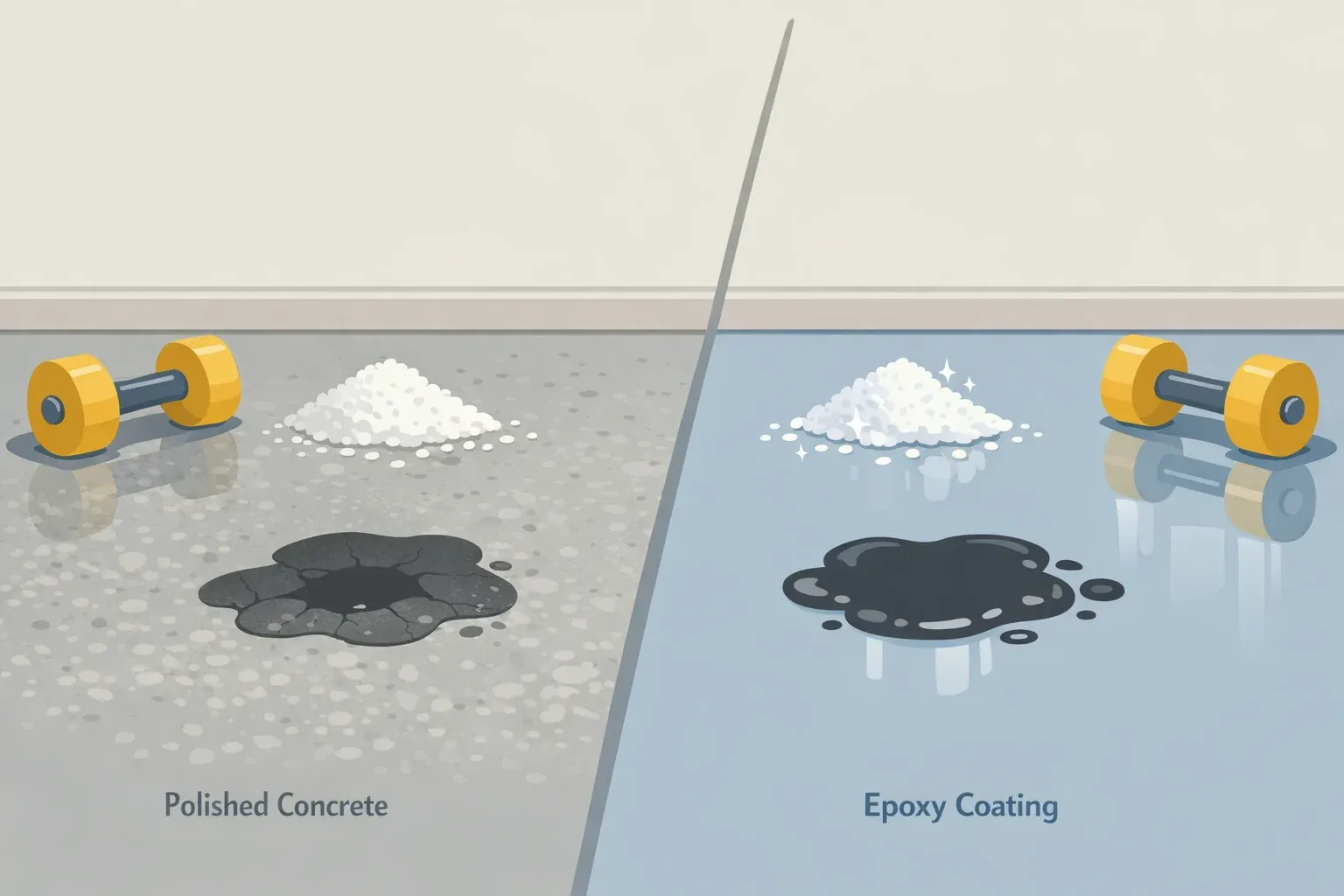
The best garage floor finish depends on what the floor has to survive. For most residential garages — daily drivers, wet tires, road salt, and the occasional oil drip — a professional epoxy or polyaspartic-flake coating is usually the stronger functional choice. For a dry, low-traffic garage used as a workshop, gym, or showroom, polished concrete can be the better long-term investment.
Neither option wins every time. The right choice comes down to moisture, chemicals, traffic, budget, traction, and the condition of the slab.
One terminology point is worth clearing up: Many garage floor coatings marketed casually as "epoxy" are multi-layer coating systems that may include epoxy, polyaspartic, urethane, or hybrid components. In this guide, "epoxy/polyaspartic" refers to coating systems applied over the slab, while "polished concrete" refers to a mechanically polished slab with no coating layer on top.
Polished concrete refines the slab itself through diamond grinding and chemical densification, leaving the concrete smoother and more reflective without adding a film on top. Because there is no coating layer, it cannot peel. But it also cannot hide every crack, patch, stain, or repair in the existing concrete.
A professional coating system works differently. It builds a sealed wear layer over the slab, often with primer, a pigmented base coat, broadcast flake or quartz, and a polyaspartic or urethane topcoat. That barrier is generally better than polished concrete at resisting oil, gasoline, brake fluid, and road brine, though spills should still be cleaned promptly and product limits vary.
Best garage floor finish by use
For a daily-driver garage in a snowy or wet climate, choose epoxy/polyaspartic. Chemical exposure from road salt, magnesium chloride brine, oil, and brake fluid is the main issue. Polished concrete, even with a penetrating guard, is not a sealed coating system; oil, salt, and deicing chemicals can still stain or etch the surface if they sit too long.
For a garage gym, workshop, or finished hobby space, polished concrete becomes more competitive. With minimal fluid exposure and no coating layer to peel, it can last for decades in a controlled garage, though it may still need periodic burnishing or repolishing to keep its sheen.
For a showroom or collector garage, either option can work. Polished concrete gives a clean, architectural look when the slab is attractive enough to show. Epoxy/polyaspartic coatings offer more color control, decorative flake, metallic finishes, and stronger protection if vehicles are still driven in and out.
For a patched, stained, or cosmetically rough older slab, epoxy/polyaspartic usually has the edge. Coating systems can hide many stains, patches, and minor repaired cracks under an opaque layer. Polished concrete reveals the substrate, so a rough slab may not polish to a finish the homeowner actually likes without expensive prep.
Severe slab movement changes the answer. If the garage floor has active heaving, structural cracking, major spalling, or drainage problems, neither polished concrete nor epoxy should be the first step. The slab needs to be repaired, stabilized, or replaced before any finish is installed.
How epoxy and polished concrete perform
Chemical resistance
Epoxy/polyaspartic coatings are the better fit for garages that regularly see oil, gasoline, brake fluid, road salt, deicing brine, or lawn-equipment fluids. These materials sit on the coating surface instead of soaking directly into the slab, which makes cleanup easier and reduces staining risk.
That does not mean coatings are indestructible. Chemical resistance depends on the product, topcoat, exposure time, and maintenance. Spills should still be cleaned promptly, especially brake fluid, gasoline, solvents, and deicing chemicals.
Polished concrete can be treated with a guard or stain-resistant product, but it is still not the same as a sealed coating system. In an active car-storage garage, that difference matters.
Durability and repairs
Polished concrete has a real long-term advantage: there is no film layer to wear through or peel. In a dry, low-chemical garage, that can make it a durable, lower-maintenance option over many years.
Epoxy/polyaspartic coatings take the abuse instead of the slab. That makes them useful in working garages, but the coating layer can still wear, chip, gouge, or need a future topcoat. Small damaged areas may be repairable, but the result depends on the coating system, color, flake blend, and installer skill.
The simplest way to think about it: Polished concrete wins on "nothing to peel," while epoxy/polyaspartic wins on "better barrier."
Traction when wet
High-gloss polished concrete can be slippery when wet, especially in garages that collect rainwater, snowmelt, or fluid drips. A lower-gloss finish can help, but homeowners should still ask about slip resistance.
Broadcast flake coatings usually add surface texture, and installers can add traction media to the topcoat when wet grip is a priority. This is worth asking about before signing a contract, not after the floor becomes slick.
Maintenance needs
Neither finish is truly maintenance-free.
For epoxy/polyaspartic, sweep regularly, mop with a pH-neutral cleaner recommended by the installer or manufacturer, and clean oil, brake fluid, gasoline, or deicing chemicals promptly. Avoid harsh cleaners unless the coating manufacturer says they are safe.
For polished concrete, sweep and damp mop with a pH-neutral cleaner. In higher-traffic garages, the sheen can dull over time; periodic burnishing, guard renewal, or repolishing may be needed to restore the finish.
Switching later is possible, but costly
Changing your mind later is not as simple as applying one finish over the other.
Epoxy cannot be applied directly over a polished concrete surface without mechanical prep. The surface usually has to be ground back to create a profile the coating can bond to.
Polishing also cannot happen over an existing coating. The coating has to be removed first, which adds labor, dust control, and cost.
That does not mean the first choice is permanent. It does mean homeowners should decide based on how the garage is actually used, not just which finish looks better in photos.
What garage floor costs really include
Upfront pricing can overlap more than homeowners expect. A basic polished concrete job may cost less on a clean, open slab, while a garage with old coatings, oil stains, cracks, or heavy patching can require enough prep to erase that advantage.
Epoxy and polyaspartic coating prices also vary by square footage, slab condition, coating type, broadcast material, and topcoat. A consumer cost guide from The Spruce puts the average garage-floor epoxy cost at $1,530 to $3,210, with square footage, concrete condition, and epoxy type among the main variables.
Treat any per-square-foot estimate as a starting point. The written quote matters more than the advertised range. It should spell out:
Surface prep method
Crack and spall repair
Moisture testing
Primer or base coat
Broadcast layer, if any
Topcoat chemistry
Cure time before foot traffic and vehicle traffic
Warranty coverage and exclusions
Long-term cost depends on how the garage is used. Polished concrete has no coating layer to replace, but it may need burnishing, guards, or repolishing to keep its appearance. Epoxy and polyaspartic systems may need a new topcoat or recoat later, especially in a high-traffic garage.
DIY kits are not the same as professional systems. Many DIY coatings are thinner and less forgiving than professional multi-layer systems, so they are more sensitive to moisture, surface contamination, poor mixing, and weak prep. A professional installation should include mechanical surface prep, compatible primer or base coat, broadcast material if used, a durable topcoat, and written cure and maintenance instructions.
Don't skip safety during prep
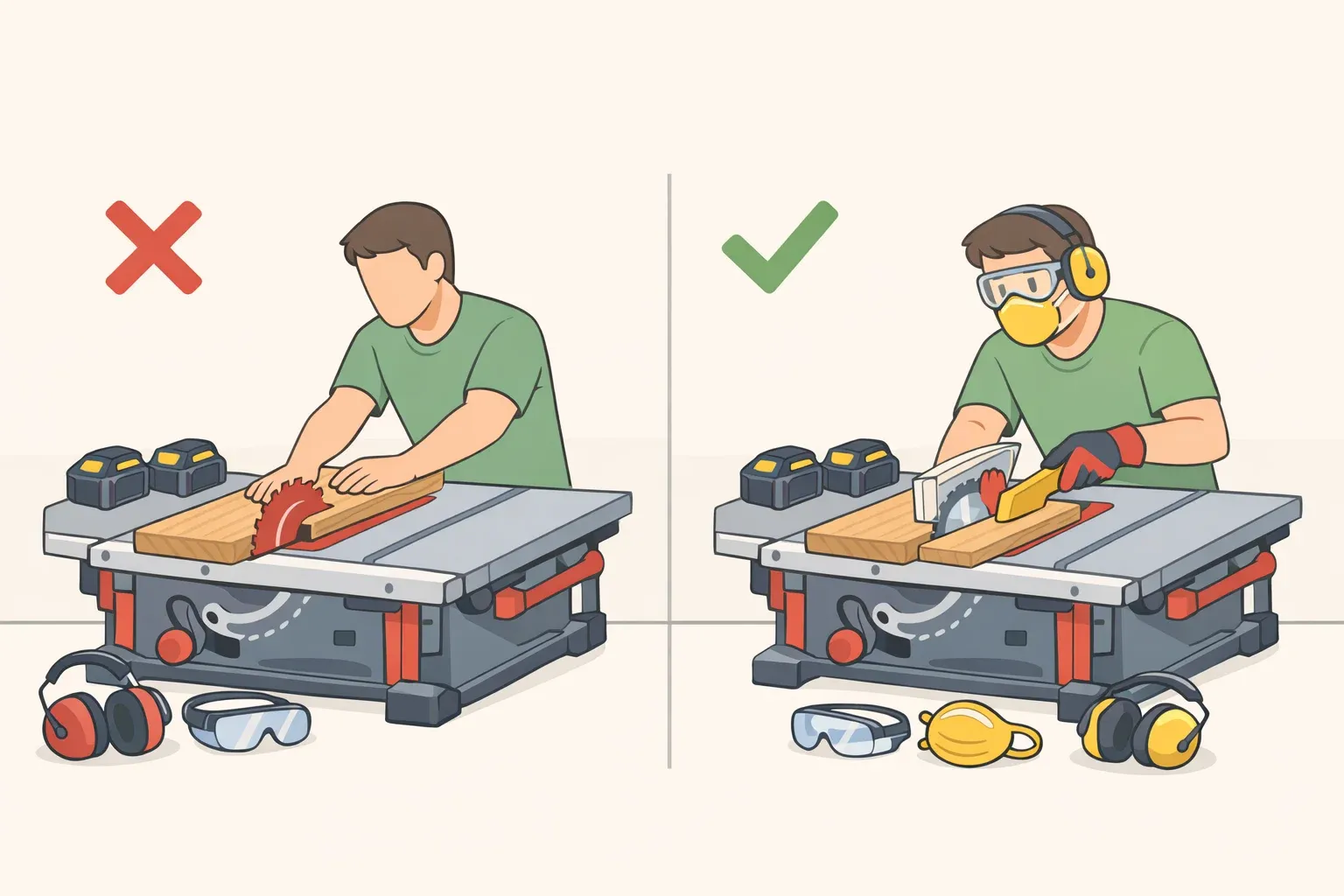
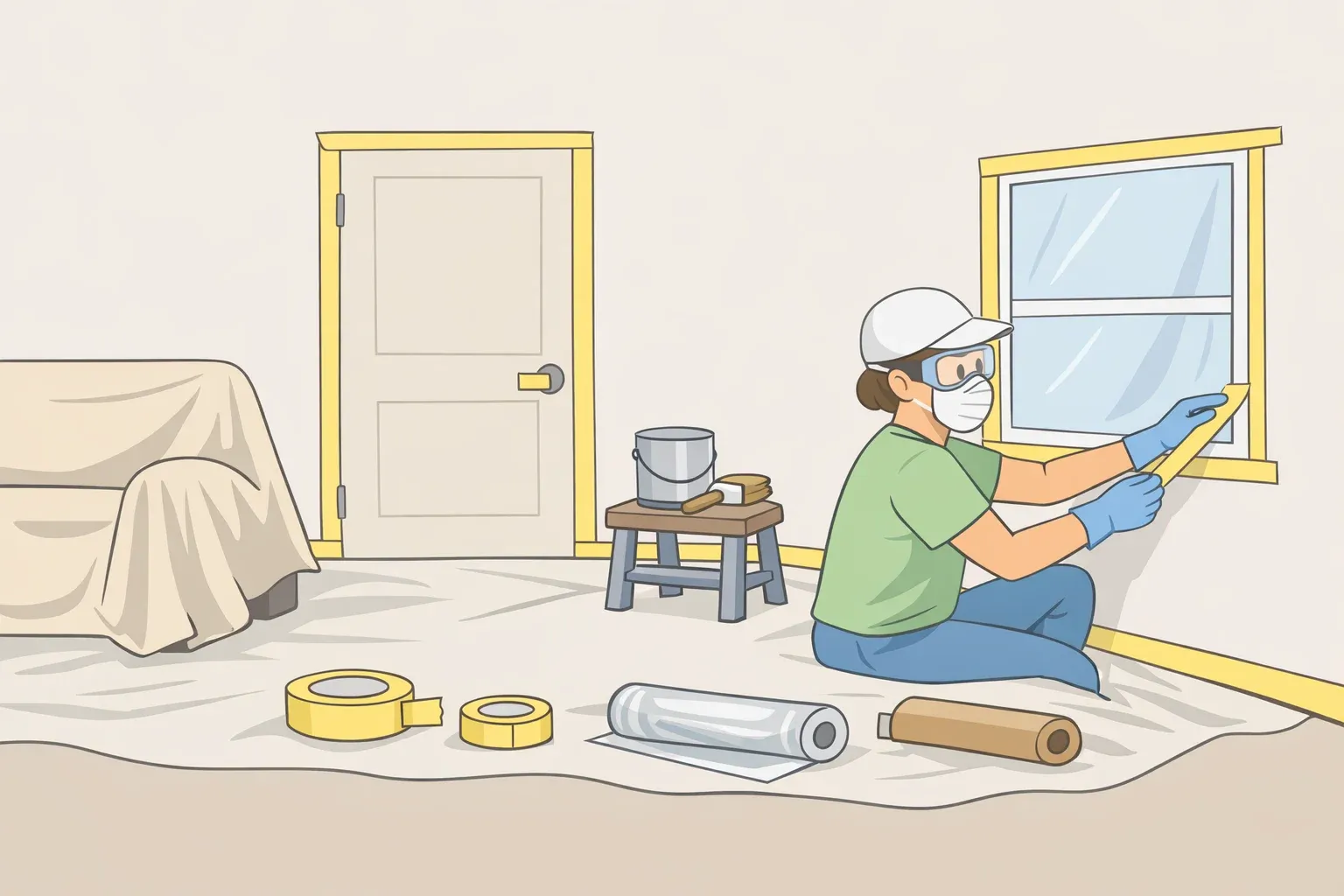
The riskiest part of a garage floor project is often the prep, not the finish. Grinding or dry sweeping concrete can release fine silica dust, so homeowners should not dry-grind a slab with ordinary shop-vac cleanup. OSHA's guidance on silica dust controls includes methods such as wet cutting, dust collection, HEPA-filtered cleanup, and respiratory protection when required.
Coatings also need ventilation and protective gear. Epoxy, polyaspartic, and urethane products can have strong odors and strict mixing, pot-life, temperature, and curing rules. Follow the product's safety data sheet and technical data sheet, and hire a professional if the slab needs heavy grinding, old coating removal, crack repair, or moisture mitigation.
Ask for moisture testing first
Moisture vapor moving upward through a slab is one of the biggest reasons a coating can blister, peel, or debond. This is especially important for garages with older slabs, poor drainage, missing vapor barriers, or unexplained dampness.
Do not rely on a visual check alone. ASTM recognizes two common ways to evaluate concrete moisture: ASTM F1869, which measures moisture vapor emission from the concrete surface using calcium chloride, and ASTM F2170, which measures relative humidity inside the slab.
Moisture limits are set by the coating manufacturer, not by one universal number. Test results should be compared with the specific coating system's technical data sheet before installation.
If moisture results are above the coating system's limits, the job may need a moisture-mitigation primer or membrane. That adds cost and should appear in the quote, but the installer should verify that the mitigation system is compatible with the coating and covered by the warranty.
Five questions for every contractor
Before hiring anyone, ask these questions:
How will you test the slab for moisture, and will I see the results before installation?
A contractor should be able to explain the test method and how the result affects the coating recommendation.How will you prepare the concrete: diamond grinding, shot blasting, or acid etching?
For most long-term coating jobs, mechanical prep is more reliable than acid etching alone.What exact system are you installing?
Ask for the primer, base coat, broadcast material, and topcoat. "Epoxy floor" is not specific enough.How long before I can walk on it, move items back, and park a car?
Cure time varies by product, temperature, humidity, and coating thickness.What does the warranty exclude?
Ask specifically about hot-tire pickup, peeling, UV yellowing, moisture failure, chemical staining, cracks, and spot repairs.
One scheduling note matters in cold climates: coatings have minimum slab, air, and material temperatures for proper cure, and those limits vary by product. In an unheated garage, ask the installer to confirm the coating's temperature range and cure schedule before booking the job.
When another garage floor option makes more sense
Polished concrete and epoxy are not the only choices. If the garage is damp, cracked, rented, or being upgraded on a tight budget, another surface may be more practical.
Garage floor tiles, mats, paint, and roll-out coverings can make sense when a homeowner wants easier installation or wants to avoid permanent coating work. The Spruce's overview of garage floor coatings and coverings notes that coatings such as paint and epoxy bond directly to concrete, while coverings such as tiles and mats sit on top of the slab.
That distinction matters. A coating depends on the slab underneath. A covering can sometimes hide stains or minor cosmetic flaws, but it can also trap moisture if the underlying problem is not fixed.
The simplest way to decide
Choose epoxy or polyaspartic if the garage stores daily drivers, sees wet tires, or regularly deals with oil, salt, gasoline, brake fluid, or deicing chemicals. The sealed coating is the advantage.
Choose polished concrete if the garage is dry, low-chemical, and used more like a gym, workshop, or showroom. It can last for decades, but only if the slab is attractive enough to polish and the owner is comfortable maintaining the sheen.
Before hiring anyone, ask how the contractor will test for moisture, prepare the slab, handle cracks, build the finish, and protect wet traction. The best garage floor is not the one with the flashiest sample board; it is the one matched to the slab and the way the garage is actually used.





Comments
Be the first, drop a comment!