



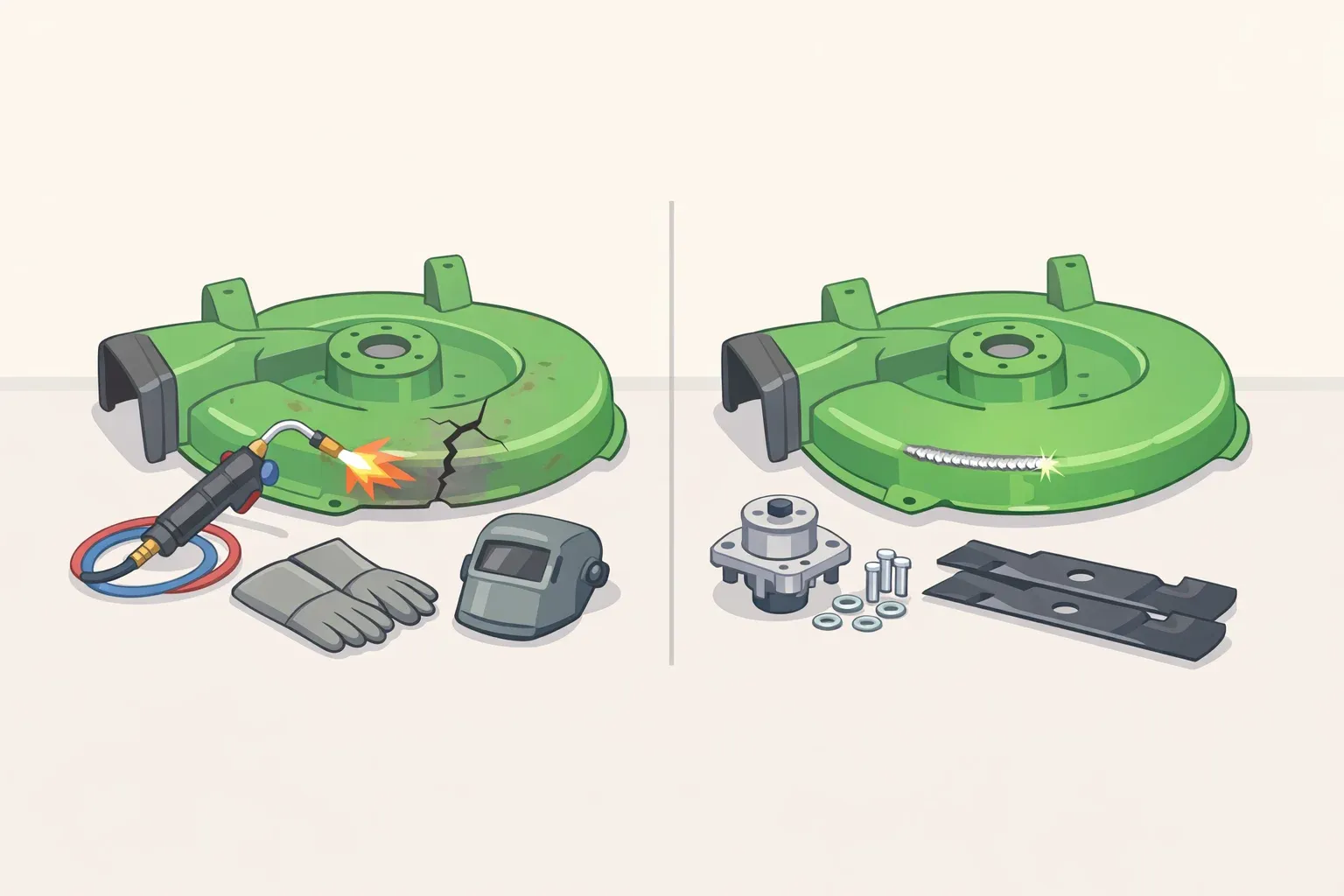
A cracked mower deck stops a mowing season cold, and the question every owner asks staring at it is whether welding fixes it or wastes a Saturday. The direct answer to whether you can weld a cracked lawn mower deck is yes, in most cases, though "can" and "should" turn out to be two different questions.
Welding fuses the metal back together along the break line, but whether that fix holds up depends on four things: what the deck is made of, how far the crack has spread, the condition of the metal around it, and whether the person running the torch actually knows what they're doing.
Steel decks are more weld-friendly than aluminum ones. A small, contained crack is generally a workable repair candidate; extensive damage or metal that's badly deteriorated from rust may not be feasible to weld at all. Most mower deck steel runs about 11 to 14 gauge, which is thin sheet steel by welding standards, and that thinness is exactly why heat control matters as much as raw welding skill.
What follows is a decision sequence: figure out if the deck is a good candidate, prep and weld it correctly if so, choose the right equipment, and know when a new deck is the smarter buy.
Can you weld a cracked lawn mower deck safely? The factors that decide it
Whether a repair is worth attempting comes down to four variables: material, crack size, the condition of the surrounding metal, and the skill of whoever holds the welder.
Material comes first. Steel is simply more weld-friendly than aluminum, and that gap affects whether a repair is realistic in the first place.
Crack size follows a similar logic. The Welding Guru's guidance is direct: a small crack or break can usually be welded, while extensive damage may not be feasible.
Because most deck steel sits in that thin gauge range mentioned above, welding heat can warp or deform it if it isn't controlled. That's one of the bigger technical risks in this job, since a deck that warps during repair won't sit flat once it's reassembled.
Skill matters just as much as equipment. Both Weld Minds and The Welding Guru make the same point from different angles: someone without welding experience is better off taking the deck to a professional than risking a failed or unsafe repair.
If a deck clears that first look, preparation is what actually determines whether the repair holds.
How to repair a cracked lawn mower deck: preparation before welding
Before picking up a grinder, it's worth knowing when to stop. If the deck is aluminum, if rust has thinned the metal enough that it crumbles or flakes during cleaning, if the crack runs through or near a blade spindle mount or another load-bearing bracket, or if the deck is already visibly warped, this isn't a straightforward DIY job. Have it looked at by a professional or plan on replacement instead.
For decks that do clear that check, preparation is what separates a repair that holds from one that reopens. Industrial welding guidance backs up the general principle, even though it isn't written for mowers specifically. The American Welding Society's D14 standards cover machinery and equipment welding, and while that guidance isn't mower-specific, its advice on joint preparation and grounding is relevant background if a professional ends up evaluating the repair.
A basic repair guide recommends these steps, though the exact procedure can shift depending on the deck's material and how bad the crack is:
Remove the deck from the mower and disconnect the spark plug before inspecting or repairing anything.
Clean the crack area to bare metal, removing rust, paint, dirt, and oil. Contamination is a common reason a weld won't bond properly. Joseph Bailey, an AWS Certified Welding Inspector quoted by Construction Equipment, puts it bluntly: prepare the joint down to shiny steel.
Drill a small stop hole at the end of the crack, which may help keep it from spreading further during the repair.
Grind a V-shaped bevel along the length of the crack so the weld can fully penetrate rather than just sit on the surface.
Weld the groove, then grind the repair flat so the deck reassembles and sits correctly.
Heat control deserves attention on its own, since uneven heating and cooling can warp the metal and distort the deck's flatness, which affects how it functions once reinstalled. Before reassembling anything, lay the deck on a flat surface and check that it sits level; if it rocks or shows a visible bow near the weld, the heat wasn't controlled well enough, and the repair needs another pass.
Choosing a welder for lawn mower deck crack repair
MIG welding is the commonly recommended choice for this job. The Welding Guru points to its speed and its ability to produce clean welds on thin sheet steel, which is exactly what a mower deck is made of. Stick welding also works to fill a prepped groove, according to Mowrator's repair guide.
TIG is the other option worth knowing about, though the comparison deserves a caveat. The cited guide describes TIG as producing a stronger weld than MIG, but the available research doesn't test that claim on an actual mower deck, so it's worth treating as directional advice rather than settled fact.
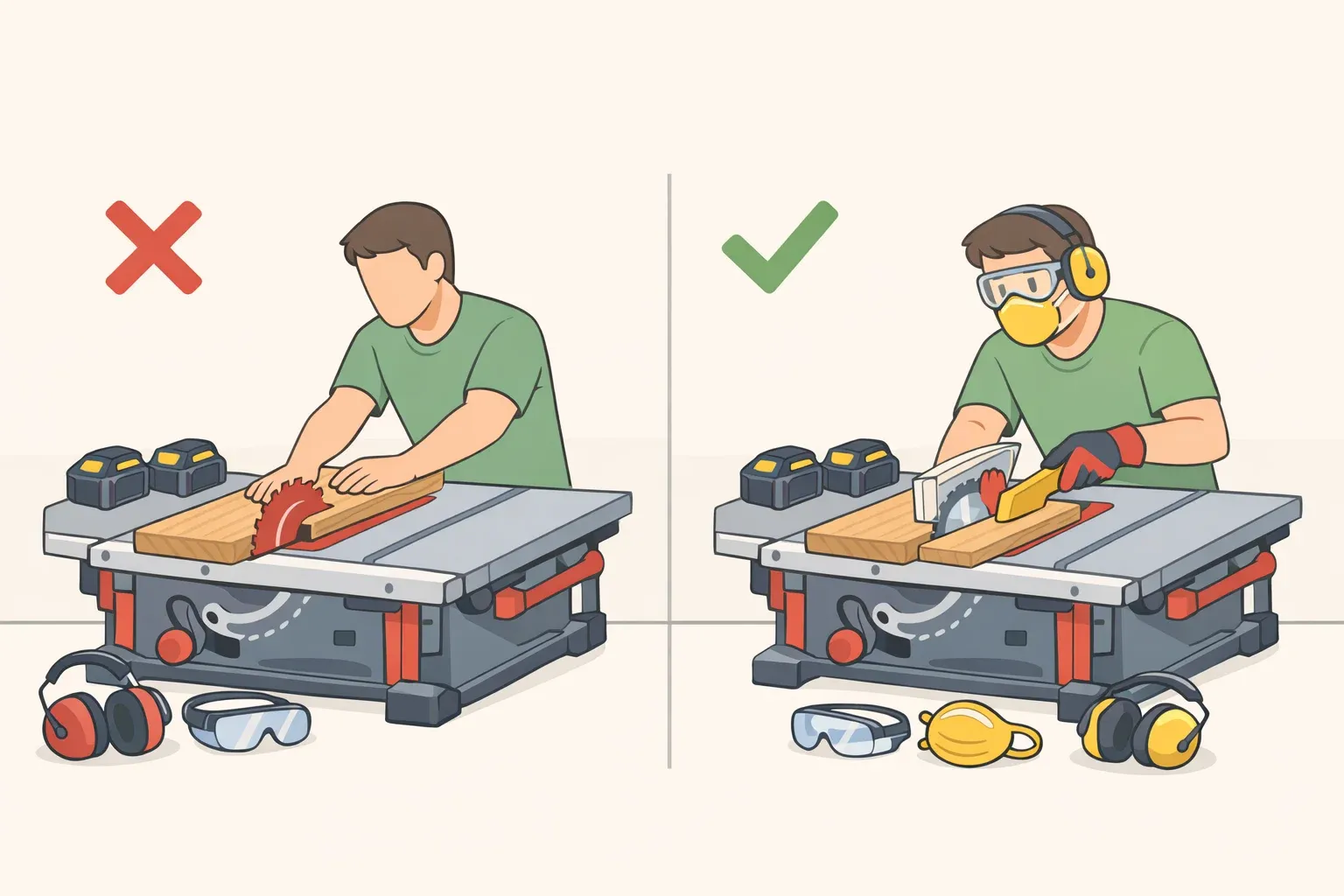
Whichever process gets used, the required protective gear doesn't change: a welding helmet, gloves, safety glasses, and a respirator, because the job carries real risk of electric shock, burns, and eye damage.
One setup detail from industrial practice is worth carrying over, even though it matters less once the deck is off the mower. Construction Equipment's guidance, citing Bailey, recommends clamping the ground lead to clean, bare metal as close to the repair as practical. Placed poorly, that ground clamp can send welding current through bearings or other components and cause damage that stays invisible until a bearing fails or a seal starts leaking weeks later. It matters more for equipment welded while still assembled than for a deck already pulled off the mower, but it's worth knowing regardless.
Beyond the ground clamp, clear the workspace of anything flammable and make sure the deck is secured so it can't shift while the arc is running.
Lawn mower deck crack repair: when replacement makes more sense
Rather than treating steel-plus-small-crack as a pass/fail rule, it helps to check three specific things before deciding. First, whether rust extends beyond the crack itself: surface rust cleans off, but pitting or thinning that spreads well past the break suggests the deck has more damage than the visible crack shows.
Second, whether the deck is still flat, since one already warped from age or a prior impact won't improve after welding. Third, where the crack sits: a crack running through or near a spindle mount, wheel bracket, or other high-stress mounting point carries more risk than one in an open section of the deck.
Where those checks come back clean, steel, a contained crack, sound surrounding metal, and an experienced welder, repair is a reasonable option. Where they don't, professional repair or replacement is the safer call.
Even a clean weld isn't the end of the story. The repaired area becomes a new stress point, and Weld Minds notes it can crack again under the constant vibration of regular mowing.
Aftercare matters more than most people expect going in. Welded areas need to be sealed and repainted, or they'll rust, and the deck should get checked periodically afterward for corrosion, distortion, or a crack reopening along the same line.
One more claim worth treating with some skepticism: that welding is cheaper, faster, and greener than buying a new deck. The Welding Guru frames it that way, but no actual cost or lifespan figures back it up in the available reporting. It's more accurate to think of welding as a way to extend a deck's useful life than as a guaranteed permanent fix.
The practical takeaway
Before firing up a welder, check the owner's manual and call the dealer or manufacturer, particularly where the repair could affect the deck's structure. Construction Equipment's guidance on heavy equipment repair recommends contacting the equipment dealer or OEM before starting any weld repair, a habit worth borrowing even for something as ordinary as a mower deck. Welding buys a cracked deck more time. It doesn't make it new again, so plan the inspection schedule with that in mind, and don't be surprised if the same spot eventually needs another look.





Comments
Be the first, drop a comment!