



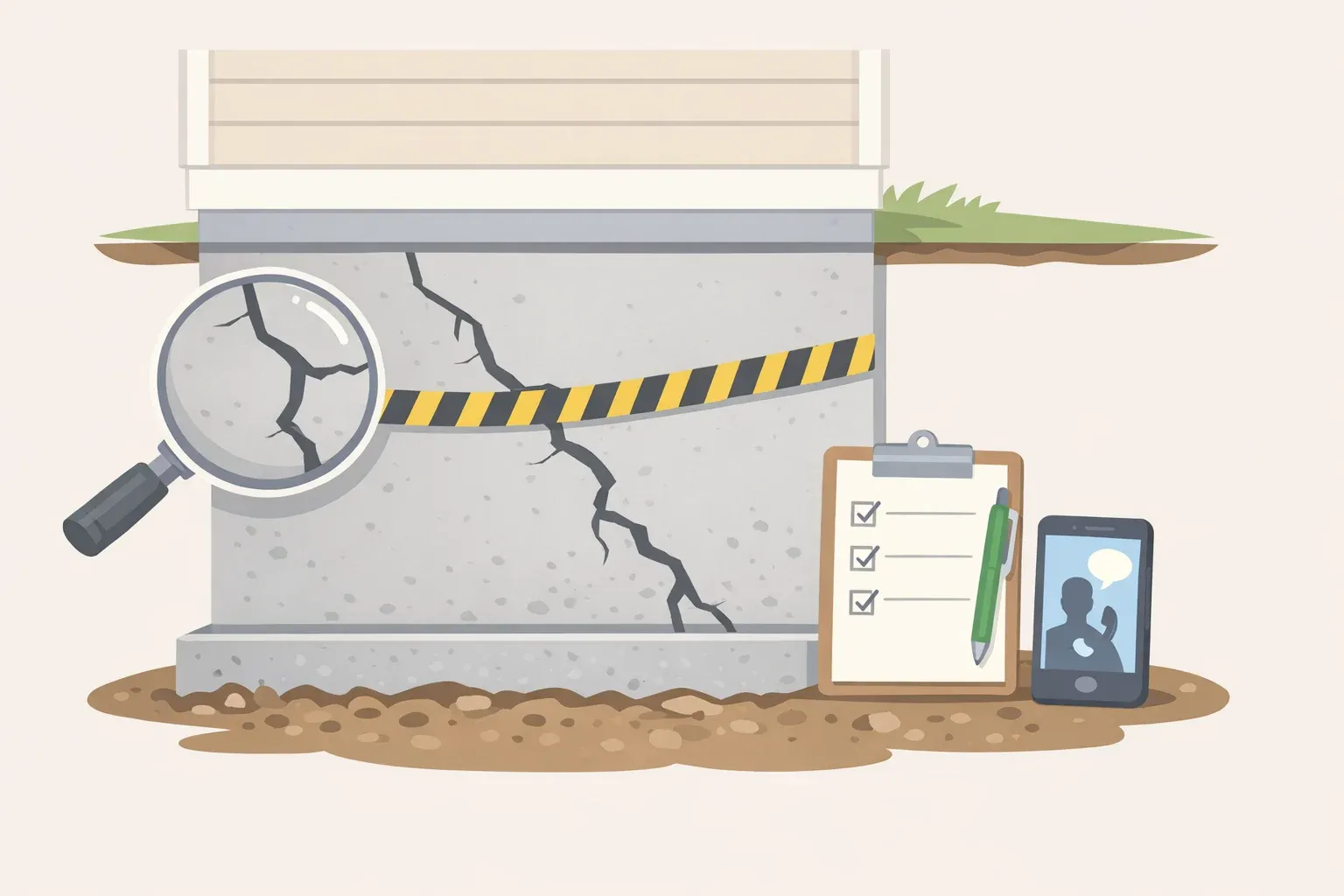
A horizontal crack in a basement wall can indicate lateral pressure or wall movement, especially when the wall is also bowing, bulging, or displaced. The crack alone cannot reveal the cause, but it should not be dismissed as routine settling.
Some structural warning signs can be documented and monitored. Others call for prompt professional inspection, and a small number may mean the affected area is unsafe to occupy. Start by determining how quickly you need to act.
How urgent is the problem?
Use these three response levels to decide what to do next.
Monitor: Photograph the condition, record the date, and recheck it periodically. Monitoring may be reasonable when a small crack appears stable and there is no displacement, water intrusion, or related movement elsewhere in the house.
Arrange an inspection: Contact a qualified home inspector or licensed structural engineer when a crack is growing, surfaces are displaced, walls are bowing, floors have changed, or several warning signs appear in the same area.
Leave the affected area: Move away from any section showing sudden movement, partial collapse, falling material, a severely bowed wall, or a rapidly sagging floor or roof. Call emergency services or the local building department if the structure may be unstable.
Homeowners insurance may cover structural damage caused by a covered event, but coverage depends on the cause and the policy. The National Association of Insurance Commissioners notes that flooding, earth movement, mold, and infestations are commonly excluded from standard policies. Photograph the damage and contact the insurer promptly before making permanent, nonemergency repairs.
Structural damage affects load-bearing or stabilizing components such as the foundation, beams, joists, posts, bearing walls, rafters, and trusses. Drywall and trim are usually finishes, but cracks or separations in those materials can reveal movement in the framing behind them.
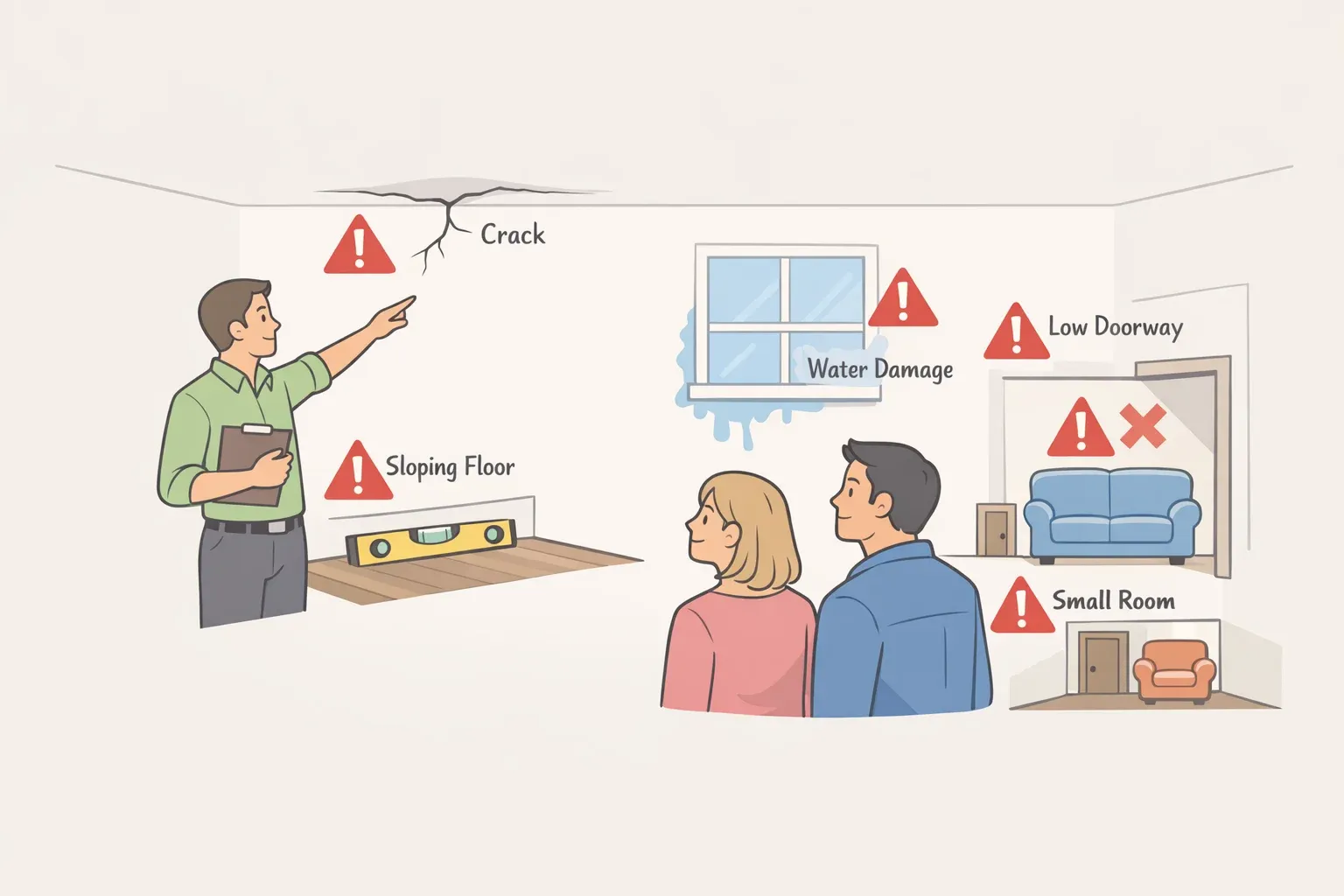
When examining a problem, note its location, direction, width, displacement, age, and whether it is changing. A single crack or sticking door does not establish that a house has structural damage. Several related changes in the same area are more concerning.
1. Foundation cracks and wall movement
Not every foundation crack represents a serious problem. Concrete can crack as it cures, and small, stable cracks may remain unchanged for years. A crack becomes more concerning when it is growing, allowing water inside, or appearing alongside visible movement.
Horizontal cracks in basement or foundation walls can be associated with lateral pressure and wall movement. Arrange a professional inspection when a crack is new or widening or when the wall is bowing, bulging, leaning, leaking, or displaced.
Stair-step cracks that follow mortar joints may indicate movement in a masonry wall or foundation. They deserve closer attention when they are widening, displaced, recurring after repair, or accompanied by sticking doors, sloping floors, or separation elsewhere.
A wide or growing vertical crack can also indicate movement, but width alone does not establish the cause. Displacement, water intrusion, recent growth, and related changes elsewhere in the house can make even a narrower crack more concerning.
Arrange prompt evaluation when:
The surfaces on either side of a crack are no longer flush
A foundation wall is changing shape
A crack repeatedly returns after repair
Water enters through the crack
Several new cracks appear in one area
The condition worsens after heavy rain, drought, excavation, or plumbing leaks
A small, stable crack with no displacement or related symptoms may be documented and monitored. Photographs can record change, but they cannot confirm that a structure is sound.
2. Sloping, sagging, or soft floors
Floors that have begun to slope, sag, bounce, or feel soft may indicate weakened joists, subfloor damage, inadequate support, moisture, pests, or foundation movement.
A new soft spot should be investigated even if it has not spread. Limit heavy use of the area and look for nearby plumbing leaks, stains, damaged flooring, musty odors, or visible rot.
Soft flooring may also result from termites or other wood-destroying organisms. Arrange a pest inspection in addition to the structural evaluation if you notice signs such as:
Mud tubes along foundation walls or framing
Hollow- or papery-sounding wood
Discarded insect wings
Small piles of wood-colored pellets
Wood that crumbles when pressed
Arrange an inspection when a floor condition is new, worsening, concentrated around a moisture source, or accompanied by cracked walls, leaning posts, or sticking doors.
Do not attempt to straighten a sagging floor by adding temporary posts or operating a jack. Raising framing too quickly or supporting it in the wrong location can damage walls, plumbing, wiring, and nearby structural members.
3. Roof and attic warning signs
From the ground, look for a roofline that has begun to sag, dip, or bow. Check both sides of the roof and note changes in the ridge, eaves, porch roof, and areas around chimneys.
From a safe attic access point, look for:
Split or cracked rafters
Broken or altered trusses
Connector plates pulling away from the wood
Sagging roof decking
Active leaks or dark water stains
Framing that appears twisted or displaced
Temporary supports that do not appear to be part of the original construction
These are preliminary visual checks, not a structural inspection. Do not walk through an attic unless it has safe access, adequate lighting, and a secure walking surface. Never step on exposed ceiling drywall or insulation between joists.
A new or worsening roof sag, broken framing member, or separated truss connector should be evaluated promptly. Stay out of the area if the roof has changed suddenly, is shedding material, or appears unstable.
Do not cut, drill, remove, or reinforce a roof truss without a professionally prepared repair plan. Trusses are engineered as complete systems, and altering one part can affect how loads are distributed through the roof.
4. Doors and windows that suddenly stop working
A sticking door or window is common and does not automatically mean the house has structural damage. Humidity, paint buildup, loose hardware, and ordinary wear can all affect how an opening operates.
A sudden or continuing change deserves more attention, particularly when several openings in the same part of the house become difficult to use.
Watch for:
Doors that no longer latch
Windows that have become difficult to open
Door or window frames that look out of square
New gaps above or beside frames
Cracks extending from the corners of openings
Several doors swinging open or closed on their own
Document when the problem began and whether it changes during wet or dry weather. Sticking openings accompanied by sloping floors, wall cracks, or exterior separation provide more useful evidence of possible movement than one misaligned door by itself.
5. Gaps and separations inside the house
Interior finishes often show the first visible evidence of movement in concealed framing.
Check for:
Walls separating from ceilings or floors
Crown molding or baseboards pulling away
Cabinets separating from walls
Cracks that repeatedly return after patching
Tile cracking across several adjoining surfaces
Countertops or built-ins pulling away from nearby finishes
Columns or posts that appear tilted or displaced
Seasonal expansion and contraction can create small gaps, particularly where different materials meet. The condition becomes more concerning when it is new, continues growing, or appears alongside movement in the floor, foundation, or exterior walls.
Do not repeatedly patch a widening crack without documenting it first. Cosmetic repairs can hide whether the area continues to move.
6. Exterior walls, chimneys, porches, or decks pulling away
Walk around the property from a safe distance and look for parts of the house that no longer appear aligned.
Possible warning signs include:
A chimney separating from an exterior wall
Brickwork or siding that bows outward
A porch roof pulling away from the main structure
Deck posts that lean or have shifted off their footings
Gaps where additions meet the original house
Exterior stairs that have settled or separated
Retaining walls that lean, bulge, or crack
Some exterior movement may be limited to a porch, chimney, deck, or another attached structure rather than the main house. It still warrants attention because failure could cause an injury or allow water to enter adjoining materials.
Keep people away from a visibly unstable chimney, wall, deck, stairway, or porch until it has been assessed.
7. Water, drainage, and soil changes around the foundation
Structural damage is not always caused by one dramatic event. Water, erosion, plumbing leaks, and changes in the surrounding soil can contribute to movement or decay over time.
Look for:
Water collecting beside the foundation
Gutters overflowing against the house
Downspouts discharging next to the foundation
Soil sloping toward the building
Erosion or voids near footings
Persistent crawl-space or basement moisture
Plumbing leaks beneath floors or inside walls
New settlement after nearby excavation or construction
Correct obvious drainage and plumbing problems when it is safe to do so, but do not assume that stopping the water will reverse existing movement.
Do not excavate beside a foundation, remove soil supporting a footing, or install a major drainage or underpinning system without professional guidance. Work intended to solve one problem can destabilize another part of the structure.
Flooding requires additional caution. The Environmental Protection Agency advises residents to check for sagging roofs, crooked or leaning walls, missing supports, and new exterior cracks before entering a flooded building. If any of those conditions are visible, stay outside until a qualified professional assesses the building.
Who should inspect the damage?
The right professional depends on the condition and its suspected cause.
General home inspector
A general home inspector can evaluate the visible condition of the house as a whole and identify areas that require specialized review. This may be a reasonable first step when the source of the problem is unclear or several systems appear to be involved.
For homebuyers, the Consumer Financial Protection Bureau recommends arranging an independent home inspection early enough to allow time for additional specialty inspections when needed.
Structural engineer
Consider hiring a licensed structural engineer with residential experience when there is visible movement in the foundation, bearing walls, floors, beams, posts, or roof framing.
An independent written assessment can:
Describe the observed conditions
Identify likely causes
Recommend further testing or monitoring
Outline necessary repairs
Provide drawings or specifications when required
Give contractors a common scope on which to bid
Verify the engineer's license through the appropriate state or territorial board. The National Council of Examiners for Engineering and Surveying maintains a member licensing board directory for that purpose.
Other specialists
A structural engineer may not be the only professional required.
Geotechnical engineer: Soil movement, slopes, retaining walls, sinkholes, or repeated settlement
Pest professional: Termites and other wood-destroying organisms
Plumber: Active or concealed plumbing leaks
Electrician: Water exposure near wiring, outlets, or electrical panels
Roofer: Roof coverings, flashing, or leaks that have not yet damaged structural framing
Drainage specialist: Surface water, grading, gutters, downspouts, or foundation drainage
Building official or emergency services: Active collapse or an apparently unstable structure
A contractor who performs the eventual repair may also provide useful information, but an independent diagnosis can help ensure that the proposed work addresses the cause rather than only the services one company offers.
Structural repairs may require permits, inspections, or engineer-stamped plans. Ask the local building department what is required before work begins.
How to document possible structural damage
Clear documentation helps inspectors compare conditions over time and may support insurance, repair, or property-sale records.
Photograph the entire wall, floor, roof, or affected room.
Take close-up photographs of each crack or damaged component.
Include a ruler for scale when it can be placed safely.
Record the date and exact location.
Note recent storms, plumbing leaks, drought, excavation, renovations, or nearby construction.
Mark the endpoints of a stable crack lightly in pencil.
Photograph the condition again from the same position.
Keep inspection reports, permits, repair plans, invoices, warranties, and insurance correspondence.
Monitoring is a recordkeeping step, not proof that a condition is harmless. Arrange an inspection if the damage changes or if related symptoms appear elsewhere.
Renters should photograph the condition and notify the landlord or property manager in writing. Keep copies of messages, photographs, and maintenance requests.
What not to do
Possible structural problems are not suitable for trial-and-error repairs.
Do not:
Jack up a floor without an engineered plan
Remove or relocate a post or bearing wall
Cut, drill, or alter a roof truss
Excavate beside a footing
Cover a growing crack before documenting it
Enter a visibly damaged crawl space or attic
Walk across a rapidly sagging or soft floor
Accept a major repair proposal without understanding the cause
Assume a previous repair means the problem has stopped
A repair should address the source of the damage, not only the visible symptom. Replacing damaged framing without correcting the leak, drainage issue, or pest activity may allow the damage to return.
When to leave the house immediately
Leave the affected area and seek immediate help if:
A foundation or exterior wall has shifted suddenly
A wall is severely bowed, leaning, or shedding material
A floor, ceiling, or roof is sagging rapidly
A vehicle, fallen tree, fire, storm, or explosion has damaged a structural component
Floodwater has reached electrical equipment or the house appears to have moved
You hear cracking or popping while part of the structure is visibly changing
A chimney, deck, porch, or stairway appears unstable
Call emergency services or the local building department from a safe location. Do not remain inside to measure, photograph, or investigate a structure that is actively changing, and do not reenter until the building has been assessed.
For less immediate concerns, document the condition and arrange an independent inspection when cracks are growing, surfaces are displaced, walls are bowing, floors are soft or sloping, or several symptoms appear in the same area.
You do not need to determine the repair yourself. Recognize the warning signs, avoid unsafe areas, and have the cause evaluated by the appropriate professional.






Comments
Be the first, drop a comment!