





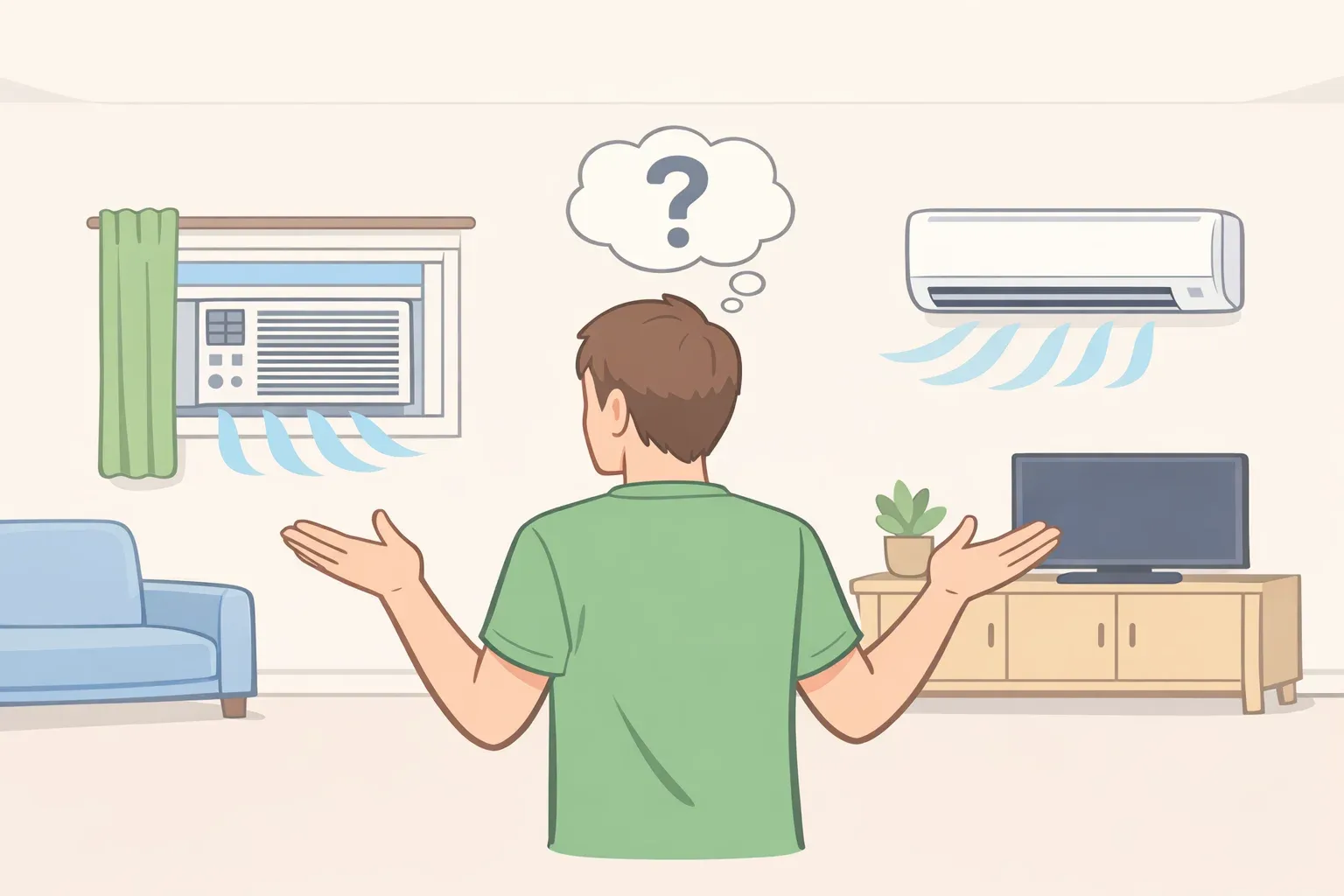
Ask a homeowner to explain the difference between a heat pump and an air conditioner, and most will pause, shrug, and guess. That's a reasonable reaction, not a naive one, since the two machines share nearly identical guts. Anyone weighing heat pump vs air conditioner as a purchase decision is really asking a narrower question: does this box only need to cool the house, or can it do both jobs from one unit?
A heat pump uses electricity to move heat rather than generate it, the same operating principle that keeps a household refrigerator cold. One air-source heat pump system can provide both space heating and cooling for a home, something a standard central air conditioner cannot do on its own.
The technology has already gone mainstream: as of 2020, more than 17 million U.S. housing units had one installed, and in 2023 DOE reported that heat pumps accounted for more than half of residential heating-equipment sales nationwide.
This piece walks through what a heat pump actually is, how it differs mechanically from central AC, when it makes sense for a given climate and home, and what the financial trade-offs look like. By the end, a homeowner should be able to walk into a contractor conversation informed rather than guessing.
Heat pump vs air conditioner: what's the difference?
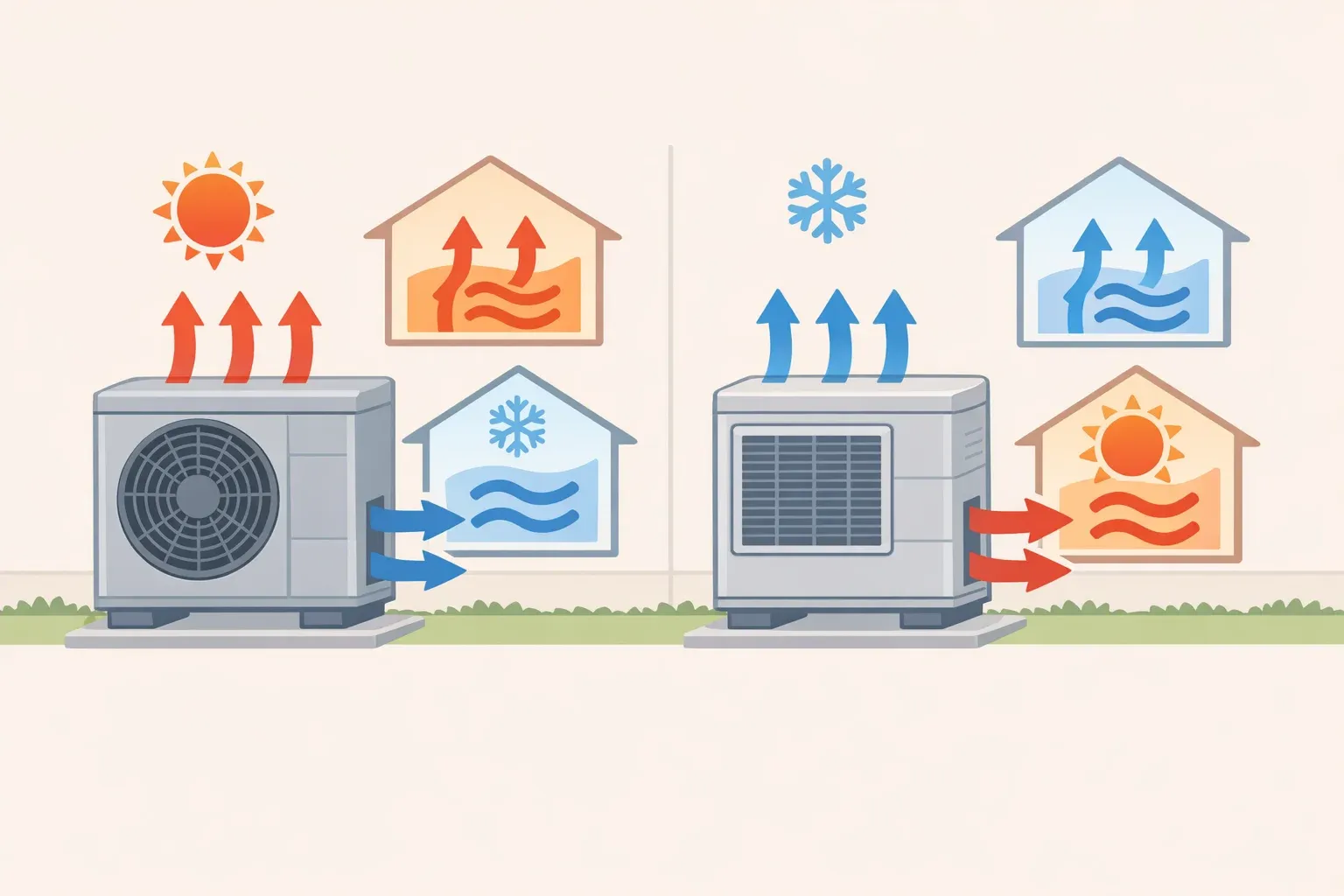
They're close cousins, not the same appliance. A heat pump does everything a central air conditioner does in summer, then reverses course and heats the house in winter.
DOE describes heat pumps as an energy-efficient alternative to both furnaces and air conditioners, not a rebrand of either one. In warm weather, an air-source heat pump moves heat from indoors to outdoors, functionally identical to how a standard air conditioner operates. In cold weather, the same unit reverses and pulls heat from the outdoor air into the home.
That reversal covers the mechanical difference between a heat pump and an air conditioner. The efficiency gap is where heat pumps earn their reputation. Because they transfer heat instead of burning fuel or using resistance elements to create it from scratch, heat pumps run significantly more efficiently than furnaces or baseboard heaters, with DOE citing electricity savings of up to 50% compared to those older heating methods.
So the headline question has a clean answer: a heat pump is best understood as a reversible air conditioner. What varies is the hardware inside that reversible system, and that's worth unpacking before getting to costs.
How does a heat pump cool and heat your home?
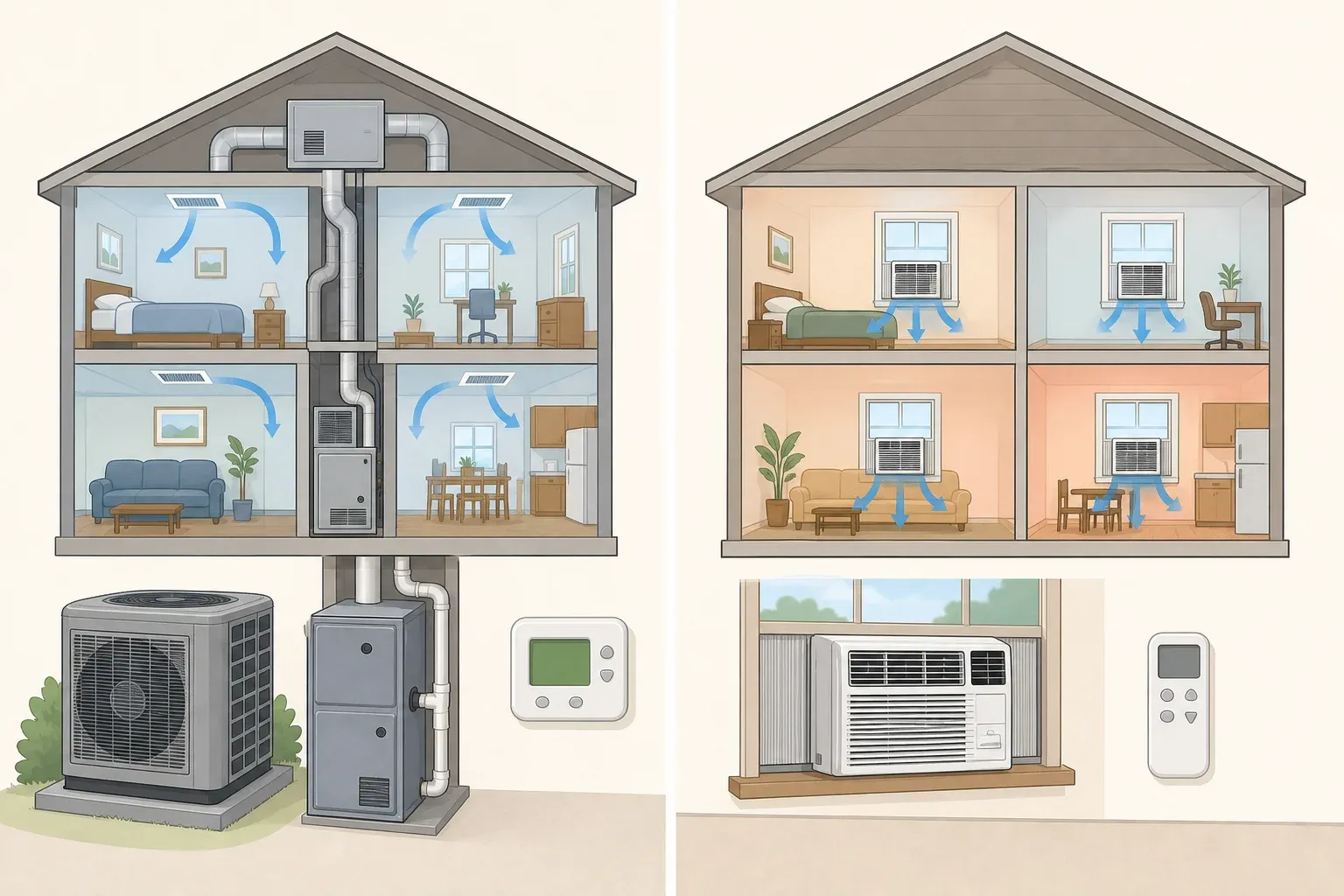
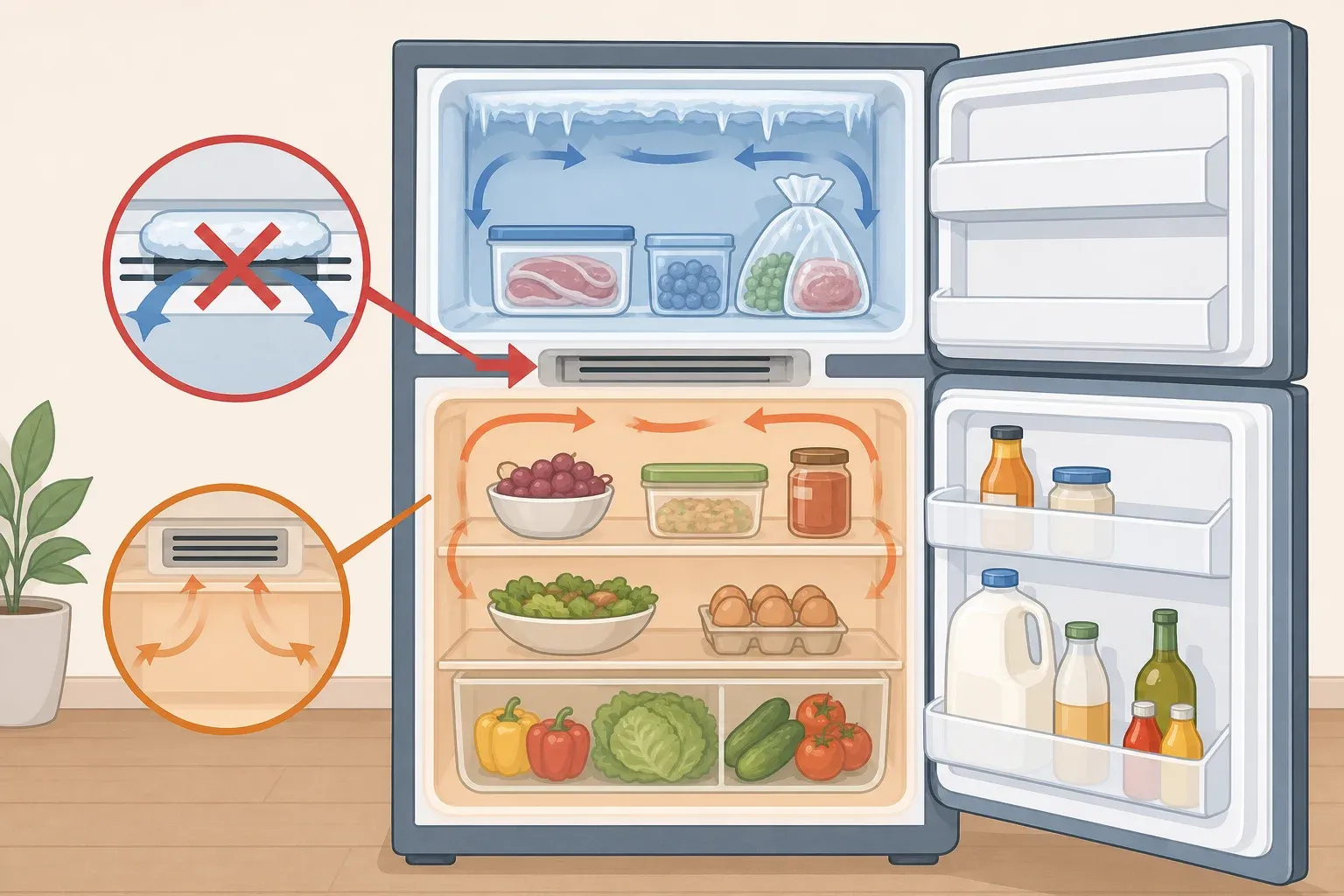
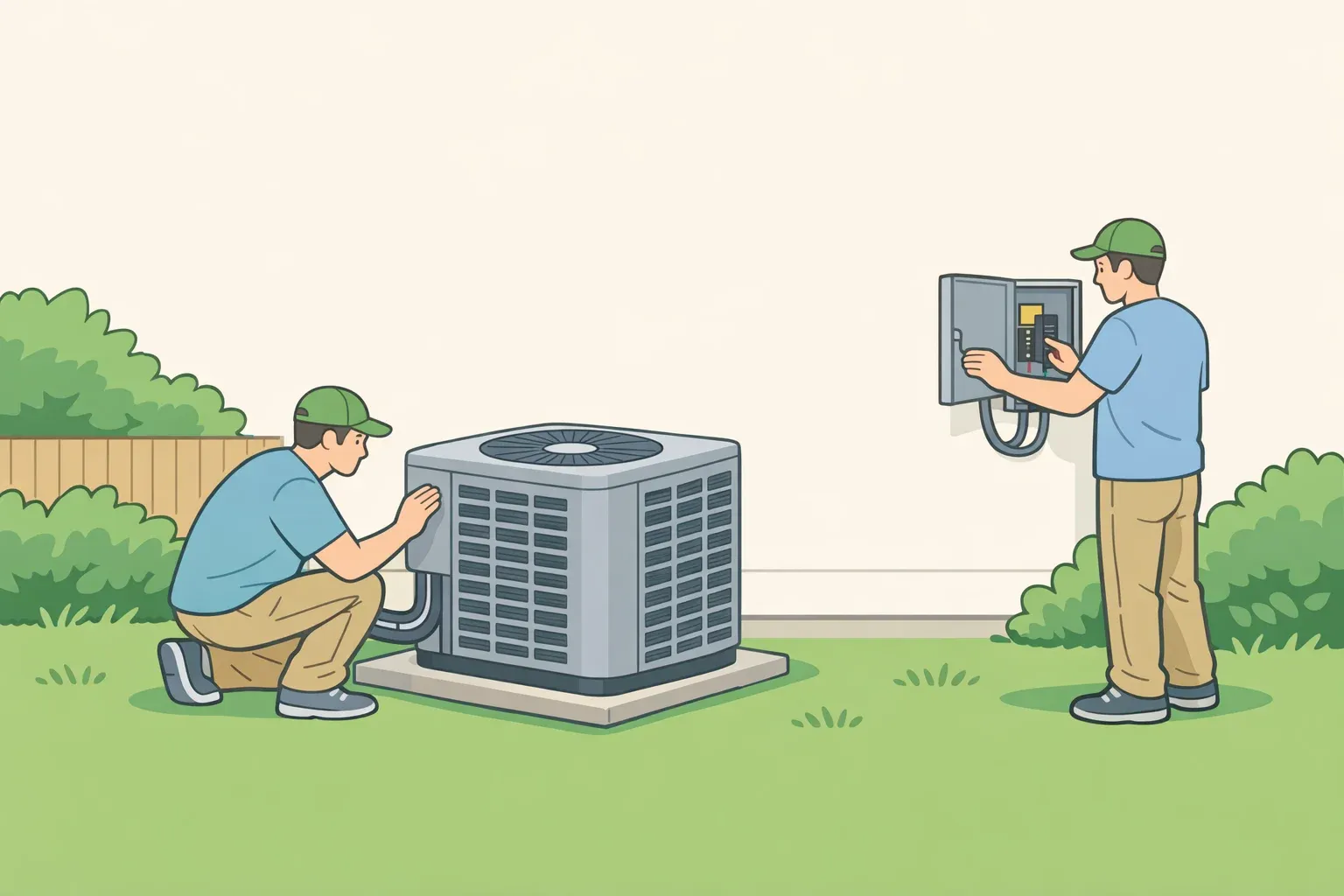
Picture the same heat-transfer loop that runs a refrigerator, built into a system that can also run in reverse. Like a fridge, a heat pump uses electricity to move heat from a cool space to a warm one rather than creating heat directly. The most common version, the air-source heat pump, transfers heat between the home and the outside air, the same basic exchange a central AC uses in cooling mode.
Homes without ductwork have an option too. A ductless mini-split heat pump delivers the same heating-and-cooling function without requiring the homeowner to install ducts, which matters for older houses, additions, or garage conversions where ductwork was never part of the plan.
Beyond the standard ducted or mini-split air-source unit, two less common configurations exist:
Geothermal (ground-source) heat pumps exchange heat with the earth or a nearby water source instead of outdoor air. They cost more to install but run cheaper because underground temperatures stay far more stable than air temperatures, and they can cut energy use by 30% to 60% while also helping control indoor humidity.
Reverse-cycle chillers produce hot or cold water instead of conditioned air, making them compatible with radiant-floor heating systems.
Most homeowners comparing options, though, are really weighing an air-source heat pump against a central air conditioner. That comparison is worth digging into next, because the right answer depends heavily on geography.
Heat pump vs central air conditioning: which is better for your home?
Climate matters far more to a heat pump than it does to a standard air conditioner, because the heat pump uses outdoor air as both its heat source in winter and its heat sink in summer. A central AC only ever needs to dump heat outside; a heat pump also has to pull usable heat out of cold air.
Heat pumps perform well in hot and dry climates and in mixed or moderate climates without any special engineering. Cold climates require specially engineered units that can keep operating efficiently at lower outdoor temperatures before switching over to backup resistance heat.
That cold-climate limitation has narrowed. Field testing by the National Renewable Energy Laboratory found that modern cold-climate heat pumps, which typically use inverter-driven, variable-speed compressors and fans, have meaningfully improved low-temperature performance, reversing the older assumption that heat pumps only suit temperate regions.
A separate cost analysis from the American Council for an Energy-Efficient Economy backs that up with numbers, though its scope is specific: the study looked at homes currently heating with gas furnaces or boilers and compared the cost of switching to various decarbonized options
In regions as cold as or milder than Madison, Wisconsin, meaning roughly 7,000 heating degree days or fewer, heat pumps generally came out as the lowest-cost option. In colder regions than that, the results hinge on assumptions about the future of gas infrastructure: in some scenarios a hybrid system pairing a cold-climate heat pump with a biogas-fueled backup furnace comes out cheapest, while in others an all-electric heat pump with resistance backup does, depending on whether gas utility pipes keep getting maintained.
Home insulation quality changes the math too. A well-insulated, well-sealed house needs a smaller and cheaper heat pump to stay comfortable year-round, and DOE modeling shows that envelope upgrades like insulation and air sealing can lower the total purchase-and-install cost of a heat pump by up to $3,700 compared with skipping those upgrades.
Which means "which is better" isn't a fixed answer. It depends on where the house sits on a map and how tight its envelope is, and both of those inputs feed directly into whether switching pays off financially.
What to compare when you get a quote
Once climate and insulation are on the table, the "it depends" answer turns into a checklist a homeowner can actually use once contractors start bidding. A useful quote should include:
A room-by-room load calculation, not a rough estimate based on square footage or the old system's size. Undersized or oversized equipment causes comfort and cost problems that no efficiency rating can fix after the fact.
The unit's rated capacity at the local winter design temperature, since a heat pump's output drops as outdoor air gets colder, and that's exactly the condition it needs to handle reliably.
The backup-heat strategy, meaning what happens on the coldest days: some systems switch to electric resistance heat, others pair with a furnace or boiler.
Duct condition, since leaky or undersized ducts undercut even a well-matched heat pump.
Installed price after verified incentives, not the sticker price before rebates and tax credits are applied.
Projected operating cost against the current heating fuel, so the comparison is apples to apples rather than a generic efficiency claim.
DOE recommends installation consistent with the ANSI/ACCA HVAC Quality Installation Specification, and NREL's field research relied on whole-house load audits at every site to catch sizing errors before they became comfort or cost problems. The same fundamentals that guided those research sites — a proper load calculation and installation done to spec — apply just as much to a single homeowner's quote.
Comparing the costs: savings, rebates, and tax credits
The size of the savings depends heavily on what's being replaced. Peer-reviewed research from national labs, cited by DOE, found that more than 90% of roughly 110 million U.S. households assessed would save on energy bills by replacing worn-out heating equipment with a properly matched heat pump.
That saving swings widely by region and by what fuel a home currently uses. In Arizona, homes suited to a standard variable-speed heat pump average around $300 a year in savings. In Michigan, homes currently heating with propane or electric resistance heat could save roughly $1,500 a year on average by switching to a cold-climate model.
The gap reflects what each analysis is comparing against: Michigan's estimate applies to homes moving off propane or electric resistance heat, while Arizona's covers homes already suited to a standard variable-speed heat pump for both heating and cooling.
Federal tax policy also treats heat pumps differently than air conditioners, and the gap is structural rather than incidental. The IRS currently caps the Energy Efficient Home Improvement Credit at up to $2,000 per year for qualifying heat pumps, compared with up to $600 per item for qualifying central air conditioners. That difference alone changes the after-incentive math in a heat pump's favor for anyone who qualifies.
There's also a break-even threshold worth knowing before shopping. FEMP's cost-effectiveness modeling finds that an ENERGY STAR-qualified air-source heat pump shows savings, under its assumptions, when its price premium over a standard model stays below roughly $707 to $771, in 2023 dollars, depending on the climate region. That's a modeled estimate, not a guarantee: an actual quote, in a specific house, can still land above or below it.
None of these numbers are a promise. They're a starting point for the arithmetic a given household needs to run with its own fuel type, climate, and insulation situation.
Conclusion
Confirm current IRS credit eligibility before filing, since federal incentive rules get revisited periodically and the figures cited here reflect current guidance. Check the yellow EnergyGuide label on any unit under consideration for its SEER and HSPF ratings, and ask whichever contractor bids the job to walk through the load calculation, not just the equipment brochure, line by line.
The technology has matured faster than many homeowners' mental model of it. For anyone who ruled out a heat pump years ago based on an older system's reputation in cold weather, the improvements in compressor technology are worth a second look before assuming central air is the only option.






Comments
Be the first, drop a comment!