



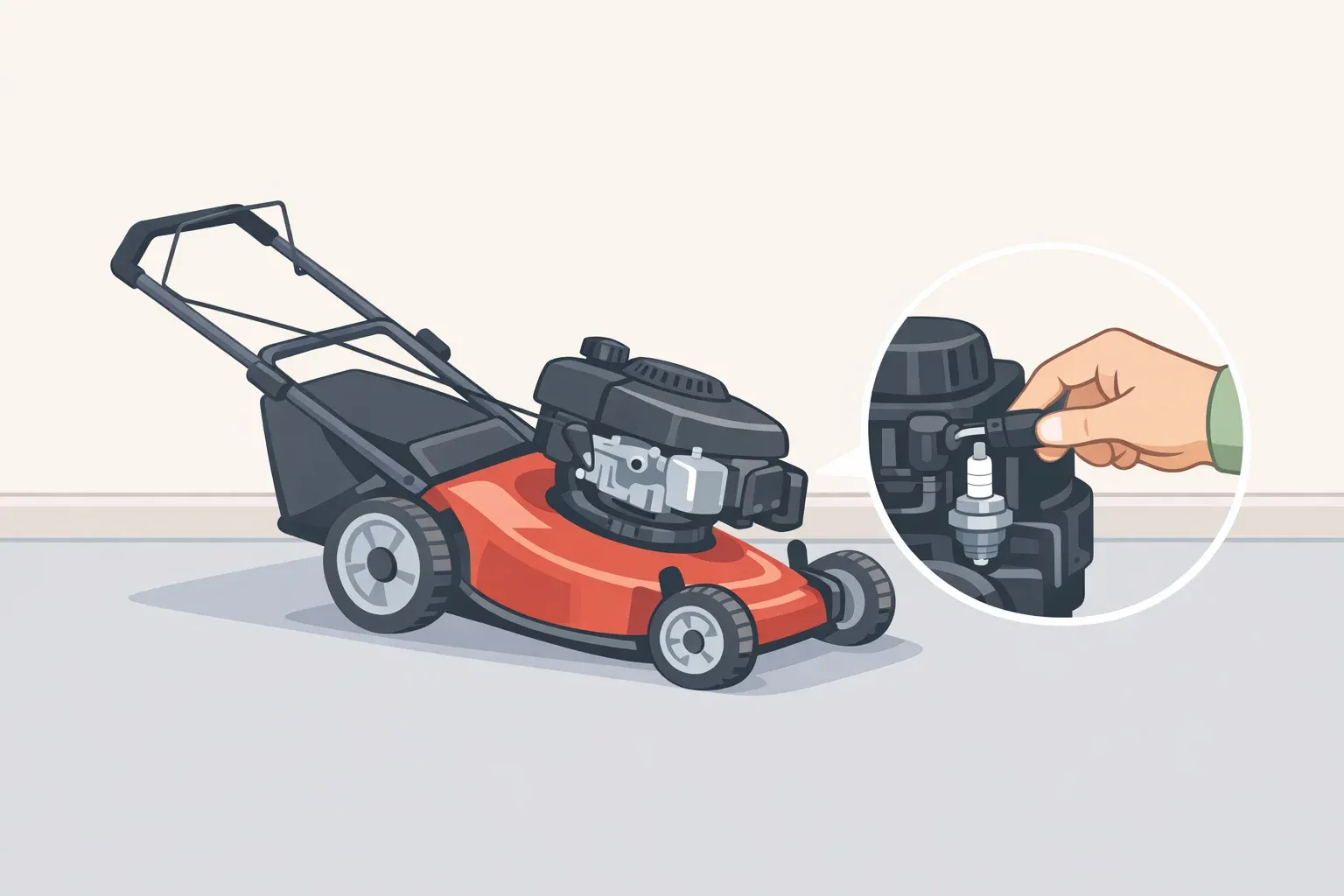
How to tip a lawn mower over safely (air filter side up)
The safe rule is simple: tip a 4-stroke push mower with the air-filter side up and the muffler side down. Never go fully upside down. Disconnect the spark plug wire before touching the blade. That's the core of how to tip a lawn mower over safely the rest of this guide explains why it works, how to execute it cleanly, and what to do if you've already gotten it wrong.
Scope: This guide covers standard 4-stroke gas push mowers only. Electric and battery-powered mowers have different fluid and venting considerations. Check the owner's manual before tilting either type.
The short version: Always tip the mower so the air filter and carburetor housing face upward. The muffler goes down. Never tip it completely upside down. Disconnect the spark plug wire before touching the blade. That's the whole rule the rest of this guide explains why it works and what to do if you got it backward.
Why tipping direction matters
Tipping a mower is routine maintenance, not a special-case repair. Briggs & Stratton explicitly recommends gently tilting a mower onto its side to spray the undercarriage on models without a dedicated washout port. Millions of mowers get tipped every season for deck cleaning and blade work.
The direction, though, is non-negotiable.
Tilting with the carburetor side down sends oil through the engine's breather tube into the intake housing almost immediately, per Howgarden.blog. A saturated air filter is the minor outcome. In severe cases, enough oil reaches the cylinder to cause hydrolock a condition where oil, which doesn't compress like air, prevents the piston from completing its stroke and can bend connecting rods, per Howgarden.blog. Going completely upside down is worse: fuel and oil escape through multiple vents and internal seals at that angle.
Most tipping mistakes are recoverable, though. LawnAsk notes that the majority of white-smoke causes cost nothing or under $20 to fix. Engine destruction is the edge case. It's also entirely avoidable.
Which way to tip a lawn mower: identifying the correct side
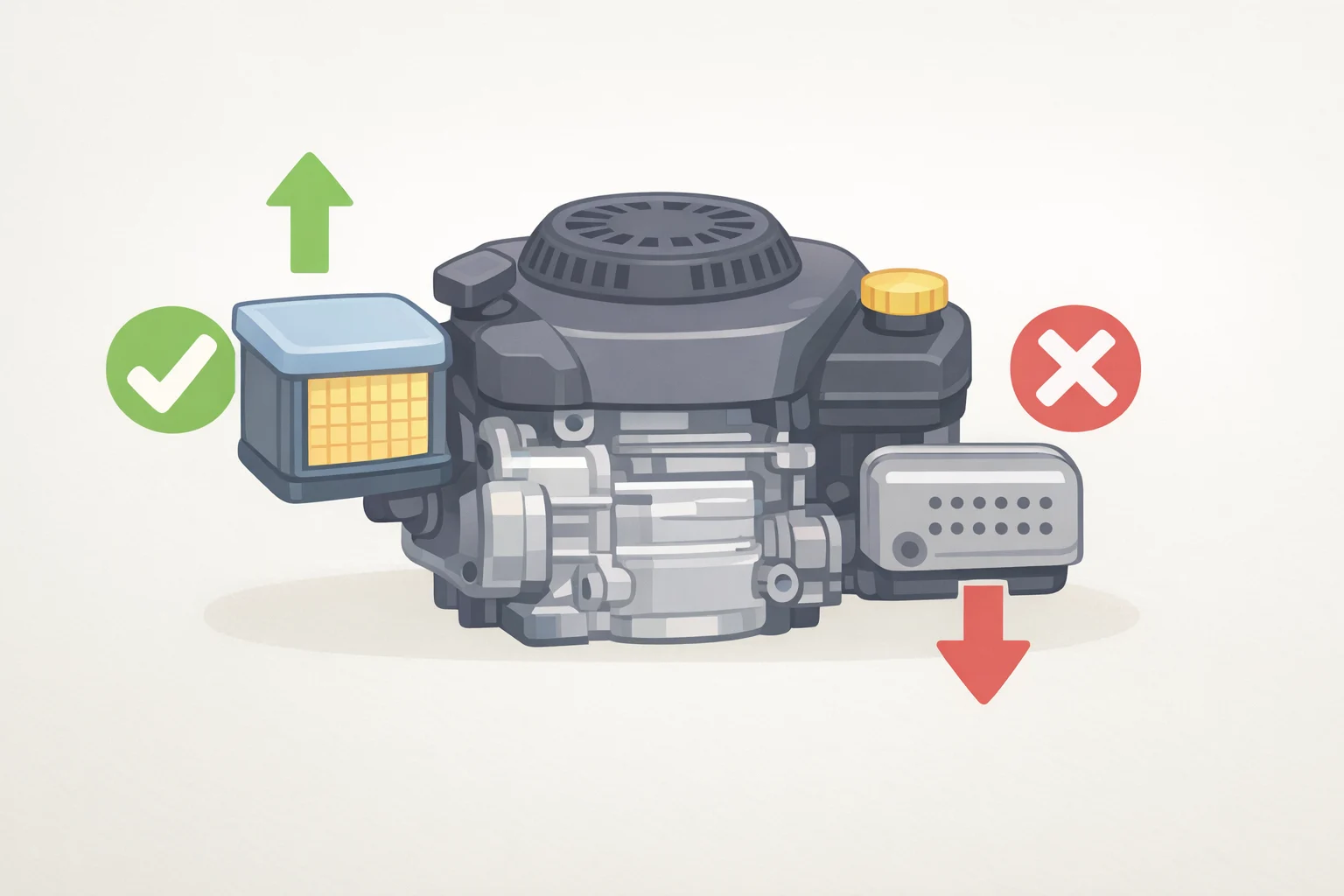
Before touching anything, find the air filter housing. This is a black plastic box, typically clipped or screwed to one side of the engine block, that sits directly over the carburetor, per Howgarden.blog. That side goes up.
On the opposite side sits the muffler: a metal exhaust component, usually pipe-shaped or boxed, warmer to the touch after running. That side faces down. Keeping the air-filter side skyward holds the oil reservoir below the intake ports so gravity works with the crankcase rather than against it, per Howgarden.blog.
If the layout isn't immediately clear, stop and look up the model's manual PDF before proceeding. Most manufacturer manuals are available on the brand's website. The tilt diagram is the one page worth finding before it's needed, not after.
Before you tip: three preparation steps
Step 1: Let the engine cool and run the fuel down
Allow the engine to cool completely before checking fluids or touching any engine components, per LawnAsk. A hot engine makes oil-level readings unreliable and the metal surfaces dangerous to handle.
Perform deck maintenance with the fuel tank as close to empty as practical. Even a tightly capped tank can leak through its venting system during an extended tilt, creating a fire hazard, per Howgarden.blog.
If the tank is full and the job can't wait: place a piece of plastic wrap under the fuel cap before screwing it down to create a temporary liquid-tight seal, per Howgarden.blog. Treat this as a workaround, not standard practice.
Step 2: Check the oil level
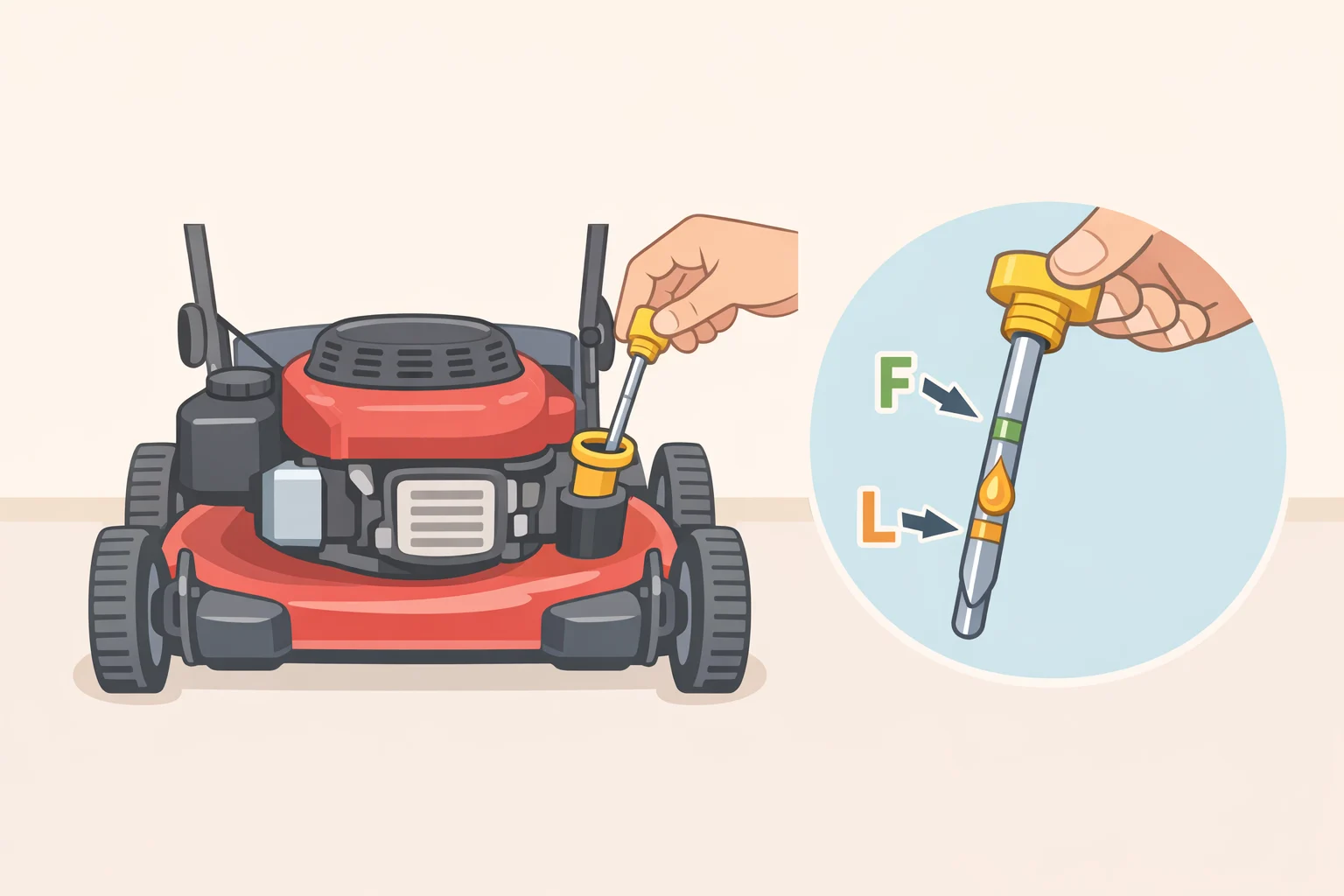
Pull the dipstick and confirm the oil sits between the low and full marks. Most walk-behind mowers hold 15–20 oz check the owner's manual for the exact figure on your model, per LawnAsk.
If the oil reads above the full line, drain the excess before proceeding. An overfilled crankcase pushes oil into the intake faster and with less margin when tilted. Overfill is also the single most common cause of white smoke on restart, per LawnAsk which makes this check relevant both before and after a tipping incident. A turkey baster or oil extractor works well for removing small amounts.
Step 3: Disconnect the spark plug wire
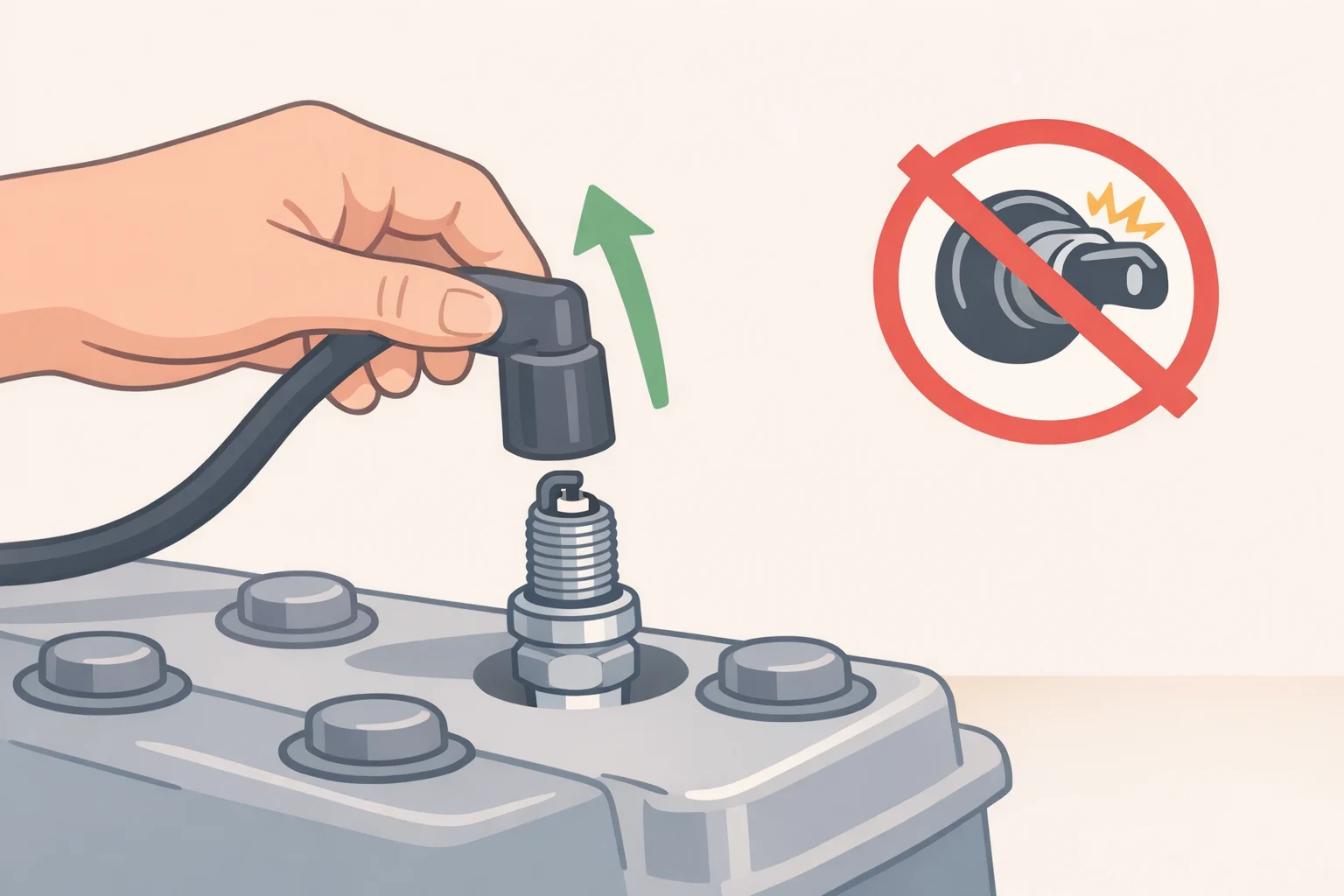
Pull the rubber boot off the spark plug before touching the blade. This prevents the engine from firing if the blade is bumped or rotated while hands are near the cutting edge, per Howgarden.blog.
Note where the wire sits so reconnecting it takes seconds when the job is done.
How to turn a lawn mower on its side: the proper technique
Step 4: Tip the mower onto its side air-filter side up
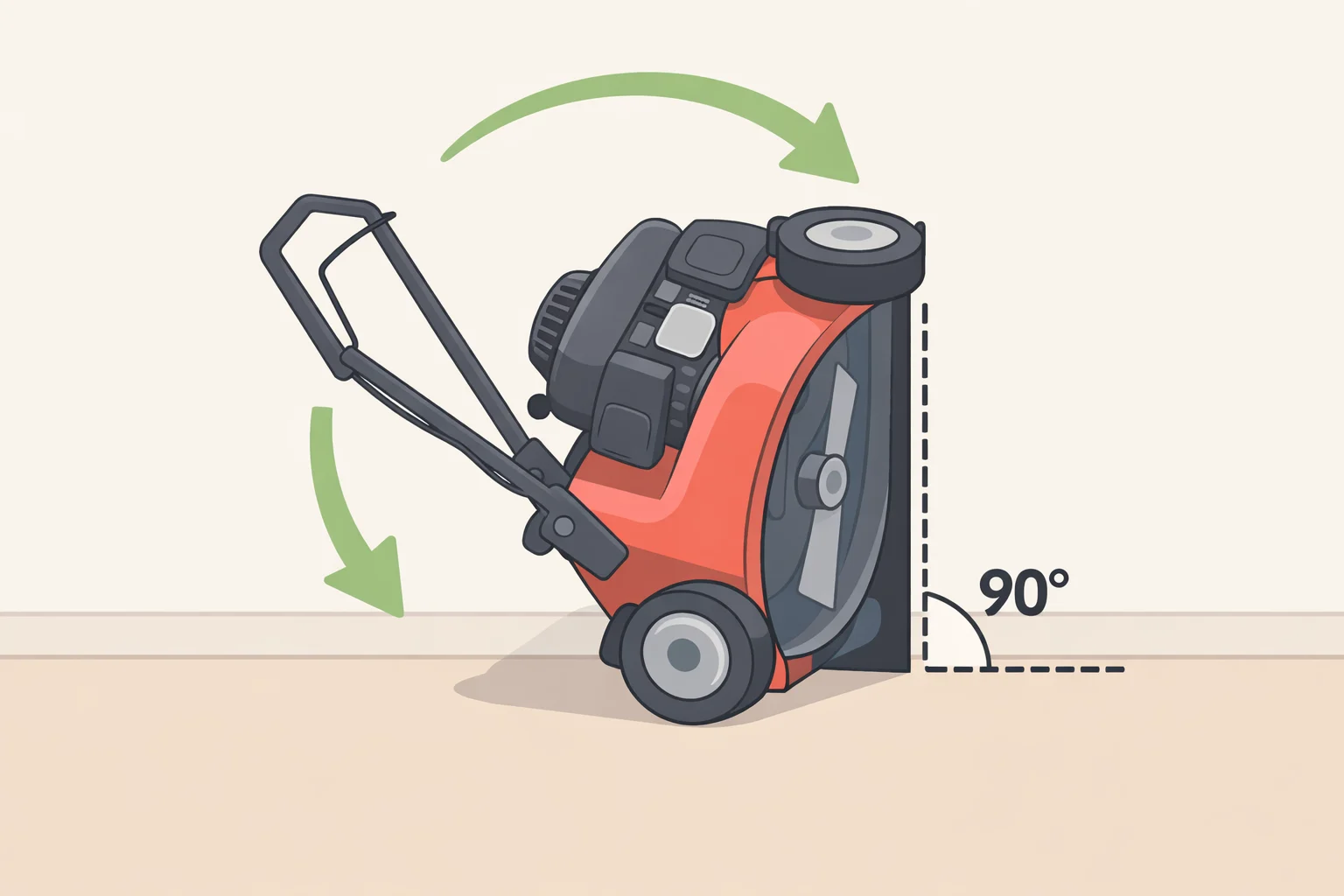
Lower the mower slowly, maintaining the air-filter-up orientation throughout the movement. Don't rush it. A mower that tips faster than expected can land in the wrong position before you catch it.
Once on its side, it should sit stable. If it rocks or threatens to roll further, use a block to hold it at 90 degrees on a flat surface. A wall can serve as a secondary brace. The goal is a controlled working position, not a quick flip, per Howgarden.blog.
Step 5: Do the maintenance
For blade inspection: look for nicks, dents, or significant wear to the rear lift wing. A blade that has lost its aerodynamic wing on the back should be replaced rather than sharpened, per Howgarden.blog.
For deck cleaning: use a plastic scraper on compacted clippings and work efficiently. Howgarden.blog recommends draining the oil before tilting if the mower will be on its side for an extended period, which eliminates migration risk entirely. For a quick scrape and inspect, the carburetor-up position is sufficient.
Step 6: Return the mower upright and verify before restarting
Set the mower back on four wheels. Reconnect the spark plug wire.
Pull the dipstick again. If oil migrated during the tilt, the crankcase level may have dropped. Top up to the correct mark with SAE 30 in warm weather or 10W-30 in variable temperatures, per LawnAsk and Mechanics Stack Exchange. Confirm the correct grade in the owner's manual before adding anything.
A brief cloud of white smoke on first startup is normal if any residual oil remains in the intake. It should clear within 1–2 minutes at low throttle, per LawnAsk.
If you already tipped it the wrong way: a short recovery guide
If the mower was tipped with the air filter side down what's sometimes called a "lawn mower tipped over smoking white" situation use this decision aid before doing anything else:
- Brief smoke that clears in 1–2 minutes: residual oil burning off. Normal. Let it run.
- Smoke clears, but the mower ran briefly with the filter-side down: check the dipstick, inspect the air filter, run at low throttle.
- Starter cord won't pull or feels locked: stop immediately. Remove the spark plug before pulling again.
- Heavy smoke that doesn't clear after several minutes, rough running, power loss: possible head gasket failure. Stop mowing and get a shop diagnosis.
Diagnostic order
1. Check the oil level first. Overfill is the most common cause of white smoke more common than a tipping incident, per LawnAsk. Before assuming the tilt caused the problem, pull the dipstick. If the oil reads above the full mark, drain to the correct level and restart.
2. Inspect the air filter. When a mower is tipped wrong-side-down, oil travels through the crankcase breather tube into the intake housing, per Howgarden.blog. A paper filter saturated with oil can't be cleaned replace it for $5–$10 at any hardware store. A foam filter can be washed with dish soap, dried fully, and lightly re-oiled before reinstalling, per LawnAsk.
3. Clear the cylinder if the cord won't pull. A locked or abnormally stiff starter cord likely means oil has pooled in the cylinder. Forcing it can bend the connecting rod, per Howgarden.blog. Remove the spark plug, point the plug hole away from you, and pull the cord several times to push oil out through the opening. Clean or replace the spark plug before reinstalling.
4. On restart, let minor smoke burn off. A Mechanics Stack Exchange thread documents one case: roughly 4–5 oz of oil leaked through the air filter after a 30-minute wrong-direction tilt. The remediation was to clean the housing, verify the oil level, and expect brief smoke on first start. No lasting damage. That's one account, but the steps align with what Howgarden.blog and LawnAsk both describe for minor tipping incidents. Most cases land here.
5. Know the head-gasket threshold. Heavy, continuous smoke that doesn't clear after a few minutes of running especially combined with rough running or power loss may indicate a failed head gasket rather than a tipping incident, per LawnAsk. Don't keep mowing through it. Head gasket replacement at a small-engine shop typically runs $75–$150 in labor, per Angi data cited by LawnAsk. That's the point where diagnosis belongs with a professional.
Three things to remember
1. Air-filter side up is the whole rule. Keep it pointed at the sky whenever the mower leaves level ground. This single step prevents the majority of tipping-related damage, per LawnAsk and Howgarden.blog.
2. Prep removes most of the risk. Cool engine, near-empty tank, confirmed oil level, disconnected spark plug. Skip any one of them and the margin for error shrinks considerably.
3. Most tipping mistakes are recoverable. Brief white smoke, an oil-fouled filter, a low crankcase those are under $20 to fix, often less. The dangerous outcome requires oil reaching the cylinder in enough volume to cause hydrolock, and that's avoidable at every step described above. Heavy smoke that won't clear after a few minutes is the signal that something more serious is happening that's when the mower stops and a shop gets involved.
If deck cleaning or blade sharpening is a regular part of the season, save the manual PDF now. The tilt diagram is the one page worth finding before it's needed.







Comments
Be the first, drop a comment!