




How Sourcing Building Materials from China for Home Renovation Really Works
For homeowners wondering whether sourcing building materials from China for home renovation is worth it, the answer depends less on product quality than on project scale, timing, and compliance. The savings numbers circulating online are specific and sometimes striking, but they originate almost entirely from businesses with a financial stake in the model. This article evaluates the full picture rather than repeating the marketing.
The headline figures come from Owner Builder Club's profile of Ship-Your-Reno, a consulting business that charges homeowners to help them do exactly this: an entire home's cabinetry (kitchen, bathrooms, laundry, wardrobes, home office) imported from China for around A$70,000, while a single locally fitted kitchen can cost more on its own; wide-format European oak flooring at A$75 per square metre imported, versus A$200-plus from a local supplier. Those figures are plausible. None of the sources reviewed, however, offer independent long-term performance data on how this approach plays out across varied project types, and that gap matters when evaluating the strategy honestly.
The real question isn't simply whether Chinese-made cabinetry can match Australian quality standards. It's whether the approach is financially viable once every cost is included, legally compliant under local building codes, and operationally realistic for a given project. All three have different answers depending on scale, scheduling flexibility, and appetite for active management.
Importing renovation fit-out materials from Chinese factories is a real strategy, not a myth. But it functions like a procurement operation, not a consumer shortcut. It works for large, schedule-flexible, whole-home projects. It breaks down fast for small or time-pressured ones.
Is this strategy right for your project? A decision filter before the detail
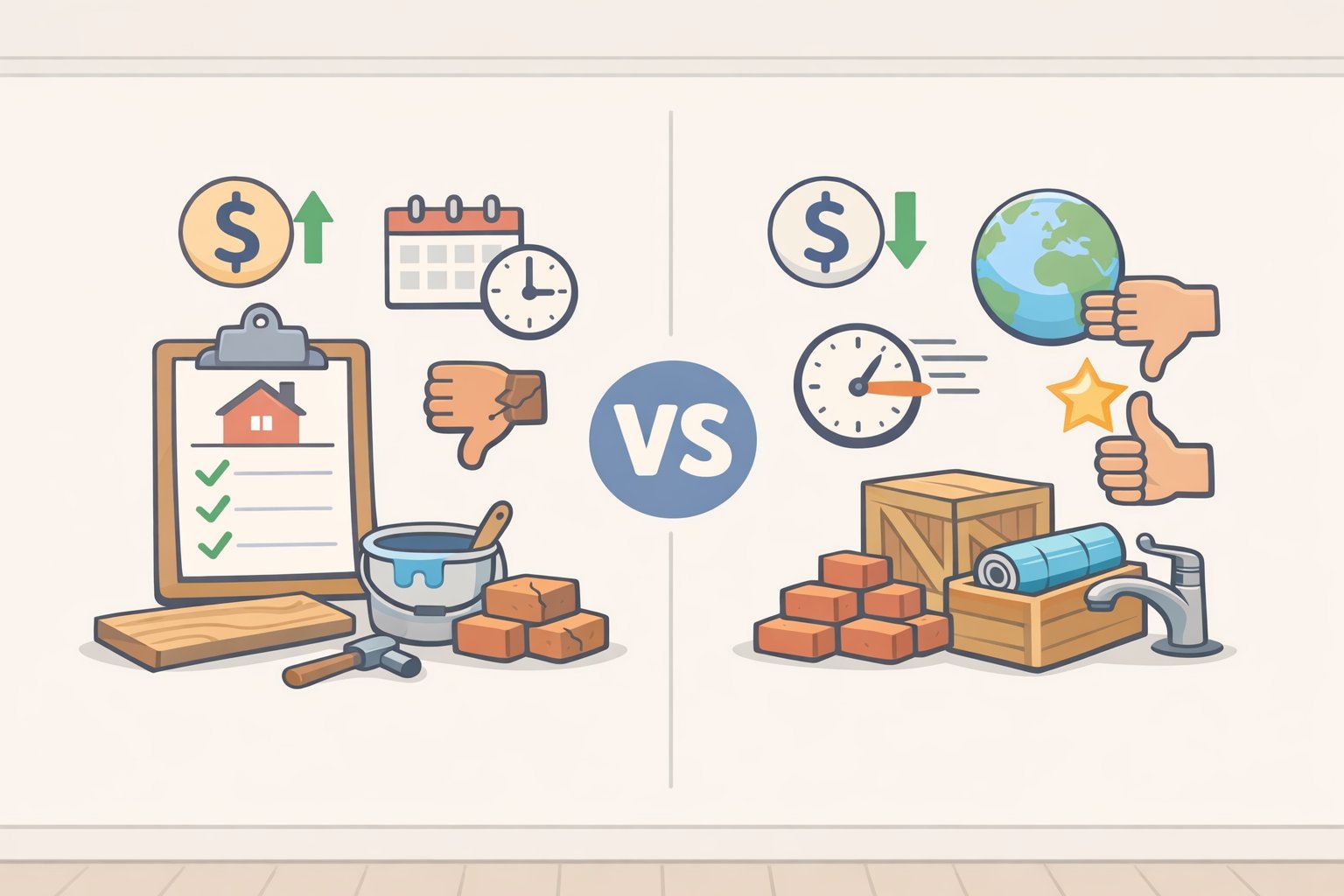
Most of the compelling evidence involves high-ticket, standardised fit-out categories ordered in volume: cabinetry packages, double-glazed windows, large flooring orders. Owner Builder Club states explicitly that the model is "tailor-made for owner-builders" who control their own schedule and are fitting out an entire home, not replacing a single room.
The model tends to work under four conditions: an owner-builder or major whole-home renovation context; orders spanning multiple categories such as glazing, cabinetry, flooring, and tiles; a build schedule the homeowner controls with six or more months before materials are needed on site; and the capacity to act as an active procurement manager rather than a passive consumer.
Where domestic alternatives probably make more sense: a single-room refresh; a fixed move-in deadline within three to four months; no appetite for compliance research, contract negotiation, or freight coordination; or a budget tight enough that a A$3,000 consulting fee or an unexpected freight surcharge would materially affect the outcome.
Categories with high local retail markups and standardised specifications offer the best import margin. Double glazing is the clearest example: Owner Builder Club notes that imported double glazing can cost roughly the same as locally supplied single glazing, a comparison that holds because glazing specifications are quantifiable and verifiable. Engineered flooring and cabinetry follow similar logic. Structural or bespoke items carry more risk and less margin.
When the savings usually pencil out

The economics of importing building materials from China shift depending on what's being ordered and how much of it. A few patterns hold across the sources reviewed:
- Standardised, high-ticket categories (glazing, engineered flooring, flat-pack cabinetry) carry the highest local retail markups and the most straightforward specification process, which is where import savings are most reliably captured
- Fixed costs don't scale down: freight forwarding, consulting fees, compliance research, and container logistics are largely the same whether the order fills a whole container or a fraction of one, which makes small single-room projects hard to justify economically
- Lead times are measured in months, not weeks: cabinetry runs four to five months from specification sign-off to site delivery, windows and doors around three months, per Owner Builder Club, so schedule buffer isn't optional
- Bespoke or site-sensitive items (custom dimensions, structural components) raise the risk profile sharply because errors can't be corrected once goods are in transit
The A$3,000 consulting fee may be straightforwardly worthwhile on a A$200,000 whole-home fit-out. On a A$25,000 single-room renovation, the math is much harder to make work.
How the process actually works: factory to front door

Sourcing clusters around manufacturing hubs, with Foshan being a major hub for furniture and building fit-out. HSY Sourcing advises centralising orders within a single hub rather than chasing marginally lower prices from distant provinces: the ability to physically match finishes and consolidate freight typically delivers more value than a 5% price difference. Buyers going unassisted typically spend weeks comparing suppliers and certifications on platforms like Alibaba before narrowing to a shortlist, as one first-person importer documented at Call Me Construction in late 2024.
Compliance is non-negotiable and non-trivial. In Australia, windows and doors must comply with AS 2047, and plumbing fixtures require WaterMark certification before installation. Owner Builder Club states it only works with factories meeting or exceeding these standards, and that duty waivers under the Australia-China free trade agreement require a valid certificate of origin obtained at the time of order. Raw materials such as aluminium profiles cannot be imported unless they form part of a finished product. These rules need to be understood before placing an order, not after goods arrive at the border.
Most homeowners who successfully execute this don't go fully unassisted. Ship-Your-Reno charges a A$3,000 consulting fee covering factory introductions, platform access, and shipping oversight, per Owner Builder Club. The Call Me Construction importer also engaged a freight forwarder early in the process and had a lawyer review the final contract before signing, per Call Me Construction. The "hack" framing implies a DIY workaround. The evidence describes a professionally supported procurement system.
The real costs of sourcing building materials from China for home renovation
Projects in this space often begin with spreadsheets showing 40% savings compared to local suppliers, according to HSY Sourcing. Those figures typically reflect factory gate prices, not delivered prices.
Landed cost is the only number that matters: the total price after freight, GST, handling, insurance, port charges, and consulting fees. GST is levied on the full declared container value on arrival in Australia, per Owner Builder Club. The Call Me Construction importer found that small per-unit price variations became significant once every fee was totalled, and ran into unexpected insurance and handling charges on top of port congestion delays. Calculating total landed cost before committing is the single most important analytical step.
The delays are structural, not exceptional. Owner Builder Club is explicit that cabinetry requires four to five months from specification sign-off to site delivery, windows and doors around three months. Port congestion can extend those timelines further. These lead times need to be engineered into the project programme at the design stage. The sources repeatedly point to late ordering as a costly mistake.
Container packing failures destroy value quietly and completely. HSY Sourcing is specific: heavy tiles loaded onto delicate cabinet carcasses arrive as scrap; shipping furniture without filling void spaces means paying sea freight rates for the air inside wardrobes. Stone benchtops and pre-assembled cabinets require reinforced plywood crating with internal foam bracing. Standard cardboard boxes are not adequate for international sea freight. Packing specifications need to be in writing before goods leave the factory.
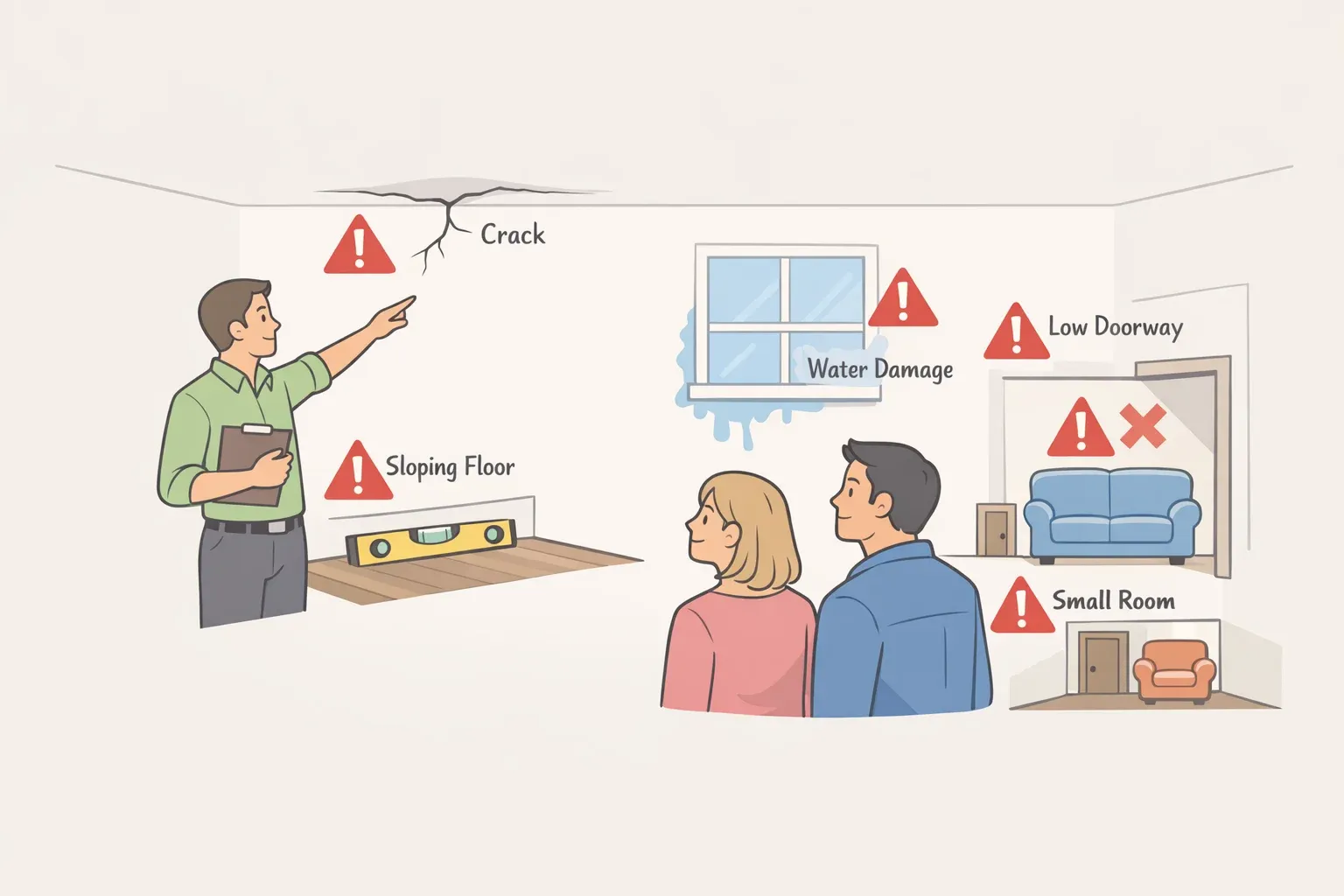
Site tolerance mismatches add another layer of exposure. Ordering cabinets and tiles from China without accounting for real-world site conditions is a common source of expensive errors. HSY Sourcing notes that walls are rarely plumb and floor levels commonly vary by 10-20mm across a typical home. Factory-cut cabinetry that doesn't account for those variations arrives uncorrectable. Reworking structural errors with skilled trades in a major city runs to thousands of dollars and stalls the entire project. A video trial assembly in Foshan, by contrast, costs nothing.
Quality, contracts, and what protects you if things go wrong
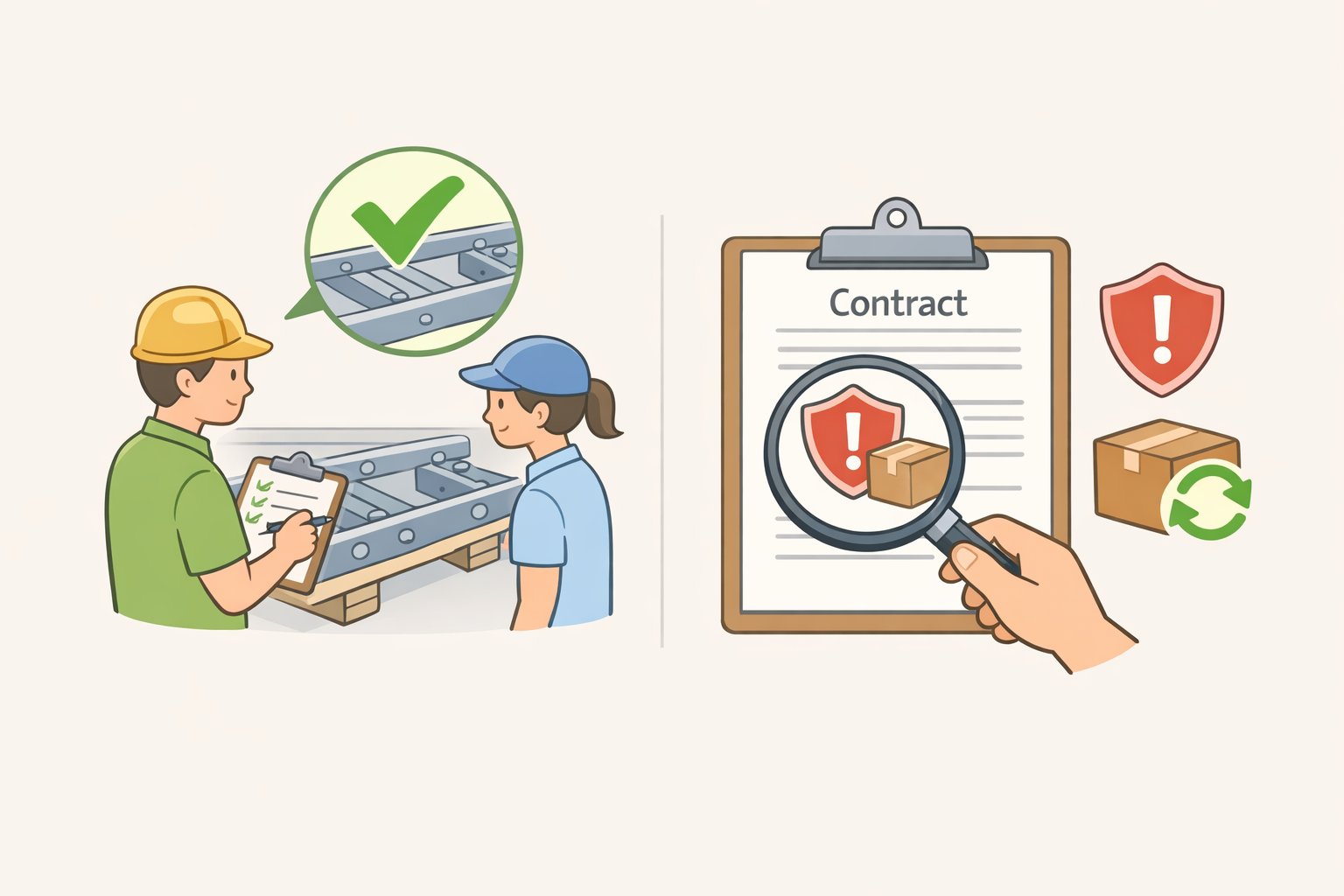
Quality is a supplier selection question, not a country-of-origin question. The same manufacturing base that produces goods for major international brands also supplies low-grade products. The buyer's job is to distinguish between them. Owner Builder Club challenges the assumption that Chinese manufacture is inherently inferior, arguing it's the wrong variable. Certifications, factory vetting, and specification discipline determine quality outcomes.
Hardware is the long-term weak point. HSY Sourcing recommends specifying globally recognised brands such as Blum or Hettich even when carcasses are Chinese-made, because replacement parts for known brands can be sourced domestically when something breaks. That choice matters more in year ten than at handover. Unknown proprietary hardware locks owners into a supplier that may no longer exist when replacements are needed.
Pre-shipment verification catches problems before they become expensive. Both Owner Builder Club and Call Me Construction treat photographic or video confirmation of trial assembly before shipping as essential, not optional. The Call Me Construction importer also negotiated explicit contract clauses requiring the supplier to replace defective materials at no additional cost, then had those clauses reviewed by a lawyer. Cross-border disputes without a written, enforceable agreement are extremely difficult to resolve; none of the sources reviewed points to a simple consumer-protection backstop for failed cross-border orders.
A practical threshold for deciding whether to pursue this
Before engaging a sourcing consultant or placing an order, the following should each be confirmed:
- Project value and scale make landed-cost savings viable after all fees are included
- The build schedule accommodates three-to-five-month lead times with buffer for port delays
- Specifications are finalised and site tolerances measured before ordering any custom items
- Compliance requirements (relevant standards certifications, certificate of origin for duty exemption) are understood before the order is placed
- A written contract with defect-replacement clauses is in place and has been reviewed by a lawyer
- Reinforced packaging specifications are agreed in writing before goods leave the factory
The flooring price differential (A$75 versus A$200-plus per square metre) and the whole-home cabinetry comparison from Owner Builder Club are the strongest concrete data points available on buying home renovation materials from China. They are category-specific, large-order examples from a commercially interested source. The savings are real in the right conditions. They are not a general guarantee that materials from China cost 60% less across the board.
For projects that don't fit the profile, local wholesale suppliers, builder discount accounts, and established in-market importers offer a better risk-adjusted outcome, even at higher unit prices. Those businesses have already done the compliance work and carry domestic stock. Whether sourcing renovation materials from China is worth it comes down to a straightforward calculation: the larger, more flexible, and more carefully managed the project, the more likely it is that the economics hold.



















Comments
Be the first, drop a comment!