



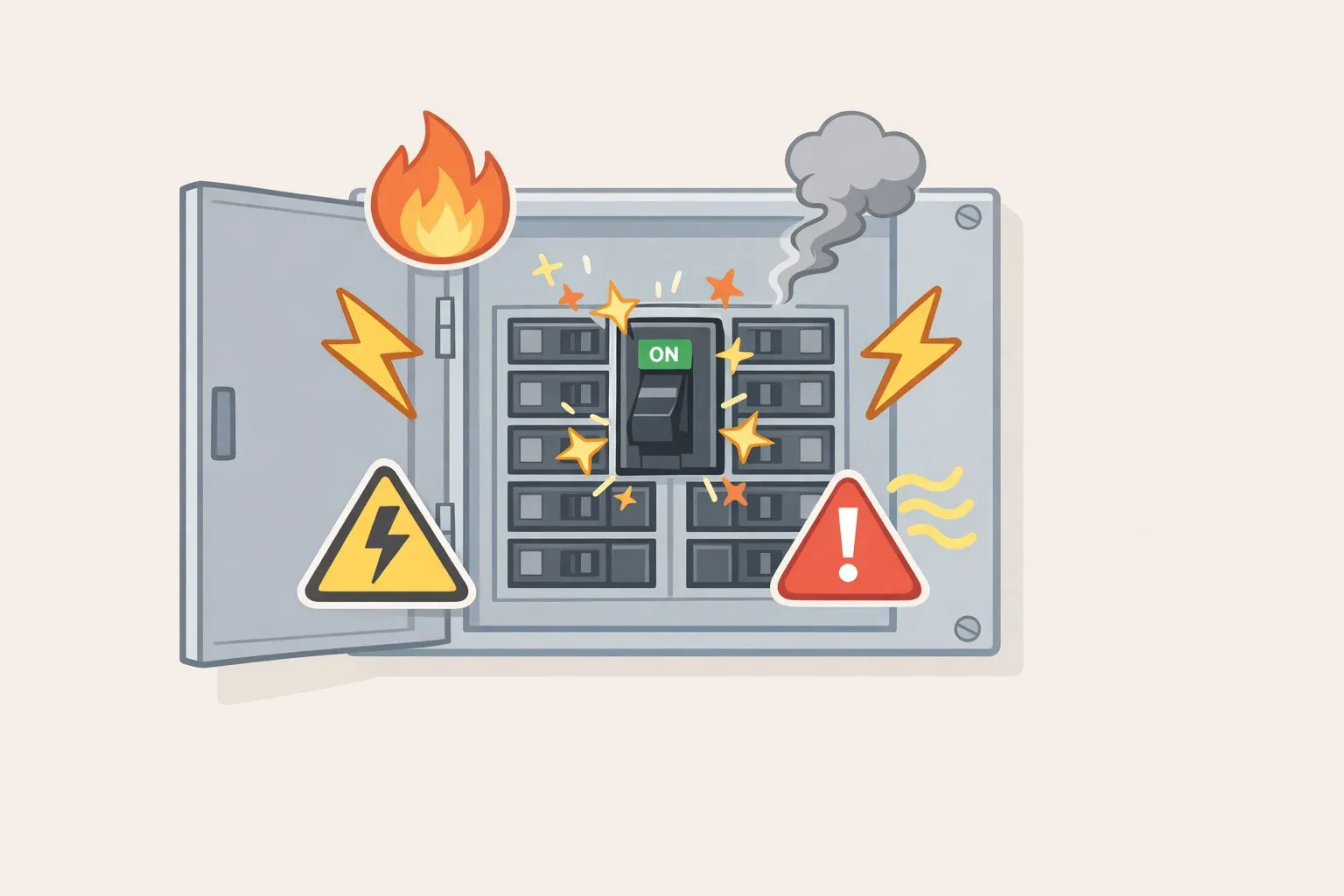
Can a Circuit Breaker Be Bad Without Tripping? Warning Signs
A breaker sitting quietly in the "on" position feels like proof that everything behind it is fine. It isn't, not entirely. Can a circuit breaker be bad without tripping? Yes: a standard breaker is designed primarily to interrupt excessive current, which helps protect the wiring in that one circuit from overheating and starting a fire (ESFI). It isn't a general test of every outlet, connection, appliance, or fault on that circuit. So a handle that's stayed "on" only confirms the breaker hasn't had to open. It doesn't confirm that a receptacle, a wire connection, or an appliance somewhere on that circuit is actually fine.
That gap between "hasn't tripped" and "everything's fine" is the reason to look closer, and it's also where this guide stops short of full diagnosis. Determining whether the breaker itself has failed happens inside the panel, and that's work for a licensed electrician, not something to test at home. Everything below is a safe homeowner check: no removing cover plates, no opening the interior of the panel, no testing how a breaker performs under load. What follows sorts common bad circuit breaker symptoms into what you can handle yourself, what needs a scheduled electrician visit, and what means stop using the circuit right now.
What a breaker actually protects against
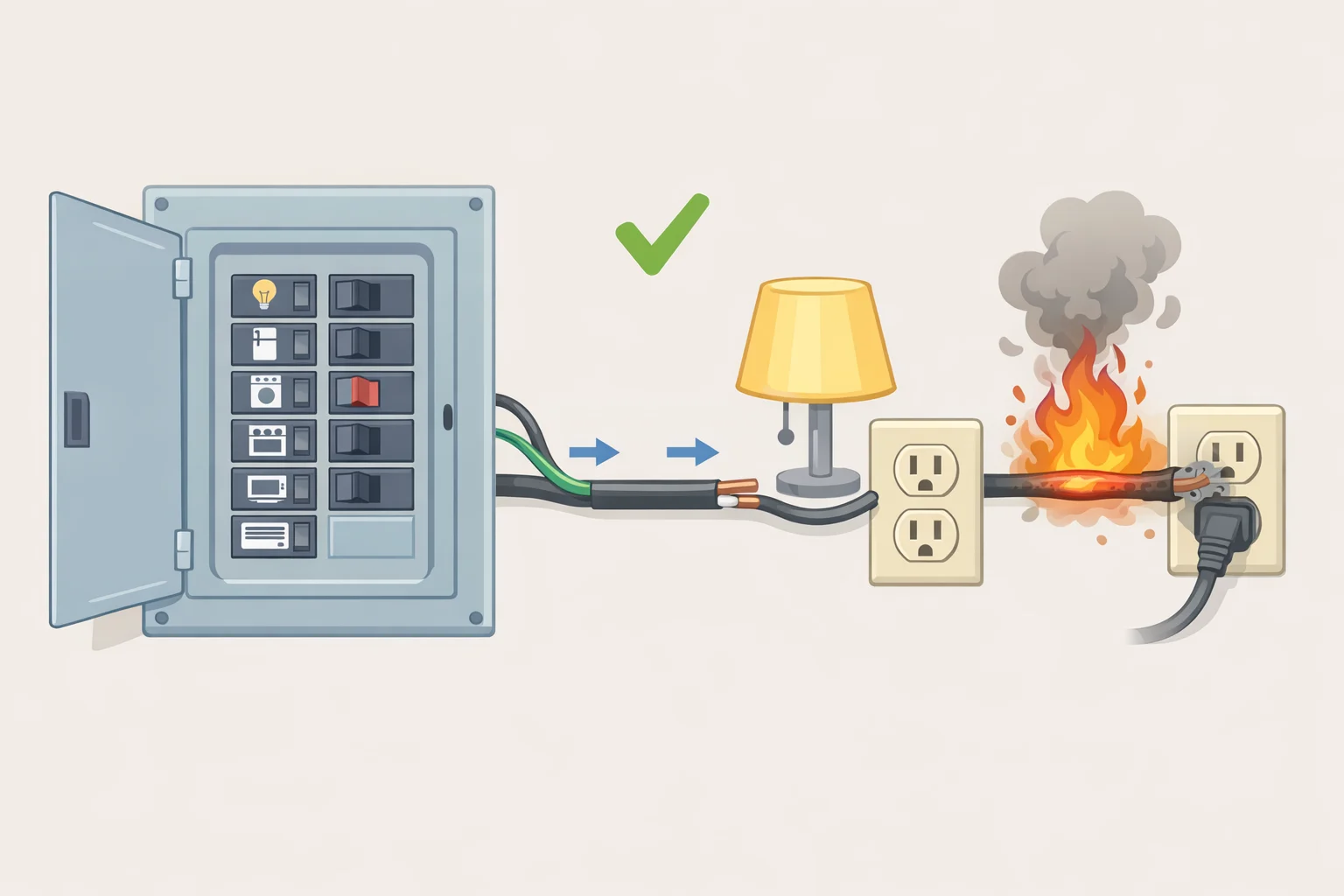
Every home service panel uses fuses or breakers built to protect the wires in each circuit from overheating and igniting (ESFI). Older panels generally rely on fuses that get physically replaced once they blow. Newer homes use breakers that reset by hand once the problem clears (ESFI). Different hardware, same underlying purpose: keep the wiring from overheating into a fire hazard.
Because overload and short-circuit current are the specific conditions a standard breaker watches for, it isn't built to catch a loose connection, a worn receptacle, or a failing appliance unless that problem also pushes current past the trip point. A breaker can sit "on" through all of those, which is the most common mistake people make when reading a panel: treating a quiet breaker as confirmation that nothing else on the circuit needs attention.
Two other devices sometimes get lumped in with "the breaker," and each guards against a different hazard. An arc-fault circuit interrupter (AFCI) shuts off power when it detects a dangerous arcing condition (NFPA). A ground-fault circuit interrupter (GFCI), when properly manufactured, installed, and maintained, is built to prevent shock or fire from a ground fault (NFPA). Some panels put GFCI or AFCI protection on a dedicated breaker; others rely on protected outlets with their own test and reset buttons. Check your panel directory or the outlets themselves to see which protection actually covers a given circuit, since that's the one whose silence you're reading.
Can a circuit breaker be bad without tripping? What you can check safely
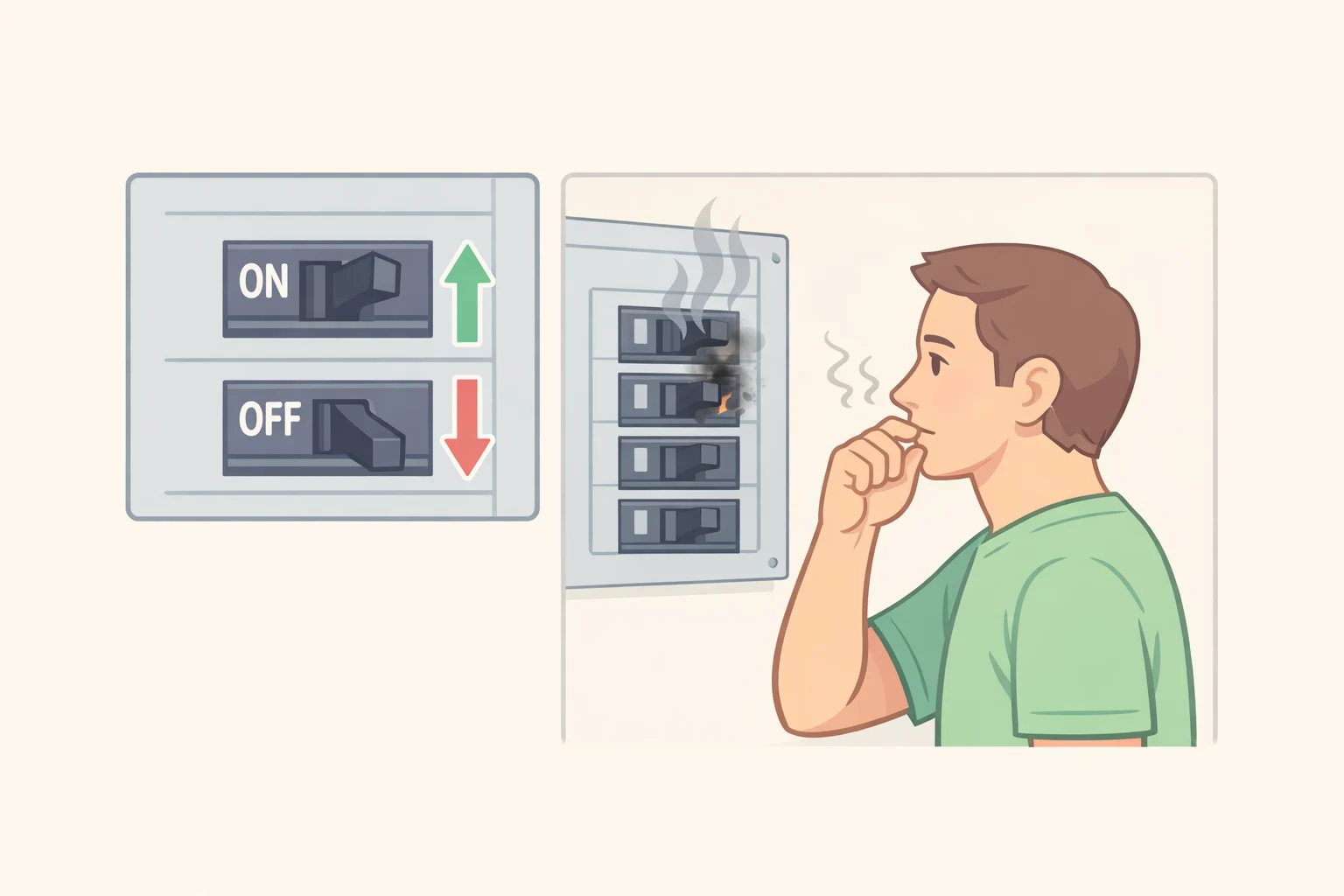
Everything here is observation, not a test. Reading a panel directory or looking at a breaker's handle position is fine as long as you don't remove any cover or touch anything inside the panel. Follow your panel's own instructions for that kind of access, and if getting a clear look would mean approaching heat, smoke, sparking, or visible damage, stop and call an electrician instead of leaning in for a better view.
- Scope. Turn on other lights and outlets on the same circuit and note whether the problem is limited to one outlet or appliance, or spans the whole circuit. A single dead outlet points toward something local to that spot; a whole circuit going dark or misbehaving points toward something further upstream. Either way, this is context for the electrician, not a diagnosis.
- Handle position. Look at whether the breaker handle sits fully "on," fully "off," or somewhere between the two. A handle that feels loose or won't hold a position is worth mentioning when you call, rather than something to click back and forth to see if it settles.
- Panel label. If your panel has a directory, note the breaker number and label for the circuit in question so you can describe it later without going back to the panel.
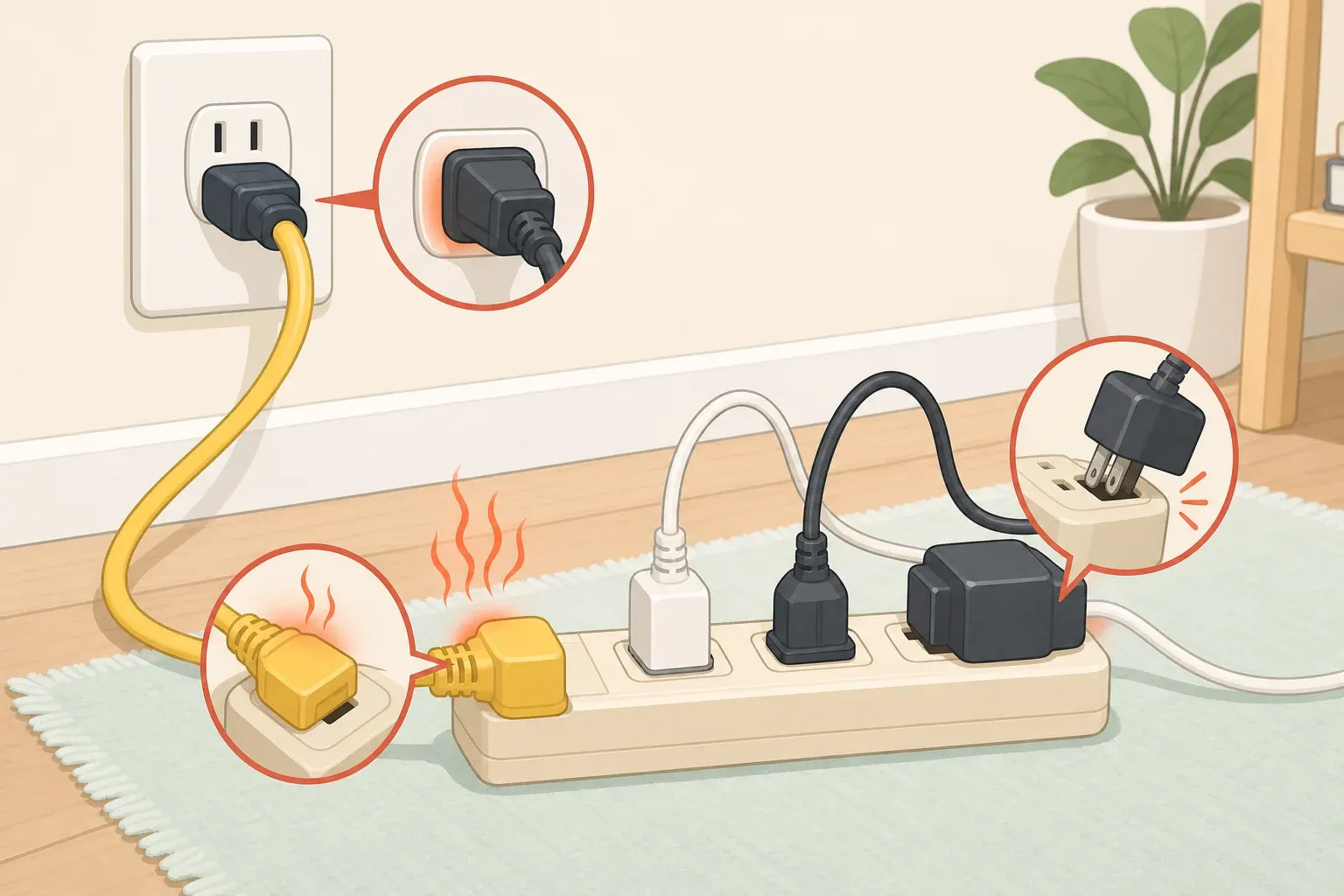
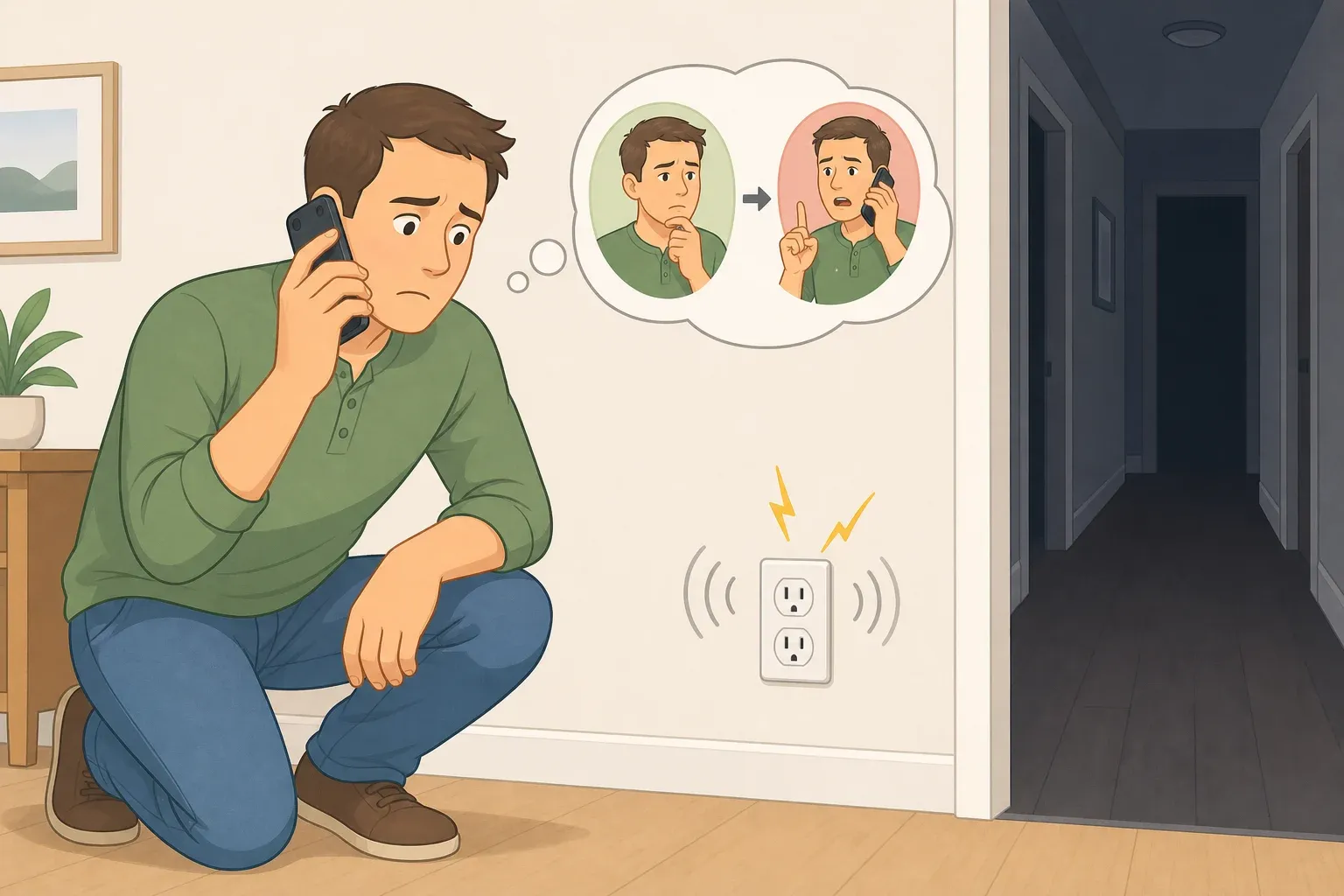
- Smell, sound, and visible marks, from a safe distance. Without touching the outlet, switch plate, or panel face, notice whether there's a burning odor, buzzing or crackling, smoke, sparking, or visible scorching, discoloration, or melting. These are reasons to stop using that circuit, not things to get closer to and investigate.
Equipment that's been switched off but not properly locked out and verified is still treated as energized under OSHA's electrical safety standard for workplaces (OSHA). Homes don't run a formal lockout process, but the caution behind it still applies: a handle sitting "off" isn't proof a circuit is safe to open. Ordinary household voltage can still be dangerous. Arcs can form with enough energy to burn skin or ignite nearby material even at the voltages found in a house, not just in industrial settings (OSHA). Verifying that a circuit is actually safe to open is the electrician's job, not a homeowner check.
Sort what you're seeing into three scenarios
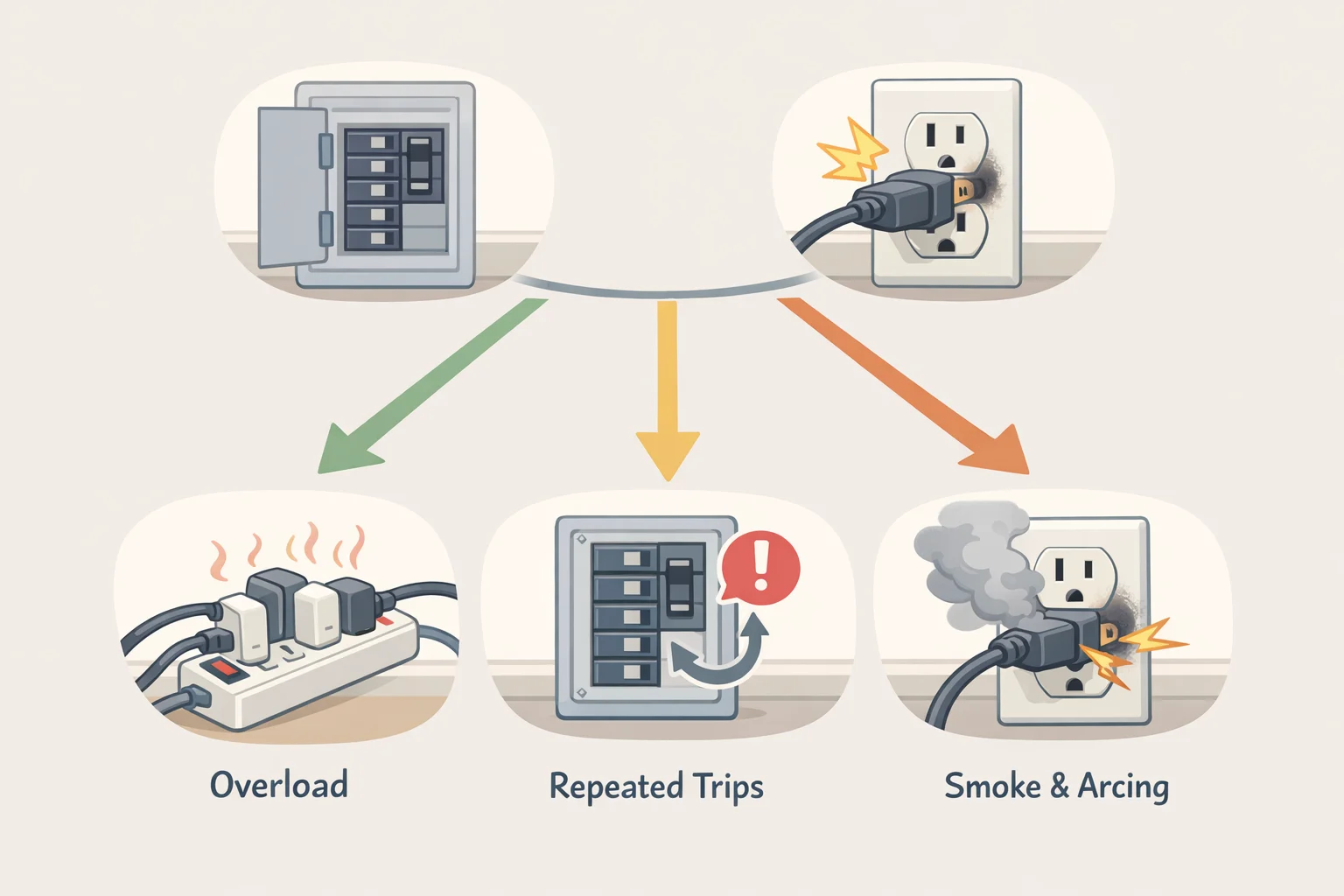
Match what you noticed to the closest description below and follow that path instead of experimenting further.
An obvious overload, nothing else unusual. A space heater, hair dryer, or other high-draw appliance running alongside other things on the same circuit is a classic overload, and ESFI notes it should be addressed right away rather than left as-is (ESFI). Unplug the extra load. If there's no odor, buzzing, sparking, or damage at the outlet or panel, follow the panel's instructions to reset the breaker once. If it trips again even with the lighter load, stop resetting it and move to the next scenario.
Repeated trips, blown fuses, or a breaker that won't behave normally. Frequent tripping or fuse-blowing on the same circuit is specifically named by fire-safety organizations as a reason to call a qualified electrician instead of resetting it as routine maintenance (ESFI; NFPA). This guidance isn't limited to homeowners; NFPA's advice on frequent tripping applies whether you own the panel or not, so the call can go to an electrician or a landlord (NFPA). A handle that won't hold position, a GFCI or AFCI that keeps tripping, or an outlet that's simply dead with no trip at all all belong in this scenario too. None of those symptoms tell you which part actually failed; only an electrician working inside the panel can determine that. Stop plugging additional devices into the affected circuit and get a visit scheduled.
Smoke, sparking, burning odor, or heat damage, with or without a trip. If there's a burning smell, buzzing or crackling, smoke, sparking, or scorching, discoloration, or melting anywhere on that circuit, stop using it, whether or not the breaker ever tripped. Don't approach the outlet or panel for a closer look, and don't try to reset anything. Even ordinary household voltage can produce an arc with enough energy to burn skin or ignite nearby material (OSHA). Leave the area and call an electrician. Treat active fire or heavy smoke as an emergency and call emergency services as well.
Before you call: what to document
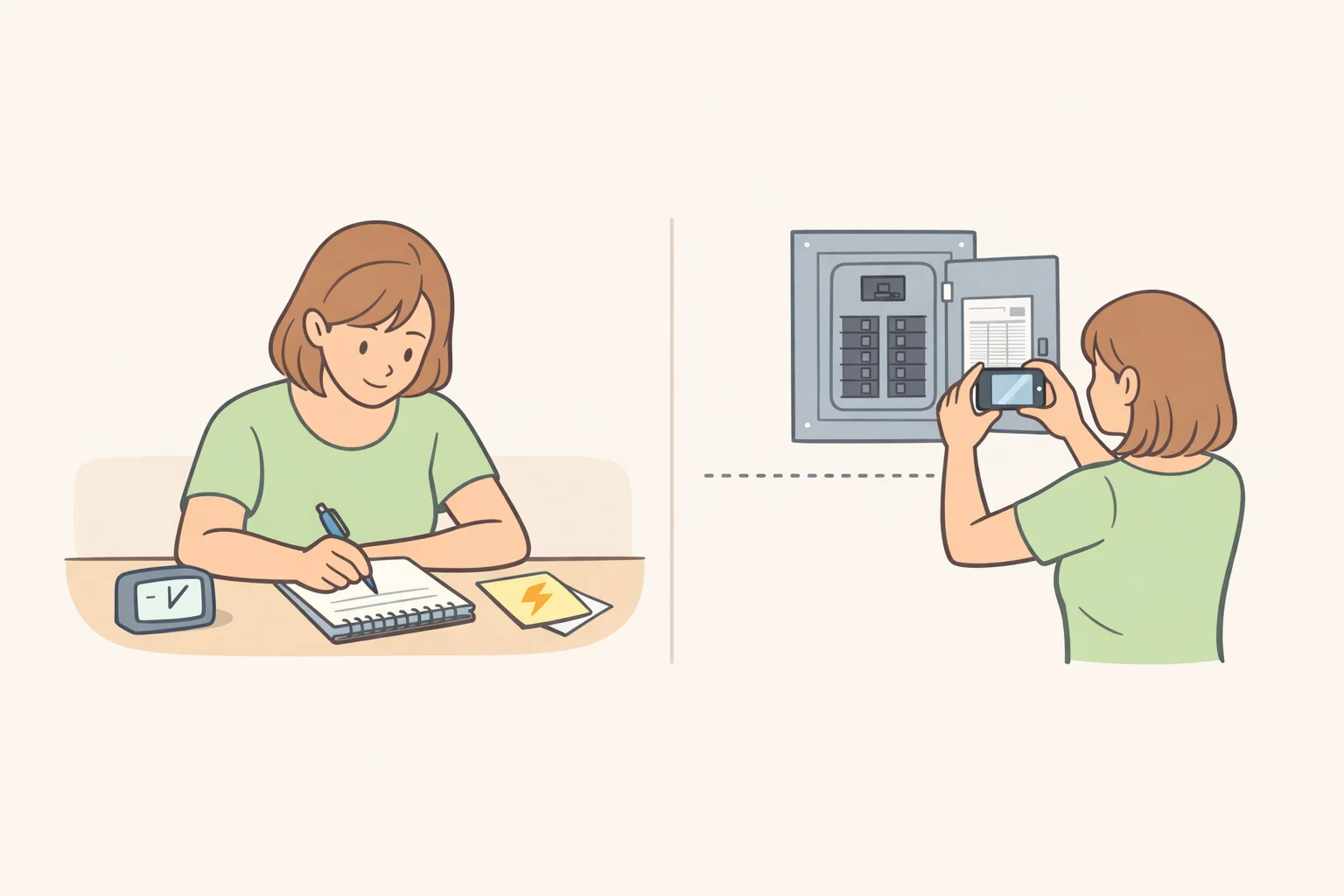
A few notes before the electrician arrives help you describe the problem clearly, even though the actual diagnosis still depends on the electrician opening the panel under controlled conditions.
- Which breaker or circuit is affected, using the panel label if there is one.
- What was plugged in or running when the symptom happened, and whether it occurs under load, at random, or every time.
- Whether the issue affects one outlet or appliance, or the whole circuit's outlets and lights.
- Any smell, sound, or visible damage you noticed, and roughly how many times it's happened.
- Whether your panel uses fuses or circuit breakers (ESFI).
If it's safe to do from a normal distance, a photo of the panel label or any visible scorching can help. Don't get close to take it. None of this replaces what the electrician checks once the panel is open; it just saves time and gives them a clearer starting point.
What to do now
- One obvious overload, no damage or unusual signs: unplug the extra load and reset the breaker once, following the panel's instructions.
- Repeated trips, a handle that won't hold, or a device that won't reset: stop resetting it and arrange for a qualified electrician.
- Smoke, sparking, burning odor, scorching, or melting: don't approach or reset anything. Leave the area and call an electrician, and call emergency services if there's active fire or heavy smoke.
A single overload trip with nothing else going on is the breaker doing exactly what it's designed to do. There's no need to turn it into a bigger project. Everything past that deserves a professional's attention rather than more troubleshooting on your own, since a breaker that hasn't tripped a second time still hasn't told you whether the underlying problem is actually gone.


Comments
Be the first, drop a comment!