



Average Lifespan of a Concrete Driveway: 25 vs. 50 Years
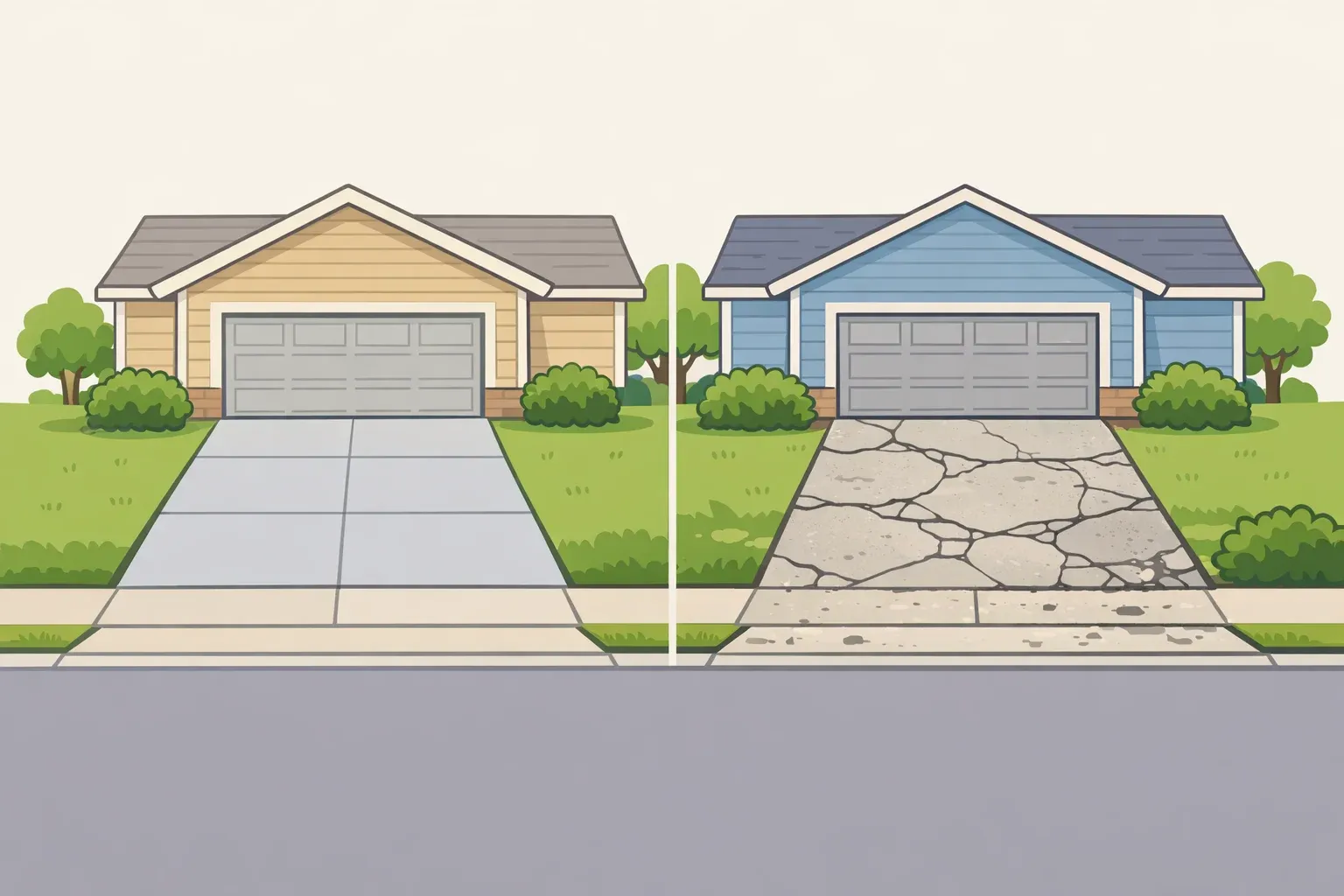
Two concrete driveways sit across the street from each other. Same neighborhood, same climate, same material. One is crumbling at 20 years. The other still looks serviceable at 45. The difference almost always traces back to a handful of decisions most of them made before the concrete truck left the job site.
The average lifespan of a concrete driveway is 25 to 30 years with routine upkeep, according to Blalock Paving. A well-built, properly maintained one can reach 50 years or more, per Bob Vila. So when someone asks how long does a concrete driveway last, both answers are technically correct which is precisely why the question is worth unpacking. Concrete driveway life expectancy is a range, not a fixed number, and where any particular slab lands on that range comes down to two categories of variables: what happened during installation, and what the owner does in the decades that follow.
This isn't a material-selection guide. The asphalt comparison appears briefly for context concrete can last roughly twice as long as asphalt under comparable maintenance, per Bob Vila but the focus here is concrete driveway lifespan, full stop.
Average lifespan of a concrete driveway: why the range is so wide
Think of the 25-to-30-year figure the way you'd think of an EPA fuel economy rating. It's a reliable baseline for typical residential conditions with general upkeep not a guarantee, and not a ceiling. Your actual result depends on how the car was built and how it gets driven.
The 50-year outcome is real, but it comes with two conditions attached. Bob Vila identifies them clearly: correct slab thickness for the vehicle loads it will carry, and consistent maintenance over the driveway's life. Pull either of those conditions and the upper range shrinks.
One number worth keeping separate: partial-depth repairs on damaged sections tend to hold for 10 to 15 years, while a full replacement resets the clock to a fresh 25 to 30 year baseline, per Badger Flatwork. Those are repair durability figures, not whole-driveway lifespans. Conflating them produces confusion a patched section lasting 12 years doesn't mean the driveway itself failed at 12 years.
The gap between 25 years and 50 years isn't random variance. It maps cleanly onto two buckets of decisions: what gets locked in at the pour, and what gets managed over time. The next two sections address each in turn.
What installation decisions can't be undone
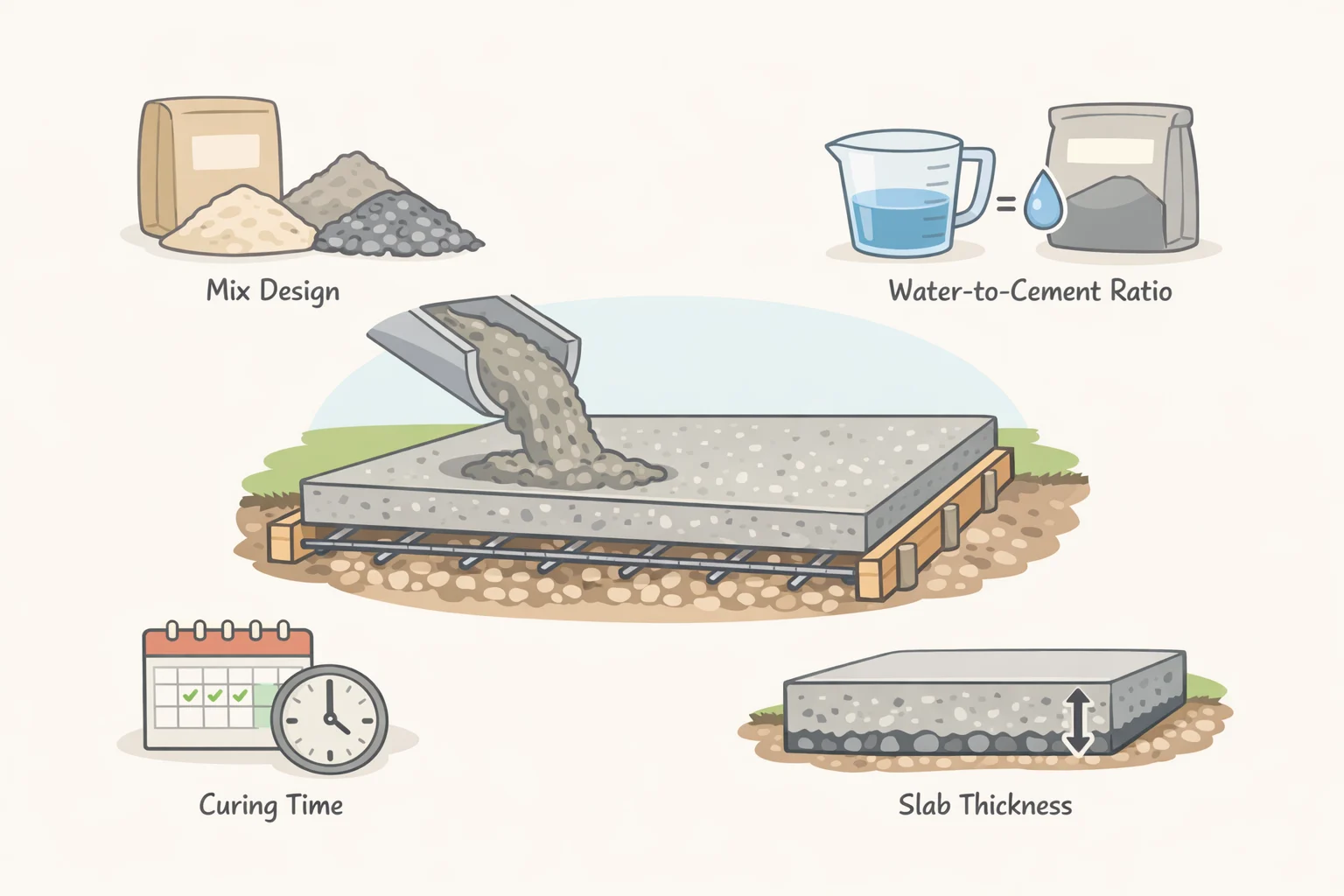
A concrete driveway's ceiling is largely set before the homeowner ever parks on it. Four variables determine it: the mix design, the water-to-cement ratio, the curing period, and the slab thickness relative to actual vehicle loads.
Mix design is the first lever. In cold-weather regions, air-entrained concrete a mix with microscopic air bubbles intentionally introduced gives the slab room to flex during expansion and contraction without fracturing. For freeze-prone climates, the recommended air content runs 5 to 7%, according to Badger Flatwork, which calibrates that figure to Wisconsin-level exposure conditions. If you're in a milder climate, the specific target differs, but the underlying principle holds: mix design directly affects how the slab handles temperature stress.
The water-to-cement ratio is equally consequential and equally invisible to most homeowners. Too much water produces a weaker, more porous slab one that lets moisture in and starts degrading from inside. Keeping the ratio at 0.45 or below results in denser concrete that resists moisture intrusion, per Badger Flatwork. This is a specification you can ask a contractor to commit to in writing before the job starts.
Curing is where impatience costs years. Concrete doesn't dry it undergoes a chemical hardening process that requires sustained surface moisture. The slab needs to stay wet for at least seven days after the pour, a recommendation shared by both Bob Vila and Badger Flatwork. A surface that looks finished at day three isn't finished. Cutting the curing window short produces a slab that performs like one.
Thickness sets the structural ceiling. Bob Vila identifies it as one of the two primary conditions for reaching 50-plus years. Heavier vehicles pickup trucks, RVs, regular commercial deliveries put loads on a slab it may not have been designed to handle. Asking a contractor what thickness they're specifying, and why, is a reasonable question before signing anything.
Before you sign a contract, get answers to these four questions:
- What air entrainment spec is in the mix design?
- What is the water-to-cement ratio?
- What is the curing plan, and for how many days?
- What slab thickness are you recommending for the vehicles that will use this driveway?
Each question maps directly to a lifespan driver. A contractor who can't answer them clearly is worth reconsidering.
What shortens concrete driveway lifespan after installation
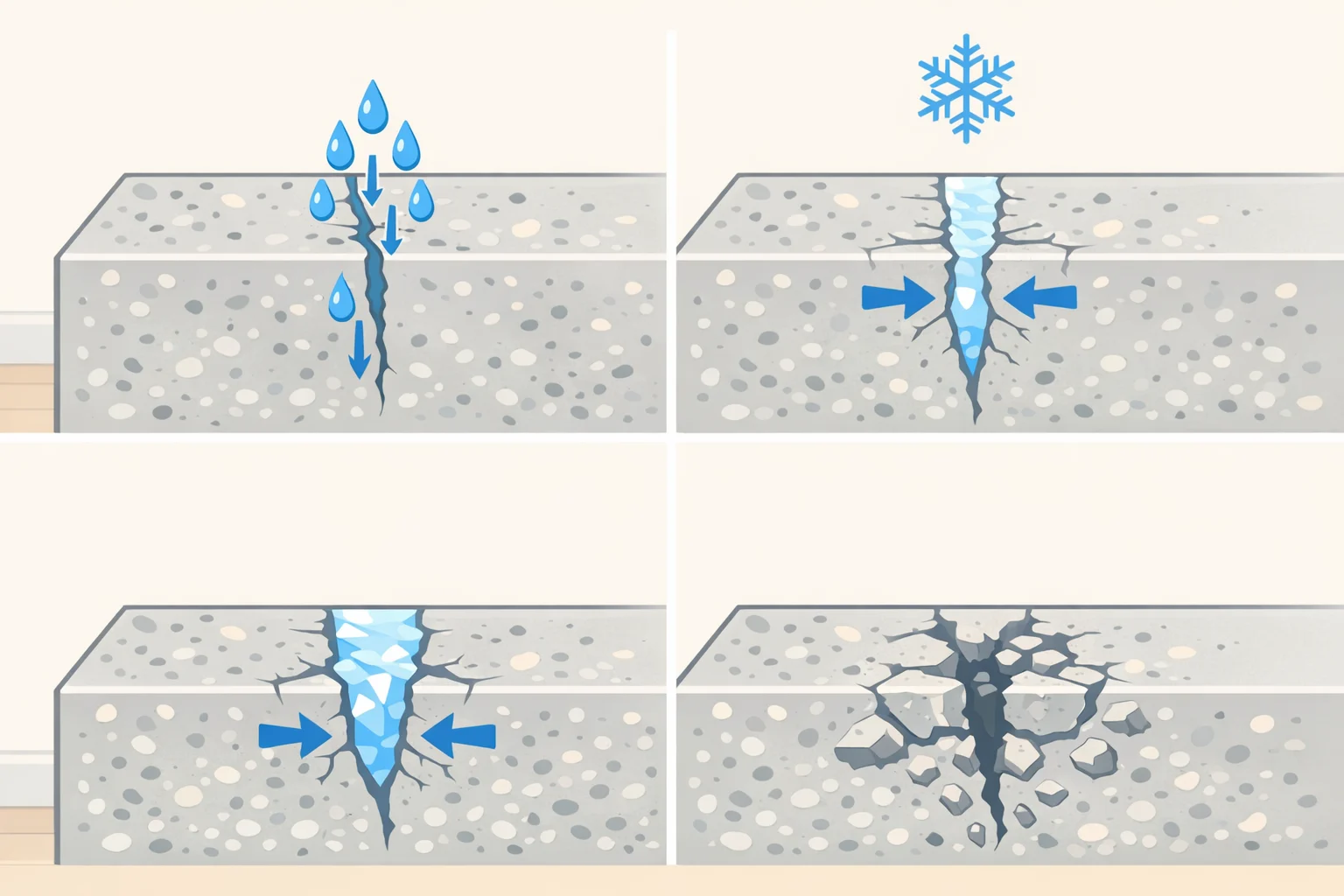
Even a well-built slab can be degraded by what happens afterward. The three biggest culprits are freeze-thaw cycling, chemical deicers, and deferred maintenance.
Winter is the most consistent lifespan limiter, and the mechanism is simple enough. Water infiltrates the small pores and surface cracks that develop over time, freezes, expands, and breaks the concrete from the inside out. A typical cold-climate winter can produce 50 or more freeze-thaw cycles, per Badger Flatwork. Blalock Paving identifies winter as the single most damaging season for concrete driveways. That 5-to-7% air entrainment spec from the installation section exists specifically to counter this; a slab without it is more exposed.
Chemical deicers compound the problem, especially on new concrete. Rock salt and calcium chloride accelerate surface deterioration on fresh slabs. New concrete is particularly vulnerable, and most contractors recommend skipping all chemical deicers for the first full winter after installation, using sand for traction instead, per Badger Flatwork. this freeze-thaw guidance is calibrated to cold climates. Driveways in warm, dry regions face different stress patterns, but the current research data doesn't address those specifically so the cold-climate figures shouldn't be read as universal.
The remaining failure accelerators are mostly behavioral: excess water in the original mix, a cut-short curing period, skipped sealing, ignored hairline cracks, and loads the slab was never designed to carry. None of those failures are dramatic on their own. The pattern is steady degradation that compounds over years until a repair-vs-replace conversation becomes unavoidable.
How to extend your concrete driveway's service life
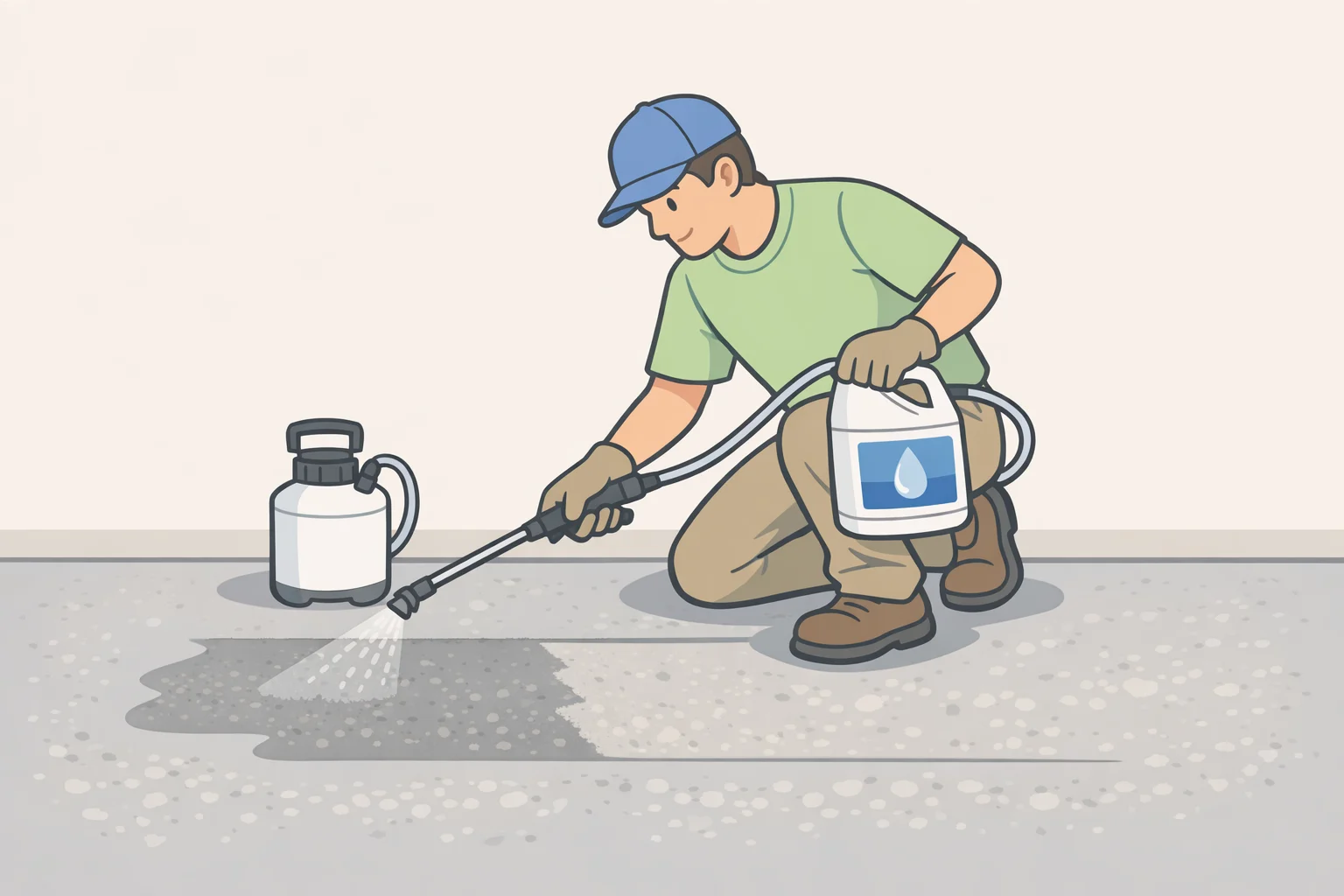
The maintenance side is less complicated than the installation side, and the stakes are just as real. Three practices drive most of the outcome: sealing on a regular schedule, inspecting annually and repairing early, and knowing when a repair is worth doing versus when replacement makes more sense.
Sealing is the highest-use routine task. A penetrating concrete sealer applied every two to three years reduces moisture intrusion and slows freeze-thaw damage, per Badger Flatwork. Penetrating sealers absorb into the slab rather than coating the surface, so they don't peel. Skipping this step on an otherwise well-built driveway is one of the more reliable ways to trim years off its life.
Inspection and early repair follow the same logic as catching a roof leak before it becomes a ceiling replacement. Blalock Paving points to regular inspection and repair as central to reaching the upper end of the service life range. A hairline crack sealed before winter costs almost nothing. A spalled section that developed because water got in and froze costs considerably more.
The repair-vs-replace decision comes down to scope. Partial-depth repairs on isolated damaged areas run roughly $5 to $10 per square foot and tend to hold for 10 to 15 years when the underlying slab is structurally sound. Full replacement runs $8 to $15 per square foot but resets the lifespan to a fresh 25-to-30-year baseline, per Badger Flatwork. The question isn't just whether the concrete looks bad it's whether you're buying years or buying time. Patching damage on a slab with deep structural problems just delays a more expensive decision.
Five things to do now:
- Apply a penetrating sealer every 2 to 3 years
- Inspect the surface each fall and fill any cracks before the first freeze
- Avoid chemical deicers on new concrete through the first winter at minimum
- Know what vehicle loads your slab was designed to handle
- If repairs are needed, assess whether the underlying slab is sound before patching
The takeaway
The 25-to-30-year average is a planning number, not a sentence. How a slab is mixed, poured, and cured sets the ceiling; how it's maintained over the following decades determines whether the driveway reaches it, per Blalock Paving and Bob Vila.
The variables within a homeowner's control break cleanly into two phases. Before the pour: ask about mix design, water-to-cement ratio, curing plan, and slab thickness. After the pour: seal regularly, inspect annually, repair cracks before winter, and keep chemical deicers off new concrete. Badger Flatwork ties each of those practices directly to extended service life.
For perspective: asphalt tops out at 20 to 30 years under comparable maintenance, per Bob Vila. Roughly half the potential service life of a well-built concrete driveway. That gap narrows when the concrete is poorly built or poorly maintained. It widens when it isn't.





Comments
Be the first, drop a comment!