



Common Whirlpool Refrigerator Problems: Diagnose Before Calling a Pro
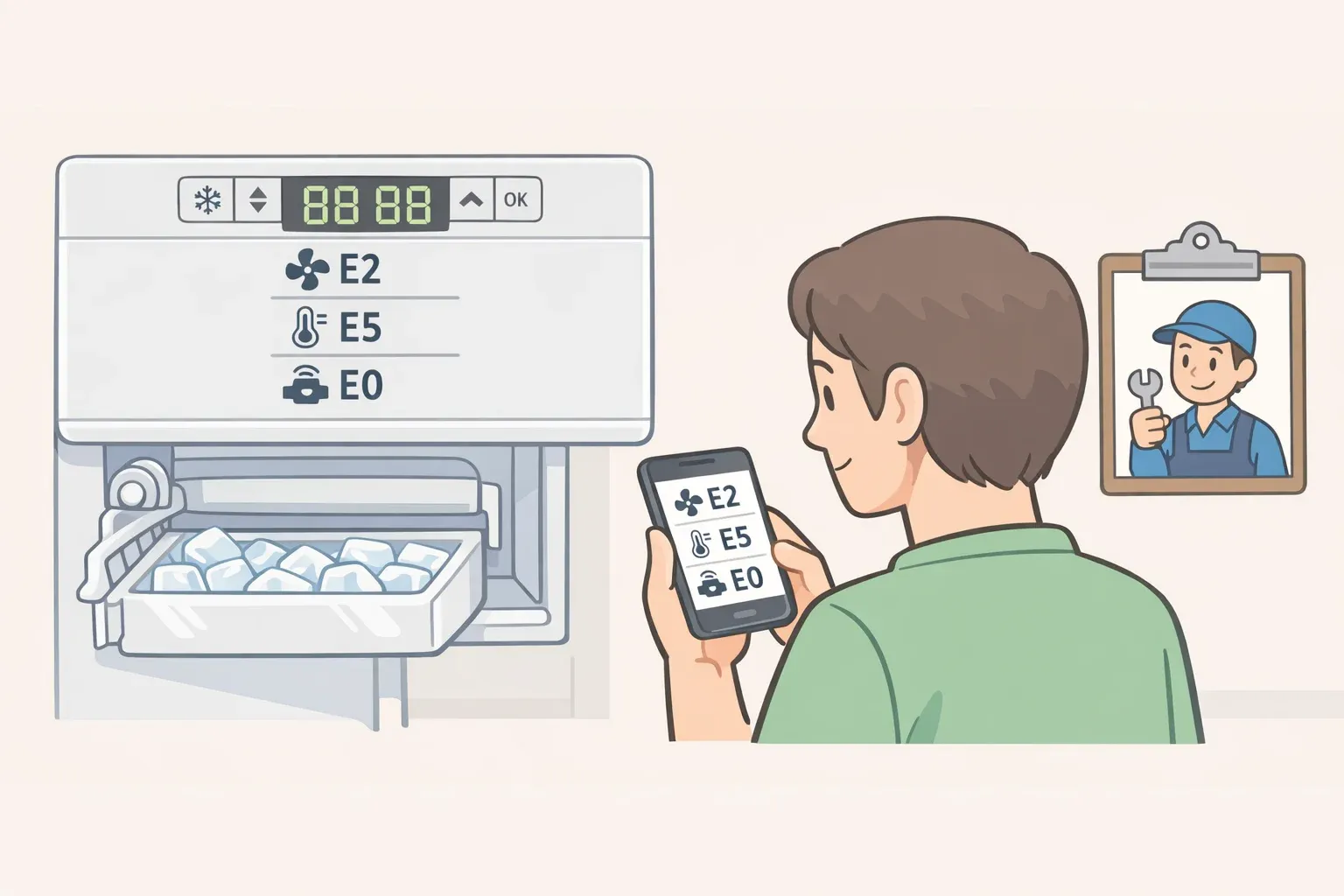
About 31 percent of refrigerators with icemakers will develop a problem within five years, according to a Consumer Reports survey updated in late April, drawing on member data from more than 71,534 refrigerators with icemakers purchased between 2015 and 2025. The two most commonly reported failure categories across all brands are icemakers and water/ice dispensers. Common Whirlpool refrigerator problems follow that same pattern but Whirlpool owners have tools available to narrow the problem before spending anything on parts or labor.
What separates Whirlpool from some competitors isn't a dramatically different failure rate. It's what you can do once something goes wrong. Whirlpool refrigerators carry an onboard diagnostic system that logs fault codes by subsystem, a consistent mechanical architecture across French-door, side-by-side, and top-mount lines, and for a specific set of French-door models built between 2012 and 2019 a class action settlement covering an alleged evaporator defect. This guide is built around using those tools to narrow the problem before paying anyone.
Four symptom categories are covered here: water not dispensing, ice not producing, the refrigerator running warm, and frost buildup on the evaporator in specific models. At each stage, the guidance tells you whether to proceed yourself, pull diagnostic codes, or call a professional. Sealed-system repairs, refrigerant handling, and board-level failures are outside that scope.
Start here, before reading anything else: find your model number. On Whirlpool refrigerators, it's printed on a label on the left wall inside the fresh food compartment. Write it down. It determines which sections apply to you and whether the settlement discussed in Problem 4 is relevant, per Whirlpool Product Help.
Problem 1: Nothing comes out of the water dispenser
These checks require no tools and no disassembly. Work through them in order a meaningful share of Whirlpool dispenser complaints end here.
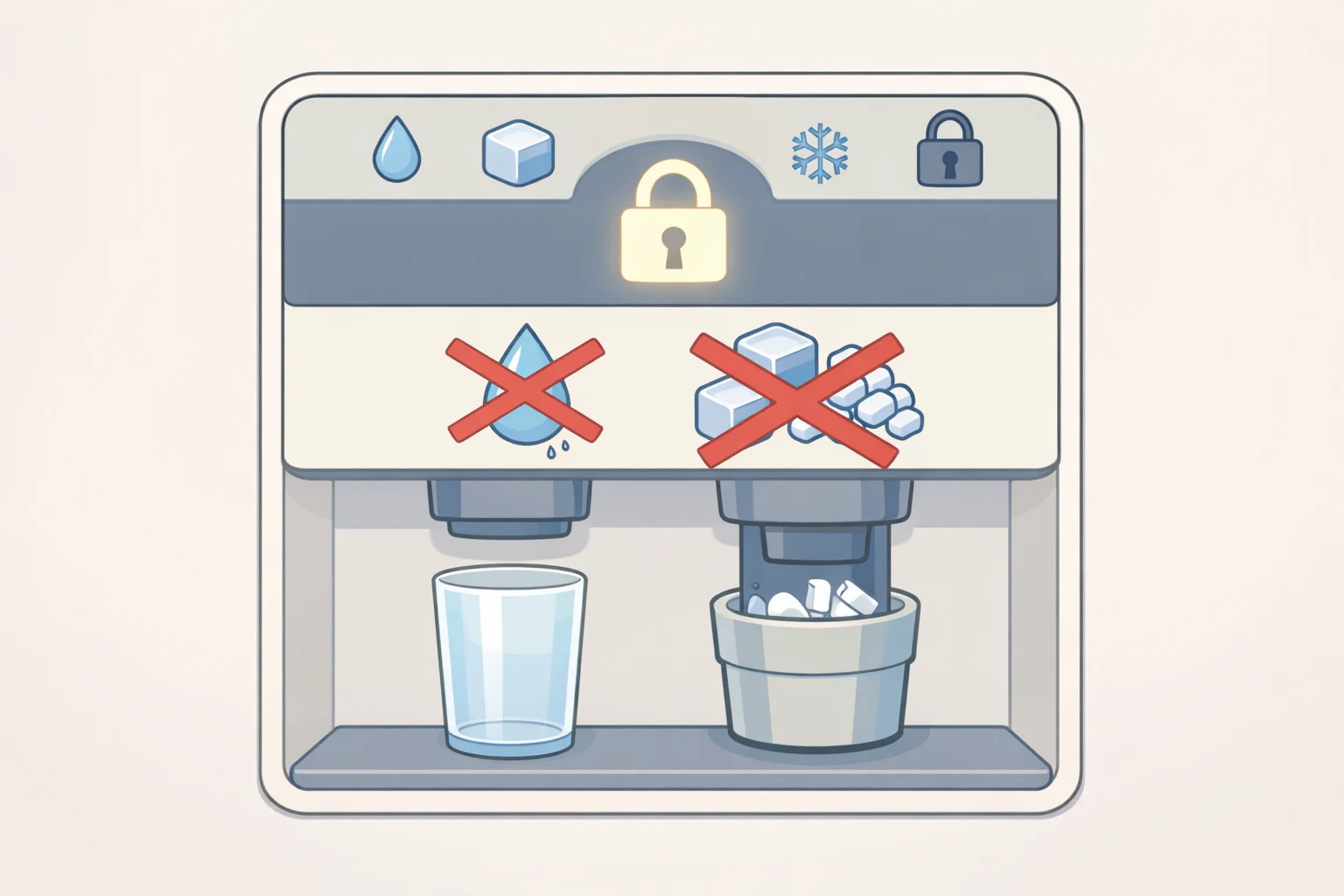
Check the dispenser lock first. Whirlpool dispensers include a lock mode that fully deactivates the pad and controls. It produces no water, no ice, and no error message. The feature exists to prevent accidental dispensing, and it's also the most commonly overlooked setting when something appears broken. Check the display before assuming a part has failed, per Whirlpool Product Help.
Check paddle contact next. The dispenser won't activate unless the paddle switch is fully engaged. Whirlpool's guidance specifies pressing a sturdy glass firmly against the paddle, not a light touch. A partial press doesn't trigger the switch, and nothing happens.
Then check the water filter. A clogged or improperly seated filter can reduce flow to a trickle or stop it entirely. Whirlpool recommends replacement every six months or when the indicator light activates. The quick test: pull the filter and try dispensing without it. If water flows, reseat or replace the filter.
Finally, check the supply line. Pushing the refrigerator flush against the wall can kink the line behind it, reducing or blocking flow just as a failed valve would. Pull the unit out a few inches and inspect. Homes with reverse osmosis filtration systems may see household water pressure drop low enough to impair both dispensing and ice production, since RO systems reduce pressure further, per Whirlpool Product Help.
Both the dispenser and icemaker can be affected by the same supply problem, so if all four checks pass without resolution, move to the fault code system introduced in Problem 2. F8-series codes cover water system failures, according to EasyBear. Pull codes before ordering any part.
Problem 2: The icemaker has slowed or stopped and how to read fault codes
The icemaker and water dispenser share the same supply path. Run through Problem 1's four checks first. This section picks up where those checks end, and it introduces the diagnostic system that every subsequent problem relies on.
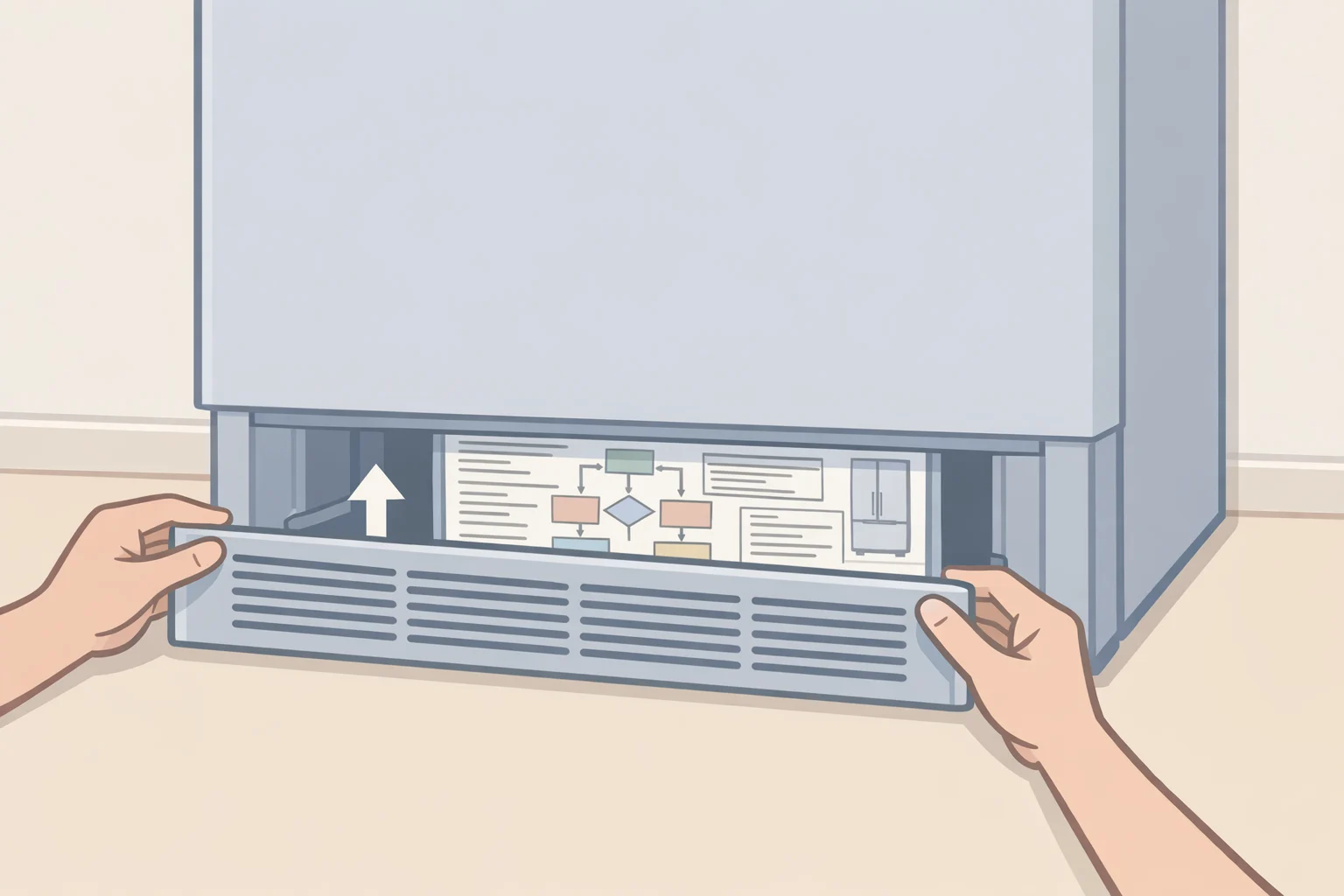
Whirlpool refrigerators store up to 10 recent fault events in an F#E# format, where the F number identifies the system and the E number identifies the specific error within it. EasyBear documents the full code map: F3 for sensors, F4 for fans, F8 for the water system, F9 for defrost, F0 for the sealed system. The entry sequence for diagnostic mode is on the tech sheet a laminated card taped behind the base grille on most models. Locate it before any disassembly; it also contains your model-specific wiring diagram and component locations.
Think of the fault code system as a call log, not a diagnosis. Multiple codes within the same F-category say, F3E1 and F3E2 appearing together typically suggest a shared cause like a wiring harness problem rather than two independent component failures, according to EasyBear. Codes give you a starting point. They aren't a parts order form.
If codes point to a specific component, verify it has actually failed before ordering anything. A digital multimeter is the right tool check resistance on heating elements, continuity on switches and sensors. If the same fault code reappears within 48 hours of a repair, that often points to a wiring or other upstream issue rather than the replaced component itself; EasyBear advises inspecting the wiring harness between the component and the control board before swapping the part again.
The tool list for anyone planning to go further is short. Whirlpool uses a Torx T20 for approximately 80 percent of internal fasteners, per EasyBear. Add a 1/4" hex nut driver for access panels, a Phillips #2 as backup, and a digital multimeter for electrical diagnosis. Those four cover about 90 percent of accessible Whirlpool repair needs.
After a successful repair, expect the first ice batch within two to four hours. Temperature should return to 0°F in the freezer within 24 hours, per EasyBear.
If no fault codes appear and the icemaker still isn't producing, a damper or fan failure can affect ice production indirectly. That path runs through Problem 3.
Whirlpool refrigerator not cooling: what a warm fresh-food section usually means
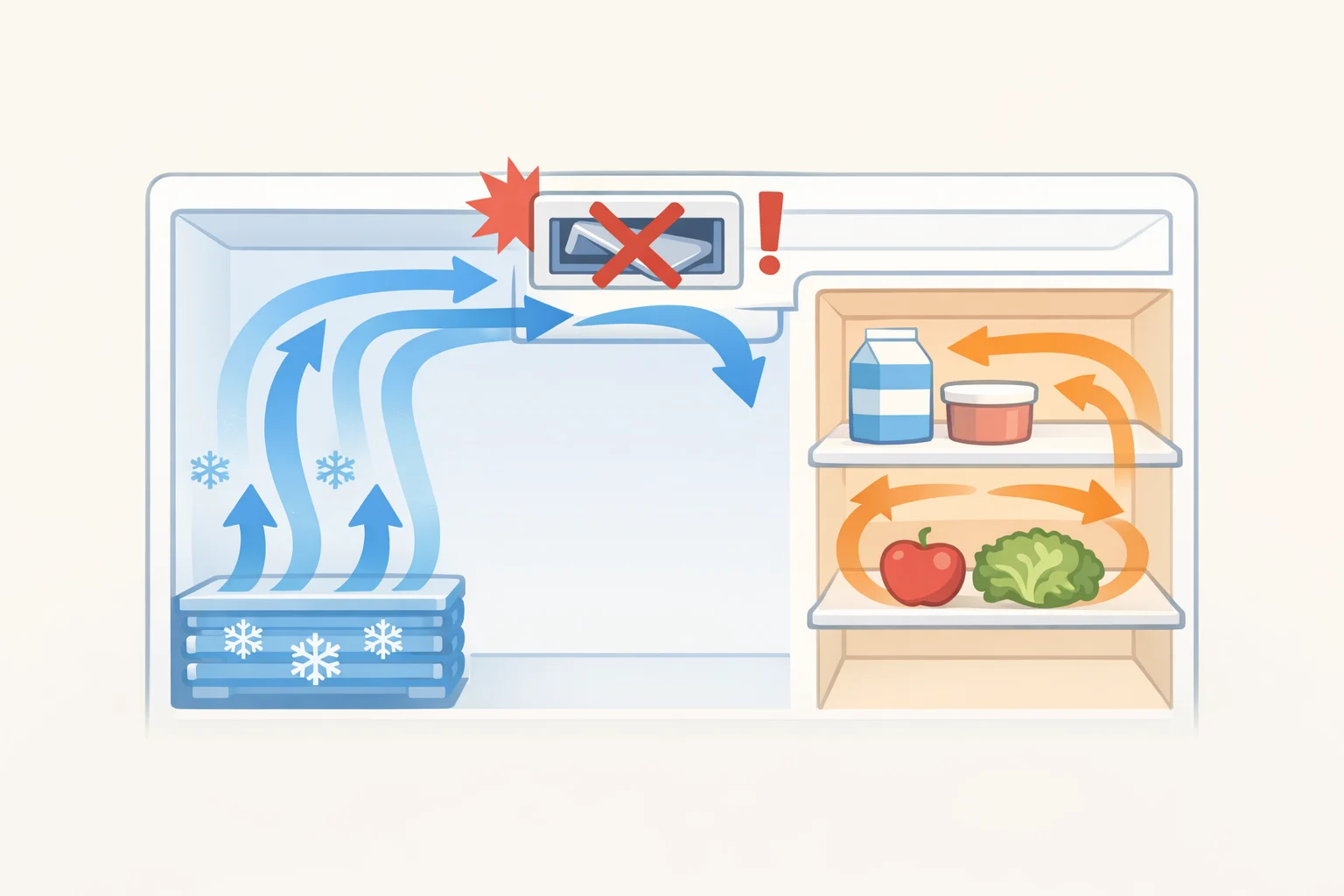
Before assuming the compressor is failing: it probably isn't. Fewer members report compressor failures or an inability to maintain temperature than report ice and water issues, according to Consumer Reports. A warm fresh-food section is more often a stuck damper, a fan failure, or a sensor fault at least as a starting diagnostic hypothesis and the fault code system can identify those causes before anyone opens a wall panel.
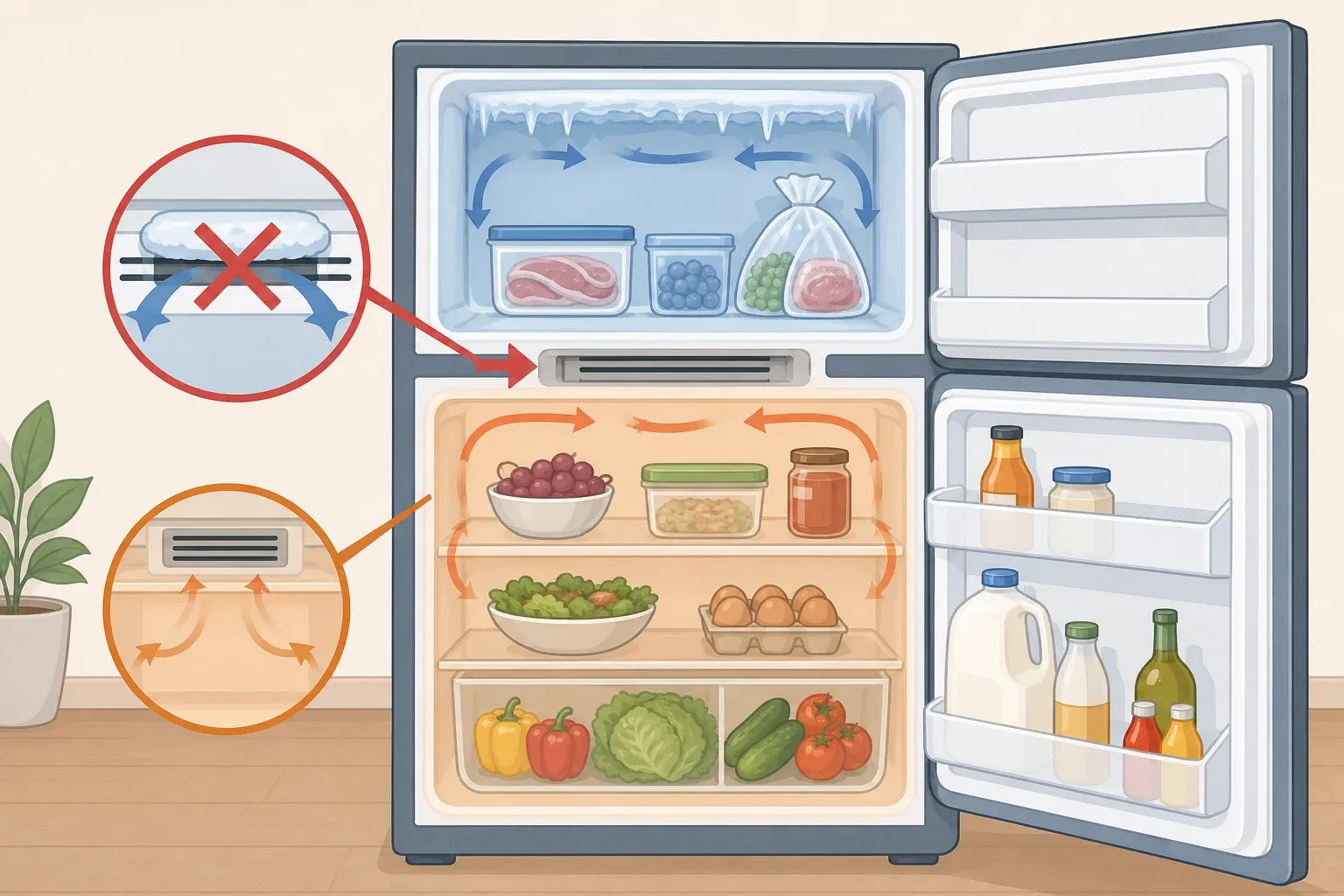
Whirlpool's control board coordinates the adaptive defrost system, evaporator fans, condenser fans, thermistors, and air dampers as a network. A failure in any one node can produce a warm refrigerator section. A stuck damper blocks cold air from reaching the fresh food compartment without touching the cooling system at all the symptom points to the compressor, but the actual cause is a far cheaper and more accessible part, as EasyBear explains. Whirlpool refrigerator evaporator fan problems follow the same logic: an F4 code points to the fan motor, not the compressor behind it.
Pull fault codes using the procedure from Problem 2. F3-series codes point to sensor failures; F4 to fan motors; F9 to the defrost system. Record every stored code before clearing any of them. If codes span multiple unrelated systems simultaneously, that pattern typically indicates main control board failure rather than a string of unlucky individual components a different repair path, and one that belongs in the professional category, per EasyBear.
Know when to stop. F0-series codes indicate the sealed refrigeration system compressor, refrigerant lines, condenser. That system contains pressurized refrigerant (R-134a or R-600a) requiring EPA Section 608 certification to handle legally. Improper discharge is a federal violation and a health hazard. When codes point there, the diagnostic work is done and a licensed technician takes over.
No codes but still warm? Check for frost buildup on the evaporator but check your model number first.
Problem 4: Frost is blocking the evaporator an alleged defect in specific French-door models
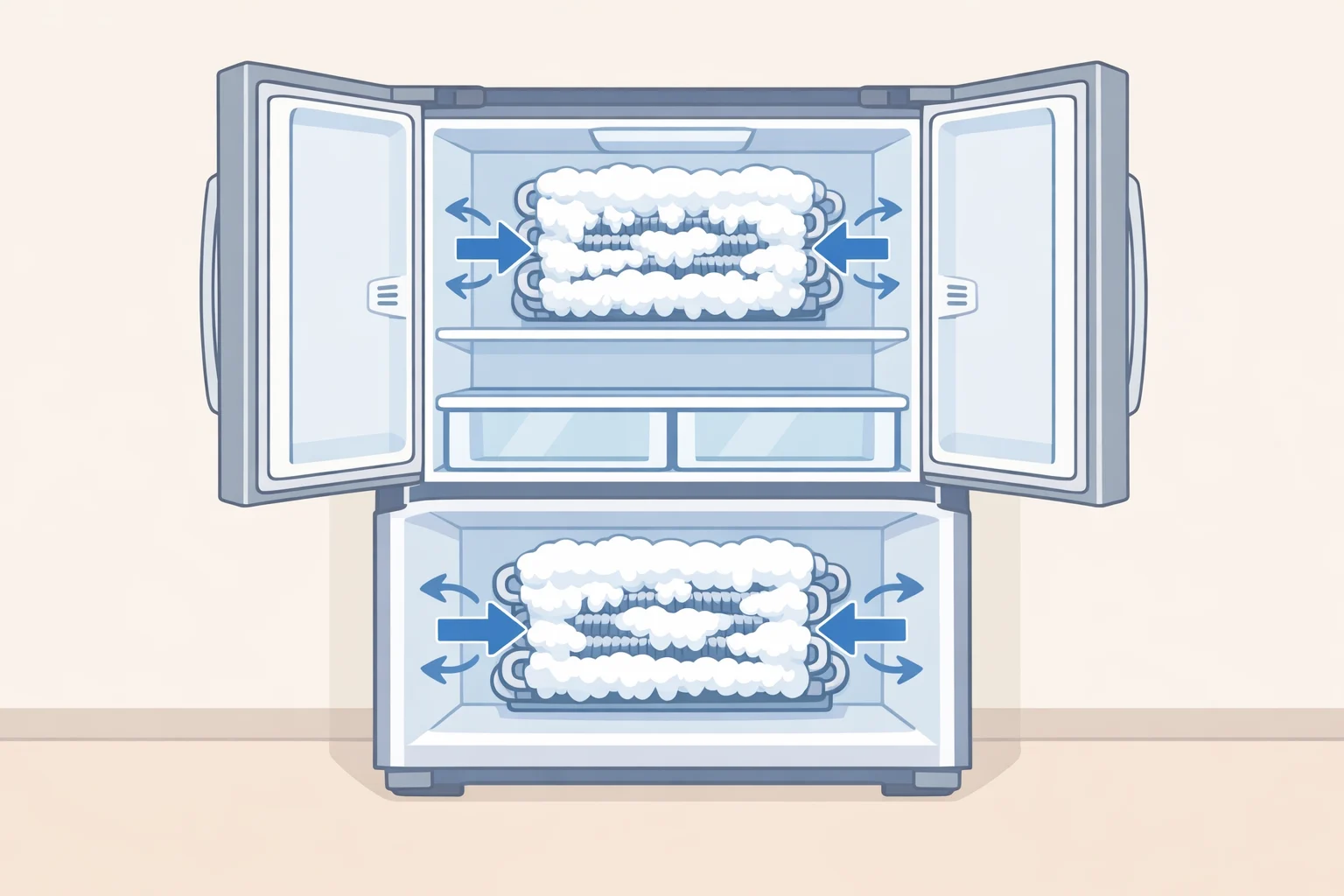
This problem applies only to certain Whirlpool-manufactured three-door French-door refrigerators built between 2012 and 2019. If your unit isn't on the list, Problem 3's diagnostic path covers cooling issues.
A class action lawsuit alleged a defect in the defrost heating system of certain Whirlpool, KitchenAid, Jenn-Air, and Maytag three-door, bottom-mount French-door refrigerators all manufactured by Whirlpool and all equipped with dual evaporator systems. The suit claimed the alleged defect allowed frost and ice to accumulate on the refrigerator-compartment evaporator, blocking airflow and impairing cooling. A settlement to resolve those allegations was preliminarily approved by a court in December 2024, as ClassAction.org reported.
Covered models. Qualifying units include models bearing designations such as WRF757SDE**, WRF767SDEM**, WRF989SDA**, WRF990SLA**, KFIS29BB**, KFIS29PBM**, KFIV29PCM**, KRFF507E**, KRFF707E**, MFT2776DEE**, MFT2776FEZ**, MFT2778EE**, and MFT2976AE**, within the serial number range K212*** to K911***. The full model list is available through the settlement website, per ClassAction.org.
Repair reimbursement caps. For eligible owners who paid out of pocket for repairs, ClassAction.org reports the following maximums by age of unit at the time of repair:
- Within three years of manufacture: up to $300 per qualifying repair
- Four to six years out: up to $225
- Seven to eight years out: up to $150
Replacement reimbursement. Owners who replaced a qualifying unit rather than repairing it may be eligible for partial reimbursement of the original purchase price. ClassAction.org reports the figures as follows:
- Replacements in years one through three: 75 percent of the original purchase price if Whirlpool was contacted first; 50 percent if not
- Replacements in years four through six: 45 percent if Whirlpool was contacted; 25 percent otherwise
Deadlines. The future-claims window stays open through December 31, 2028. Claims for frost clog issues occurring after January 31, 2025 must be filed within 90 days of service completion or the purchase of a replacement unit, per ClassAction.org.
Prior compensation. Owners who previously received compensation from Whirlpool for a frost clog issue will have their settlement reimbursement reduced by that amount, per ClassAction.org.
If your model is on the covered list and cooling problems are present, check settlement eligibility before paying for a repair out of pocket.
When to repair, when to replace, and when to stop diagnosing entirely
Three situations end the DIY path immediately, per EasyBear: fault codes in the F0 range (sealed system); burn marks or melted connectors anywhere in the wiring, which indicate an arc-over event that may have cascaded through multiple components; and simultaneous failures across multiple unrelated systems, which typically signal main control board failure rather than a string of individually unlucky parts. All three require a licensed technician.
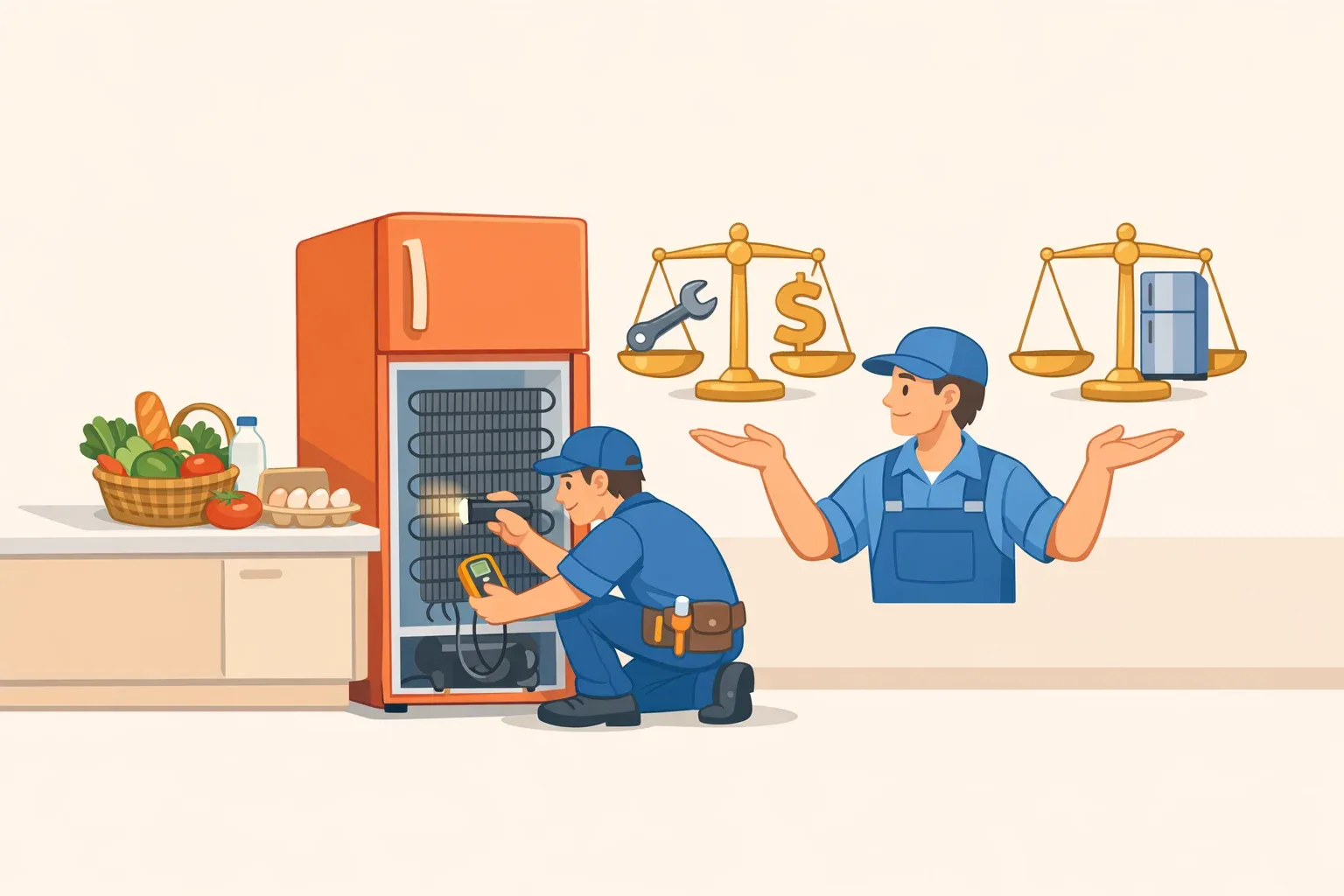
On the repair-vs.-replace question, a practical benchmark from EasyBear: if the cost of the repair parts plus the value of your time exceeds 50 percent of a comparable replacement unit's price, and the refrigerator is more than eight years old, replacement tends to be the more economical choice. For straightforward component failures on units under ten years old, repair is usually worth attempting. This comes from a single commercial source; treat it as a rough frame, not a formula.
Parts availability is a real variable in that calculation. Whirlpool's WRF, WRS, and WRT lines share common diagnostic architecture and fastener systems, and many components are cross-compatible across Whirlpool Corporation brands Maytag, KitchenAid, Amana. According to EasyBear, parts for models 15 to 20 years old are commonly available through the Whirlpool parts network though that's a claim from a commercial repair service, so confirm availability for your specific model before it factors into a decision. An older unit that can actually be repaired is a different calculation than one where the part no longer exists.
What to do next
The Whirlpool refrigerator troubleshooting sequence that resolves most complaints runs like this: model number first, then the four no-tool checks from Problem 1 lock, paddle, filter, supply line. If those don't resolve it, pull fault codes using the tech sheet behind the base grille. For a French-door model from 2012 through 2019, verify settlement eligibility before committing to a repair cost.
The fault code system is the single most useful intermediate step for anything that survives the basic checks. It can distinguish a failed component from a wiring fault, flag a board-level failure that requires a different approach entirely, or confirm that the symptom and the cause are in different places. That's a meaningful amount of information to have before calling anyone.
Icemaker and dispenser failures have topped Consumer Reports' reported problem categories across all refrigerator brands in data drawn from more than 71,534 refrigerators with icemakers and that pattern isn't changing. The advantage for Whirlpool owners isn't a uniquely low failure rate. It's that the diagnostic infrastructure and parts supply make it more practical to understand exactly what failed, decide whether to fix it yourself, and arrive at that decision with actual information rather than a guess.



Comments
Be the first, drop a comment!