



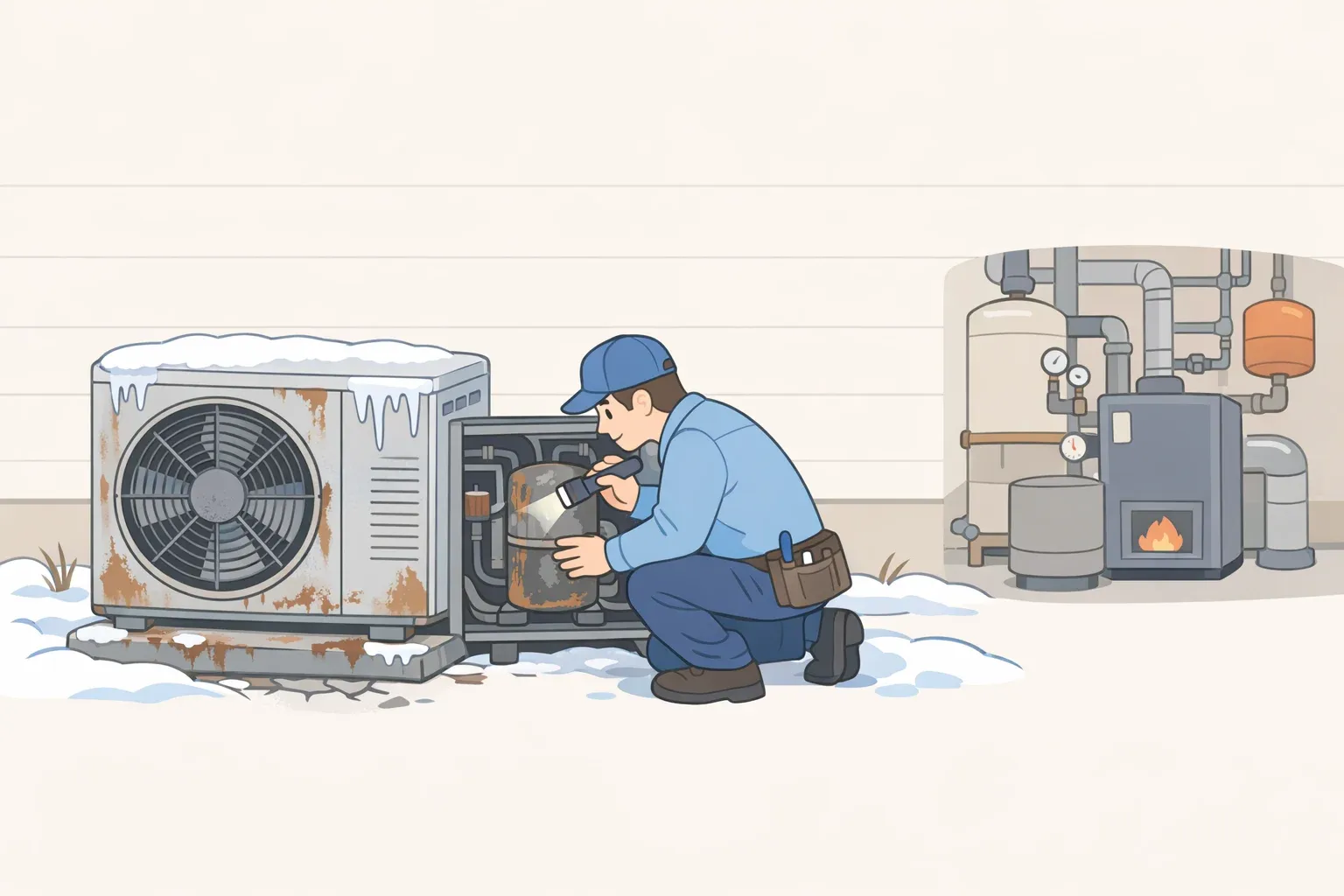
Ask an expert how long heat pumps last, and you'll get a number quickly: around 15 years for air-source systems, longer for geothermal. That figure is an industry estimate, not a finding from a single definitive study, and it moves considerably depending on where the unit lives, how it was installed, and whether anyone maintains it. What follows is an explanation of why it moves, and what moves it most.
The governing principle is mechanical exposure and runtime stress. A compressor that sits outside through rain, freeze-thaw cycles, and years of UV exposure ages differently than one in a protected mechanical room. That single idea connects every factor discussed below.
The stakes are concrete. Space conditioning and water heating together consume more than 40% of U.S. primary energy use, according to a DOE technical report from 2025. That makes the heat pump one of the most consequential appliances most homeowners own. Whether a system lasts 10 years or 20 is not an incidental question.
Two terms worth defining up front: an air-source heat pump extracts heat from outdoor air; a geothermal system draws from stable underground temperatures. Both heat and cool a home, but their mechanical exposure, and therefore their heat pump life expectancy, differ in ways that matter.
Heat pump lifespan by system type: how many years does a heat pump last?
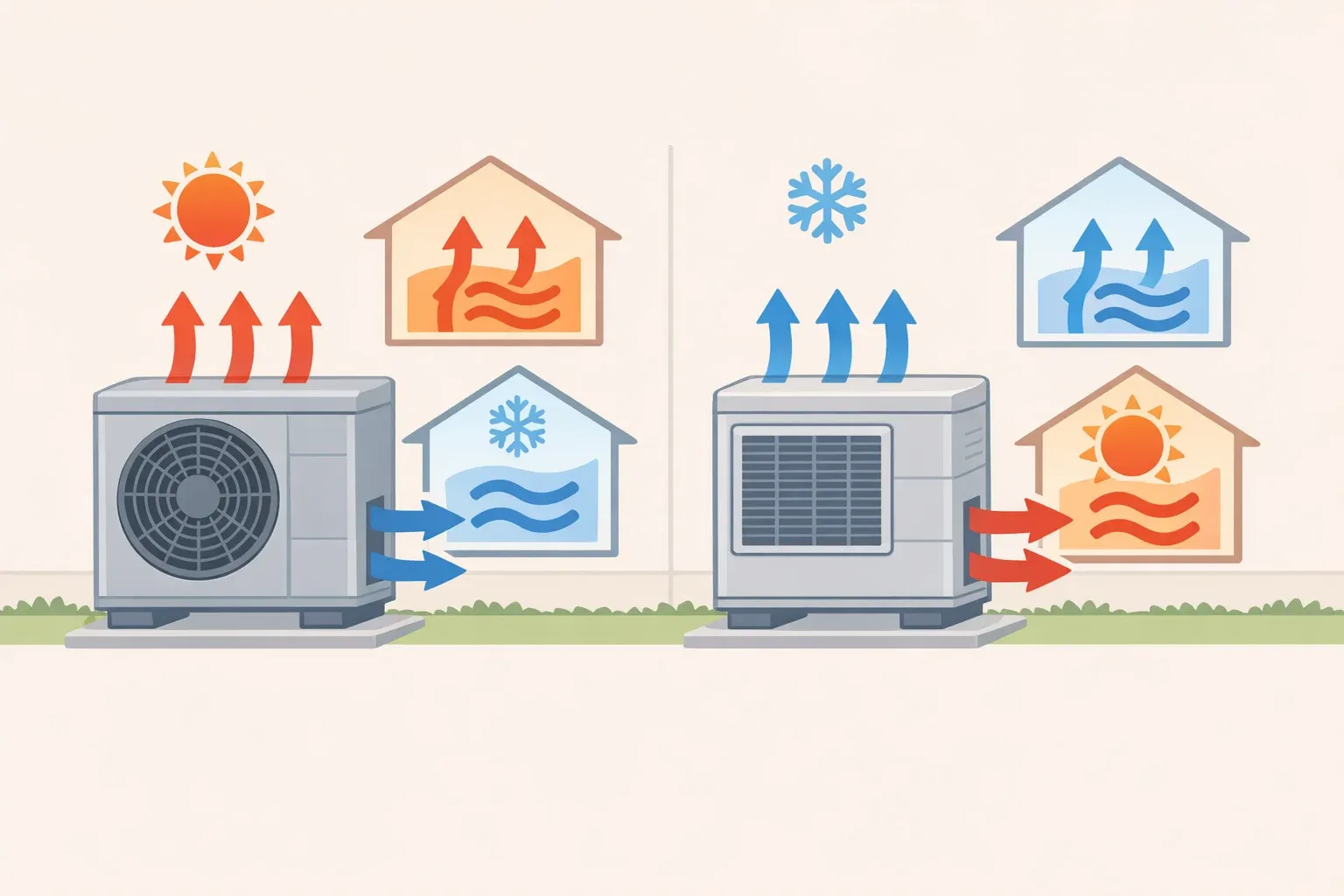
Air-source heat pumps are the most common residential configuration, and the 15-year figure is the standard industry reference for them. The compressor and outdoor coil live outside year-round, exposed to whatever the weather does. Unlike a furnace or central air conditioner, each of which runs only half the year, a heat pump operates in both heating and cooling modes. A heat pump can provide both heating and cooling efficiently, which means its compressor accumulates runtime year-round rather than seasonally. That continuous demand is a meaningful factor in the average life of a heat pump.
Geothermal heat pumps benefit from a structural advantage: the mechanical components live indoors. The DOE's Trilith case study, published earlier this year, documents a 750-home community in Georgia built entirely on geothermal systems and states directly that housing equipment indoors can extend a system's life expectancy by years. However, Trilith is one community, not an industry-wide sample. At most, this is directional evidence backed by straightforward engineering logic: components that never see weather don't accumulate weather-related wear.
Ductless mini-splits fall between the two. The indoor air handler is protected, but the outdoor compressor faces the same exposure as any ducted air-source unit. Service life tracks similarly to other air-source configurations, with variation by manufacturer and climate.
The simplest analogy: think of the difference between a car engine and a portable generator left outside. Same operating hours, but the one sitting through freeze-thaw cycles shows wear faster, not because the machine is inferior, but because the environment asks more of it.
What actually shortens a heat pump's life
Installation quality, climate stress, and maintenance interact to produce real-world outcomes that can differ by years from the baseline. Understanding the mechanisms is more useful than memorizing the number, because it tells you which risks are manageable and which you're simply operating around.
Installation quality is the most decisive factor, and the only one fully within your control before the unit runs for a single day. Sizing errors are the most common form. A unit too large for the home short-cycles, meaning it starts and stops in rapid bursts without completing a full run.
Every startup is the hardest moment for a compressor motor; frequent unnecessary startups add up. A unit too small runs nearly continuously, trying to meet the load, accumulating runtime faster than a matched system. Either condition accelerates compressor wear, and both are entirely avoidable with a proper load calculation before installation. Ask any contractor explicitly whether they're performing one; anyone who skips it is guessing.
Climate stress is real, but varies by degree. Extracting usable heat from very cold outdoor air demands more from the compressor than the same operation at moderate temperatures. As the DOE field validation report from early last year confirms, heat pump performance in cold climates has traditionally suffered as units strain to efficiently transfer heat from colder outdoor air.
That mechanical strain accumulates over time. A unit in coastal Virginia running mostly in mild conditions is under meaningfully less stress than an identical unit in northern Minnesota. Coastal environments introduce a separate factor: salt air accelerates corrosion on outdoor components, which is a recognized variable in HVAC equipment service life across the industry.
Frost accumulation and defrost cycling add a specific cold-weather wear mechanism. When outdoor coils ice over, the heat pump temporarily reverses refrigerant flow to clear the buildup before returning to heating mode.
A field study conducted in Fairbanks, Alaska, during the 2023-2024 heating season, published earlier this year, found that factory-default control algorithms ran aggressive, frequent defrost cycles focused on keeping the outdoor coil clear. When researchers switched to revised algorithms midseason, defrost frequency dropped, and efficiency improved substantially.
The study measured efficiency, not lifespan directly, but the implication for wear is straightforward: each defrost cycle reverses refrigerant flow and temporarily stresses the compressor. Systems defrosting more often than conditions require are doing more mechanical work than they need to.
Deferred maintenance compounds. Dirty coils reduce heat transfer efficiency, forcing the system to run longer to achieve the same output. Low refrigerant levels, usually from a slow leak rather than depletion, stress the compressor and can cause overheating. Annual filter changes, coil cleaning, and periodic professional inspection aren't optional extras for a system expected to reach its service life estimate. They're the difference between a unit that gets there and one that doesn't.
What's changed for cold-climate homeowners
The technology for cold climates has improved, and the improvement is real, but it's worth being precise about what changed and what didn't.
Residential heat pump technology has advanced meaningfully over the past decade to allow operation at temperatures that would have pushed earlier systems into backup-heat mode, as the Fairbanks field study notes. The DOE's Cold Climate Heat Pump Challenge, launched in 2021, brought major HVAC manufacturers together to develop units optimized for performance at 5°F and below, with field validation running from 2022 through 2024.
Frost accumulation on outdoor coils remains an active engineering challenge even in current designs, the Fairbanks study confirms. A unit that maintains heating performance at very low temperatures without falling back on resistance heat is a genuine step forward from earlier generations. It is still working harder at those temperatures than at 40°F. Better cold-climate performance does not automatically mean equivalent cold-climate durability.
If you're in a northern climate selecting a system now, a current cold-climate model is a stronger choice than anything available five years ago. Plan for somewhat faster outdoor component wear than a mild-climate installation, and build your maintenance schedule around that reality.
Signs your heat pump needs replacement
The goal is a usable threshold, not a checklist that requires a technician to interpret.
Watch for these signals:
Heating or cooling performance that has declined noticeably without any change in usage or thermostat settings, which can indicate compressor wear, refrigerant loss, or coil degradation
Energy bills that have risen without explanation, consistent with the finding that system condition and control behavior directly affect efficiency, as the Fairbanks study shows
Ice buildup on the outdoor unit outside of brief, normal defrost cycles
Short cycling (rapid start-stop sequences) or the opposite: running nearly continuously without reaching the setpoint
Increasing repair frequency, especially on core components like the compressor or reversing valve
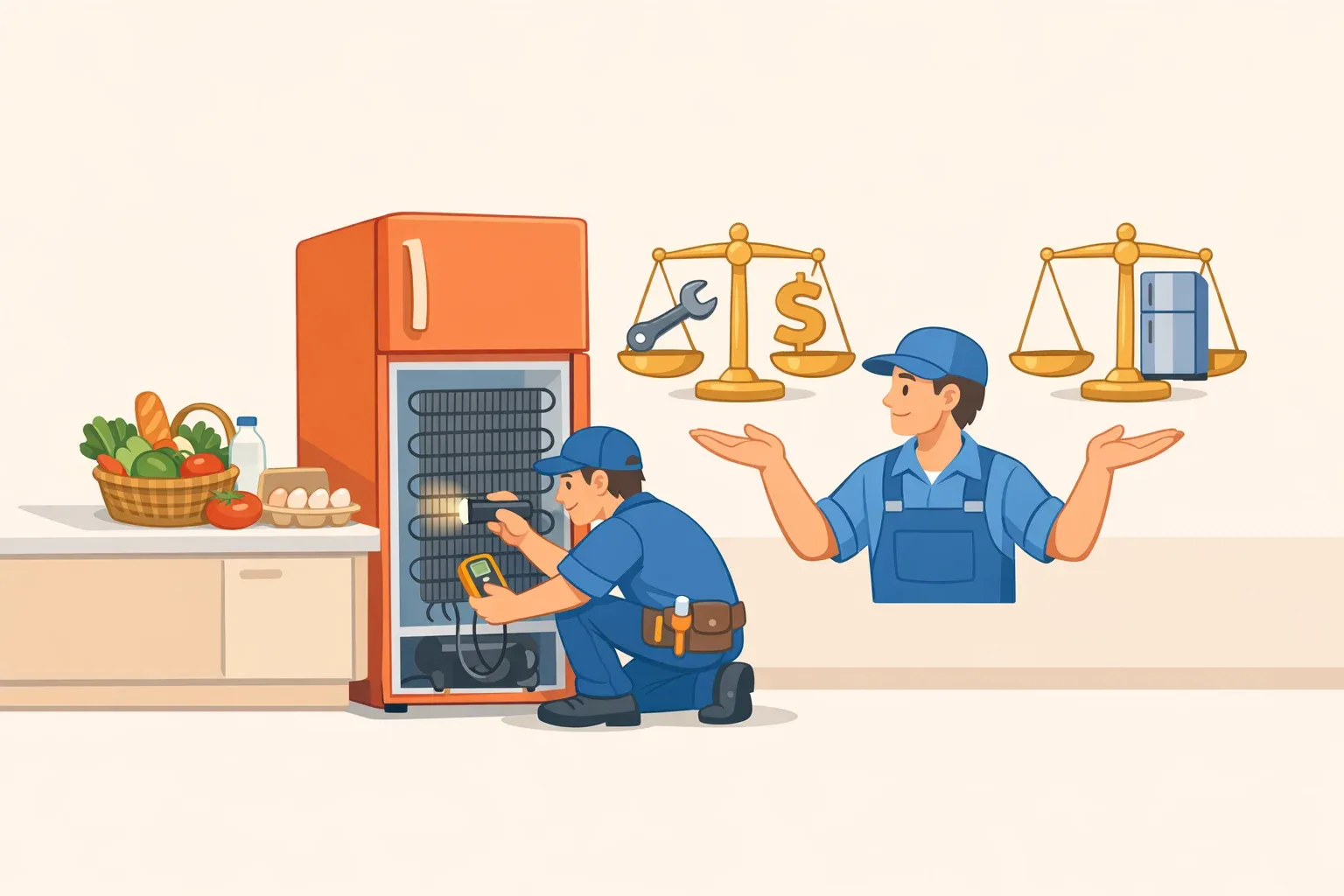
The replacement decision comes down to three variables: age, repair cost, and efficiency decline.
These thresholds reflect standard HVAC industry guidance. Use them as a starting framework, and ask your contractor to run the numbers for your specific situation.
An air-source unit under 10 years old with a minor repair need is almost always worth fixing. Between 10 and 15 years, facing a major component failure — compressor, reversing valve, or heat exchanger — get a replacement quote before committing to the repair. Space conditioning represents a significant share of most homeowners' utility costs, and the DOE's data on heating and cooling's 40%-plus share of primary energy consumption means efficiency improvements on a new installation translate to real bill reductions, not theoretical ones.
Any system past 15 years with a major repair need: the remaining service life on aging equipment typically doesn't justify the investment, and current units, which are designed to meet higher efficiency standards than systems from 15 years ago, will outperform older hardware from the first season of operation.
Geothermal systems warrant more flexibility given longer expected service life, but the same logic applies as repair costs grow relative to replacement costs. When repair costs approach a substantial fraction of what a new installation would cost, the math generally favors replacement.
One practical note on timing: schedule a professional assessment before each heating season, not after something fails. A broken system in January compresses every option you have.
What the research actually tells us
The 15-year industry estimate for air-source systems is a useful reference point, not a guarantee or a ceiling. What the available evidence actually shows is more specific. The DOE's Trilith case study is the clearest direct evidence that protecting mechanical equipment from weather extends service life.
The Fairbanks defrost study shows that control algorithms determine how hard a system works in cold conditions, with meaningful efficiency consequences. The Cold Climate Heat Pump Challenge results confirm that the technology has improved for northern climates. None of that changes the underlying physics: a compressor working harder, more often, in harsher conditions accumulates wear faster.
For practical next steps: check your specific model's manufacturer documentation for its rated service life. If you're not on an annual maintenance schedule, get on one. If your air-source unit is approaching year 12 or beyond, book a professional assessment this season rather than waiting for a failure to force the conversation.
When you talk to a contractor, ask specifically about sizing accuracy, refrigerant levels, and coil condition. Those three things will tell you more about the remaining service life than the installation date alone.



Comments
Be the first, drop a comment!