



Is It Safe to Use an Air Compressor Indoors? A Clear Guide
Yes, it is safe to use an air compressor indoors provided it runs on electricity and you control a handful of practical risks. That's the short answer. The longer one depends on what kind of compressor you own, where you're setting it up, what you're using the air for, and whether you're doing basic maintenance.
Most formal guidance on air compressor indoor safety comes from OSHA workplace standards and institutional shop-safety programs, not consumer home-use rules. That distinction matters less than it sounds. The underlying physics and hazards are identical whether you're running a nail gun in a professional cabinet shop or inflating tires in your basement. The rules were written for job sites, but the risks travel home with the equipment.
One threshold rule cuts through everything else: the type of compressor determines whether indoor use is possible at all.
Electric vs. fuel-powered: the one rule with no exceptions
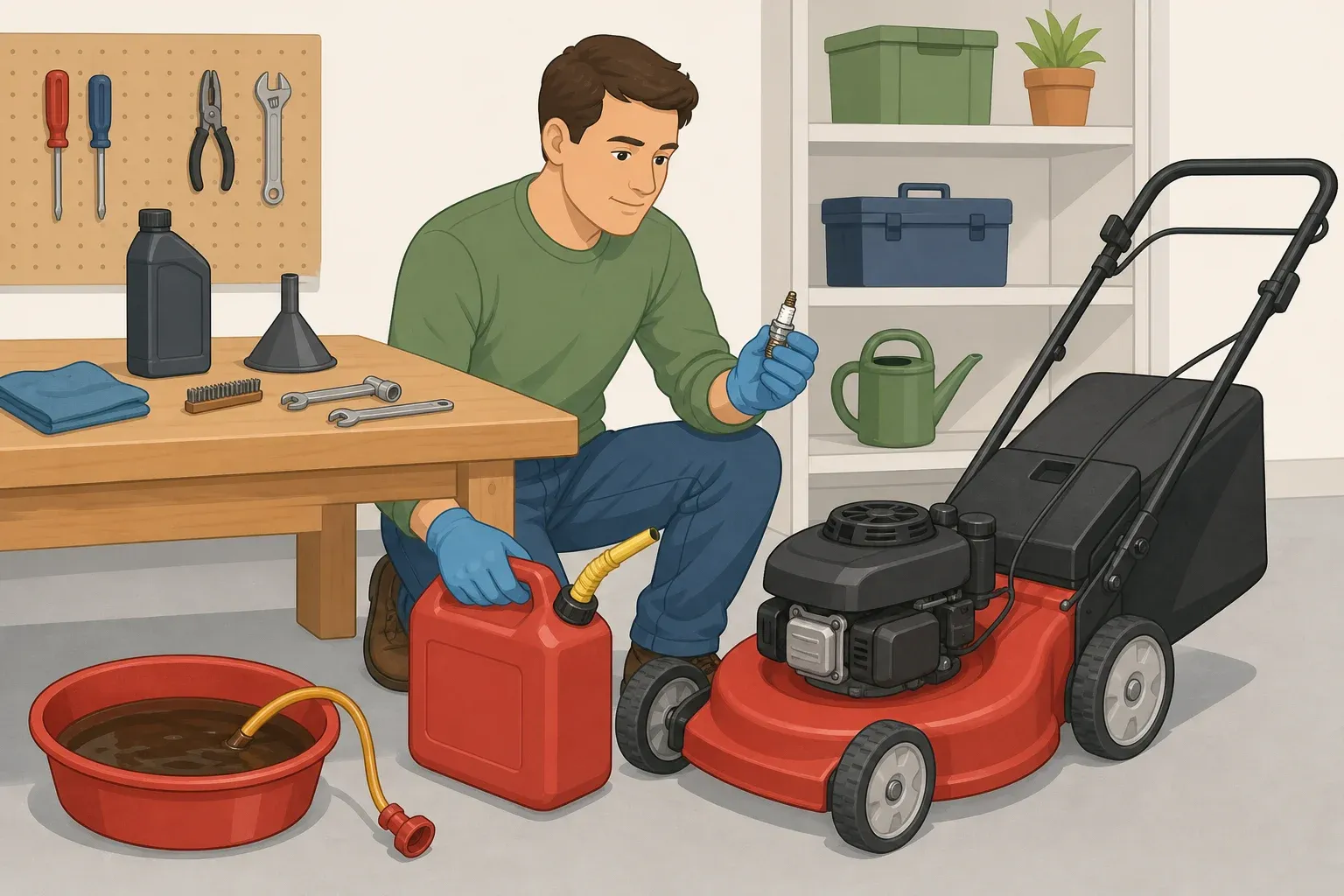
Gasoline-, diesel-, and other fuel-powered compressors must never be used indoors, in garages, basements, sheds, or other enclosed or semi-enclosed spaces because they can produce deadly carbon monoxide. That's not a caution or a recommendation; University of Florida EHS states it as a flat prohibition, with no carve-out for cracked doors, open windows, or fans running. No amount of partial ventilation changes the calculation. Per CPSC, Opening doors or windows or running a fan does not make a fuel-powered compressor safe indoors; carbon monoxide can build up quickly and linger even after the engine is shut off. A working carbon monoxide alarm is still important in any home or garage where fuel-powered equipment is stored or used nearby, but an alarm is a backup warning — not permission to run the equipment inside.
Electric compressors are a different story. For those units, indoor use is often preferable. Outdoor conditions — moisture, temperature swings, and cold — can create electrical problems for the machine itself, as FS-Curtis notes. Think of it like the difference between a propane grill and an electric griddle. One produces combustion byproducts and belongs outside; the other generates none and is designed for enclosed use. Same logic applies here.
If you have an electric compressor, indoor use is on the table. The rest of this article is about getting the setup right.
Air compressor ventilation requirements indoors
There's no single consumer-facing standard for indoor compressor ventilation, but the practical requirements aren't complicated. Compressors generate heat during operation, and in a sealed, unventilated space that heat builds up, reducing efficiency and increasing wear on the machine. For an electric compressor, running the unit somewhere with passive airflow — such as a garage with the door open or a basement with a window open — helps manage heat without special equipment.
Placement matters too. Put the compressor on a stable, level surface with clearance on all sides. The intake needs room to draw air, so avoid pushing it into a corner or flush against a wall. Keep it away from flammable materials: solvents, paint, gasoline containers. That last point isn't just common sense.
Pneumatic tools can generate static electricity, which means the equipment needs to be grounded or bonded when used near fuel, flammable vapors, or explosive atmospheres, according to University of Florida EHS. Running a compressor next to an open can of lacquer, solvent, or gasoline is not a minor oversight; it is a specific, documented hazard.
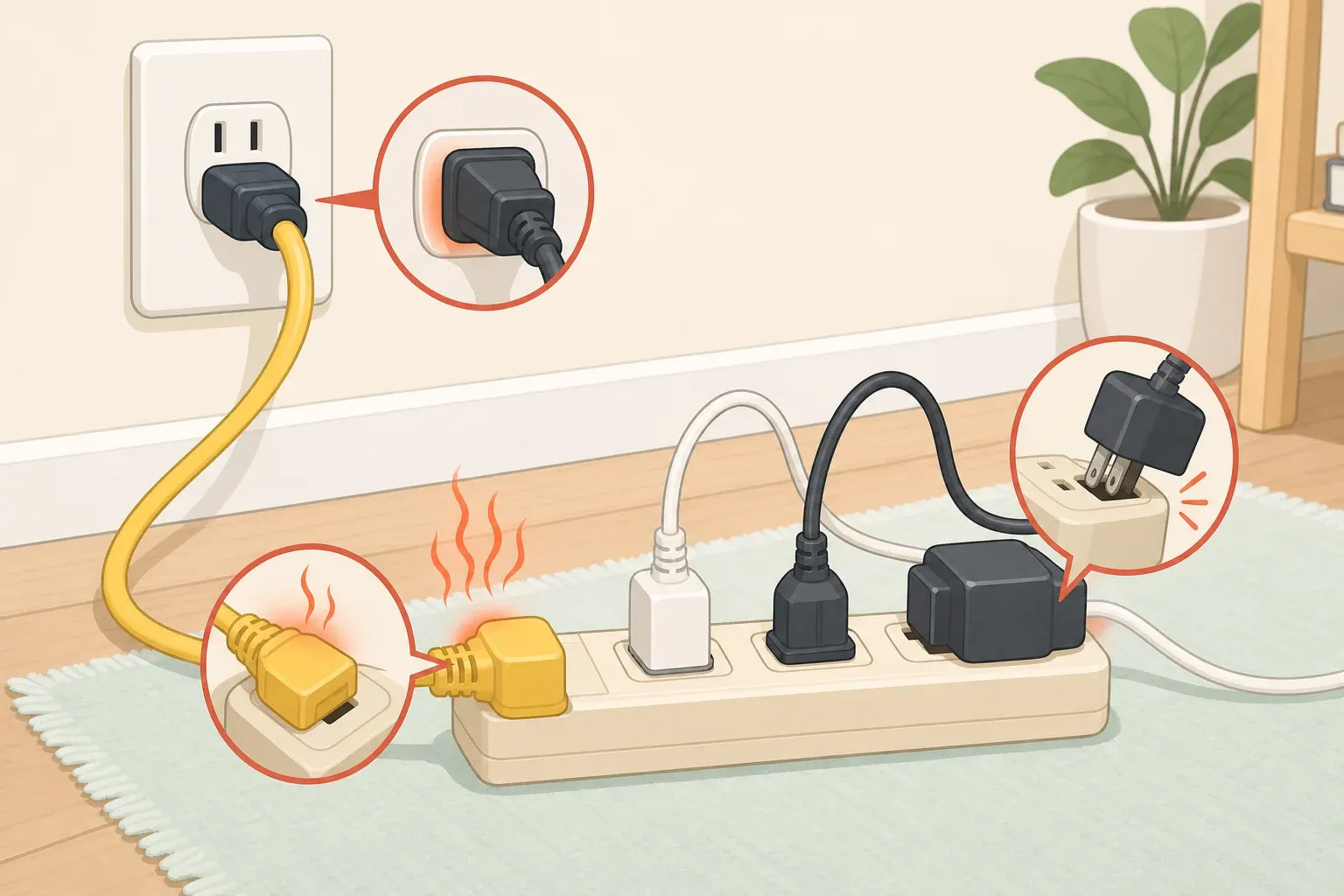
On the electrical side: many portable models run on standard household circuits, but check the manual for your specific unit's minimum wire gauge and circuit requirements before plugging in. Avoid long or undersized extension cords. Undersized wiring causes voltage drop, which stresses the motor and generates heat at the connection point. If you're installing a larger stationary unit, that's worth a conversation with a licensed electrician.
Before first use, also confirm the pressure relief valve is present, functional, and properly set. Per OSHA's air-receiver standard, an air receiver should have a readily visible pressure gauge and one or more spring-loaded safety valves capable of preventing dangerous overpressure. If the valve has been modified, disabled, plugged, removed, or replaced with a non-matching part, stop there and have the unit serviced before it runs.
Using an air compressor indoors safely depends on the task
Not all compressor work carries the same risk profile. Where you fall on that spectrum depends on what you're actually doing with the air.
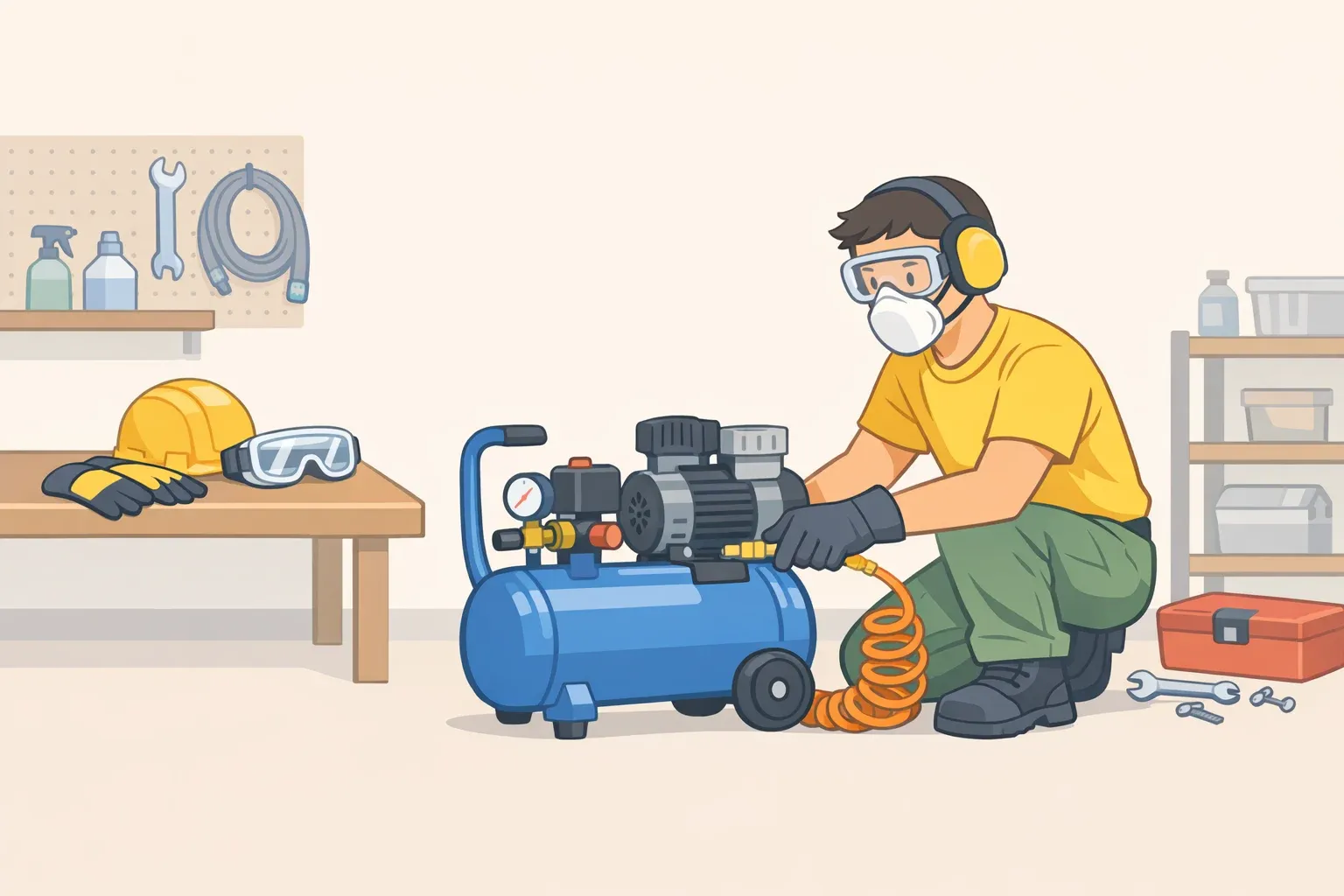
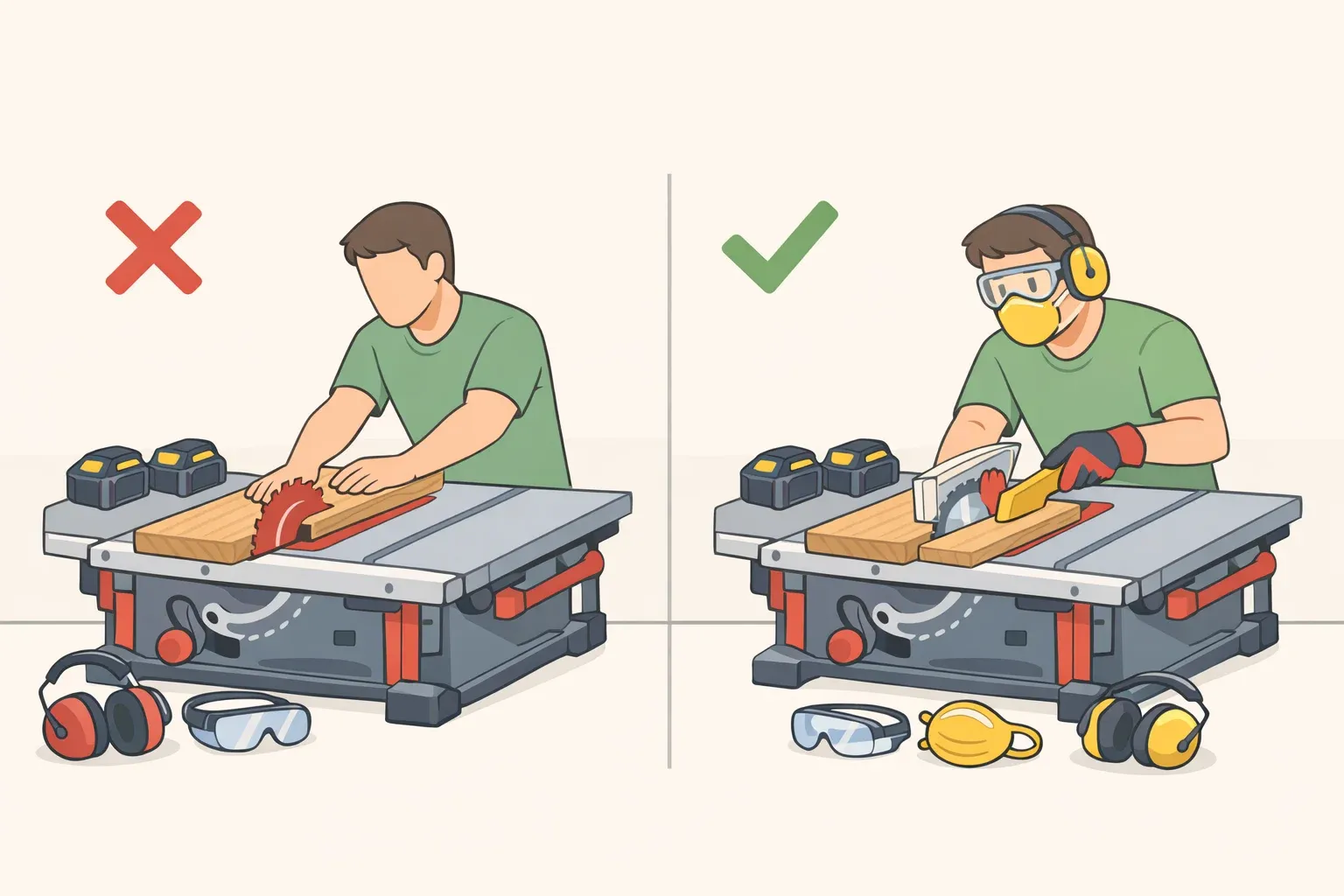
Routine tool use — running a brad nailer, inflating tires, operating a ratchet wrench, or using an air mattress pump — is generally lower-hazard. The air is directed through a tool, pressure is managed by the tool itself, and the main precautions are straightforward: eye protection when debris is possible, hearing protection in hard-surfaced rooms, hose inspection before each session, and draining the tank after use.
Blow-off cleaning is higher risk. When you're using compressed air directly to dust surfaces, clear chips, or dry parts, pressure management becomes critical. OSHA standard 1910.242(b) requires that compressed air used for cleaning purposes be reduced to less than 30 PSI, with effective chip guarding and personal protective equipment in place, as EXAIR explains in its breakdown of the standard. Importantly, that 30 PSI limit refers to the static or "dead-end" pressure when the nozzle is obstructed, not the flowing pressure. The dynamic airspeed can be higher, but the blocked pressure must stay under the threshold.
University of Florida's institutional guidance sets an even tighter limit: 15 PSI for shop-cleaning air, unless diffuser nozzles are in use to bring the pressure down further, per UF EHS. The 15-versus-30-PSI difference isn't a contradiction: one is the federal floor, and the other is a stricter institutional standard applied on top of it. Either way, the direction is the same: lower the pressure, use protection.
One absolute: compressed air must never be directed at clothing or skin under any circumstances, UF EHS states plainly. No exceptions, no reduced-pressure workarounds.
For spray painting and finish work, moisture is only one part of the risk. Wet air can ruin finishes through discoloration, poor adhesion, and blotchy results, but indoor spraying also creates overspray, inhalation exposure, and possible flammable-vapor hazards. Follow the coating manufacturer's ventilation, respirator, and ignition-source warnings; exhaust vapors outdoors where appropriate; and do not treat a moisture separator as a substitute for paint-safety controls.
Air compressor condensation indoors: why you drain the tank every time
Condensation is the least dramatic compressor hazard and probably the most neglected. Every session produces water inside the tank, and what happens to that water determines both the machine's lifespan and the quality of certain work.
Here's why it happens. Compressing air forces it to shed moisture it can no longer hold — like wringing out a sponge. The air going in is full of water vapor; the compression squeezes it out, and the water has to land somewhere. How much water that is depends on ambient temperature, relative humidity, compressor size and flow rate, and operating pressure, according to Atlas Copco. A small pancake compressor in a cool, dry basement produces far less than the same unit running in a humid summer garage, but both produce some.
Unmanaged, that moisture corrodes tanks and lines, washes lubricant out of pneumatic tool components, accelerates wear, and in cold conditions can freeze in control lines, Atlas Copco notes. For painting and finishing work, it can cause discoloration and adhesion failures — the kind that show up after the job is done, not during.
The tank is where much of that moisture settles out as compressed air cools. Atlas Copco is direct about what that means: a wet tank needs to be drained daily. After every use session is the right cadence for a home shop. This is the single most neglected compressor maintenance task, and skipping it accelerates internal corrosion consistently and quietly.
For most casual uses nail guns, inflation, simple tools draining the tank is the minimum necessary and usually sufficient. When dry air matters for the work itself, a moisture separator or aftercooler can remove a significant amount of condensed water, but it is not enough on its own for precision finishing work. For spray painting and similar applications, that's where a refrigerated dryer starts to make sense. It chills the compressed air to around 3°C (37°F), forcing the remaining moisture to condense out before it reaches the line.
Noise in enclosed spaces: shorter sessions, better protection
Sound is louder indoors. Hard walls, concrete floors, and low ceilings reflect noise rather than absorbing it, which compounds the exposure compared with running the same equipment in open air.
OSHA's occupational noise standard uses 85 dBA as the 8-hour time-weighted action level for workplace hearing-conservation programs, which is not a home-use limit but is still a useful benchmark for risk. That's a workplace benchmark written for all-day industrial workers, but the biology doesn't change based on venue. Decibels damage hearing the same way in a basement as on a job site.
Compressed air applications particularly open-nozzle blow-off work for cleaning, cooling, or drying are among the loudest common uses, capable of exceeding 100 dBA, per EXAIR. That puts them well above the OSHA conservation threshold.
Start by checking the dBA rating in your compressor's manual. If it isn't listed, a phone-based sound meter app gives a useful rough reading — not lab-accurate, but enough to flag whether you're in a concerning range. Measuring is the first step toward managing the problem, as EXAIR notes.
The default for hard-surfaced garages and basements: wear hearing protection. The home DIYer has one advantage the industrial worker doesn't: the ability to stop. Keep sessions short when protection isn't available, and treat blow-off cleaning tasks with the same ear protection discipline as any other loud tool.
Pre-use checklist for indoor compressor safety
An electric air compressor can be used indoors safely. Running through these six points takes about a minute.
Power source confirmed. Electric only. Gasoline or diesel units stay outside; UF EHS prohibits indoor use with no exceptions.
Space and circuit are suitable. Some airflow in the room, clearance around the compressor on all sides, adequate circuit for the unit's draw. No long or undersized extension cords. Nothing flammable within the blast radius of incidental air movement.
Pressure relief valve is intact. Confirm it hasn't been modified or disabled. Pressure relief valve is intact. Confirm it hasn't been modified, disabled, plugged, removed, or replaced with a non-matching part. OSHA requires air receivers to have a visible pressure gauge and one or more spring-loaded safety valves.
Pressure matched to the task. Running tools? Normal operating pressure is fine. Blow-off cleaning? Below 30 PSI static with chip guarding and PPE EXAIR. Never point compressed air at skin or clothing.
Tank drained after use. Condensation builds every session. Drain it daily, per Atlas Copco. Add a moisture separator or dryer if you're doing spray painting or finish work.
Hearing protection on hand. Open-nozzle compressed air applications can exceed 100 dBA, according to EXAIR. Wear protection in hard-surfaced rooms and keep sessions short.
For readers who want to go deeper: OSHA's compressed air and occupational noise standards are publicly available at osha.gov. The CDC's carbon monoxide guidance covers the specific hazard from fuel-powered equipment in enclosed spaces. And if you're moving from a portable unit to a larger stationary compressor, the questions stop being casual DIY decisions and start becoming installation questions; that's when a licensed electrician is worth the conversation.






Comments
Be the first, drop a comment!