



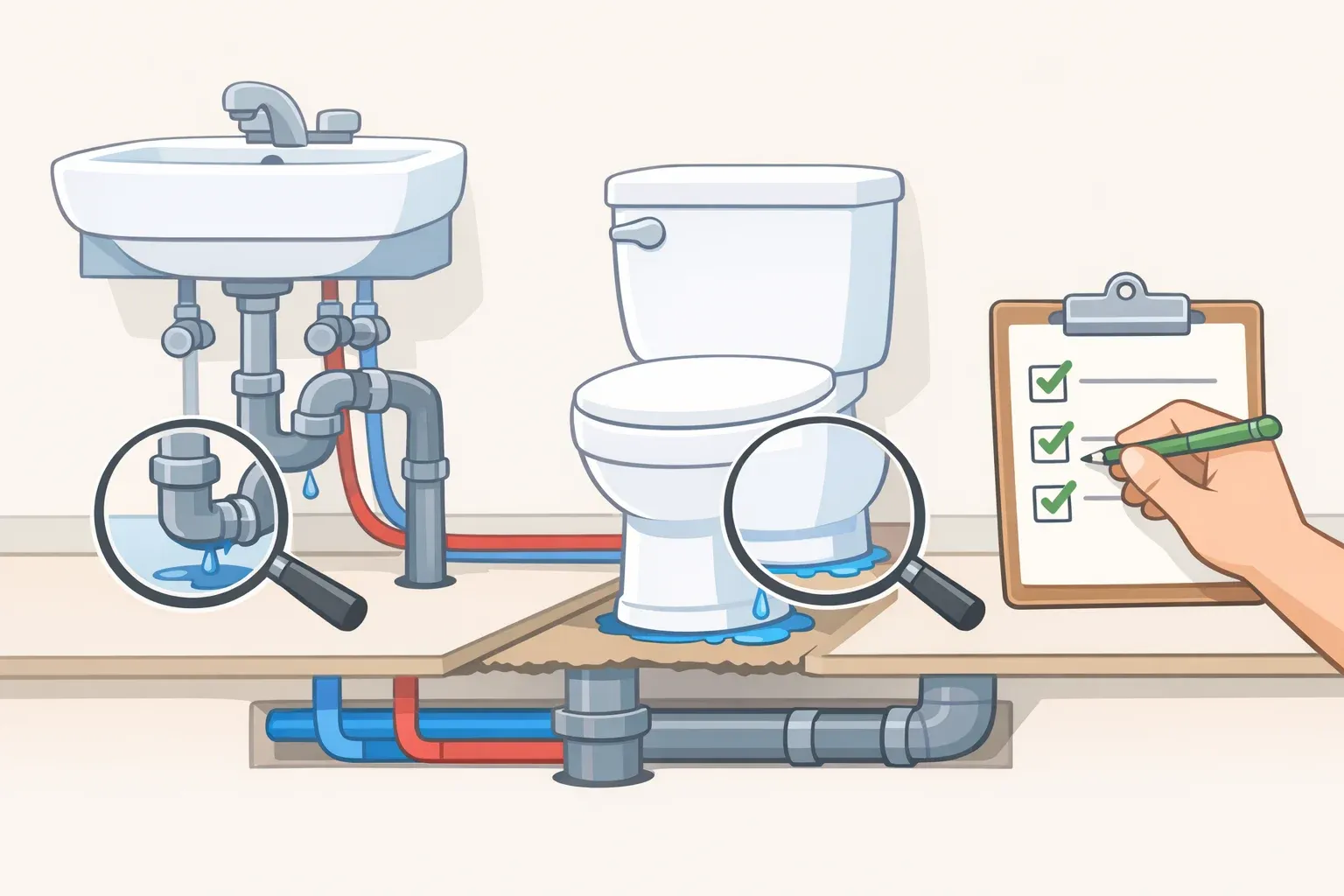
Simple plumbing habits to prevent expensive repairs at home
Most plumbing disasters don't announce themselves. They build quietly a slow drip inside a cabinet, a flapper seeping a few gallons a day, water pressure running too high for years. The simple plumbing habits to prevent expensive repairs are the ones that catch these problems before they compound. This guide organizes them by how often you need to act, starting with the habits that eliminate the most damage for the least effort.
What you'll need: No special tools for the daily habits or the toilet dye test. The pressure check requires a gauge available at most hardware stores for under $15. Any step that calls for a professional is marked clearly.
Things you should never flush down the toilet
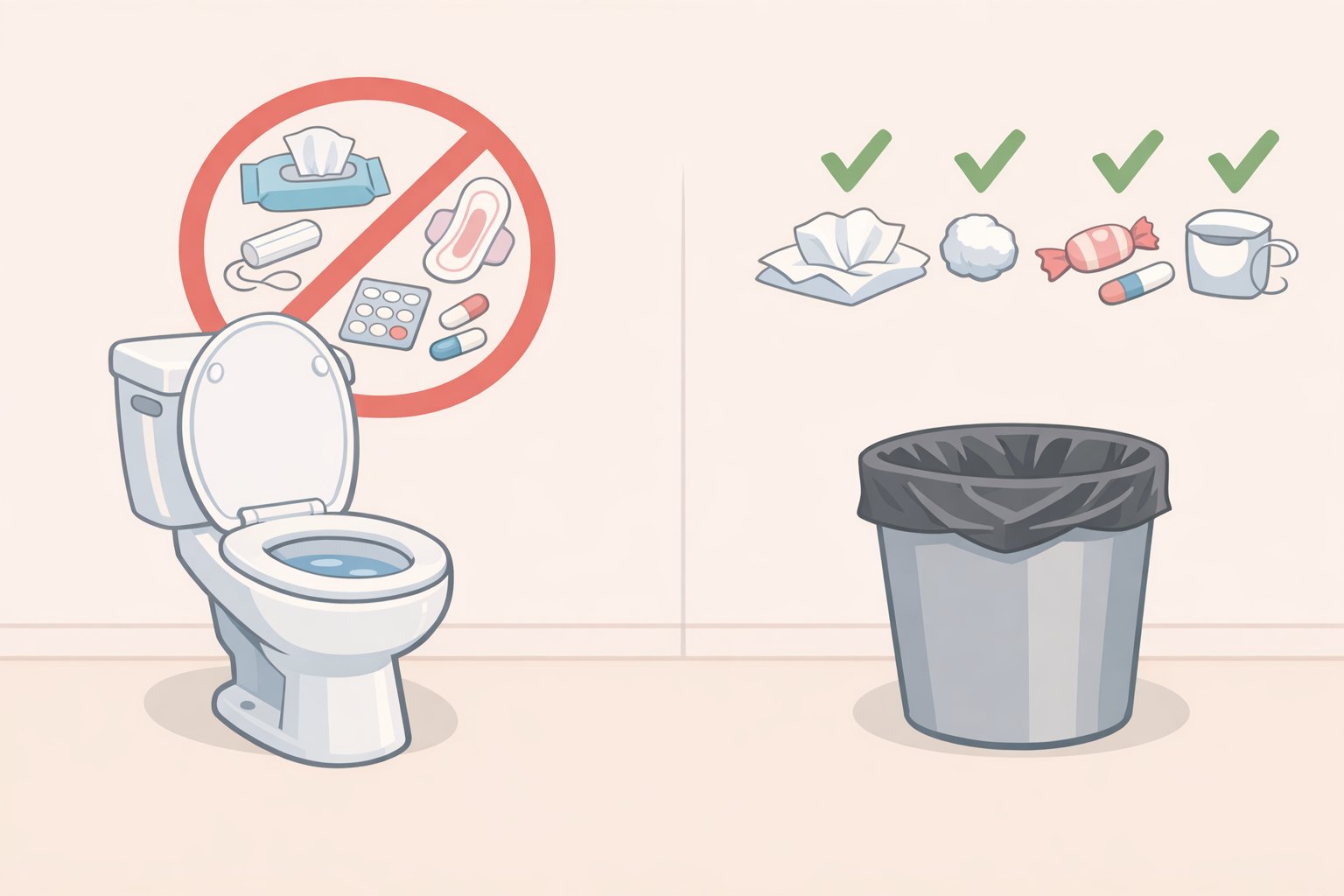
The single highest-impact plumbing habit costs nothing and takes no extra time: flush only human waste and toilet paper. That's it. Everything else goes in the trash.
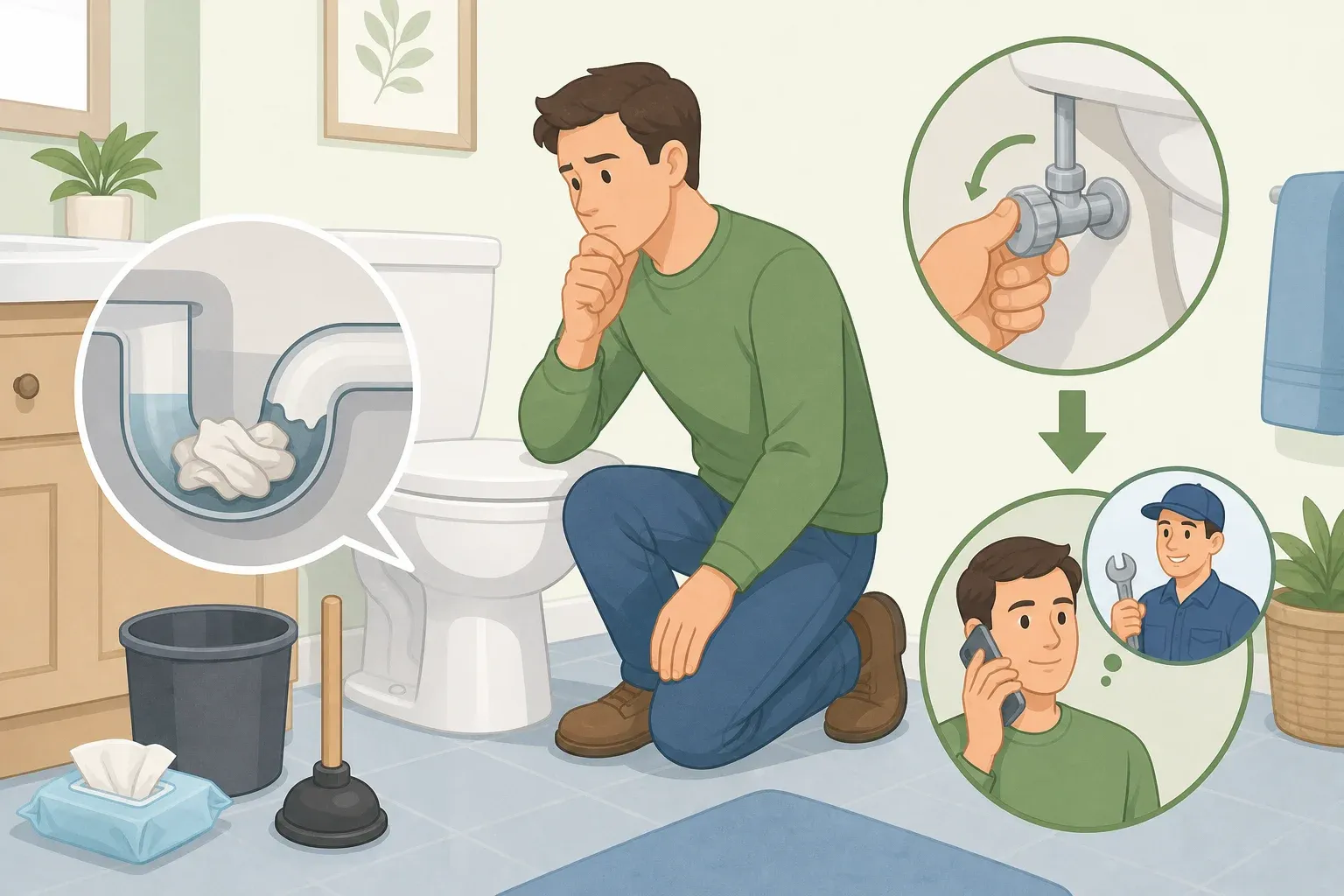
Plumbers are emphatic on this point, and they specifically call out products marketed as safe to flush. Wipes labeled "biodegradable," "earth-friendly," or "flushable" don't dissolve the way toilet paper does and will clog a system or cause worse damage, according to plumbers interviewed by Real Simple last week. When wipes snag at a bend, curve, or joint in a pipe, they accumulate into a barrier. Enough of them in one place can destroy pipes and trigger a backup or leak simultaneously.
The problem extends well beyond wipes. Dental floss lodges permanently in pipes and acts as a scaffold one plumber describes it as a beaver dam, catching debris behind it until a thin strand becomes a dense clog (Real Simple). Feminine hygiene products are engineered for maximum absorbency, which means they expand significantly in water and can block an entire system thoroughly enough to require professional extraction. Paper towels appear to flush cleanly but don't break down in transit.
The full list of items plumbers flag as unsafe to flush (Real Simple):
- Personal care items: wipes (any kind), cotton balls, cotton swabs, dental floss
- Hygiene products: tampons, pads, other feminine hygiene items
- Household materials: cooking grease, cat litter, cigarette butts, paint, medications, household chemicals
Gotcha children and small objects: Children routinely drop toys and soap bars into toilets. One plumber recounts a case where a two-year-old flushed bars of soap that required physically removing the toilet and cutting the soap out a repair that was nearly impossible to avoid once it happened (Real Simple). If young children use a bathroom, keep small objects and bath toys away from the toilet.
Gotcha chemical drain cleaners: When a clog happens despite good habits, reach for a plunger before a bottle of drain cleaner. Some chemical products corrode pipe material and can create leaks where none existed before (Real Simple). For a persistent clog, call a plumber before reaching for a corrosive fix.
One kitchen habit in this category: Scrape food into the trash rather than relying on the garbage disposal for bulk plate scrapings. The EPA's WaterSense program recommends scraping food into the trash instead of the disposal a small habit that keeps drain pipes cleaner over time.
Leak detection: the annual 15-minute check that catches hidden damage
Household leaks cause significant water waste, drive up utility bills, and can produce serious structural damage, according to the EPA. The EPA recommends checking for leaks regularly and addressing any that are found as soon as possible. The following three checks cover the locations most likely to produce a quiet, expensive failure.
1. The toilet dye test (10 minutes, no tools)
- Drop a few drops of food coloring or a dye tablet into the toilet tank.
- Wait 10 minutes without flushing.
- Check the bowl. If color appears, the flapper is leaking water is seeping continuously from tank to bowl without triggering a flush cycle.
A leaking flapper usually needs to be replaced, not repaired. The part is inexpensive and swapping it is a straightforward DIY task. The EPA recommends replacing toilet flappers at least once every five years regardless of test results the rubber degrades over time and will eventually fail even without detectable symptoms.
When to call a plumber: If the toilet is running constantly, won't flush, or shows water flowing into the overflow tube inside the tank, those symptoms go beyond a worn flapper. Don't troubleshoot further on your own.
2. Showerhead and faucet inspection (3 minutes)
Check each showerhead for drips or erratic spray. A loose connection at the pipe joint is usually the cause tighten it with a wrench and pipe tape. While you're there, inspect showerhead and faucet aerators for calcium or scale buildup. The EPA recommends soaking restricted fixtures or aerators in white vinegar to dissolve deposits and clear any buildup that may be restricting flow.
When to call a plumber: If tightening the connection doesn't stop a drip, or if a faucet continues to drip after the aerator is cleared, the fixture's internal components may need service.
3. Under-sink visual check (2 minutes)
Open every cabinet under a sink bathroom and kitchen and look for moisture, discoloration, or warping on the cabinet floor and back wall. A slow leak at a pipe joint or supply line can run undetected for months inside an enclosed cabinet. One visual check per year closes that gap.
When to call a plumber: Visible moisture, staining, or soft wood means there's an active or recent leak. Don't wait.
Pressure and long-term system health: the annual check most homeowners skip
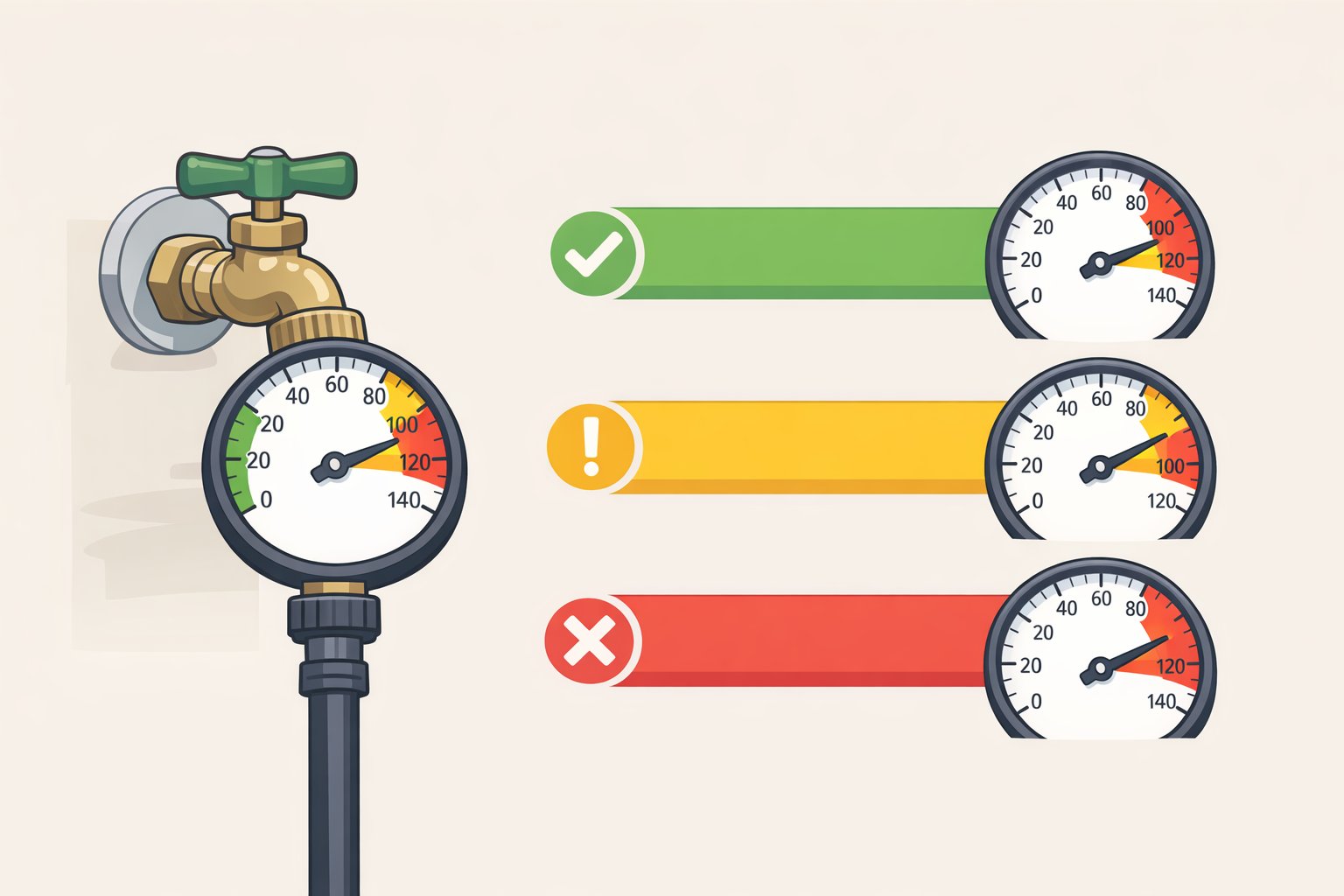
Water pressure is the failure mode most homeowners have never thought to measure. Sustained high pressure accelerates wear on every fixture, joint, and seal throughout a home's plumbing system quietly, over years.
How to check water pressure:
- Purchase a pressure gauge at any hardware store (under $15).
- Turn off all water-using fixtures and appliances dishwasher, washing machine, ice maker, everything.
- Attach the gauge to an outdoor hose bib.
- Turn the water fully on and read the gauge.
The EPA specifies that plumbing fixtures perform best between 45 and 60 psi. Here's what to do with each result:
- 45–60 psi: Normal. Record the reading and recheck next year.
- Above 60 psi: Have a professional adjust or install a pressure-regulating valve (PRV) to bring it into range. The EPA recommends professional installation for this it's not a DIY adjustment.
- Below 45 psi: Low pressure can indicate an active leak in the system. Check for visible leaks first; if none are apparent, call a plumber to diagnose the source.
For homes with a water heater or water softener: the EPA recommends annual professional servicing for both. Components in both systems degrade over time, and an annual check catches deterioration before it becomes a failure.
Everyday plumbing maintenance tips: adding passive backup coverage
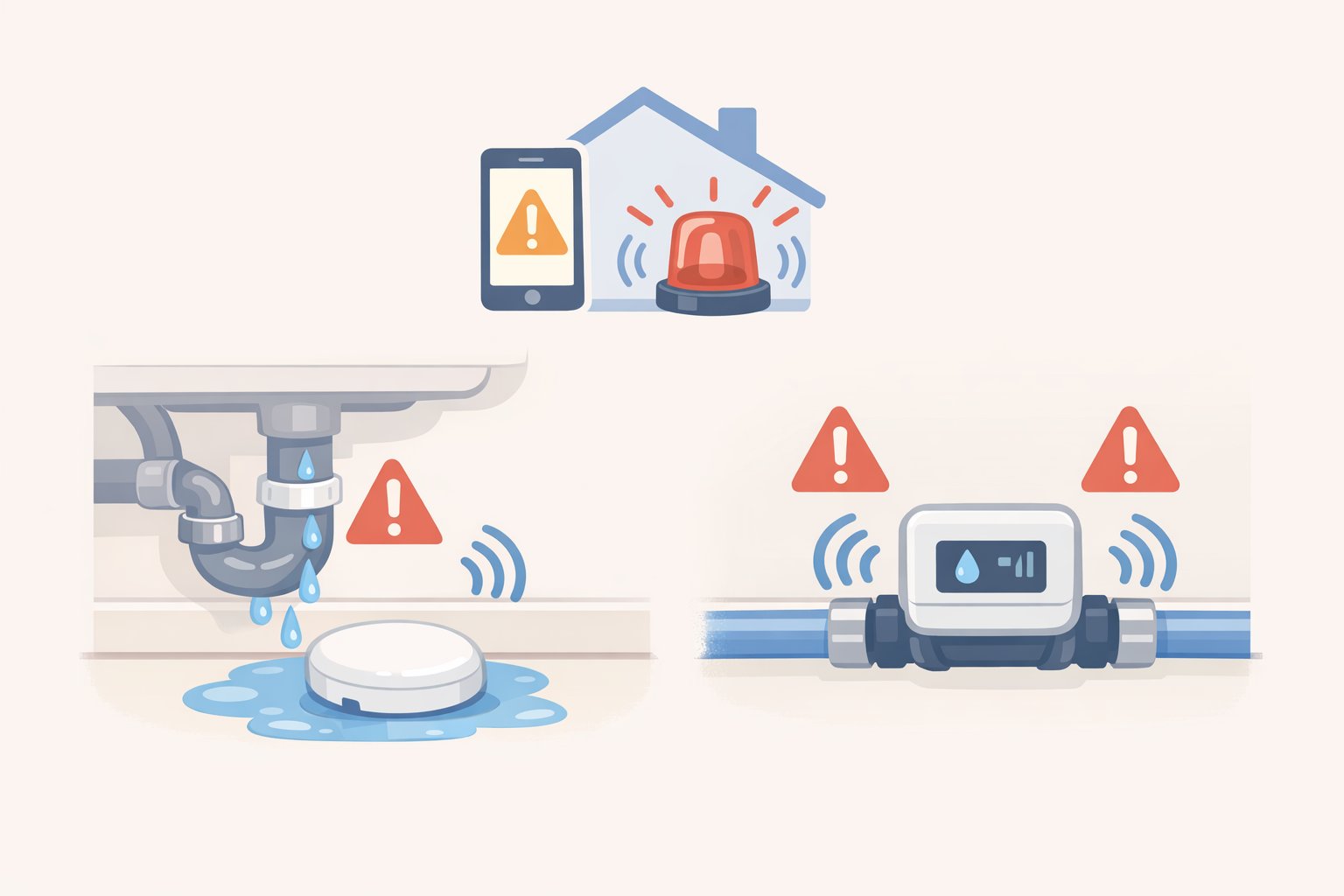
The habits above cover everything achievable through routine behavior and annual checks. One optional addition is worth knowing about not as a replacement for those habits, but as coverage between inspections.
Leak detection devices come in two types: moisture sensors, which alert you to unexpected dampness at a specific location, and flow monitors, which track water consumption patterns and flag irregularities that may indicate a running leak. The EPA recommends considering one as a complement to routine visual inspections.
A moisture sensor placed under a sink cabinet, near a water heater, or beside a washing machine catches what an annual visual check will miss in the eleven months between inspections. Flow monitors work at the main supply line and don't require knowing where to look they flag abnormal consumption automatically.
These make the most sense for older homes, homes with a recent leak history, or anyone who travels frequently. For a newer home with no known issues, the annual check alone is sufficient.
What to do and when
Put this on the calendar now, while it's in front of you:
- Every day: Flush only toilet paper; scrape food scraps into the trash rather than the disposal
- Once a year: Run the toilet dye test; inspect showerheads and faucets for drips and scale buildup; open every under-sink cabinet and look for moisture; measure water pressure with a gauge
- Every five years: Replace toilet flappers regardless of symptoms the EPA recommends this as a preventive baseline
- Annually (professional): Service the water heater; service the water softener if you have one
- Optional: Install a moisture sensor or flow monitor under sinks, near the water heater, or at the main supply line
Keep a $15 pressure gauge and a bottle of food coloring somewhere accessible. Treat any unexplained moisture under a sink or near an appliance as urgent, not something to revisit next weekend. The damage that becomes a large repair almost always started small and was ignored longer than it should have been.


Comments
Be the first, drop a comment!