



What Is the 3-Thread Rule for Bolts? A Seating Check, Not a Strength Gauge
There's a heuristic passed around hardware stores and DIY forums: make sure three threads show past the nut, or three threads are engaged, and your bolt is secure. In shop practice, three visible threads are often treated as a seating check a sign the bolt is fully through and the nut isn't cross-threaded. That's a reasonable installation confirmation. It is not a strength measurement. What actually determines whether a joint will hold is how deeply those threads engage the receiving material, measured against the bolt's own diameter. That's the rule worth knowing and the one this article explains.
This guidance covers machine bolts threading into nuts or tapped metal holes, the kind of fastening typical in appliances, fixtures, brackets, and hardware. Wood screws, lag bolts, and structural steel connections behave differently and fall outside this scope.
What the 3-thread rule actually measures
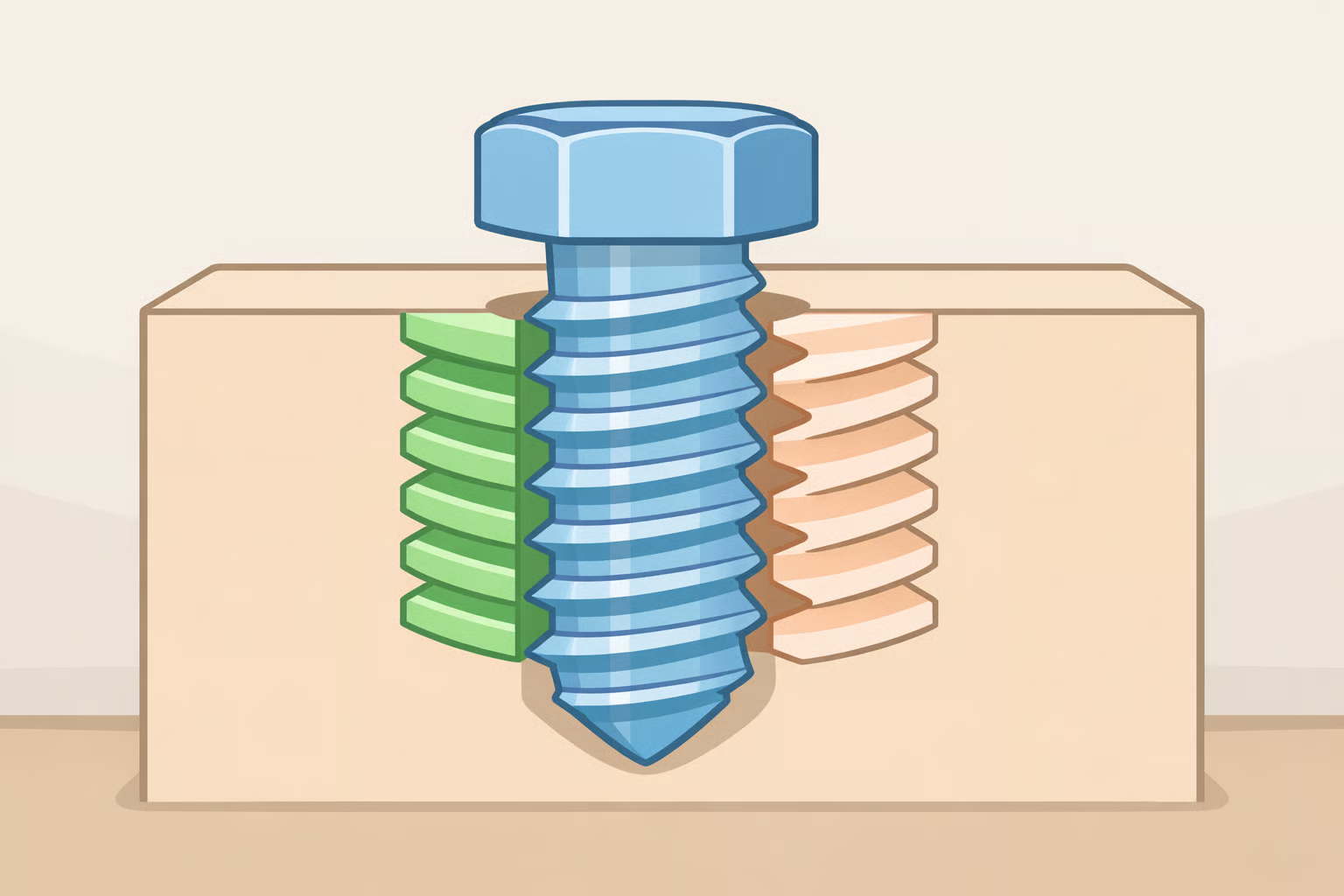
Thread engagement is the length of contact between a bolt's threads and the nut or tapped hole receiving them. Every load the joint carries passes through that zone and nowhere else, according to Component Solutions Group. Threads extending beyond the nut do nothing. A longer bolt doesn't automatically mean a stronger joint if the extra length doesn't increase contact inside the hole or nut, it adds zero strength, as Component Solutions Group makes clear.
The "three-thread rule" circulates in two overlapping forms that are often conflated: three threads showing past the nut as visual confirmation the bolt is fully seated, and three threads engaged as a strength minimum. The first is a reasonable check. The second is where the rule falls apart.
Only fully formed threads on a bolt carry load. The first one or two threads at the bolt tip and at the opening of any hole are typically incomplete and provide no holding power, as Component Solutions Group noted early this year. Three visible threads, minus two incomplete ones, may leave a joint with one usable thread of engagement. That's not a safety margin that's a liability.
Thread pitch compounds the problem. A fine-threaded bolt may need eight to ten threads to match the holding strength a coarse-threaded bolt achieves with six, because fine threads have less shear surface per thread, per Component Solutions Group. Thread count without pitch context gives a different answer every time.
The bolt thread engagement rule engineers actually use expresses minimum safe engagement as a multiple of bolt diameter, not a thread count. That framing holds across thread pitches and material types in a way a simple count never can, per Tameson's thread engagement guidance.
Minimum thread engagement for bolts: the rule to use instead
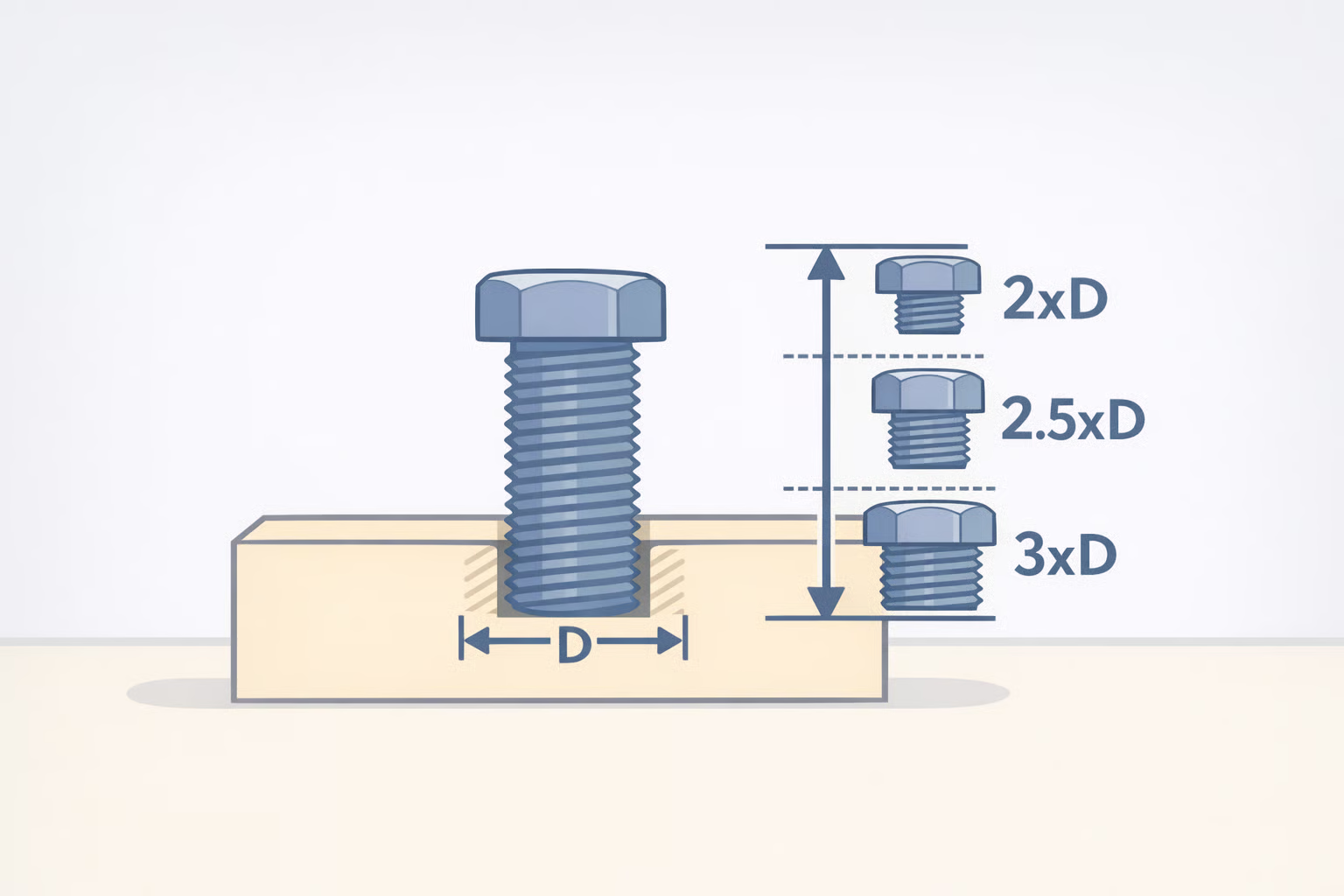
The diameter multiplier works because bolt diameter is a consistent reference across thread types and sizes. For steel threading into steel, 1.0 to 1.5 times the bolt diameter is sufficient. At that depth, the bolt is more likely to snap in tension than to strip the threads and bolt fracture is the preferred failure mode because it happens at a predictable, rated load. Thread stripping is sudden, occurs at loads well below the bolt's rated capacity, and gives no visual warning, according to Component Solutions Group.
As the base material gets softer, required engagement goes up because the internal threads in the receiving hole become the weak link. Here's how the numbers break down:
- Steel into steel: 1.0–1.5x diameter (Tameson; Component Solutions Group)
- Steel into cast iron: 1.25–1.5x diameter (Component Solutions Group)
- Steel into aluminum alloy (6061-T6): 1.5x diameter (Component Solutions Group)
- Steel into soft or cast aluminum: 2.0x diameter (Component Solutions Group)
- Steel into reinforced plastics: 2.5x diameter (Component Solutions Group)
- Steel into soft plastics (nylon, PVC): 3.0x diameter (Component Solutions Group)
One note on aluminum: Tameson's guidance puts the minimum for aluminum at 2.0 to 2.5 times the diameter overall, which runs higher than the 1.5x figure cited for 6061-T6 alloy specifically. The difference reflects alloy grade variation. For DIY applications, erring toward the higher figure is the safer call, per Tameson. These are informed ranges, not universal absolutes.
There's also a meaningful difference depending on whether a bolt threads into a nut or into a tapped hole in base material. With a standard nut, the nut's thickness defines the engagement length and a properly specified nut for a given bolt diameter is already designed to provide sufficient engagement in steel. The math gets more consequential when bolting into a tapped hole in aluminum, plastic, or any housing material softer than the fastener, because the hole itself can strip. That's where undercalculating engagement causes real damage.
A concrete example: a 12mm bolt threading into an aluminum fixture needs at least 18mm of full thread contact (12mm × 1.5). Subtract the two incomplete threads at the tip, and the bolt needs to sit deeper than a surface measurement alone suggests, per Component Solutions Group. Three threads showing past the nut would represent roughly 3–5mm of contact depending on pitch a fraction of the required 18mm. The joint can feel tight during installation and still fail under load.
Why shallow engagement fails without warning
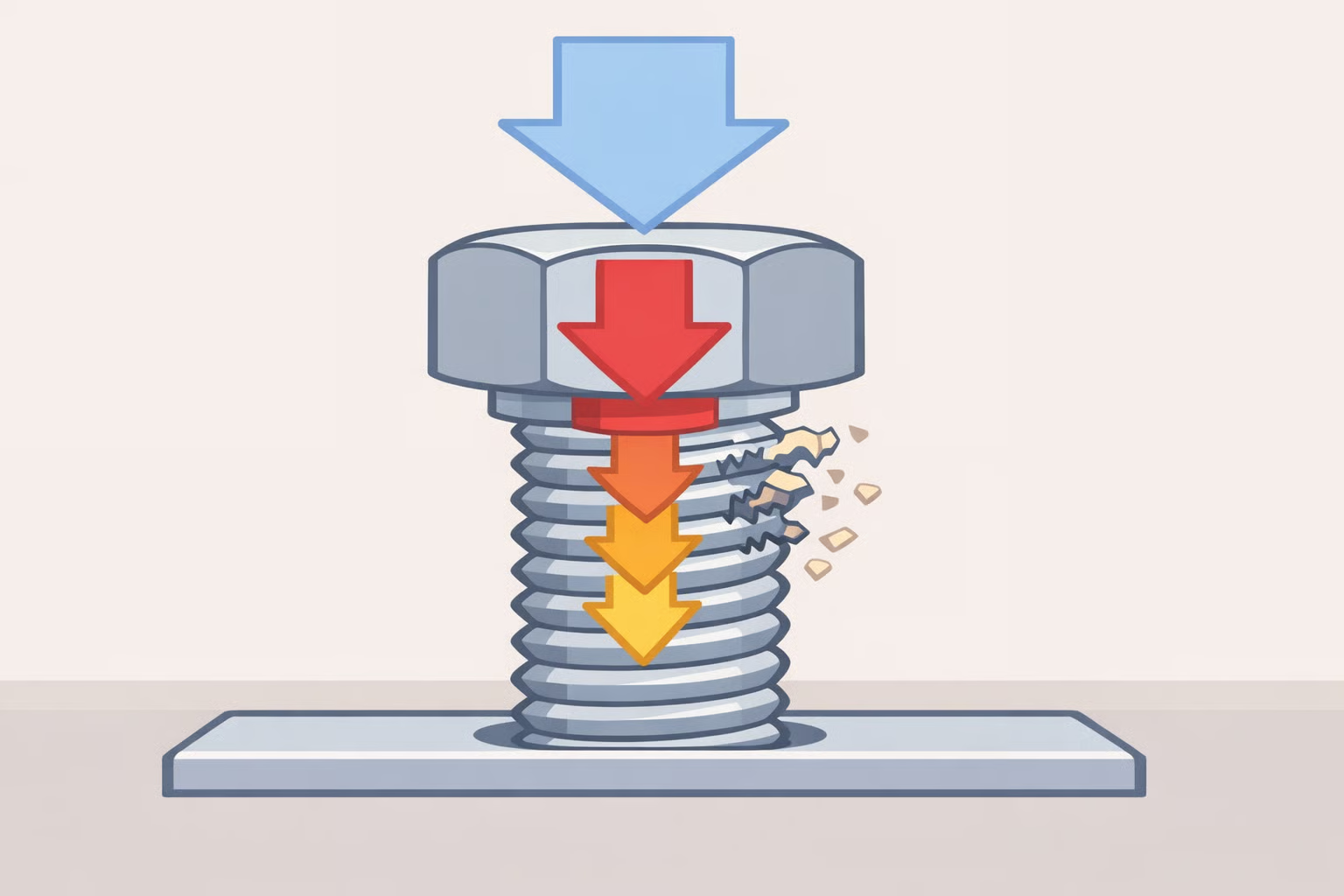
Load doesn't distribute evenly across engaged threads. The thread nearest the bearing surface absorbs between one-quarter and one-third of the total load on its own, with each subsequent thread carrying progressively less, according to Component Solutions Group. Think of it as the first rung of a ladder taking the bulk of a climber's weight.
When engagement is shallow, that first thread carries a disproportionate share, deforms, and can trigger a cascade that strips the joint entirely. The process is silent no crack, no visible deformation during installation and Component Solutions Group describes this pattern as "silent failure": a connection that passes every installation check and still fails under operational stress.
Vibration makes things worse over time. In HVAC equipment, off-road vehicle frames, and appliance frames, cyclic loading causes microscopic thread movement, gradually working the joint loose even when the initial installation felt solid. For these assemblies, Component Solutions Group recommends adding 20 to 30 percent beyond the calculated minimum as a conservative buffer not a codified universal standard, but sound engineering practice for dynamic loads.
Upgrading bolt grade won't fix this. Switching from Grade 5 to Grade 8 increases the bolt's tensile capacity, but if the housing material is softer than the bolt, the threads in the hole remain the weak link. A stronger bolt in a shallow aluminum or plastic hole just delivers more force to the part that was already going to fail first, per Component Solutions Group. Engagement depth must increase alongside bolt grade whenever the housing is the softer material.
When hole depth or material limits how deep a bolt can go, threaded inserts sometimes called Helicoils distribute load across more surface area and can extend thread life substantially in softer materials, according to Component Solutions Group. They're also the right fix when a hole is already stripped and a longer bolt won't solve the underlying problem.
Applying the bolt thread engagement rule: a five-step check
Step 1 Identify the receiving material. The housing material, not the bolt, sets the engagement floor. Steel, cast iron, aluminum, and plastic each demand a different multiplier.
Step 2 Calculate minimum depth. Multiply bolt diameter by the appropriate factor from the table above. This gives the length of full thread contact required, per Tameson and Component Solutions Group.
Step 3 Subtract incomplete threads. Deduct two full thread pitches from measured engagement to account for the unusable threads at the bolt tip, per Component Solutions Group. If the result falls short of the Step 2 target, the joint needs a longer bolt, a deeper hole, or a threaded insert.
Step 4 Check for bottoming out. In blind holes, a bolt that reaches the bottom stops clamping and can crack the hole. Engagement depth and available hole depth are both hard constraints, according to Component Solutions Group. When hole depth limits engagement, a threaded insert bored into a slightly larger hole often resolves both problems at once.
Step 5 Add margin for vibration. For joints subject to ongoing movement, target the upper end of the relevant range. Component Solutions Group frames the 20–30 percent buffer as a conservative engineering practice for dynamic loads, not a hard standard.
When assessing an existing joint without removing it: bolt length minus the thickness of material being clamped gives a rough estimate of how many threads are actually engaging. When that figure looks marginal for the housing material, the right call is a longer bolt or a threaded insert especially in aluminum or plastic, where stripped threads mean a ruined housing, not just a loose fastener.
The rule that travels
Three threads past a nut confirms a bolt is seated. That's genuinely useful during installation it catches cross-threading and ensures the nut is fully on. But it says nothing about how much of that engagement is load-bearing, or whether the receiving material can handle the load that's actually being applied.
The diameter multiplier is what travels. Minimum engagement depth equals bolt diameter times a material factor: 1.0–1.5x for steel, 1.5x and up for aluminum alloys, 2.5–3.0x for soft plastics. The 1.5x figure is a reasonable conservative floor for steel and harder aluminum alloys; for soft metals and plastics, it's the starting point, not the ceiling. Those ranges come from Tameson and Component Solutions Group.
Where this matters most in practice is aluminum and plastic housings appliance frames, fixture bodies, brackets. Those are precisely the materials where stripped threads mean replacing a housing rather than just swapping a bolt. Sixty seconds with a diameter multiplier before choosing bolt length is often the difference between a joint that holds and one that fails quietly, months after installation.











Comments
Be the first, drop a comment!