



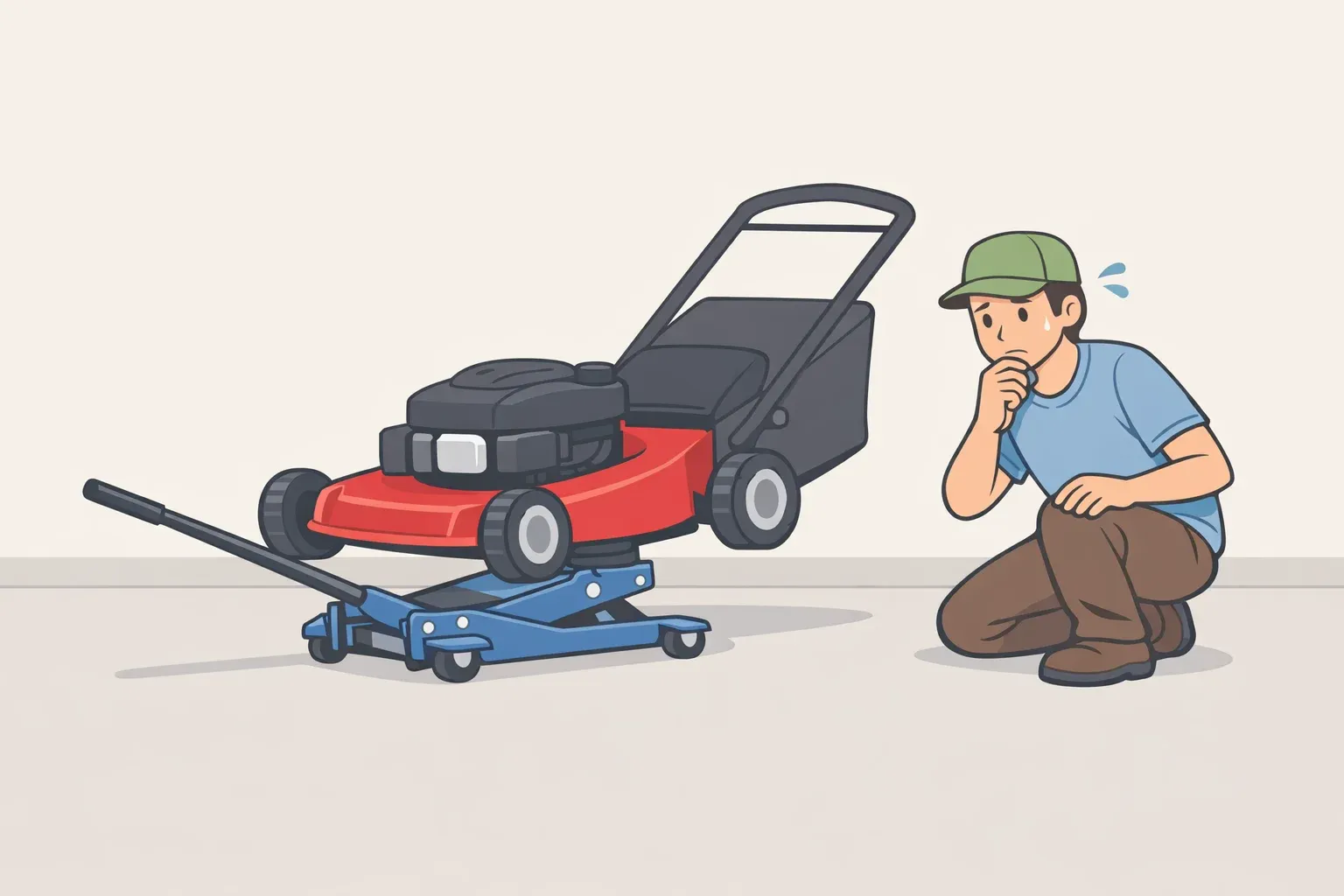
You have a hydraulic floor jack in the garage. It handles your car without effort, and your mower weighs much less. The swap seems logical, but lifting a mower and safely supporting it are different things.
To answer directly: a car jack can technically raise part of a riding mower or zero-turn mower, but it is not a safe maintenance solution on its own. The geometry is wrong, the load distribution is wrong, and hydraulic pressure can fail without warning. For repeated blade and deck work on riding and zero-turn machines, a purpose-built mower lift is usually the safer, better-suited option.
Any lift setup should start on a flat, firm surface, with the mower shut off, the key removed, moving parts stopped, hot parts cooled, and the parking brake set where applicable. Ariens also warns that users should never trust a hydraulic jack by itself and should use jack stands if part of the machine needs to be raised.
Lawn mower injuries are common enough that the safety steps matter. The U.S. Consumer Product Safety Commission reported an average of 35,000 emergency-room-treated injuries each year from walk-behind power mowers alone from 2013 through 2015, with severe blade-contact injuries sometimes requiring emergency surgery. Poor maintenance setup is one way routine mower work can turn dangerous.
This piece covers why car jacks are risky for mower maintenance, how push mowers differ from riding machines, what to use instead, and the safety checklist that applies before you work near a mower deck.
Push vs. riding mowers: why the lift method changes
The type of mower determines everything. Habits that work for a walk-behind mower can be dangerous on a riding mower or zero-turn.
Push mowers are their own category. Some walk-behind mowers can be tilted for blade access, but the safe direction and angle depend on the model, engine, battery setup, and operator manual. For gas mowers, avoid fuel or oil leaks before tilting. For battery mowers, remove the battery and safety key or fuse key before reaching near the blade. No jack is usually required for a push mower.
Riding mowers and zero-turn mowers are a different problem. These machines can weigh several hundred pounds or more, depending on the model, which makes stability and support more important than the jack's lifting capacity alone.
Avoid tipping a zero-turn mower onto its side unless the operator manual specifically allows it. Lifting from approved points keeps the machine more stable and helps avoid fuel, oil, or engine problems. Also avoid placing a jack under the mowing deck unless the manual specifically allows it. The deck is not automatically a safe lift point, and using it that way can damage the mower or create an unstable lift.
If you are working with a push mower, your safest next step is usually to follow the manual's blade-access instructions. The rest of this guide focuses mostly on riding tractors and zero-turn machines, where the car-jack problem is most serious.
Why a car jack alone is not enough
The problem is not that car jacks are weak. Many floor jacks can lift the weight. The problem is design: car jacks are engineered around vehicle frame geometry, and a mower is not a car.
A car jack may lift from one small contact point, which can make the mower less stable than a lift designed to support mower geometry. That instability may not cause an immediate collapse, but it gives you very little margin if the mower shifts, rolls, or drops.
Hydraulic pressure is also not a passive safety lock. Hydraulic jacks can lose pressure, so no one should work under a machine supported only by hydraulic pressure. OSHA's rule for jacks in workplace settings uses the same basic safety principle: once a load is raised, it should be blocked or cribbed so it cannot fall.
The clearest "do not do this" list is simple:
Do not crawl under a mower supported only by a car jack.
Do not use cinder blocks, loose lumber stacks, or other unstable substitutes.
Do not lift from the mower deck unless the manual identifies it as a safe lift point.
Do not rely on a bottle jack or floor jack without secondary mechanical support.
The operator manual is the final authority. If the manual gives a different lift point, tilt direction, or service sequence, follow the manual.
If you only have a car jack
Sometimes the mower needs work before you have a dedicated mower lift. In that case, treat a hydraulic floor jack as conditionally usable for positioning only, not as the support that protects you while you work.
Follow this sequence:
Find the approved lift point in the operator manual. Use a solid frame point, not the deck or a convenient low spot.
Place the floor jack on a flat, firm surface and lift slowly.
Raise the mower only as high as needed for the job.
Immediately place rated jack stands under approved support points before reaching under or near the deck.
Lower the mower gently onto the stands so the stands carry the load.
Check stability before working. If anything shifts, lowers, rocks, or feels uneven, stop and reset the lift.
Toro's maintenance guidance also tells users to use jack stands to support components when required and to disconnect the battery or spark plug wire before repairs. That is the key distinction: the jack may raise the mower, but the stands support it.
Even then, a floor jack and stands do not offer the same load distribution or built-in locking design as a purpose-built mower lift. It is a stopgap, not the best regular setup.
Safer ways to lift a lawn mower
Best option for regular blade or deck work
For most homeowners doing regular blade or deck maintenance on a riding mower or zero-turn, a purpose-built mower lift is the cleanest option. These lifts are designed around mower shape and access needs, and many include a mechanical locking arm that holds the raised mower in position without depending only on hydraulic pressure.
When comparing lifts, check:
Rated capacity
Intended equipment type
Lift height
Wheel spacing
Mechanical locking system
Compatibility with your mower's manual
Do not shop by mower weight alone. Make sure the lift is rated for the way your mower will actually be raised and supported.
Other options for garage or shop setups
In a dedicated shop, an overhead hoist may be an option only if the structure, rigging, and load rating are appropriate. For most homeowners, a mower lift or properly rated jack stands are simpler and safer.
Heavy-duty ramps can also be useful in some setups, but standard car ramps are not automatically appropriate. The ramps must be rated for the mower, wide enough for the wheel spacing, and stable on the work surface.
Quick reference by mower type
Mower typeRecommended methodCar jack acceptable?Push / walk-behindFollow the manual's tilt or blade-access instructionsUsually not neededRiding tractorMower lift or floor jack plus rated jack standsOnly with jack standsZero-turnPurpose-built mower liftNot as a standalone methodZero-turn in a shop setupRated hoist or mower-appropriate rampsNot as a standalone method
Before you work near the mower deck
These steps apply regardless of lift method.
Shut everything down. Turn off the engine or motor, remove the key, wait for moving parts to stop, and let hot parts cool. Set the parking brake on riding mowers.
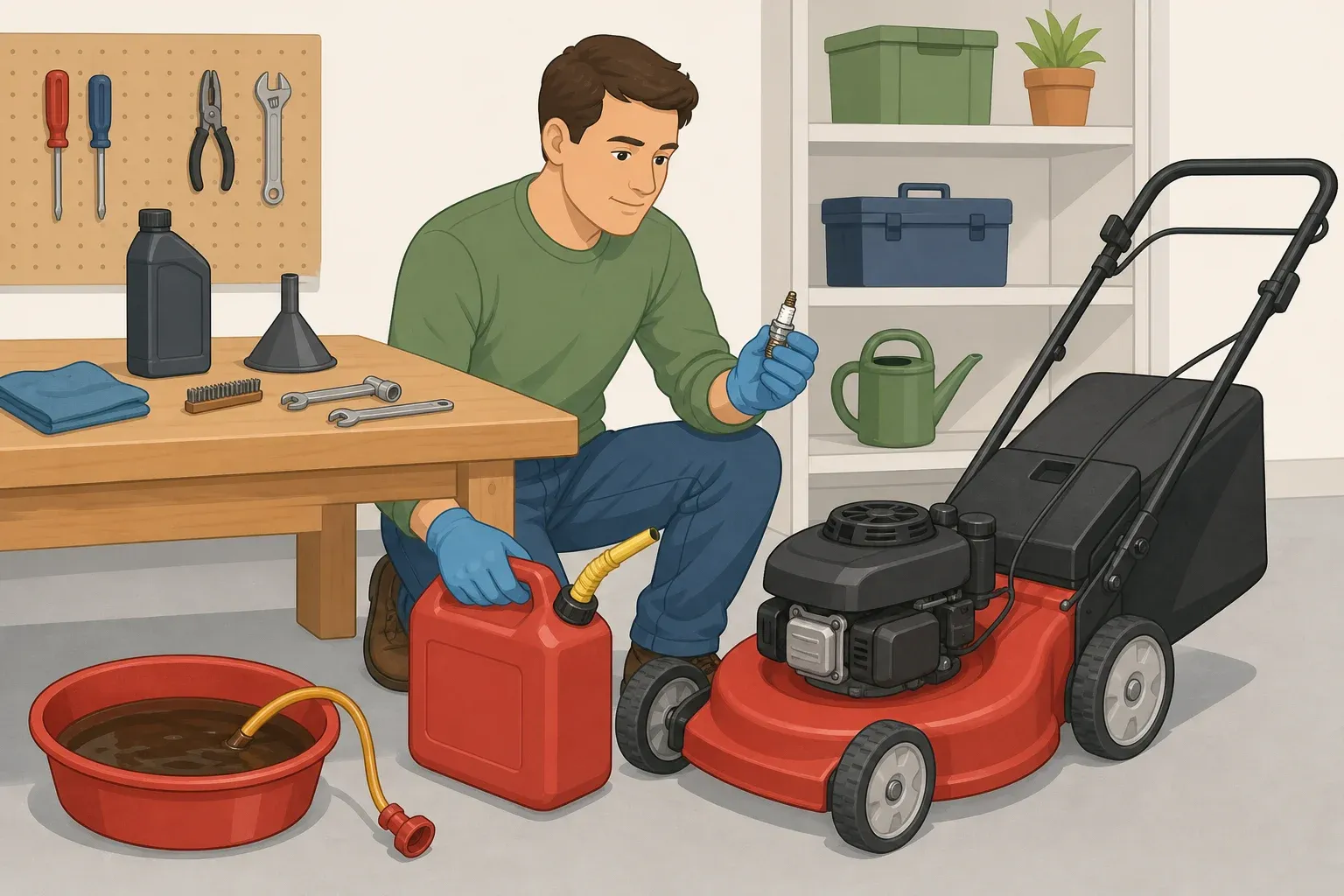
Disable the mower before servicing. For gas mowers, disconnect the spark plug wire and set it aside so it cannot accidentally contact the plug. For battery mowers, remove the battery and safety key or fuse key before cleaning, adjusting, servicing, or reaching near the blade.
Chock the wheels. Use heavy-duty wheel chocks so the mower cannot roll while one end is raised.
Engage the mechanical lock or set the jack stands. If you are using a mower lift, engage the mechanical safety lock once the mower reaches working height. If you are using jack stands, make sure they are rated for the load and fully seated before you work.
Do a stability check. Before putting your hands or body near the deck, apply firm sideways pressure to check whether the mower shifts. If it moves, stop and re-secure it.
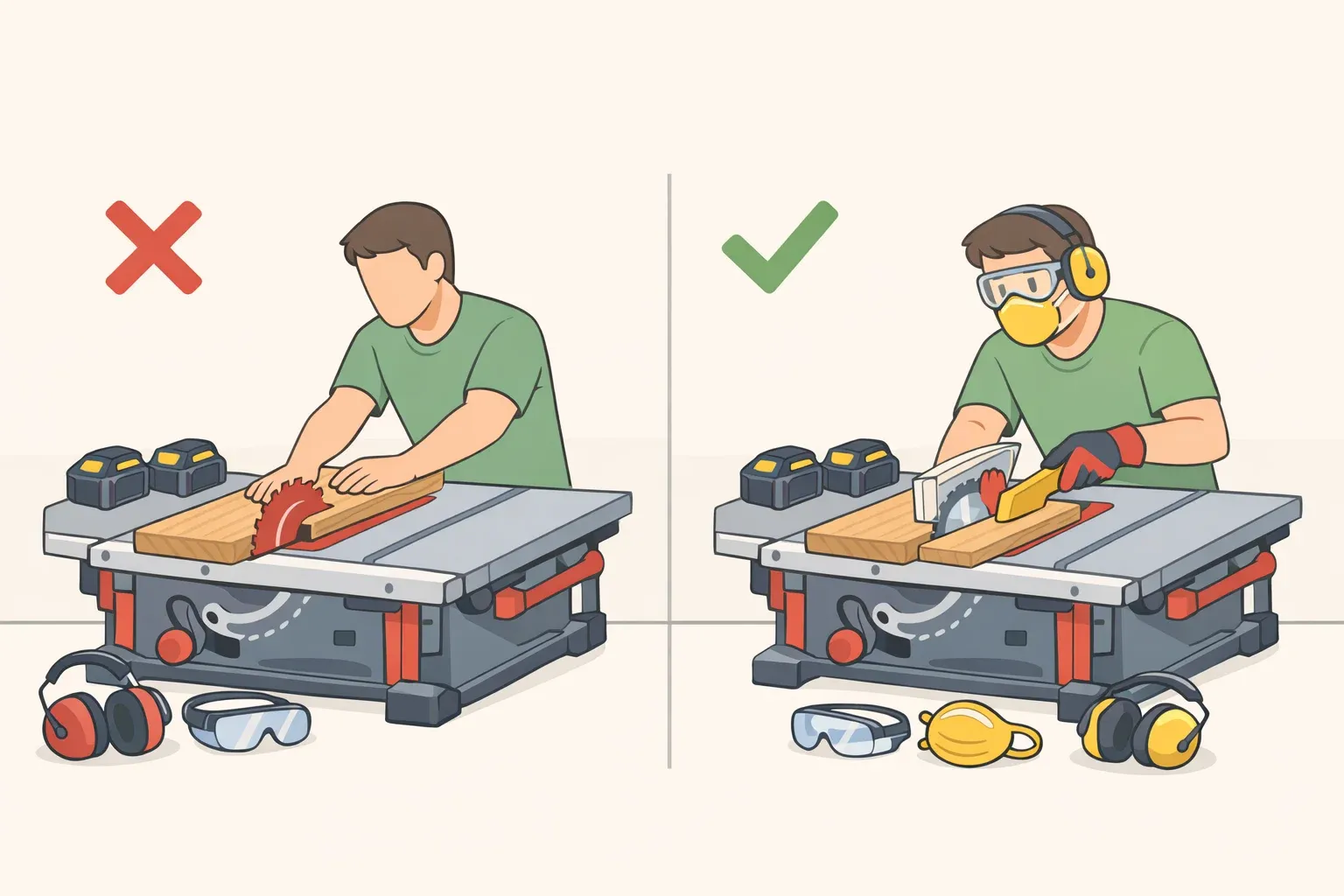
Wear basic PPE. Use eye protection and heavy gloves, especially when handling or checking blades. Blades can cut even when the mower is off, and debris can fall from the deck.
The short answer
For riding and zero-turn mowers, a car jack alone is not a safe maintenance solution. The jack may lift the mower, but it should not be what keeps the mower supported while you work.
A hydraulic floor jack with rated jack stands can be a workable last resort under controlled conditions. A purpose-built mower lift is usually the better option for repeated blade and deck maintenance, especially on zero-turn mowers.
The operator manual is the authority on approved lift points, safe tilt angles, and service steps. If blade or deck maintenance is more than a one-time job, use a mower lift or properly rated jack stands instead of relying on a car jack alone. A jack can raise the mower; it should not be what keeps it safely supported.






Comments
Be the first, drop a comment!