



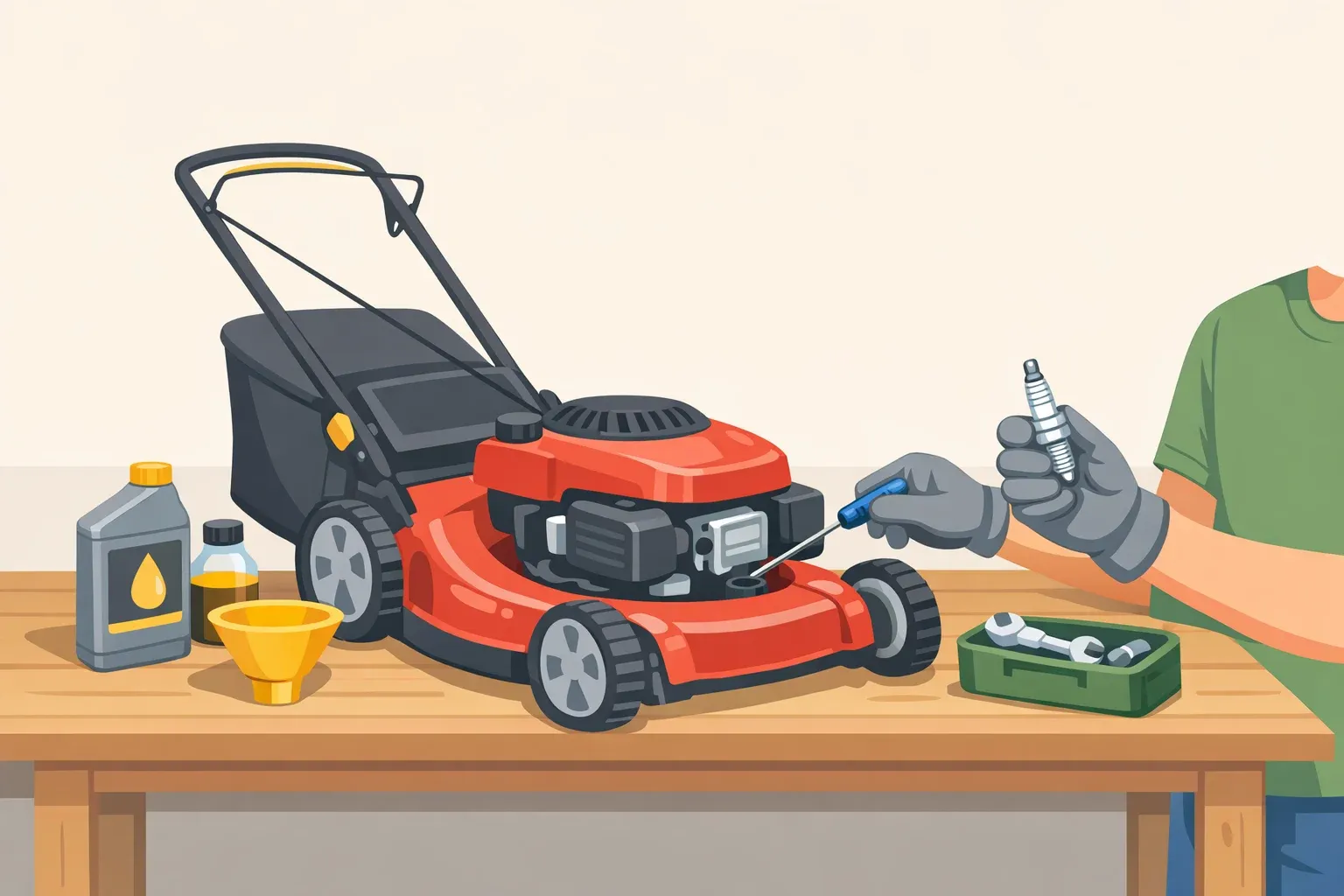
Average Lawn Mower Engine Lifespan: Benchmarks and Care Tips
Most residential gas mowers last somewhere between 4 and 10 years. That's not a vague estimate it's an honest reflection of how much maintenance habits move the outcome. The average lawn mower engine lifespan sits at 8 to 10 years for owners who follow standard upkeep guidance, and drops to less than half that for those who don't, according to LowesEmployees.com. The same machine can reach year nine in solid working order or sputter out before year three, depending heavily on maintenance and storage habits.
One clarification worth making upfront: the available lifespan research measures whole-mower service life rather than isolating the engine block as a standalone component. That distinction matters less than it might seem. The engine is the mower's most critical part, and engine failure is what typically ends a machine's useful life. These figures work as reliable practical proxies for lawn mower engine life expectancy, and this article treats them that way.
What follows covers realistic residential and commercial lifespan benchmarks, the specific failure modes that explain why so many engines die well before their time, and the maintenance habits most requiring under $25 in annual parts, per LowesEmployees.com that determine whether an engine reaches its potential or falls short of it.
What to expect: residential lawn mower lifespan benchmarks
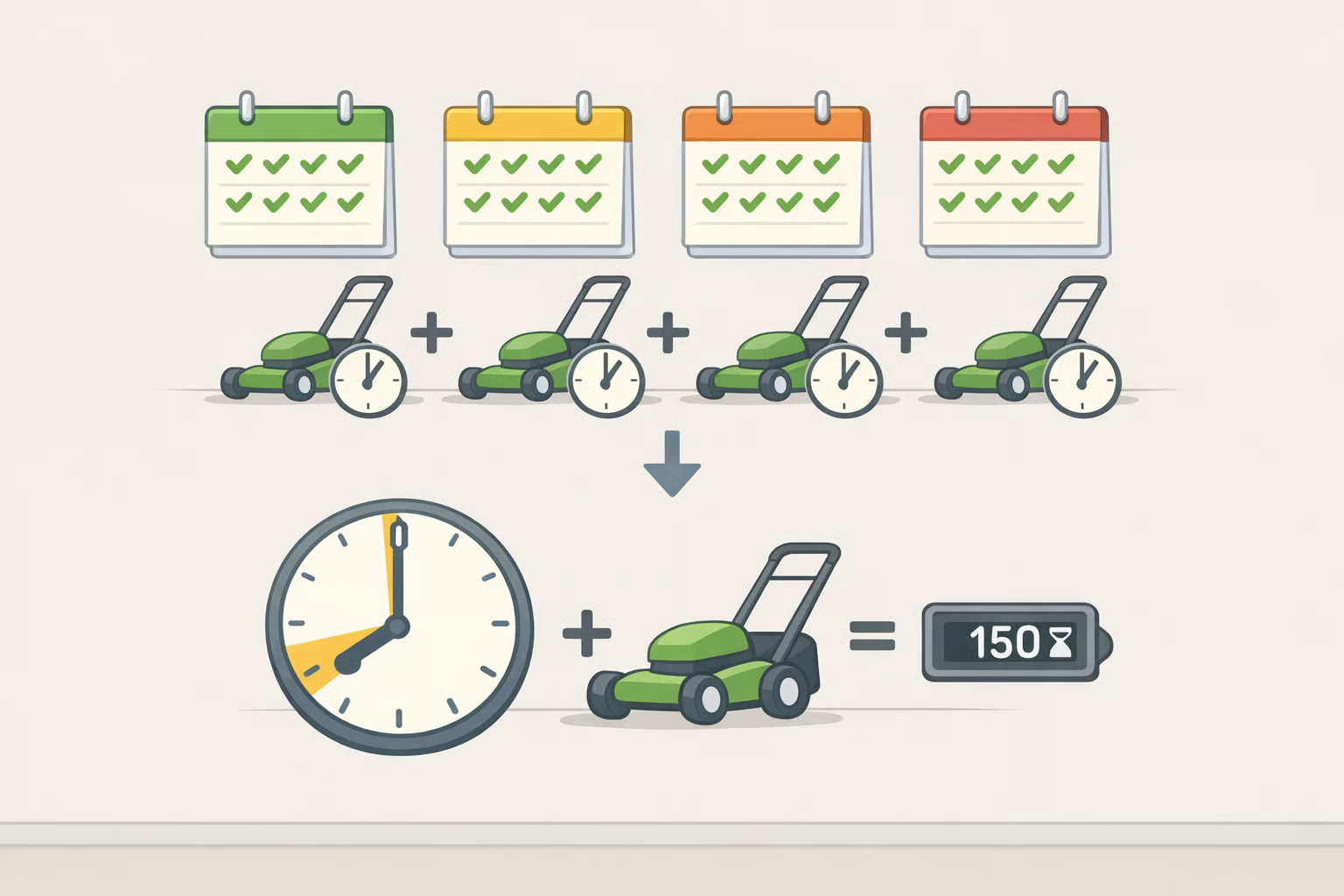
A gas-powered residential mower with consistent basic care can last 4 to 10 years, or roughly 450 to 1,500 operating hours. The 8-to-10-year figure represents the achievable high end for owners who follow standard maintenance practices. Skipping that care regularly tends to cut service life to under half that span, according to LowesEmployees.com. Worth noting: these estimates come from a single field-experience source rather than a formal study, so treat them as practical benchmarks rather than engineering specifications. The extension-backed maintenance and failure data later in this article carries more evidentiary weight.
The hours-based framing deserves a word of caution, because the math can mislead. On a typical suburban lot of around 7,000 square feet, each mowing session takes roughly an hour, meaning a homeowner mowing weekly through a six-month season logs about 24 to 30 hours annually a rough calculation based on LowesEmployees.com's per-session estimate. On paper, 450 hours at that pace would take 15 or more years.
In practice, fuel and storage issues can end a mower's useful life before hour-based estimates suggest. The 4-to-10-year range reflects real-world outcomes, not the math on a spec sheet.
Commercial mowers occupy a different category entirely. Built for sustained daily use, they typically carry ratings of 1,200 to 2,500 hours before significant wear sets in, roughly double the upper bound for residential equipment, according to the same source. For most homeowners, that figure is useful only as a reference point. The engineering differences are real; the maintenance principles largely overlap.
Why mowers die early: the real-world gap between potential and outcome
The gap between four years and ten years isn't random. The research points to specific, documented failure modes not generic "neglect shortens life" advice, but identifiable mechanisms with identifiable causes.
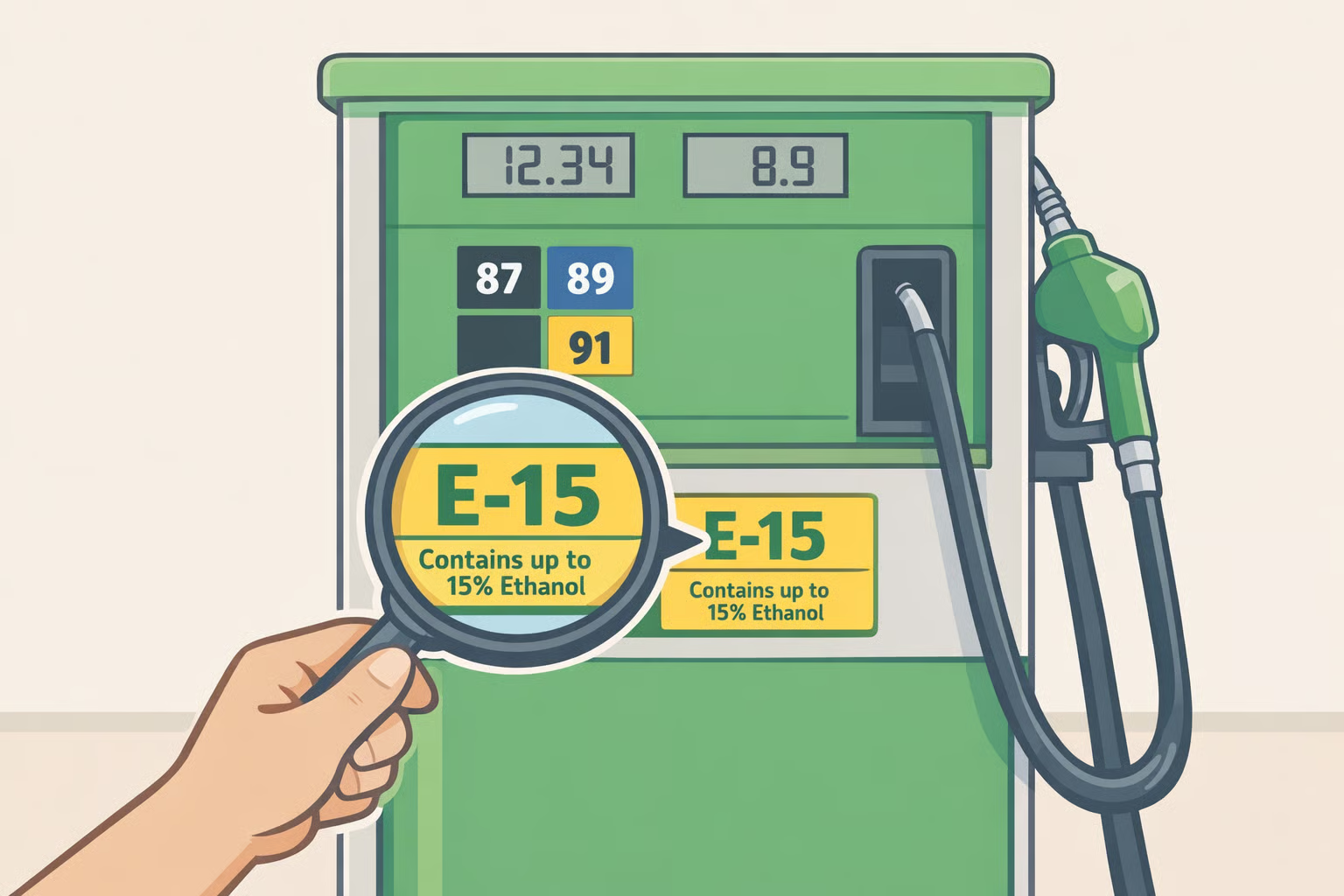
Ethanol fuel is the most underestimated risk. The gasoline sold at most pumps contains ethanol, and fuel blended at 15% ethanol concentration (labeled E-15) may damage small engine components not engineered for that level, N.C. Cooperative Extension warns. The University of Georgia Extension identifies the ethanol supply at the pump as one of the biggest issues for any small-engine outdoor power equipment. Most homeowners never consider what blend they're putting in.
Stale fuel sitting over winter is the second major culprit. UGA Extension recommends draining fuel before storage periods of three to four weeks or more to avoid fuel-related damage to the tank and carburetor, the publication states. This is not a gradual wear process. A single poorly managed off-season can produce hard-start problems and carburetor failures that shorten engine life outright.
Dirty oil is a quieter but equally consistent contributor. Manufacturers recommend oil changes every 30 to 50 hours of use, LowesEmployees.com reports. For many homeowners, annual changes satisfy that interval given typical usage patterns. The owners who skip them entirely allow oil contamination to work against engine tolerances with every hour of operation.
A dull blade can make the engine work harder on every pass a quiet, cumulative contributor to wear that most owners never connect to engine health.
Think of a mower engine like a car engine with no warning lights, no service reminders, and no scheduled inspection unless the owner initiates one. Left entirely to individual initiative, some run for a decade; others fail in three years from entirely preventable causes. The difference, in nearly every case, comes down to a handful of things done consistently.
How to make a lawn mower engine last longer: the annual maintenance routine
Each of the steps below connects directly to one of the failure modes above. None of them require special tools or a lot of time.
Oil changes: one of the most important steps for engine longevity
Manufacturers typically call for oil changes every 30 to 50 hours of use, and for homeowners mowing standard suburban lots, the University of Georgia Extension recommends treating an annual oil change as the minimum baseline. Degraded oil doesn't just lose effectiveness it increases wear on internal components with every hour the engine runs on it.
Spark plug replacement: resolving the interval question
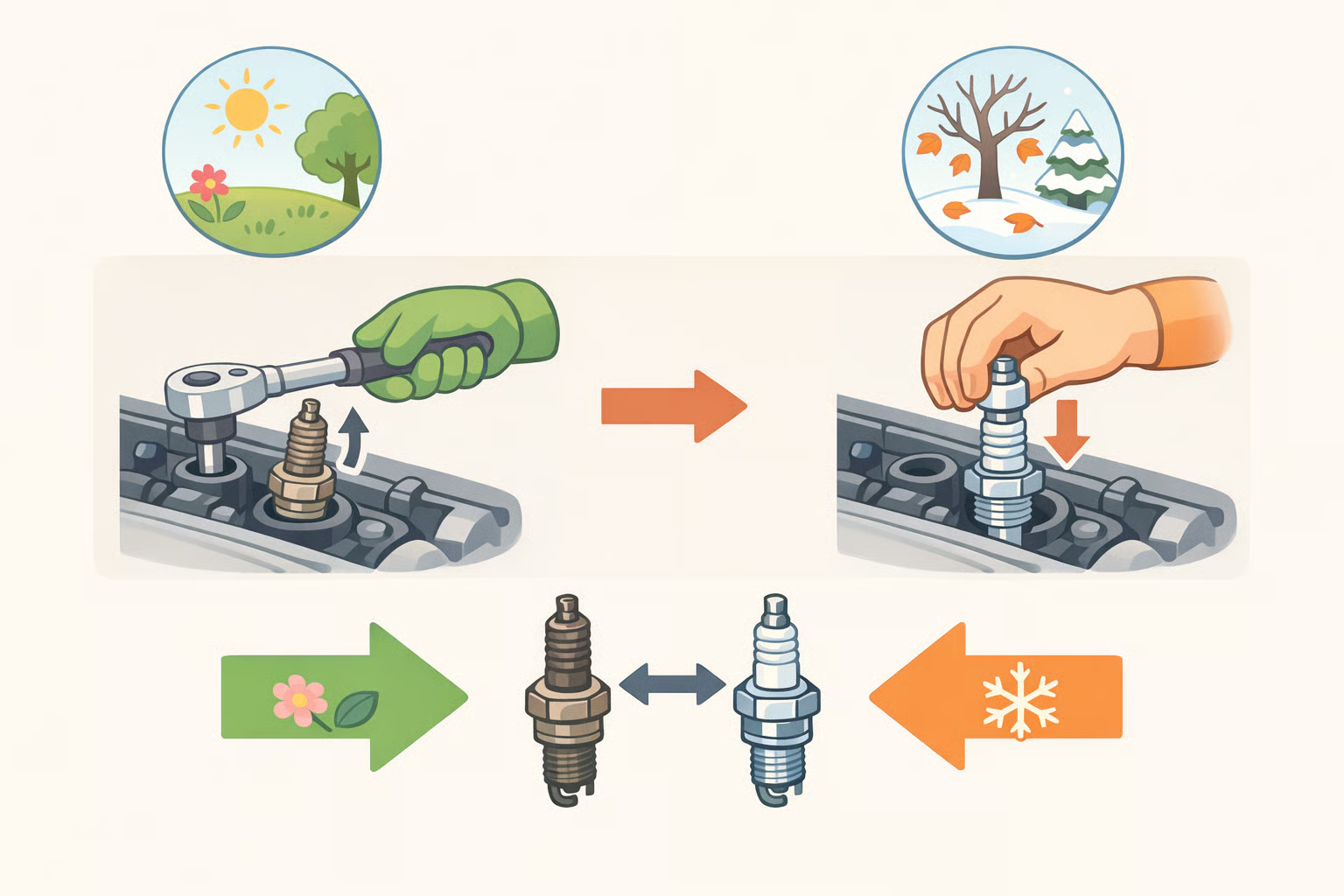
Two credible sources give slightly different guidance here. N.C. Cooperative Extension recommends replacing the spark plug each season, at either startup or shutdown. LowesEmployees.com suggests every two years is sufficient for low-hour engines. The safest approach: check the owner's manual for the manufacturer's specified interval, and when in doubt, err toward annual. A replacement plug costs around $3. The manual is the authoritative reference for that specific engine general guidance applies broadly, but manufacturer specifications make it precise.
Fuel selection
Avoid E-15 fuel. N.C. Cooperative Extension states that 15% ethanol gas may damage small engines. Checking the pump label before filling takes about three seconds and costs nothing. This is the rare maintenance step that requires no tools, no parts, and no scheduled time just attention.
End-of-season storage: where most mower lives are won or lost
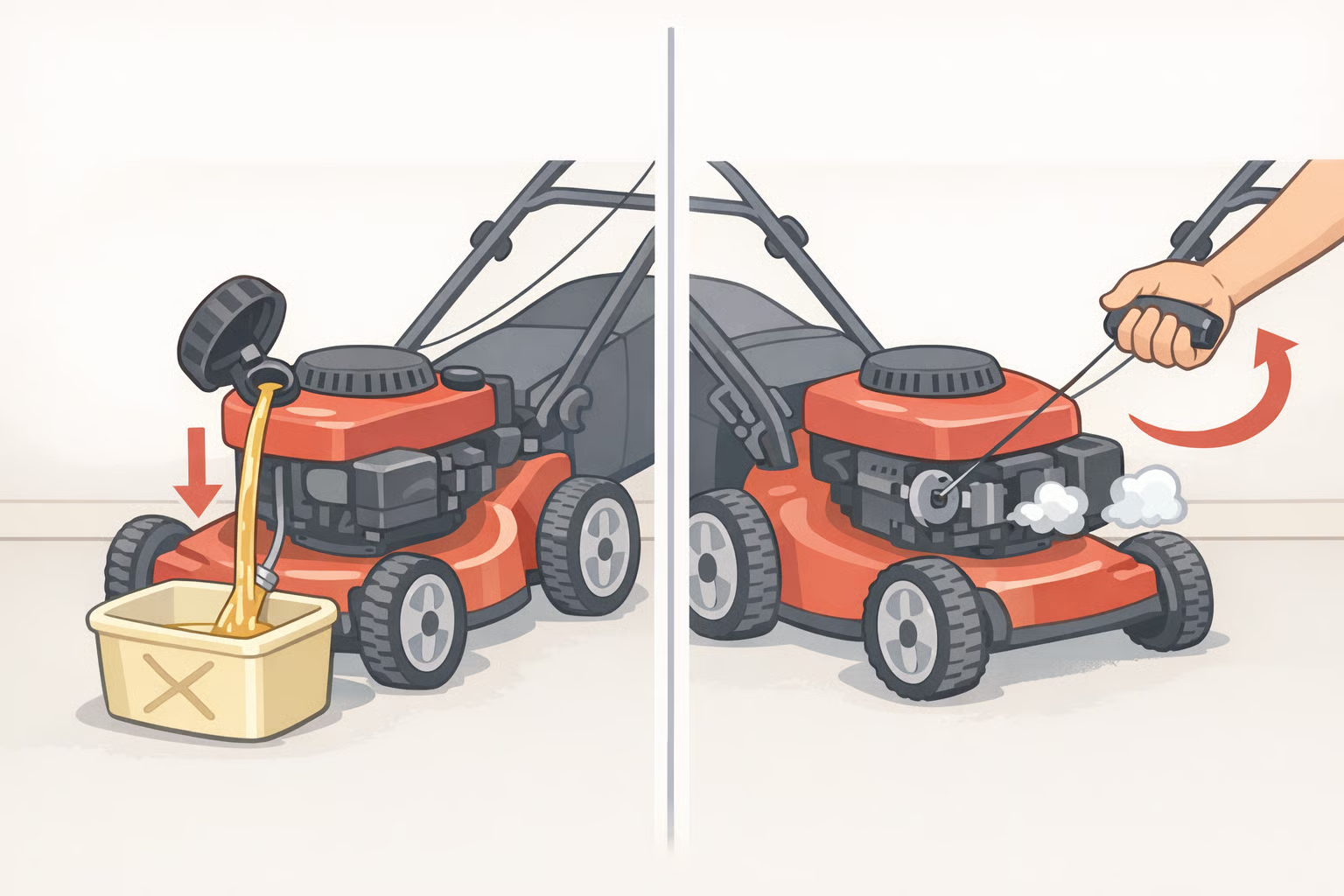
Before putting the mower away for any extended period, drain the fuel tank completely, then crank the motor several times to clear remaining fuel from the carburetor, UGA Extension advises. With the mower out of service, the checklist continues:
- Check or change the oil
- Inspect and replace the air filter and spark plug if needed
- Lubricate any parts specified in the service manual
- Sharpen or replace the blade
- Cover the machine to protect against dust and moisture
UGA Extension and N.C. Cooperative Extension both identify this end-of-season process as standard practice. Pairing the oil change with storage prep means two items get handled in one session, which is a practical reason to do both at the same time rather than treating them separately.
Blade maintenance: the engine-protection angle
Annual sharpening typically costs about $8 at most independent dealers; a replacement blade runs approximately $20, LowesEmployees.com notes. The framing that matters here isn't cutting quality it's reduced engine load. Every pass with a sharp blade is easier on the engine than every pass with a dull one. Multiplied across a full mowing season, that difference accumulates.
The minimum annual routine
Once a season: change the oil, swap the spark plug, sharpen or replace the blade, drain the fuel before storage. Year-round: check pump labels and avoid E-15. For the basic parts alone, one source puts the annual cost under $25, per LowesEmployees.com treat that as a rough field estimate, not a precise budget guarantee. The barrier to basic annual upkeep appears modest. Mostly, it's a question of habit.
Conclusion
The 8-to-10-year end of the residential range is achievable; the low end reflects what happens when basic upkeep is consistently skipped, LowesEmployees.com data indicates. The number itself matters less than understanding which inputs move it.
Ethanol exposure and poor off-season storage are among the most common preventable causes of early engine failure, UGA Extension and N.C. Cooperative Extension each confirm. Engine failures that seem sudden usually have a slow-burn cause: a winter's worth of stale fuel in the carburetor, two seasons of degraded oil, a fuel blend the engine wasn't designed for.
The maintenance case reduces to four things: oil, spark plug, clean fuel, proper storage. Most of the cost is time, not money.
The owner's manual is the best next step it specifies oil type, change intervals, and service schedules for that engine specifically. For anyone who no longer has theirs, the manufacturer's website will typically have a downloadable PDF searchable by model number.



Comments
Be the first, drop a comment!