



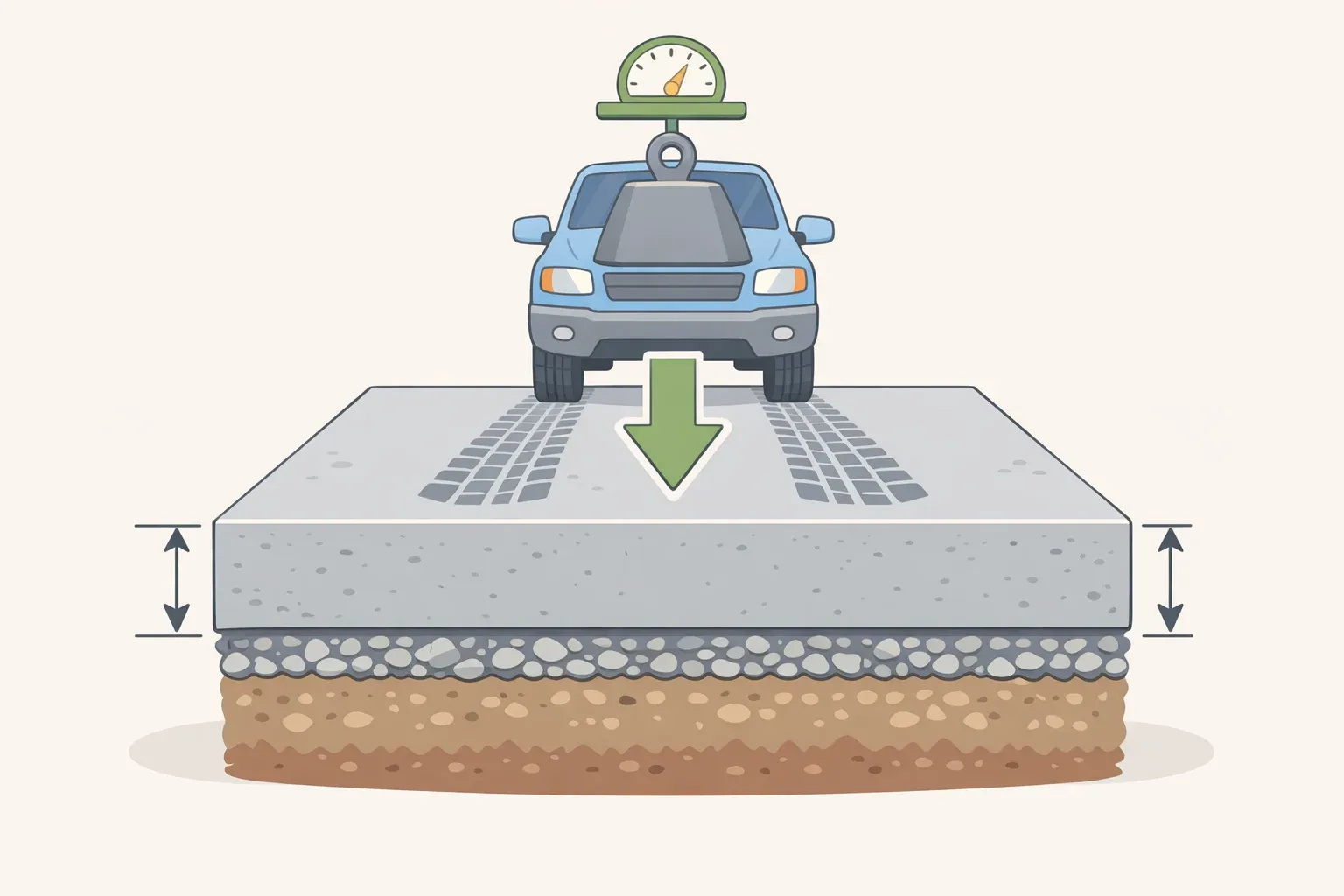
How Much Weight Can a Concrete Driveway Hold: Thickness & Load
Most people asking this question want a number. There isn't one not a single universal figure that applies to every driveway. But there is a framework that answers the practical question: was this driveway built to handle the vehicles that are actually using it?
Here's the short version of how much weight a concrete driveway can hold: four inches of concrete handles standard passenger cars up to around 4,000 pounds. Five inches is the threshold for heavier pickup trucks in the 5,000 to 8,000 pound range. Six inches or more is the starting point for RVs and commercial-style vehicles. But thickness is only part of the equation. The base beneath the concrete, how well it drains, and where control joints are placed can matter just as much as how thick the slab is.
That's the framework. Everything below explains why it works that way, what happens when it doesn't, and how to evaluate a driveway that's already showing problems.
Concrete driveway load capacity: match slab thickness to vehicle weight
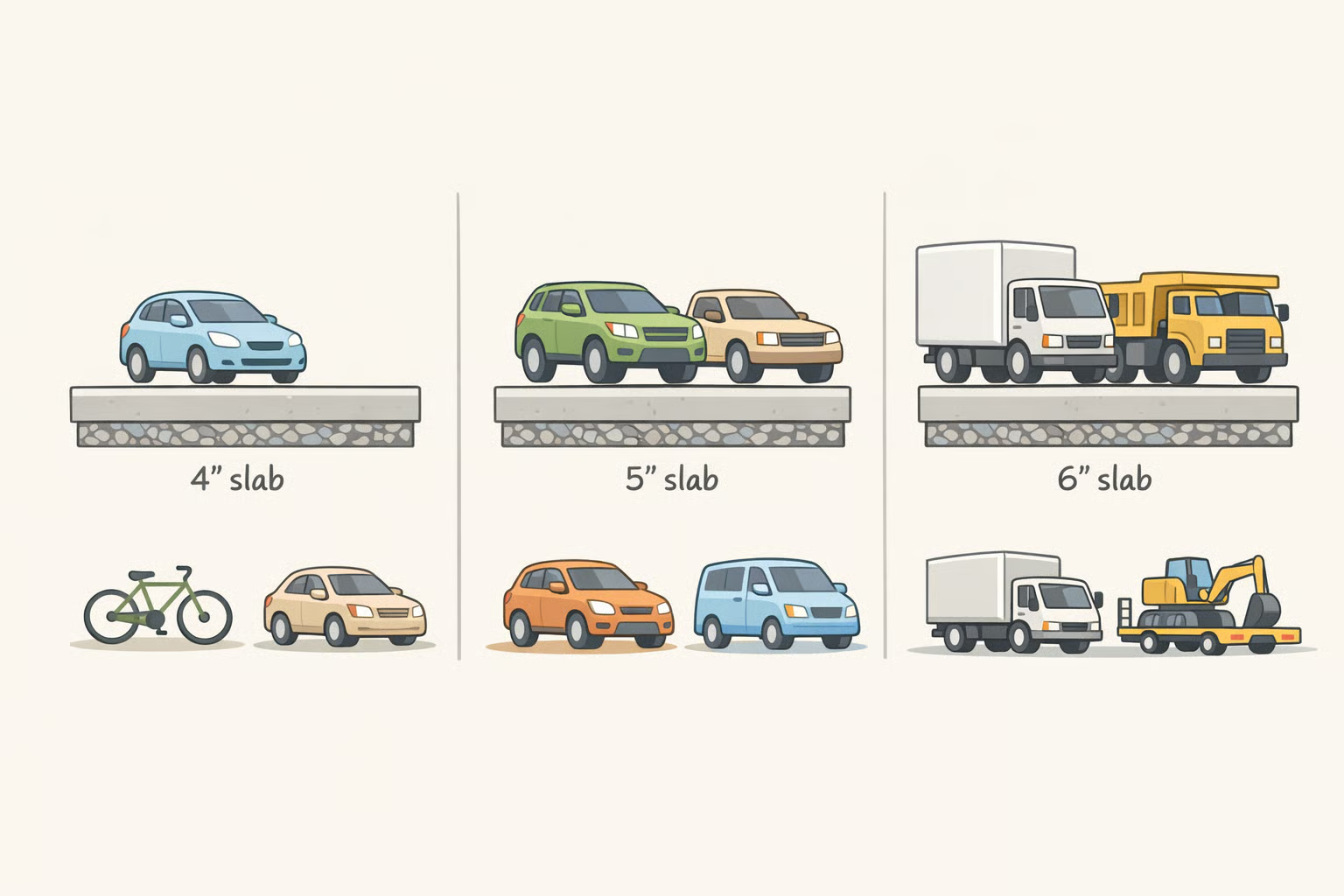
The three-tier thickness guide above reflects broad contractor consensus. It isn't a precise engineering load rating, but it holds up across multiple sources as a practical starting point.
Standard residential driveways are typically built to four inches, which suits most passenger cars and light SUVs. Five inches is the recommended threshold for heavier pickup trucks. Six inches or more is where contractors start when the driveway will regularly see RVs or commercial-style vehicles, according to Northmen Concrete earlier this year. Vehicle weights give you a sense of why the tiers matter: a compact car runs 3,000 to 3,500 pounds; a full-size SUV, 4,000 to 6,000 pounds; a pickup truck, 5,000 to 8,000 pounds; a large RV can exceed 10,000 pounds.
A four-inch slab may satisfy local building codes and still flex noticeably under load. That repeated flexing accumulates. SlabCalc put it plainly earlier this year: a four-inch driveway typically shows significant cracking within five to ten years, while a five-to-six-inch slab resists flexing better and, with proper installation, lasts twenty-five to thirty years. Going from four to five inches adds roughly 25% more material more expensive, but often the right call for households that regularly park anything over 6,000 pounds, per Northmen Concrete.
Local building codes complicate this picture. Minimum thickness requirements vary by jurisdiction and should not be read as performance benchmarks. CodeConcrete cites examples where municipal requirements range from four inches (Lancaster, California; Sterling Heights, Michigan) to six inches (Boca Raton, Florida; San Clemente, California) for residential driveways. Code compliance is the legal floor, not a guarantee the driveway will handle the heaviest vehicle in your garage.
For vehicles exceeding roughly 22,000 pounds Class 6 medium-duty trucks, concrete mixers, fully loaded trailers standard residential guidelines don't apply. The CCAA guidance, as cited by CodeConcrete, states directly that driveways used by vehicles over 10 metric tons require a formal engineering design, not contractor rule-of-thumb thickness.
Why the ground beneath the concrete often matters more than the slab itself
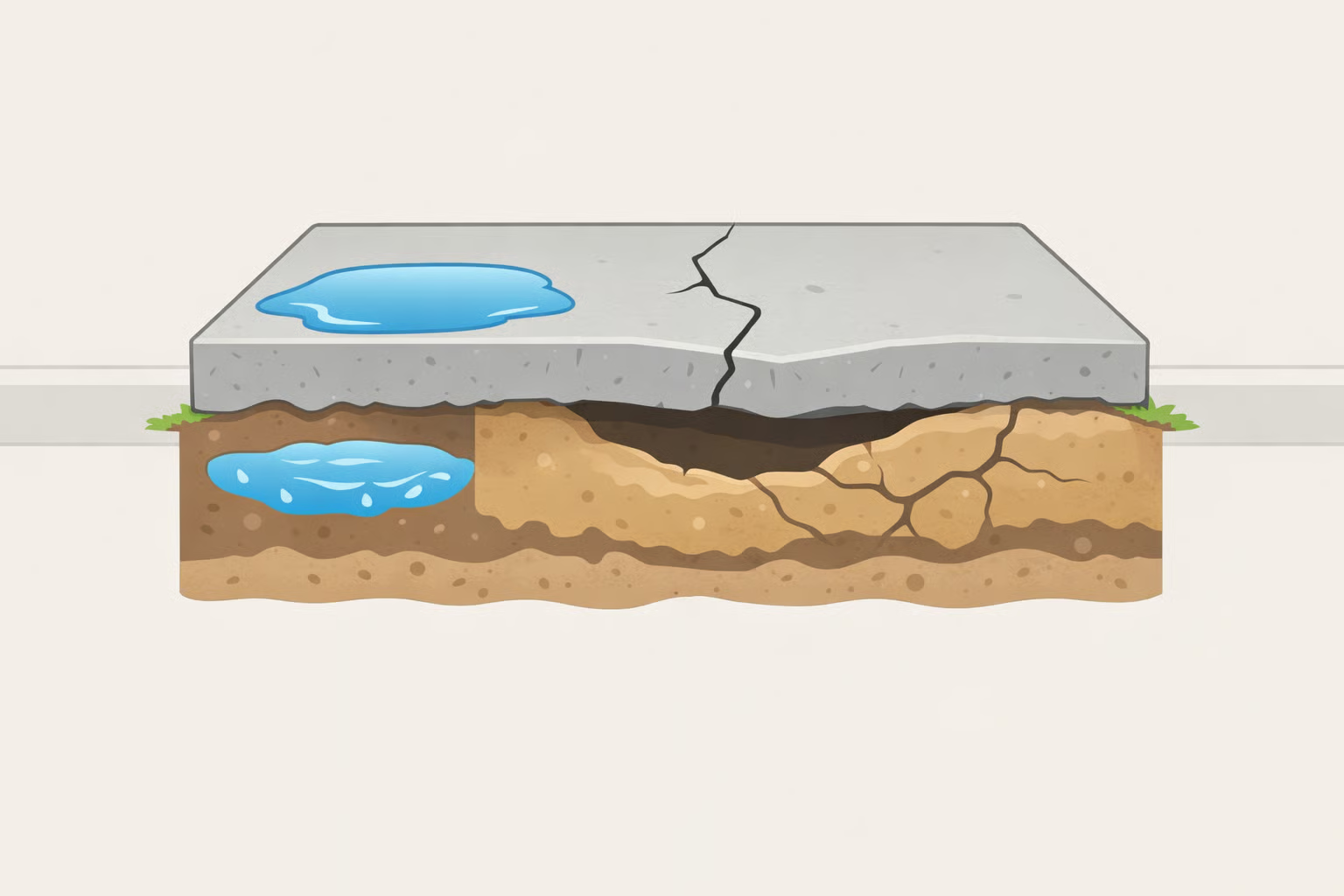
A thick slab over a poorly prepared base is a solid tabletop on wobbly legs. The concrete doesn't bear load in isolation it transfers force downward into the base and subgrade, which have to hold their shape under that stress. If they don't, the slab loses support unevenly, stress concentrates at specific points, and cracks follow.
Cesar's Concrete noted earlier this year that even a code-compliant, correctly thick driveway will fail early if the base beneath it isn't properly compacted and stable. The mechanism is straightforward: poor compaction, unstable soil, or water erosion allows the subgrade to deform under load, and once the slab loses continuous ground support, it begins to bend. Concrete handles compression well; bending is where it breaks.
Two installation details worth knowing when evaluating contractor bids: base thickness is generally recommended to equal slab thickness, and slab edges are typically thickened by about 50% with a 1-in-10 slope to reduce edge curling, per CodeConcrete. These aren't exotic specifications they're standard practice but contractors cutting costs often skip them.
Drainage compounds the problem. Water pooling beneath or at slab edges accelerates base erosion, and in freeze-thaw climates the cycle is destructive: water infiltrates the base, freezes and expands, heaves the slab, then recedes leaving voids underneath. Northmen Concrete identifies poor drainage planning as one of the most common installation mistakes, and in cold-climate regions, the choice of concrete mix matters too. Legacy General Services noted last year that mixes with 5 to 7% entrained air content help resist internal cracking from freeze-thaw cycles, while areas with heavy deicing salt use benefit from compressive strength at or above 4,500 PSI combined with chemical-resistant sealers.
The practical implication: a homeowner whose driveway cracked under a heavy truck may be misdiagnosing the cause. The weight may have exposed a base problem inadequate compaction, missing drainage, unstable soil that existed long before the vehicle arrived.
Reading your driveway: how to evaluate cracks, joints, and site conditions
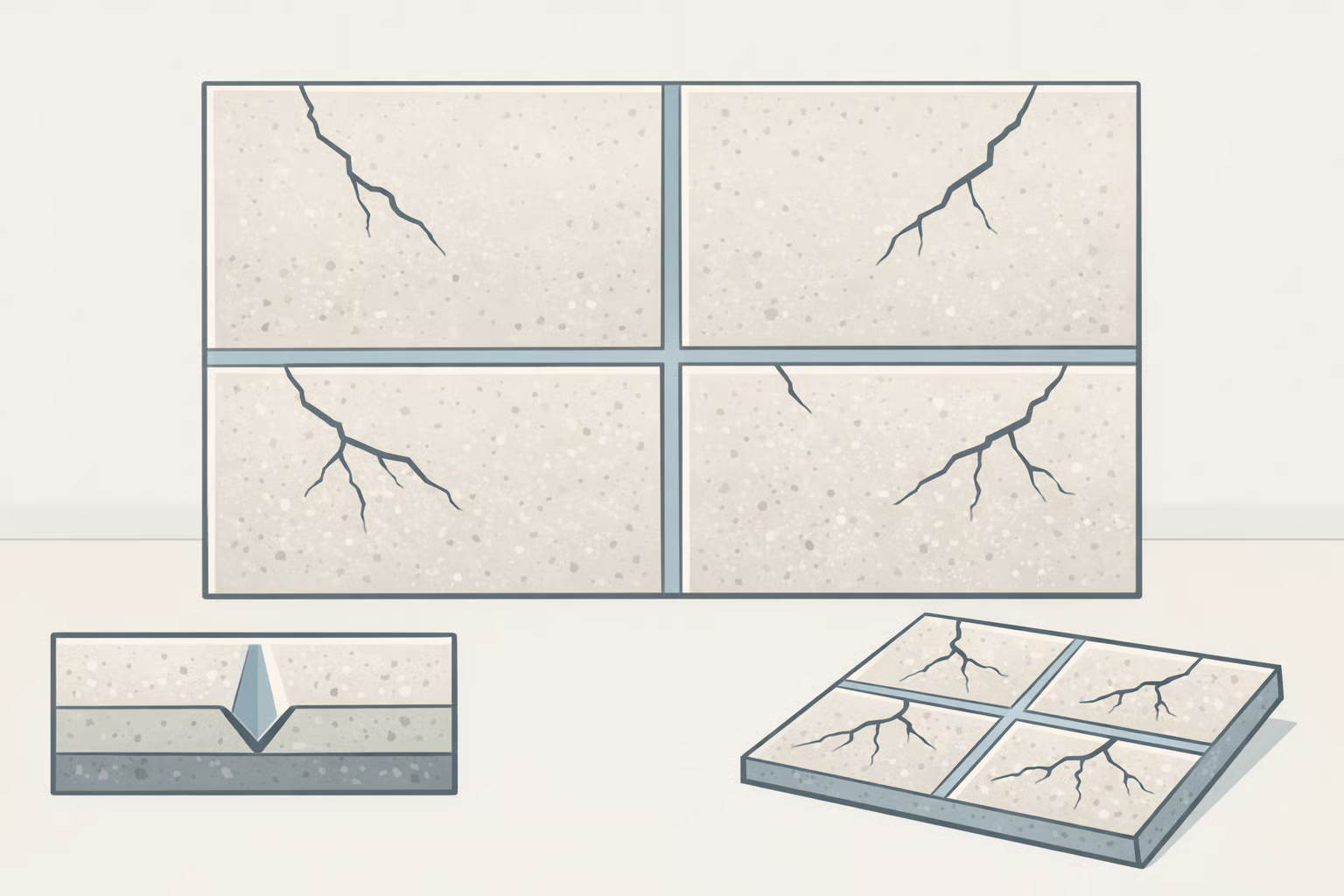
Concrete driveways are designed to crack. That's not a failure of the material the engineering goal is crack control, not crack prevention. A crack's location and pattern tells you far more than its existence.
Properly designed driveways include control joints: intentional score lines that direct expansion and contraction cracks to predictable, managed locations. A crack running along a control joint is the system doing exactly what it was built to do, as Cesar's Concrete explains. Joints should be spaced every eight to twelve feet, cut to roughly one-quarter of the slab's depth so a four-inch slab needs joints at least one inch deep. Joints cut too shallow or spaced too far apart leave the slab without a planned relief path, and cracks appear wherever the concrete decides rather than where the contractor intended, per Cesar's Concrete and SlabCalc.
Steel rebar is often misunderstood in this context. In a typical residential driveway, rebar controls shrinkage and temperature movement it does not significantly increase the load a slab can carry before it first cracks, per CodeConcrete. What it does is hold cracked sections together afterward, preventing the differential movement that turns a hairline crack into a tripping hazard. For driveways that regularly support vehicles over 6,000 pounds, Northmen Concrete recommends rebar grid reinforcement and notes that fibers alone shouldn't substitute for it in high-load situations.
Cure time is another variable most homeowners only think about after the damage is done. Concrete reaches roughly 70% of its design strength after about seven days adequate for passenger vehicles. Full strength takes 28 days. Parking heavy vehicles on a new slab before the 28-day mark is one of the fastest ways to compromise an otherwise sound installation, per SlabCalc and Legacy General Services.
For homeowners evaluating an existing driveway, here's what to check:
- Vehicle weight: Use manufacturer specs or a public weighbridge. Anything over 6,000 pounds warrants scrutiny on a standard four-inch driveway.
- Slab thickness: Check original permits or contractor records. If those aren't available, a small test hole near the edge with a masonry drill bit gives a rough measurement.
- Joint presence and spacing: Score lines should be visible every eight to twelve feet. No visible joints means the slab was likely installed without them a setup for uncontrolled cracking.
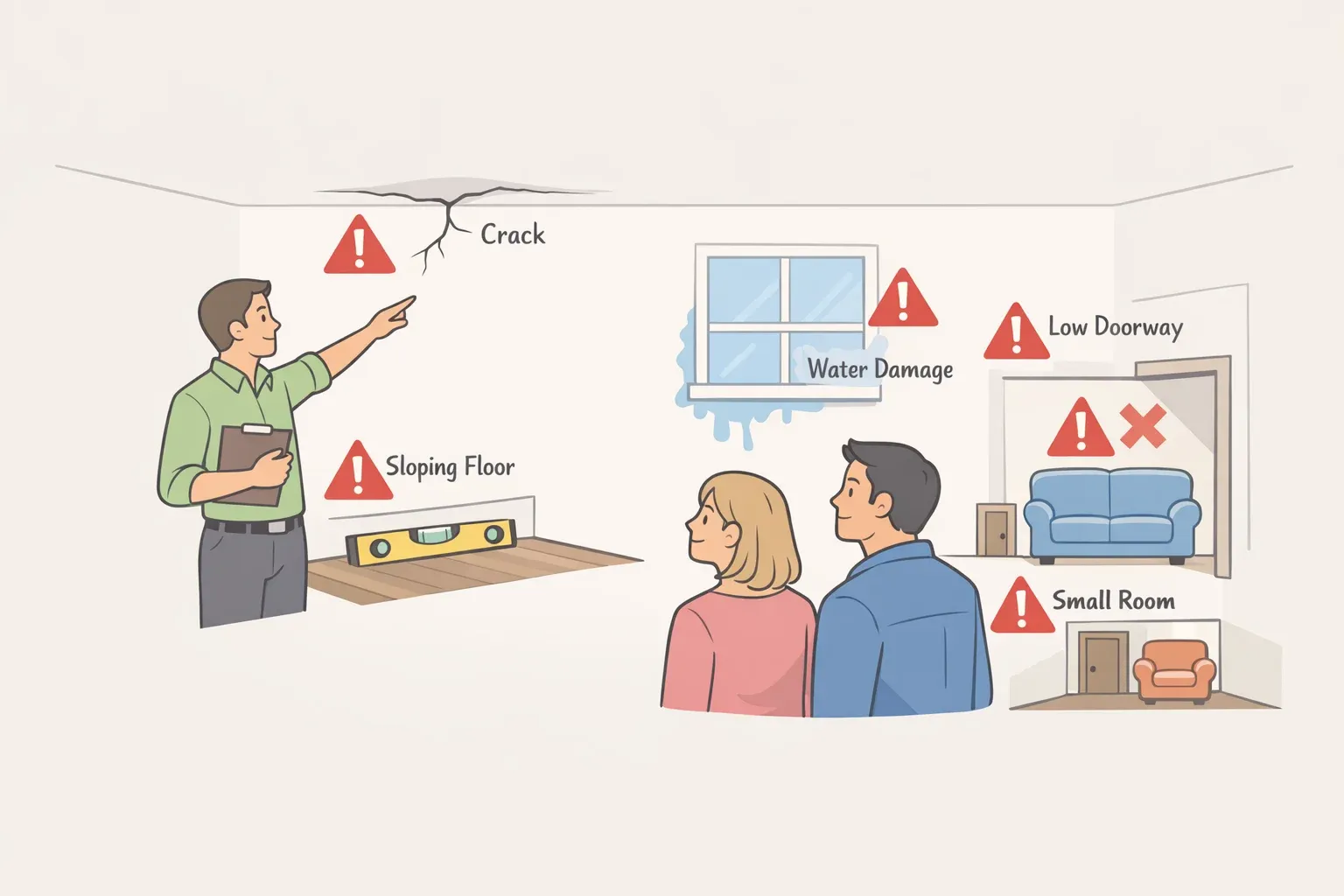
- Crack type: Hairline cracks at joints are normal. Diagonal cracks crossing a panel, stepped cracks at panel edges, or cracks with height differential between sides indicate base movement, not just surface wear.
- Settlement and drainage: Panels sitting at different heights, water pooling near the slab, or eroded material visible at edges all point to base problems.
- Curing history on newer slabs: If a driveway less than a year old is already cracking, early loading or an installation shortcut is the more likely cause than overload.
Cesar's Concrete identifies the leading causes of premature cracking as poor base preparation, missing or incorrectly placed control joints, and insufficient curing not vehicle overload as the primary driver.
When cracking is widespread across multiple panels, sections sit at uneven heights, or drainage problems keep returning after repair, the base problem is systemic. Patching extends the symptom. Cesar's Concrete puts the replacement threshold there: when repair no longer provides a lasting solution, replacement is the straightforward answer.
The decision framework
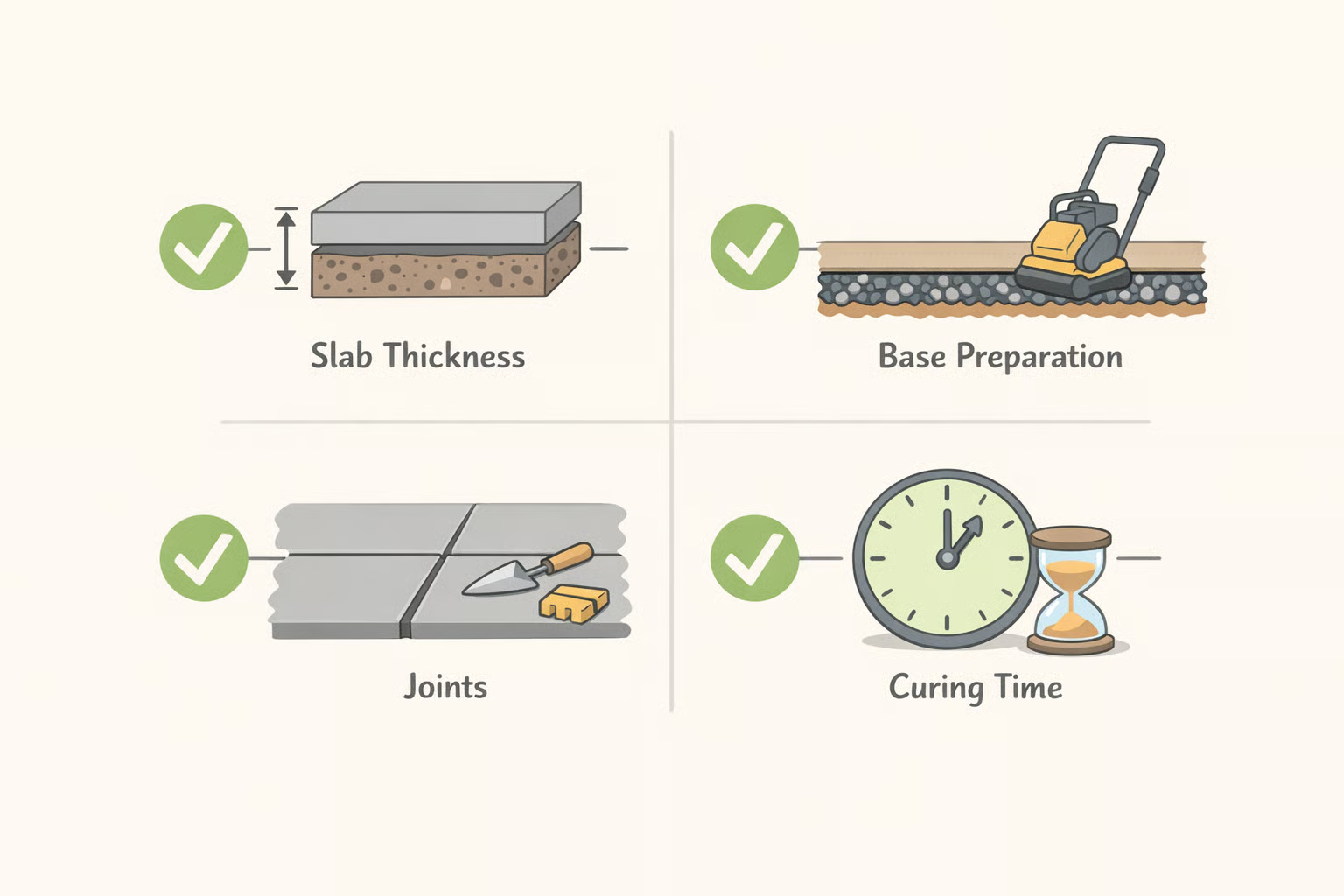
Driveway load capacity comes down to four things working together: slab thickness matched to vehicle class, a properly compacted and drained base, correctly placed control joints, and adequate cure time before heavy use.
Quick reference by vehicle weight:
- Standard passenger cars and light SUVs under 4,000 lbs: four-inch slab meets code and performs adequately with proper base and joints
- Heavy SUVs and pickup trucks between 4,000 and 8,000 lbs: five inches is the safer choice; rebar is worth including
- RVs and heavy vehicles over 8,000 lbs: six-inch minimum; rebar grid recommended; discuss base specs with the contractor
- Vehicles exceeding roughly 22,000 lbs or commercial equipment: standard residential guidelines don't apply; a structural engineer should be part of the design process
Before a new pour, three questions are worth pressing a contractor on: what thickness is being specified and why does it match the planned vehicle load, how will the base be prepared and compacted, and where will control joints be placed. For an existing driveway, the inspection checklist above will tell you whether cracking reflects normal aging, an installation shortfall, or a load mismatch and whether repair or replacement is the more durable path forward.
One final threshold: the CCAA guidance, as cited by CodeConcrete, calls for a formal engineering design for any driveway regularly used by vehicles over 10 metric tons. That covers large RVs on the heavy end, commercial delivery vehicles, and construction equipment. For those situations, a contractor's rule of thumb isn't enough.

















Comments
Be the first, drop a comment!