



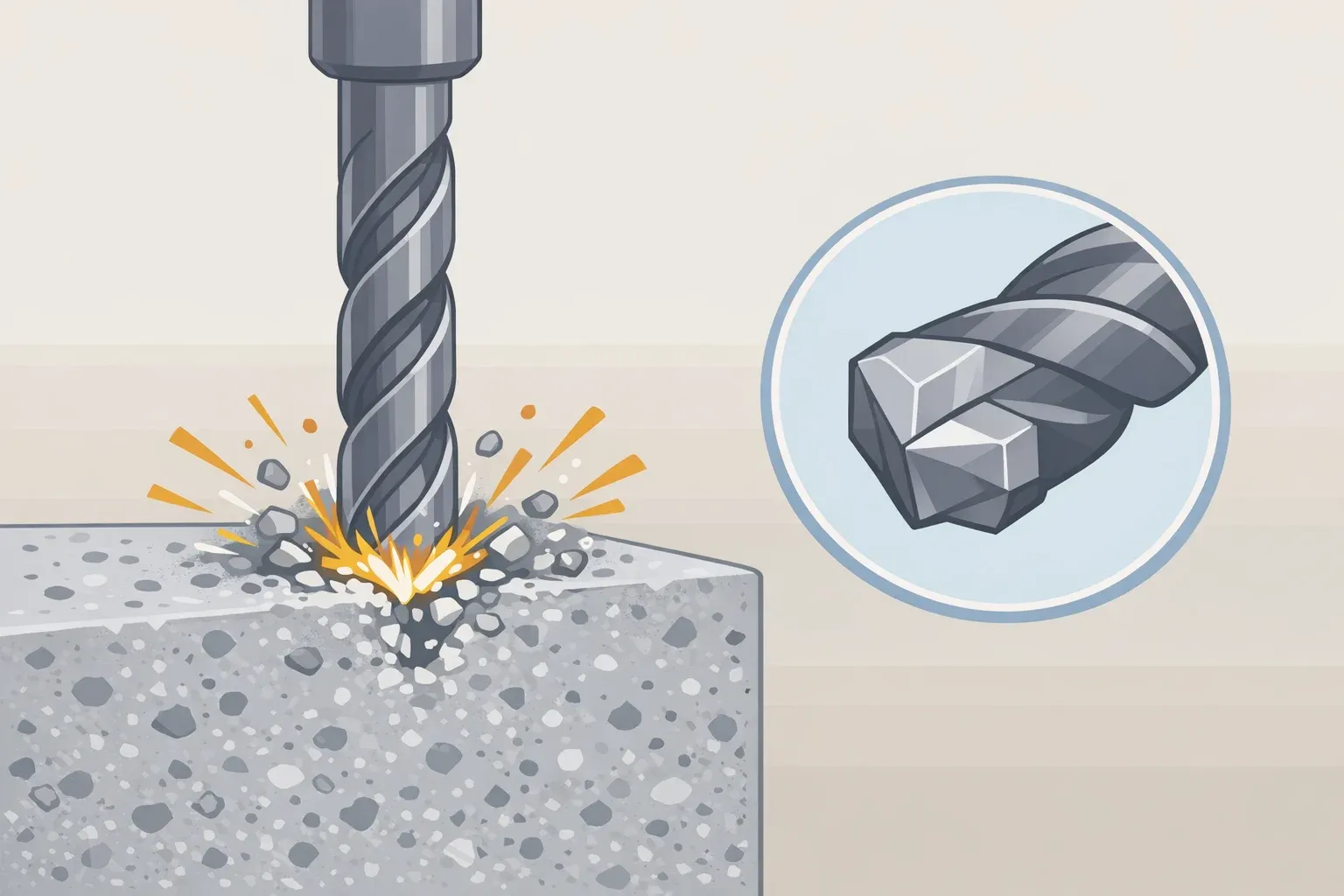
Push a standard twist bit into concrete and nothing good happens. It heats up, smokes, and loses its cutting edge quickly — not because the drill lacks power or because the technique is automatically wrong, but because concrete is a fundamentally different material. Understanding how concrete drill bits are different from other drill bits comes down to three things: tip material, tip geometry, and shank design.
Before going further, it helps to sort drill bits into three rough categories. General-purpose twist bits, typically made from high-speed steel (HSS), handle wood, plastic, and soft metals. Masonry bits use a carbide tip and work on brick, block, mortar, and many small concrete jobs. Diamond and core-drilling systems are a different class entirely, used for larger holes, harder materials, reinforced concrete, and professional work.
For most shoppers, the practical question is not the exact strength rating of the concrete. It is simpler: what are you drilling into, how big and deep does the hole need to be, and what drill do you have? Those answers determine whether you need a basic masonry bit, an SDS bit, or a diamond core system.
Concrete drill bits vs. regular bits
A masonry bit is recognizable the moment you pick it up. The tip is wide, flat, and angled — often spear- or chisel-shaped — and it looks built to take a beating rather than make a clean entry. A standard twist bit has a centered point with two sharp spiral cutting edges. That difference in shape reflects a basic difference in how each bit works.
A twist bit slices and shears. It cuts through wood fibers or soft metal with a sharp edge. A masonry bit does not slice concrete in the same way. It chips, crushes, and pulverizes the material ahead of it so the flutes can carry debris out of the hole.
That is why tip material matters. Concrete contains sand, stone, and aggregate, which can quickly dull a general-purpose HSS bit. Most masonry and concrete bits use carbide because it holds up better against heat and abrasion; Bosch, for example, describes its masonry and concrete drill bits as equipped with carbide tips for durability in concrete and stone.
The flutes matter too. As the bit moves into the wall or slab, the flutes help pull concrete dust out of the hole. If dust packs around the bit, drilling slows down, friction increases, and the tip can overheat. That is why backing the bit out periodically to clear dust can help on deeper holes.
Shank design is the third major difference. Straight-round shanks clamp into a standard keyed or keyless chuck and are fine for lighter masonry jobs. SDS shanks are made for rotary hammers. They lock into the tool and allow the bit to move back and forth during hammer action without slipping loose in the chuck.
Check the flute length, not just the total bit length, against the hole depth your anchor or fastener requires.
Why the drill matters too
A masonry bit in a standard rotary drill is usually only a partial solution. For soft brick, lightweight block, mortar, or one small hole, a regular drill with a carbide masonry bit may work slowly. For ordinary concrete, repeated holes, or anchor work, hammer action is usually what makes the job practical because it helps chip the concrete while the bit rotates.
A hammer drill combines rotation with rapid, short hammering blows along the axis of the bit. That makes it suitable for many household concrete jobs, such as installing small anchors, mounting hardware, hanging items on a basement wall, or drilling into a patio slab.
A rotary hammer is a heavier-duty tool. It uses a stronger hammering mechanism and is usually faster and less fatiguing for larger holes, repeated holes, or harder concrete. If a hammer drill feels like it is barely making progress, a rotary hammer may be the better tool for the job.
SDS-Plus and SDS-Max are shank systems used with rotary hammers. SDS-Plus is the common choice for many small to medium concrete holes, while SDS-Max is for heavier rotary hammers, larger holes, and more demanding work. Hilti's concrete and masonry bit catalog separates bits by connection end, including TE-C/SDS Plus and TE-Y/SDS Max, which is a useful reminder to match the bit to the tool before buying.
Speed settings should come from the bit and tool manufacturer, not a universal rule. In general, masonry and concrete bits need enough rotation to clear dust without overheating. Diamond core bits may call for different speeds and drilling methods than small carbide masonry bits. If the bit is smoking, slowing down, glazing, or no longer clearing dust, stop and check the bit, the drilling mode, and the manufacturer's instructions before forcing it.
Carbide vs. Diamond: Which bit to choose
The right bit depends on the material, hole size, hole depth, and whether the concrete is reinforced. Use this as a practical guide:
JobBest starting pointWhat to knowSmall holes in brick, mortar, or lightweight blockCarbide masonry bit in a regular drill or hammer drillA regular drill may work for one or two small holes, but hammer mode usually makes the job easier.Small anchor holes in ordinary concreteCarbide masonry bit in a hammer drillMatch the bit diameter to the anchor instructions and check that the flute length covers the needed depth.Repeated holes or harder concreteSDS-Plus bit in a rotary hammerThis is often faster and easier than forcing a standard drill and straight-shank masonry bit.Large, deep, or heavily reinforced concrete holesDiamond core bit or professional core-drilling setupThis may require specialized equipment, water control, dust control, and a more experienced operator.Tile over masonry or concreteTile/glass bit first, then masonry bit after the tile layerDo not start hammer mode directly on finished tile unless the bit and surface are meant for it.
Carbide masonry bits are the practical choice for most household concrete jobs. They are widely available, relatively affordable, and appropriate for common anchor holes when used with the right drill.
Diamond bits and core systems are for tougher situations. They grind rather than chip, which makes them useful for larger holes, hard stone, and reinforced concrete. They are also more specialized. For a homeowner drilling a few small anchor holes, a diamond core setup is usually unnecessary. For a large pipe penetration through a foundation wall, it may be exactly the point where the job should move beyond basic DIY tools.
Rebar is another dividing line. If a standard masonry bit suddenly stops advancing and you suspect it hit steel, do not keep pushing harder. Back the bit out and reassess. Depending on the location, you may need to shift the hole, use a rebar-capable bit, or consult a pro — especially if the hole is in a structural wall, slab, or foundation.
Safety checks before you drill
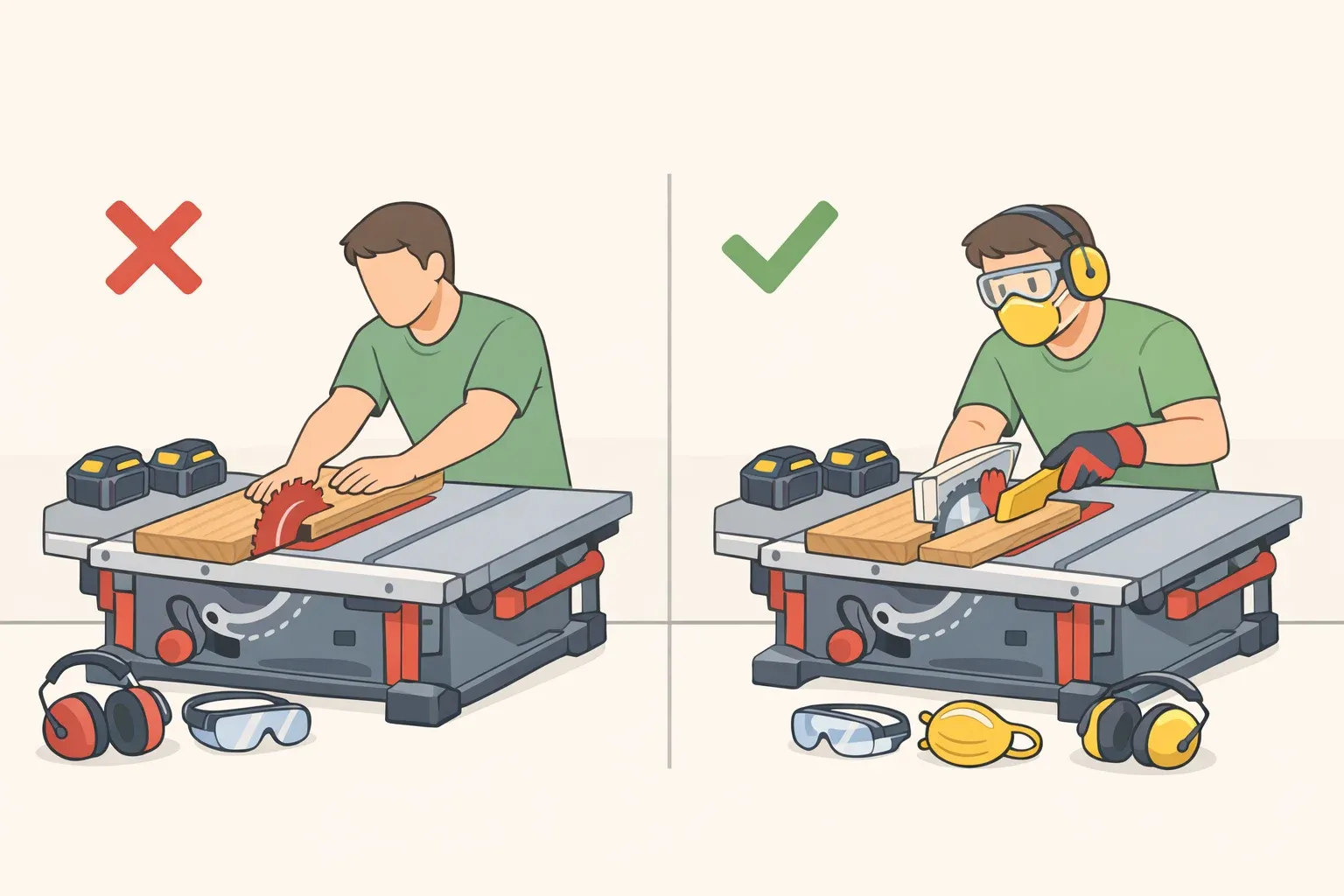
Before drilling, put on eye protection and control dust as much as possible. OSHA notes that drilling concrete, brick, mortar, stone, and similar materials can release respirable crystalline silica, so use dust extraction or a vacuum attachment when possible; use wet methods only when the bit, tool, and work area are suitable for wet drilling.
Also check what may be hidden behind or inside the surface. Do not drill blindly into slabs, foundations, structural walls, or areas that may contain wiring, plumbing, rebar, or post-tension cables. If you are not sure what is inside the concrete, stop and verify before drilling.
For anchor work, two details matter: bit diameter and hole cleaning. The bit diameter should match the anchor or screw manufacturer's instructions exactly. A hole that is too small can make the fastener bind or break; a hole that is too large can leave the anchor loose. After drilling, clean dust from the hole before setting the anchor so the fastener can seat properly.
How to choose the right concrete drill bit
Start with the material, then match the bit and drill to the job.
For small holes in brick, mortar, or lightweight block, a carbide masonry bit may be enough. Use a hammer drill if the material is hard or the bit is moving too slowly.
For small anchor holes in ordinary residential concrete, use a carbide masonry bit in a hammer drill set to hammer mode. Match the diameter to the anchor instructions, confirm the flute length is deep enough, and clean the hole before installing the anchor.
For repeated holes, harder concrete, or jobs where a regular hammer drill is struggling, step up to an SDS-Plus bit and rotary hammer. The bit and tool are designed to work together, so the job usually goes faster with less pressure from the user.
For large holes, deep holes, reinforced concrete, foundations, or structural walls, a bit change alone may not be enough. The job may need an SDS-Max rotary hammer, a diamond core drill, a rebar-capable bit, or a contractor with the right equipment.
The simplest rule is this: do not choose a concrete drill bit by size alone. Choose it by material, tool type, shank style, hole depth, and fastener requirements. Get those pieces lined up, and drilling into concrete becomes much more predictable.









Comments
Be the first, drop a comment!