



Hiring a Plumber in Huntington Beach: Questions to Ask First
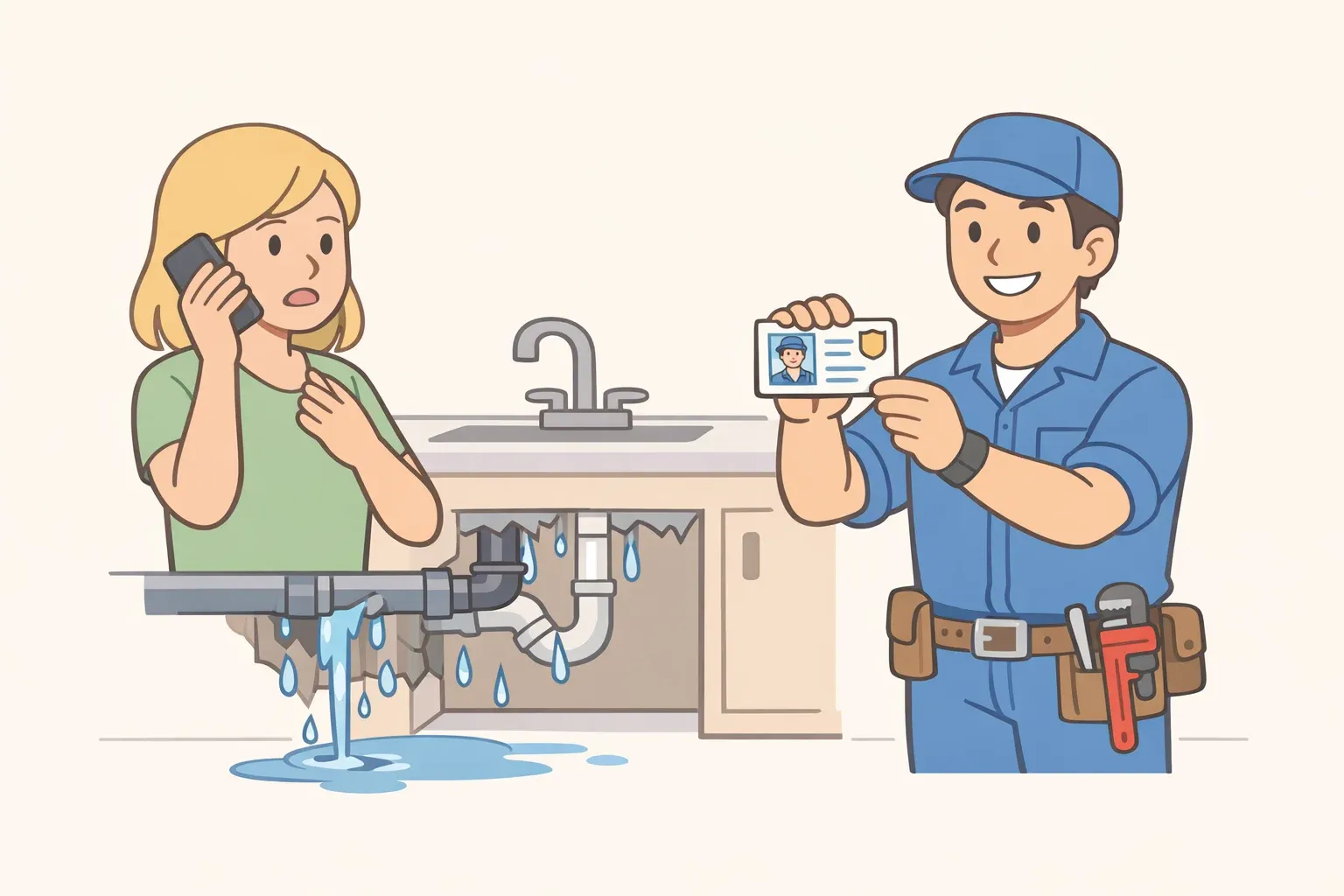
Most homeowners don't think about hiring a plumber until something has already gone wrong. A burst pipe at 11pm. A water heater bleeding into drywall. A drain backing up the night before guests arrive. That's the worst possible moment to start vetting contractors.
Huntington Beach compounds the problem. Coastal salt air can accelerate corrosion on exposed metal fittings, per AMPP (formerly NACE International, the professional body for corrosion engineering), which documents how proximity to shorelines may affect metal pipe degradation and material selection. Many Orange County service areas have moderately hard to very hard water that can shorten the lifespan of fixtures, water heaters, and supply lines faster than most homeowners expect, according to Orange County Water District's annual water quality reports. Both factors make local expertise worth paying for, and make a poorly scoped repair more likely to underperform.
If water is actively damaging your home right now, start with the first section. Everyone else, read straight through.
When you can't wait: minimum checks before authorizing emergency work
The first question to ask any plumber you're calling in a crisis: "Can you give me your license number right now so I can verify it while you're on your way?"
California requires plumbing contractors to hold a valid C-36 specialty license issued by the California Contractors State License Board (CSLB). Their public license lookup tool shows license status, bond status, workers' compensation coverage on file, and any recorded disciplinary actions. It takes under two minutes to run.
Skipping it has real consequences. The California Department of Insurance notes that hiring an unlicensed contractor may complicate insurance claims related to that work and could create personal liability if a worker is injured on your property. Urgency pressure tactics are a documented warning pattern in emergency contractor fraud. "We need to start tonight or the price goes up" is the line. Don't let a flooded bathroom talk you into ignoring it.
Before you authorize anything, run through these four items:
Get the license number and run it at cslb.ca.gov
Confirm they carry general liability insurance and can send a certificate before work begins
Get a written scope and price before authorizing a single hour of labor
If the repair requires opening a wall or cutting into a floor, get a written not-to-exceed amount for that access work before they go further
Emergency surcharges are real and often legitimate. Ask specifically: "Is this your standard rate or an after-hours rate, and what's the dollar difference?" If that question gets a runaround, find someone else.
Baseline legitimacy: license, bond, and insurance
The CSLB license lookup does more work than most homeowners realize. One search returns license status, bond status, workers' comp coverage on file, and disciplinary history. Run all four fields, not just the license check. A contractor who is licensed but carries a pattern of disciplinary actions is a different risk profile from one who is clean across every field.
The business name on the estimate should match the licensed entity in the CSLB record. If the license belongs to a named individual but the company sending workers is a different entity, that can signal unlicensed subcontracting arrangements, which may shift liability onto you.
Workers' compensation is worth pressing on directly. The California Department of Insurance outlines what the absence of coverage can mean for homeowners. The Insurance Information Institute recommends requesting an actual certificate of insurance on significant jobs, not just asking whether coverage exists.
One nuance: some solo operators in California may qualify for exemptions from standard workers' comp requirements. That exemption doesn't mean they're covered if injured on your property. Ask how they'd handle an on-site injury. A straight answer is a good sign.
Scope and price in writing: the questions most homeowners skip
Pricing and scope are where plumbing jobs most frequently go sideways. The problem usually isn't a dishonest contractor; it's a vague initial quote that leaves room for surprises neither party anticipated.
California law requires a written contract for home improvement projects over $500, specifying work description, materials, and total cost, per the CSLB. A contractor who resists putting terms in writing before starting work is telling you something. Low-estimate/inflated-invoice patterns rank among the most common home services consumer complaints, typically enabled by vague quotes that don't separate labor, parts, and diagnostic fees. An itemized quote protects both parties.
Some plumbing jobs require permits in Huntington Beach. Water heater replacements, significant repiping, and sewer line work may fall under city permit requirements; confirm with the City of Huntington Beach before major work begins. A plumber who sidesteps permits to move faster can leave you with unpermitted work that complicates a future sale or insurance claim.
What the vetting conversation looks like by job type
Not every plumbing job carries the same risk profile. The questions that matter on a drain clearing are almost nothing like the ones that matter on a repipe.
Job typePrice structurePermitsWarranty worth pressing for?Key trapDrain clearingFixed price is standardRarely requiredLess criticalUpsells: camera inspection or hydro-jetting on a simple clogWater heater replacementFixed price is typicalOften required; confirm with cityYes, in writingCode add-ons appearing outside the quoted price: seismic strapping, expansion tank, updated ventingLeak in wall or under slabTime-and-materials can be reasonable; insist on a written not-to-exceed for the exploratory phaseVaries by scopeYes, especially on pipe repairsOpen-ended scope without a ceiling; drywall or flooring restoration excluded from the quoteFull repipeFixed price is the normVery likely requiredYes, before signingVague timeline with no milestone-based payment structure
A few traps that cut across all job types:
Diagnostic fees: "Free estimate" sometimes means free once they're already inside your house. Confirm the arrangement before they make the trip out.
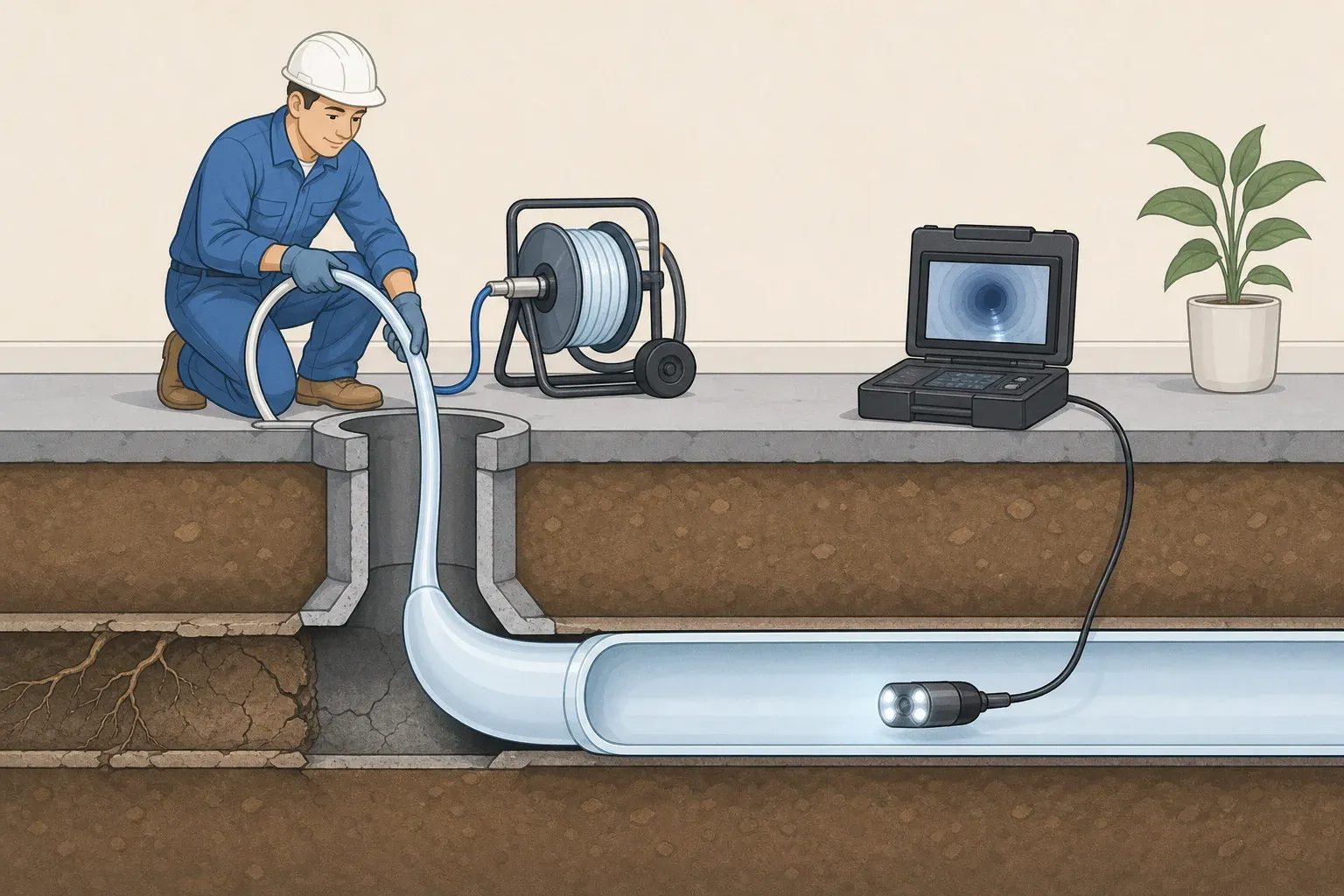
Sewer camera inspections: Useful in the right context, sometimes sold as an upsell when the job doesn't warrant one. Ask why it's being recommended and what the findings will change.
Access and restoration: If finding the problem requires opening a wall or cutting into a floor, confirm who restores it and whether that cost is itemized in the quote.
An itemized quote separating labor, parts, and diagnostic fees, with a clear change-order process explained before work starts, is what you're looking for. A flat number with no line items on a complex job, or a contractor who won't set a ceiling before opening walls, is the red flag.
Local knowledge: Huntington Beach experience and how to verify it
General plumbing competence is the floor. What separates a good hire in Huntington Beach from a competent hire anywhere is whether they've worked with the specific conditions here.
Hard water is one factor. The Orange County Water District's annual water quality reports document elevated mineral content throughout the service area. Scale buildup accelerates wear on pipes, fixtures, and water heaters, and a plumber speccing materials based on inland experience may leave you with a repair that underperforms on a shorter timeline than they quoted. Salt-air corrosion is a separate issue. AMPP documents how coastal environments may accelerate degradation on exposed metal pipes and fittings. Ask whether they've worked on or near the coast and how that shapes their material choices. The depth of the answer tells you more than the confidence of the delivery.
A plumber who mentions hard water or salt-air corrosion unprompted when discussing your job is demonstrating local fluency. That's not a sales pitch; it's a sign they've run into the problem before.
Solo operator or larger company? For a drain clearing or a water heater swap, a well-regarded solo plumber with a strong local referral network often outperforms a larger company dispatching whoever is available that day. For a repipe or sewer line replacement, a company with a dedicated crew, a project manager, and verifiable permitting history in Huntington Beach carries less scheduling risk across a multi-day job. Neither is automatically better. The job type should drive the choice.
Request two or three references from recent Huntington Beach jobs of a similar type, and actually call them. Two questions matter most: did the final price match the estimate, and did the plumber return promptly when follow-up was needed?
For independent verification, cross-check the CSLB disciplinary history with the Better Business Bureau for complaint patterns. Google Reviews are useful for texture, not verdicts. Reviews that mention specific local neighborhoods or describe job types similar to yours carry more weight than star volume. An absence of online reviews doesn't disqualify a solid operator who built the business on referrals.
Warranty terms: what stands behind the work
Labor warranties vary by contractor and aren't standardized by California law. The CSLB advises homeowners to get warranty terms in writing as part of the contract, since verbal commitments are difficult to enforce.
Parts warranties typically come from the manufacturer and run separately from the labor warranty. According to This Old House plumbing guidance, if a part fails and requires reinstallation, the plumber may not cover that labor even when the manufacturer replaces the part itself. Warranty terms belong in the contract from the start, not handled as a separate conversation once work is complete.
For a drain clearing, warranty terms matter less. For a water heater replacement or a full repipe, a defined labor warranty with a clear callback process is a reasonable expectation. Ask what the warranty period covers, whether a return visit within that period is at no charge, and whether the parts warranty is separate from the labor warranty.
In coastal homes, add one more question: does the warranty include exclusions for environmental conditions? A contractor with real shoreline experience will have a ready answer. Hesitation may mean a boilerplate warranty that wasn't written with salt-air exposure in mind.
A specific warranty period on workmanship with a defined callback process at no charge is what you're looking for. "Satisfaction guaranteed" with no definition of what that means or how disputes get resolved is a marketing phrase, not a commitment.
The order of operations
Work through this sequence before the first appointment. In a city where the water is hard, the air is salty, and a lot of the housing stock is old enough to have original copper or galvanized pipe, this isn't excessive preparation. It's just how you hire well.
Run the CSLB lookup. Check license status, bond, workers' comp coverage, and disciplinary history. Confirm the business name on the estimate matches the licensed entity. (cslb.ca.gov)
Request the insurance certificate in writing before work starts. For home improvement projects over $500, California also requires a written contract; confirm current requirements with the CSLB.
Get an itemized written estimate with explicit answers on fixed vs. time-and-materials pricing, change-order terms, permit responsibility, and the job-specific variables from the table above.
Verify local track record. References from comparable local jobs first, CSLB disciplinary history second, reviews third.
Confirm warranty terms in writing, labor and parts separately, with a defined callback process and a clear answer on environmental exclusions.
The contractors who push back on these questions are doing you a favor. You find out before the invoice, not after.













Comments
Be the first, drop a comment!