



Reviewed by: Y. Garcia
Your refrigerator keeps your food fresh and your drinks cold — until it doesn't. Spotting early warning signs can save you from spoiled groceries, costly emergency repairs, and the headache of a complete breakdown. Most refrigerators can last many years with proper care, but according to the U.S. Department of Energy, the average unit serves about 12 years. The key is recognizing when yours needs professional attention before small issues become major problems.
Your refrigerator actually gives you plenty of advance warning before it fails completely. A family of four can lose $150-200 monthly in spoiled groceries when temperatures fluctuate, while energy costs can double as struggling units work overtime. Learning to spot these five critical warning signs helps you catch problems while they're still manageable — and affordable to fix.
When your fridge can't keep its cool
Temperature problems are often the first red flag that your refrigerator needs repair. Your appliance should maintain temperatures at 40°F or below (many people aim for ~37°F), as noted by Mr. Appliance. When this balance fails, you'll notice groceries don't last as long as they should, even with proper storage, according to CLT Appliance.
The financial impact hits fast and hard. Fresh produce wilts within days, dairy products spoil before expiration dates, and leftovers develop off smells quickly, as CLT Appliance reports. Here's why: dairy products spoil faster than produce during temperature fluctuations because milk proteins break down rapidly above 45°F, while leafy greens can tolerate brief temperature spikes better than protein-rich foods.
Tip: Use an appliance thermometer to monitor temperatures routinely — they should stay below 40°F, Brian's Appliance Repair advises. Check both morning and evening, as failing units often show wider temperature swings during peak usage hours. When temperature fluctuations spoil groceries faster, families can lose hundreds of dollars monthly in food costs, CLT Appliance warns.
Sounds that signal trouble
Your refrigerator should operate with just a soft hum during normal cycles, Malachy Cares explains. Strange sounds often indicate the first signs of a failing unit, Appliance Tech Pros notes.
Different noises point to specific mechanical problems. Grinding sounds typically mean worn compressor bearings, while buzzing or rattling noises suggest a failing condenser fan, CLT Appliance details. Knocking sounds usually point to loose internal components, and clicking can indicate problems with the start relay that powers the compressor, commercial refrigeration experts at Ancaster Food Equipment report.
Document when these sounds occur — during startup, continuous operation, or shutdown — as this timing helps technicians diagnose issues faster and can reduce service call duration.
Complete silence can be equally concerning. When your fridge should be running but you hear nothing at all, this can signal compressor or motor problems, C&W Services points out. Your refrigerator needs to cycle on and off throughout the day to maintain proper temperatures.
Water where it shouldn't be
Water leaks create immediate safety hazards and indicate significant internal problems that worsen over time, CLT Appliance emphasizes. Pooling water around your refrigerator base commonly stems from blocked defrost drains or clogged water supply lines, CNET reports.
These external leaks can damage flooring, create slip hazards, and lead to mold growth if not addressed quickly, CLT Appliance warns. But internal moisture problems often share the same root causes through different pathways — the same failing defrost system that causes external pooling can also create excessive interior condensation.
Water droplets constantly forming on interior walls, shelves, or food containers signal ventilation or sealing problems, CLT Appliance notes. You might notice condensation that never seems to go away, even when you're not opening the door frequently.
Excessive moisture creates cascading problems beyond just water damage. It makes food spoil faster and can trigger mold growth, creating both food safety issues and air quality problems, Brian's Appliance Repair explains. What starts as a minor moisture issue can quickly escalate into health concerns for your entire family.
Frost and ice where they don't belong
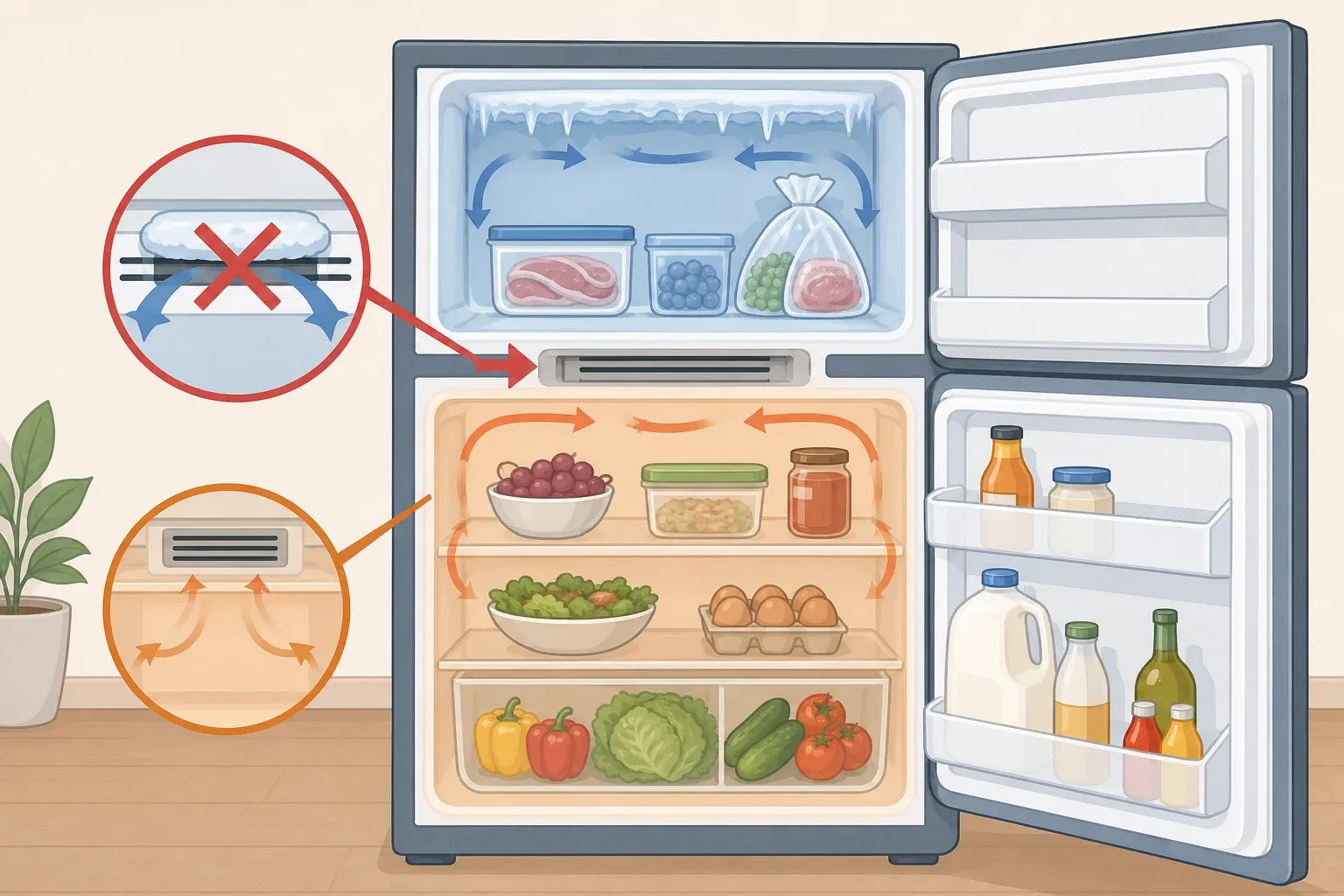
Excessive frost accumulation signals defrost system malfunctions that reduce efficiency and force your appliance to use much more energy, CLT Appliance reports. A thin layer of frost is normal, but large ice buildups or frost covering entire shelves indicate serious problems, Malachy Cares notes.
Sometimes user habits contribute to temporary frost issues — leaving the freezer door open too long, faulty door seals, or too many items blocking airflow against the rear freezer wall, CNET details. However, persistent buildup despite proper door closure and loading indicates mechanical failure requiring professional attention.
When the automatic defrost system fails, significant frost accumulation hampers performance and cooling ability, Ancaster Food Equipment explains. Your freezer has to work 20-30% harder to maintain temperatures through thick frost layers, which drives up energy costs and puts additional strain on components.
Ice formation in the refrigerator section — not just the freezer — clearly indicates defrost issues that need immediate attention, Ancaster Food Equipment warns. When you see ice where it definitely shouldn't be, you're looking at a system that can no longer regulate temperatures properly.
When energy bills start climbing
A malfunctioning refrigerator can significantly increase energy bills while providing worse cooling performance, CLT Appliance states. When refrigerators start failing, they often work harder to maintain temperatures, consuming more electricity, Malachy Cares explains.
Your fridge motor should cycle on and off throughout the day rather than run continuously, CLT Appliance clarifies. An efficient unit shouldn't run all the time, CNET confirms. A failing refrigerator can consume 20-50% more electricity while providing 10-15% worse cooling performance.
Several factors drive this increased energy consumption. Setting temperatures too low forces your refrigerator to work overtime, while debris buildup around condenser coils commonly causes units to run too frequently, CNET reports. Seasonal changes also affect efficiency — units work harder during summer months, but year-round increases typically signal mechanical problems.
Struggling refrigerators can double cooling costs while providing worse performance, CLT Appliance warns. When you're paying more for electricity and still dealing with spoiled food, it's clear your refrigerator needs professional attention.
Time to call the professionals
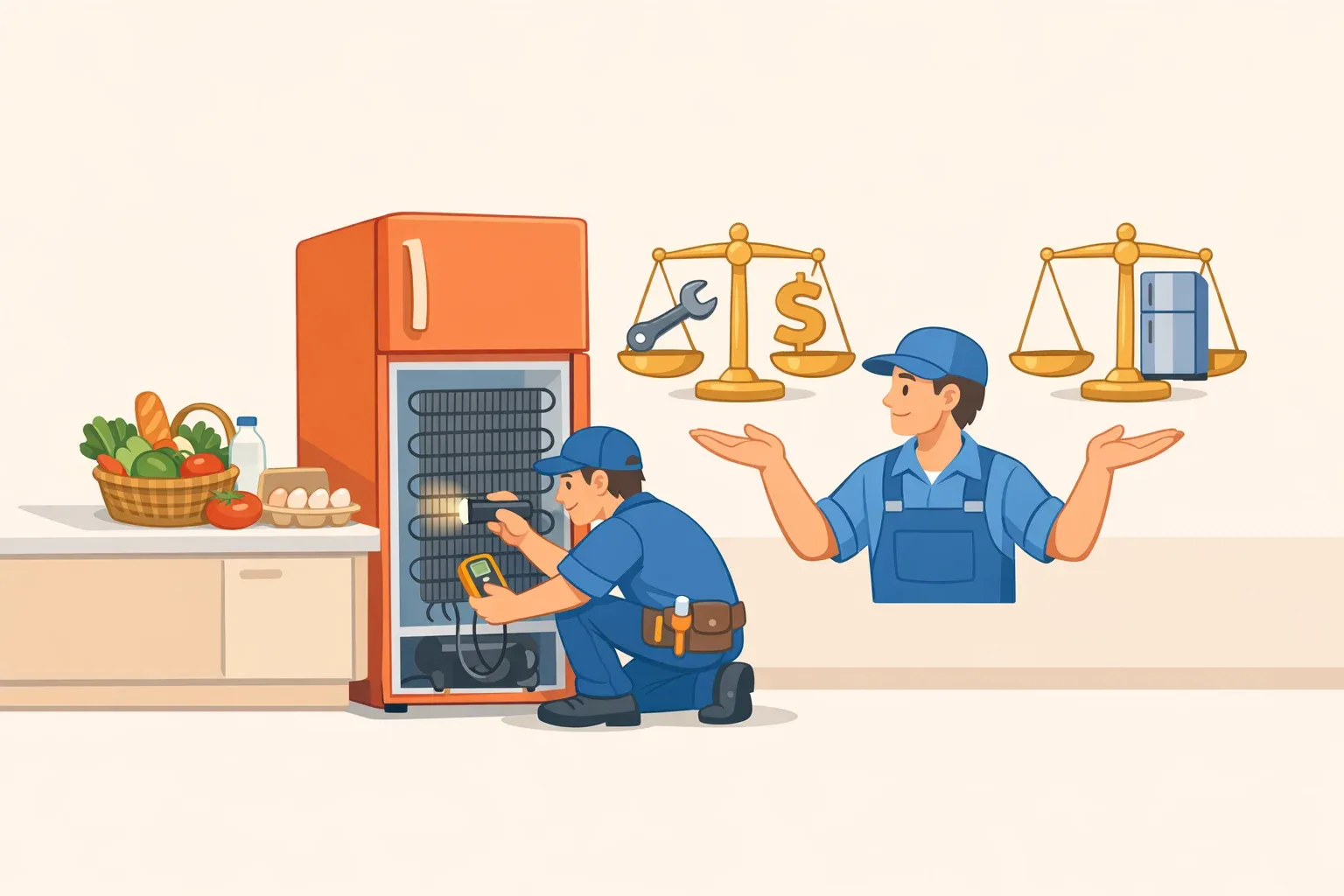
Professional repair can diagnose and fix most issues for a fraction of replacement costs, CLT Appliance assures. You should call for service when you notice water leaks, electrical issues, complete cooling failure, loud noises, frost accumulation, or hot external surfaces, CLT Appliance advises.
Before calling, prepare this information to help technicians diagnose efficiently: note specific symptoms, their frequency, any recent changes in performance, and when problems occur (startup, continuous operation, or shutdown cycles). Document temperature readings from different sections and take photos of any visible issues like frost buildup or water leaks.
Taking immediate action when you spot failure symptoms can often save you from scheduling expensive emergency repairs, Sears Home Services points out. Emergency service calls typically cost 50-75% more than scheduled maintenance, and you'll face longer wait times when your refrigerator has completely failed.
Regular maintenance prevents emergency breakdowns and extends appliance life, CLT Appliance emphasizes. When refrigerators show signs like inconsistent temperatures, spoiled food, or rising energy use, don't wait for complete appliance failure, Brian's Appliance Repair recommends.
Address these warning signs early to save time, money, and the stress of dealing with spoiled groceries and emergency service calls. Your refrigerator is trying to tell you something — it pays to listen before minor issues turn into major expenses.



Comments
Be the first, drop a comment!