





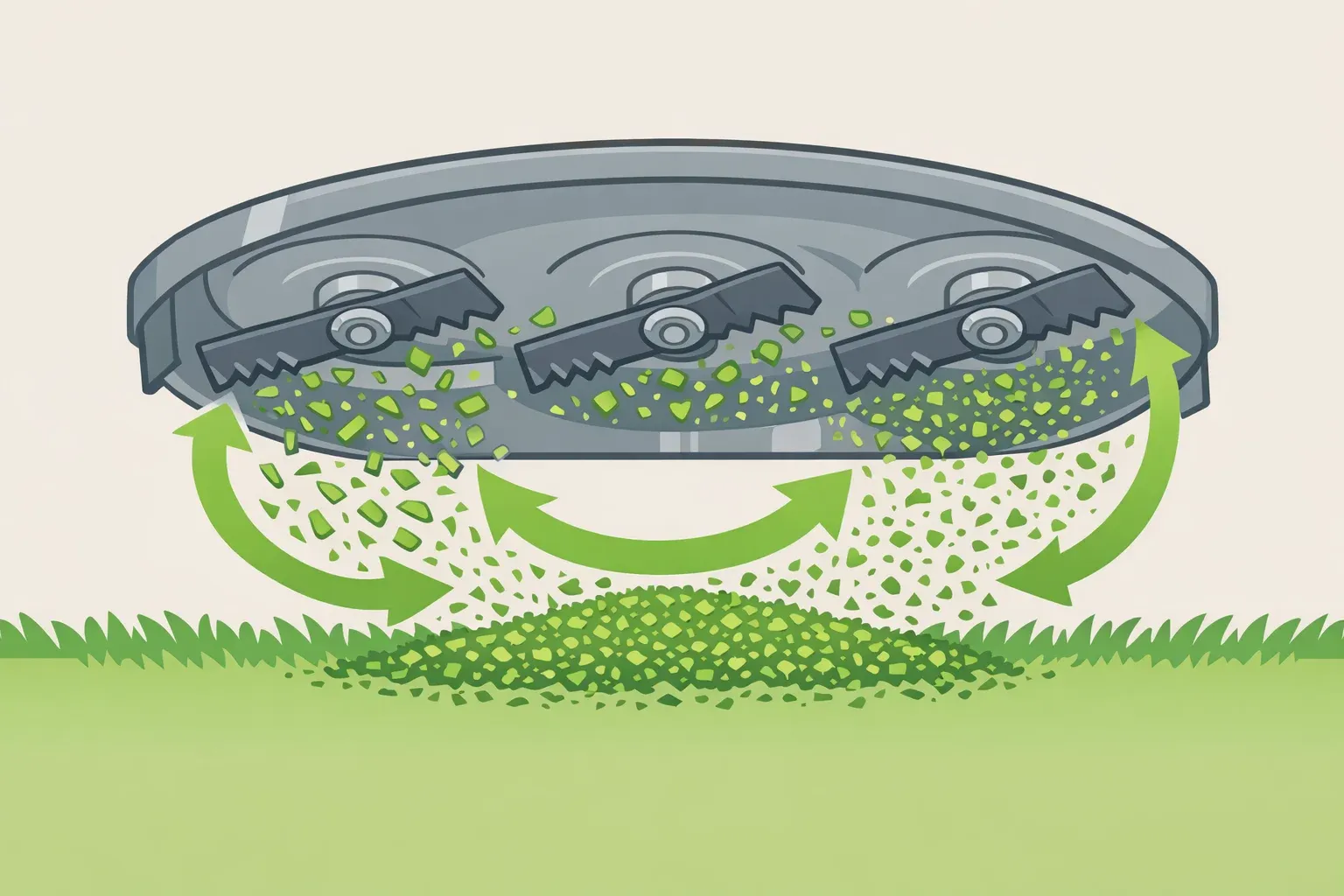
Those jagged teeth along the trailing edge of a mower blade look aggressive, but they are not extra cutting edges. Their main job is to redirect airflow and push clippings back over the blade's cutting edge repeatedly, producing finer mulch than a smooth blade usually leaves behind.
That is the main mechanical difference between a Gator blade and a standard mulching blade. Whether it matters to you depends mostly on how often you mow and what your yard throws at the mower.
Gator blades are a toothed variation of mulching blade, not a separate mowing category. Oregon, which sells Gator blades, says its patented Gator mulching teeth are designed to send cut grass back through the deck multiple times for a finer cut. Similar toothed mulching blades are sold by other manufacturers under different names, but the basic idea is the same: the sharpened edge cuts the grass, while the raised teeth help keep clippings moving long enough to be cut again.
Gator blades are most useful for infrequent mowing, fall leaf cleanup, and thick seasonal growth. They are usually unnecessary for a maintained lawn mowed weekly.
How the teeth recut grass
A standard discharge blade is designed to cut grass and move clippings out of the deck quickly. A mulching blade is designed to keep clippings moving inside the deck longer, so they can pass over the cutting edge more than once before settling back into the lawn.
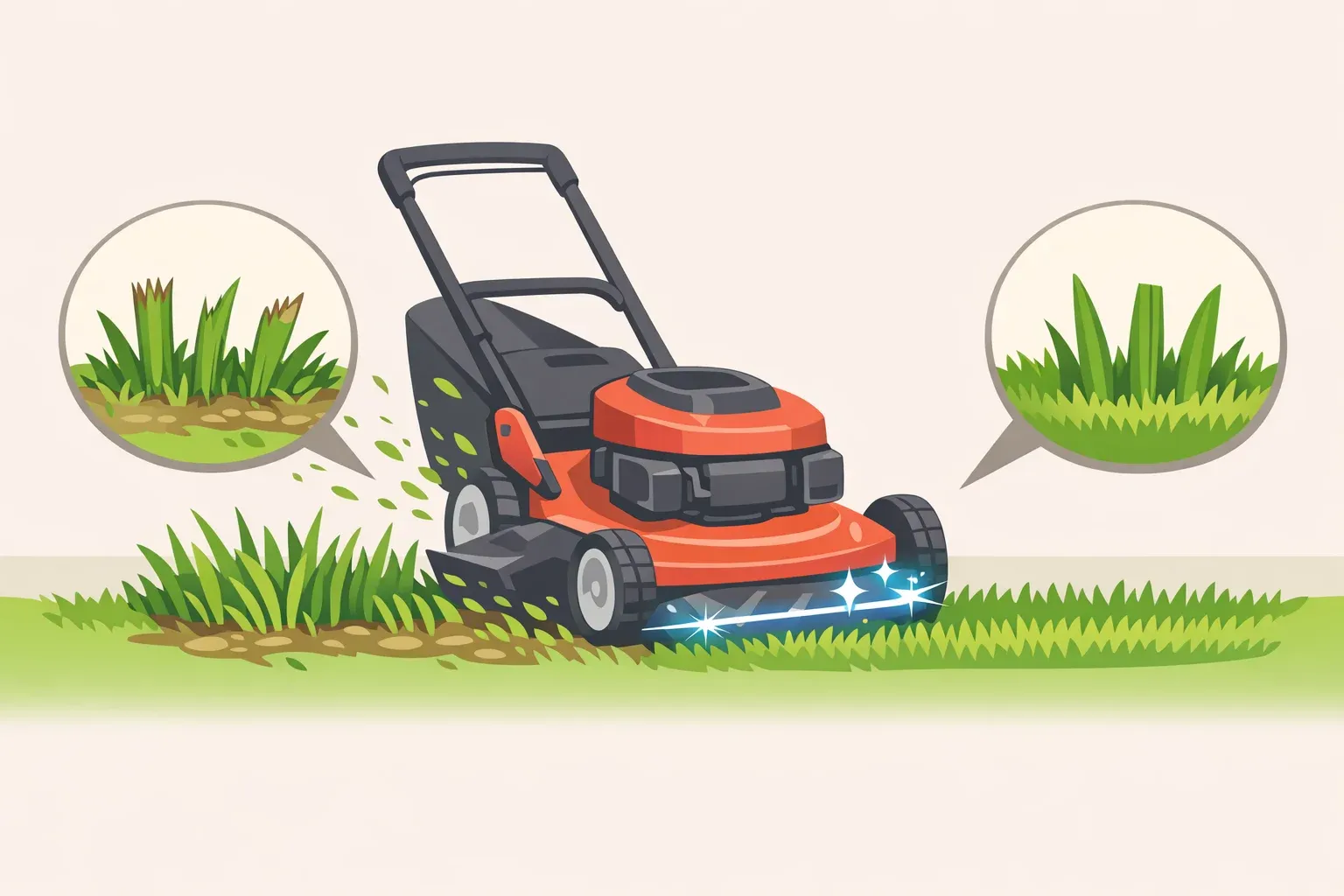
Gator blades add raised teeth along the trailing section of the blade, behind the main cutting edge. Those teeth help redirect airflow back toward the cutting zone, pushing clippings into another pass instead of letting them settle right away. The result is usually smaller, finer particles than a smooth mulching blade produces under the same conditions.
Think of the teeth as a recirculation feature, not a saw. The sharpened edge still cuts the grass; the teeth help keep clippings moving long enough to be cut again.
Deck setup matters as much as blade style. If your mower is not set up for mulching, or if it needs a mulch plug or mulch kit, a blade swap alone may not deliver the finer clippings you expect. Check your mower manual before buying, and make sure the replacement blade matches your mower model, deck size, center hole, mounting pattern, and blade rotation.
When Gator blades are worth it
Missed mowing cycles are where Gator blades can make a visible difference. When grass gets ahead of schedule, long clippings are more likely to sit on top of the lawn instead of filtering down into the turf. A toothed mulching blade can help chop that material more finely before it falls.
Fall leaf cleanup is another strong use case. Dry leaves break down more easily when they are chopped into small pieces, and Gator blades can help keep them circulating under the deck instead of leaving larger pieces behind. Some homeowners may prefer to use Gator blades during leaf season, then switch back to standard blades when regular mowing resumes.
Light seasonal debris is another use case. Gator blades can help break down dry leaves, pine needles, and seed heads, but they are not brush-clearing blades and should not be used to mow sticks, rocks, or woody growth.
Use this quick rule of thumb:
Weekly mowing on a tidy lawn: standard mulching blade
Infrequent mowing, heavy growth, or fall leaves: Gator blade
Year-round flexibility without seasonal swaps: Gator blade
Bagging or clean discharge: high-lift blade
Weekly mowing on a maintained lawn does not usually need the extra recutting action. At a consistent five- to seven-day interval, clippings are short enough that a standard mulching blade can handle them cleanly. Running Gator blades in that scenario usually does no harm, but there may be little payoff if a standard mulching blade already leaves a clean cut.
Two situations call for stepping back from mulching altogether. If disease is spreading through the lawn, bagging clippings can help avoid moving infected material around the yard. If bagging or clean discharge is the priority, a high-lift blade is usually the better tool because it is designed to create stronger upward airflow into the bag or discharge chute.
Wet grass is also a poor match for mulching in general. It clumps, loads up the deck, and can smother turf if heavy clippings sit on the surface. Gator blades may reduce some clumping in damp or thick growth, but they are not a fix for mowing soaked grass.
Check fit and safety before buying
Compatibility is determined by the mower, not the blade style. A Gator blade and a standard mulching blade for the same mower should match the required length, center hole, mounting pattern, and rotation direction. Do not rely on a tape measure alone if you can avoid it. Use the mower's model number or the manufacturer's part number, and check the manual before ordering.
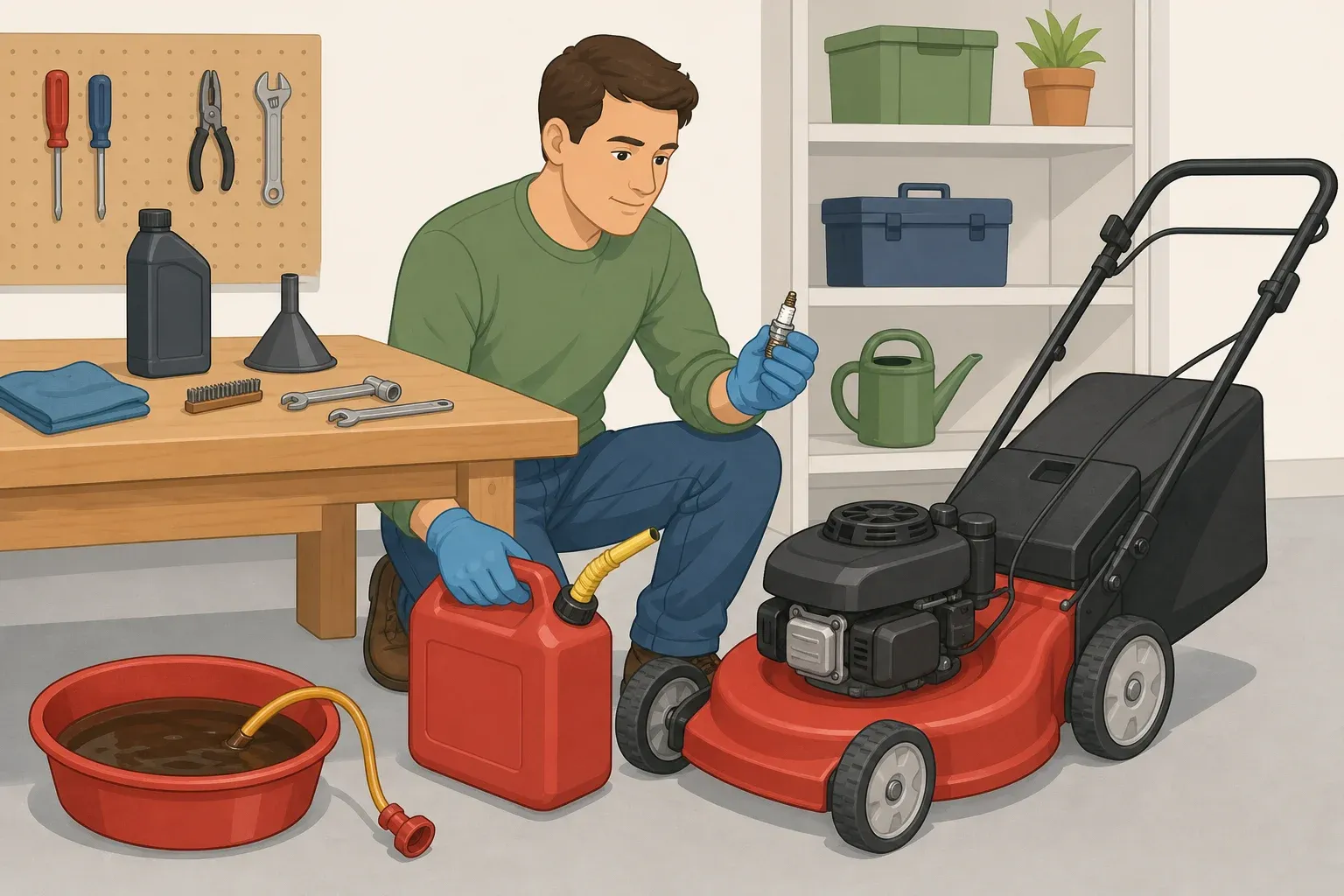
Before removing a mower blade, disconnect the spark plug wire, battery, or power source so the mower cannot start accidentally. Wear gloves, mark the blade's orientation before removing it, and reinstall the replacement blade right-side up. Tighten the blade to the torque spec in the mower manual, then check for vibration before mowing a full lawn. A current Tom's Guide mower blade safety guide gives similar advice: disconnect power before blade removal, mark the blade's orientation, check balance, and tighten the blade to the manufacturer's torque specification.
The same basic maintenance rules apply to both blade styles. A dull blade tears grass instead of cutting it cleanly, which can leave ragged brown tips across the lawn. Inspect the blade regularly, sharpen it when the cut starts looking torn, and check it after hitting rocks, roots, or hard debris. If the blade is cracked, bent, deeply nicked, or badly worn, replace it instead of sharpening it.
Mulching works best when clippings are short. The University of Minnesota Extension says grass clippings of an inch or less can generally be left on the lawn, while longer clippings should be removed because they can shade or smother the grass beneath. The same guidance recommends avoiding cutting more than one-third of the grass height at a time.
The bottom line
The teeth on a Gator blade redirect airflow and push clippings back over the cutting edge multiple times per pass. They do not do the primary cutting, and they do not turn a mower into a brush cutter.
They are worth considering if you mow less often, deal with fall leaves, or regularly cut thick seasonal growth. For a maintained lawn mowed weekly, a standard mulching blade is usually enough.
Before buying any mulching blade, check the deck setup, confirm the fit, and follow basic blade-change safety. The right blade helps, but the best results still come from mowing dry grass, cutting often enough to keep clippings short, and keeping the blade sharp.









Comments
Be the first, drop a comment!