



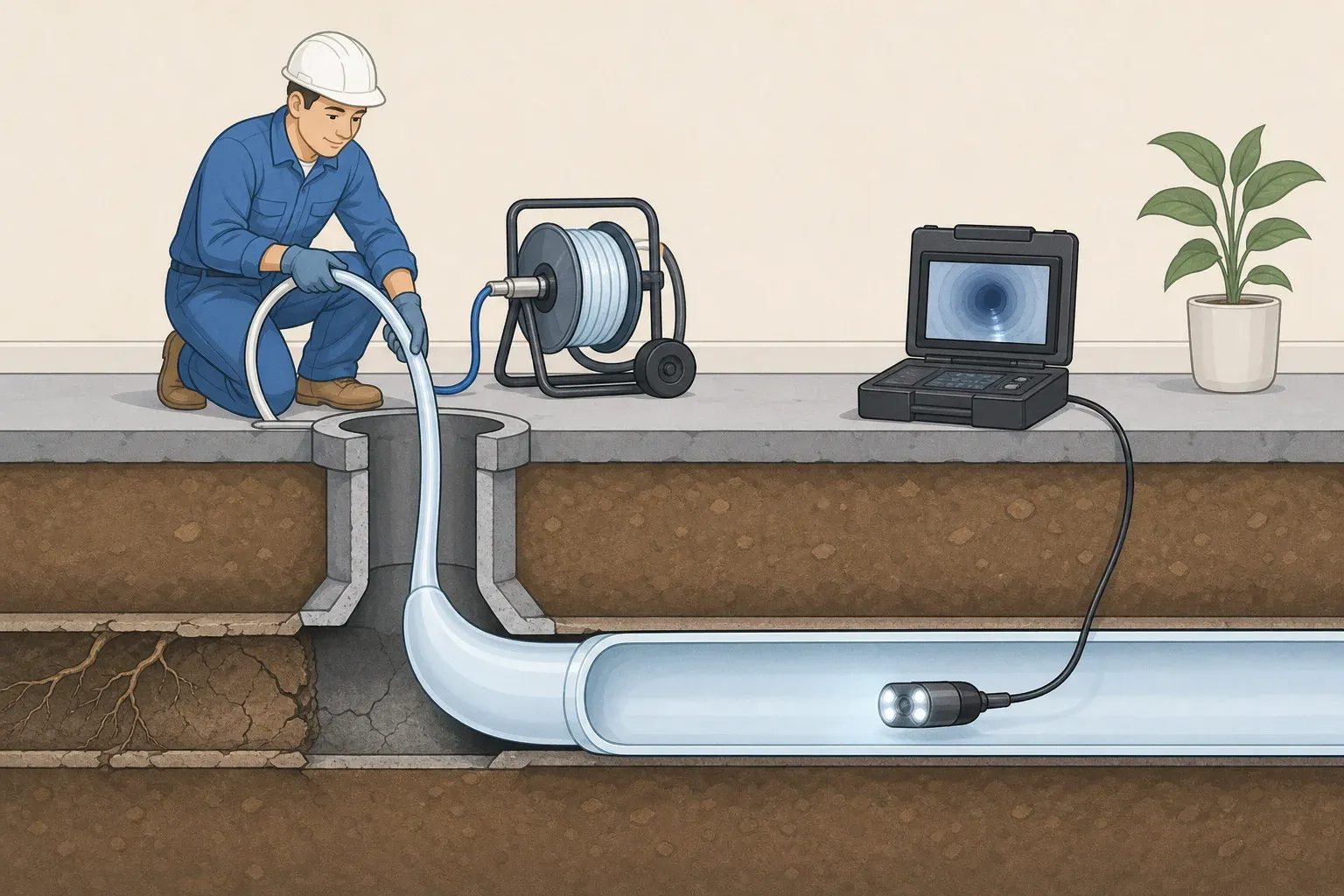
Trenchless Sewer Pipe Repair: How It Works Without Digging
Recurring backups, gurgling drains, or a sewage smell drifting up from the yard can point to a problem in the building sewer or another part of the drainage system. The instinctive fear is a torn-up lawn and a long excavation project. Trenchless sewer pipe repair can often avoid that outcome, but whether it works for your pipe depends on what a camera finds inside it first.
The short version: trenchless repair is professional-only work, it usually starts with a camera inspection, and it can save most of your yard if the pipe isn't collapsed or badly blocked. Instead of excavating and swapping out the damaged pipe, a contractor forms a new one inside it, usually working through an existing cleanout or manhole rather than a long trench. Cured-in-place pipe (CIPP) lining is one widely used trenchless method for this kind of no-dig sewer repair, but it isn't automatic, and a homeowner can't simply request it the way you'd request a routine replacement.
Signs it's time for an inspection, not a DIY fix
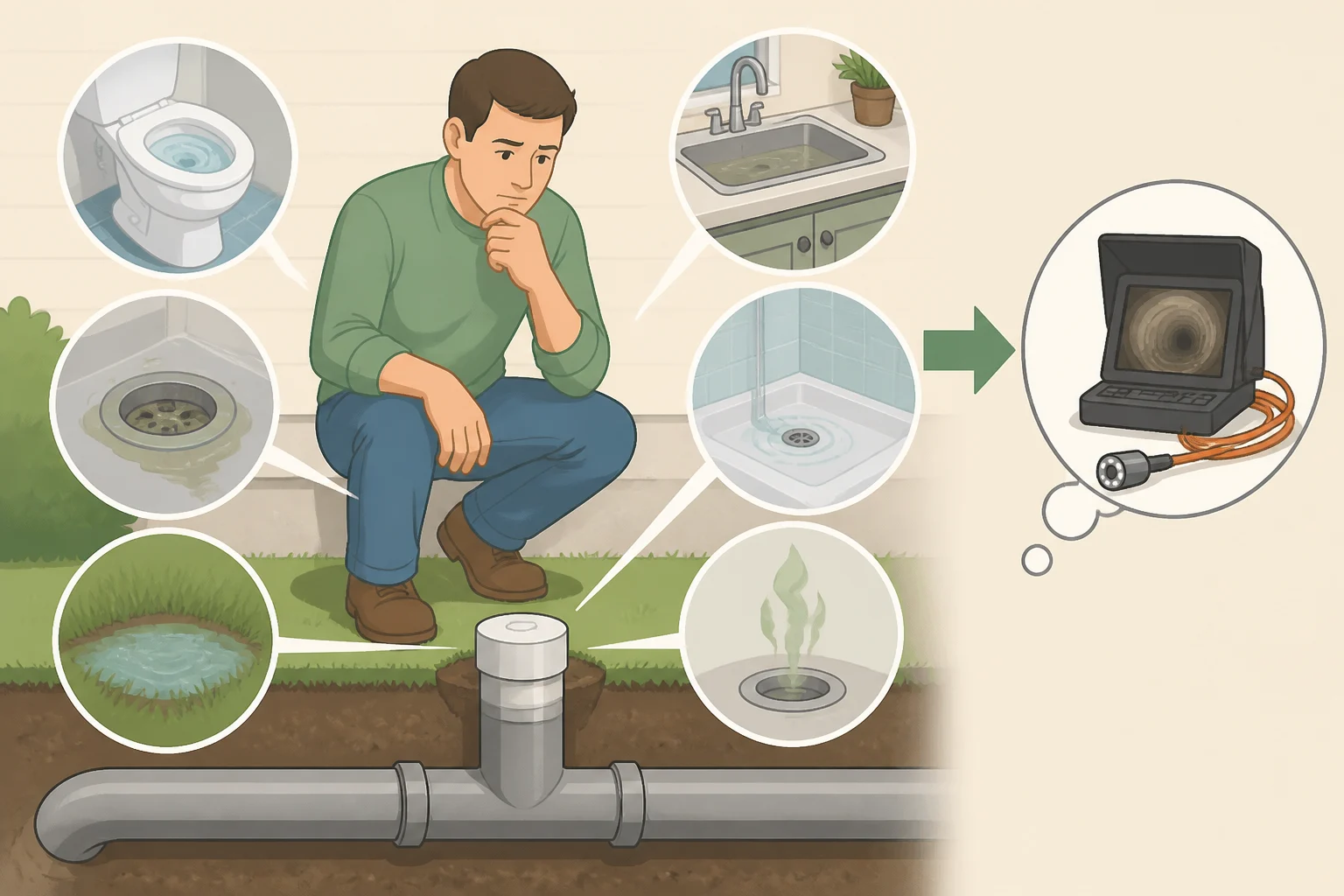
Slow drains in multiple fixtures at once, gurgling toilets, sewage odor near a cleanout, or repeated backups after snaking are all reasons to schedule a professional inspection. None of these symptoms proves a specific cause on its own, but together they're a solid reason to get a camera run through the line instead of guessing at the problem.
Sewer line diagnosis and repair sit outside ordinary homeowner DIY territory. This is excavation-adjacent work that affects a structural part of your home's plumbing, and it belongs to a qualified local contractor from inspection through completion. Your job as the homeowner is to gather context, compare proposals, and review the contract, not to pick a repair method yourself.
Before the contractor arrives, it helps to have a few things ready:
- A rough timeline of when the symptoms started and whether they're getting worse
- Photos of any visible damage or standing water in the yard
- Records of any prior plumbing work or previous camera inspections
- The location of your cleanout, if you know where it is
How trenchless sewer pipe repair works
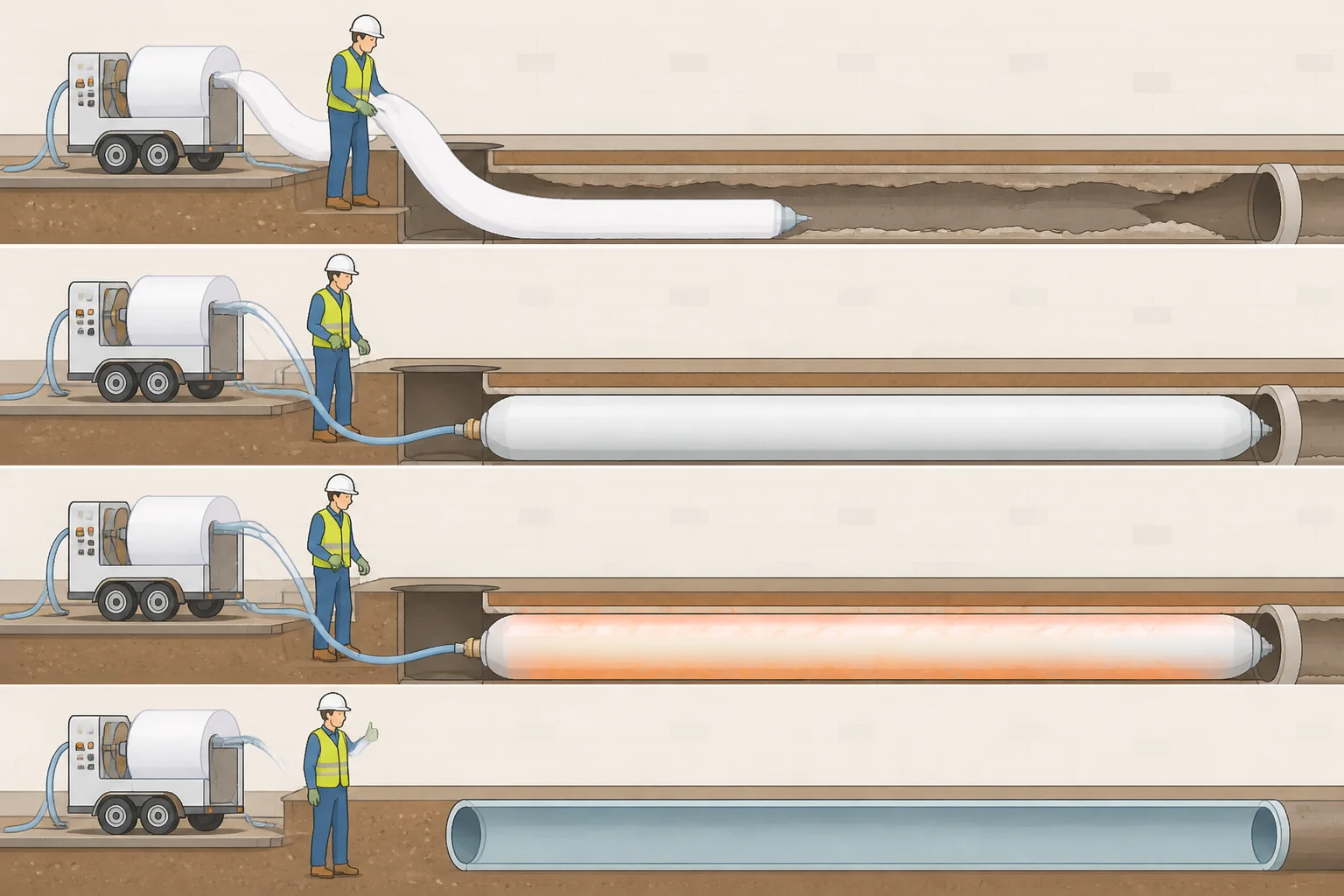
With CIPP lining, a technician feeds a resin-saturated tube into the existing damaged pipe, then cures it in place using ambient air, applied heat, or UV/LED light until it hardens into a new pipe wall, according to NASSCO's 2025 pipeline rehabilitation matrix. The result is what the industry calls a close-fit liner: it conforms tightly to the inside of the old pipe and creates what's effectively a seamless new pipe within it, per the same source.
NASSCO lists an installable diameter range of 2 to 120 inches for CIPP, and the liner can navigate multiple 45- and 90-degree bends. Those are industry specifications rather than a guarantee about any specific home's layout, but they explain why lining can work on pipes that aren't perfectly straight.
Access points and the amount of digging involved vary by method. Fold-and-form lining, a related close-fit liner technology, installs through existing manholes or small access points rather than a trench, per NASSCO. That's the core of the "no-dig" idea: a meaningfully smaller footprint than open-trench replacement, even when it isn't zero footprint.
What the inspection should tell you
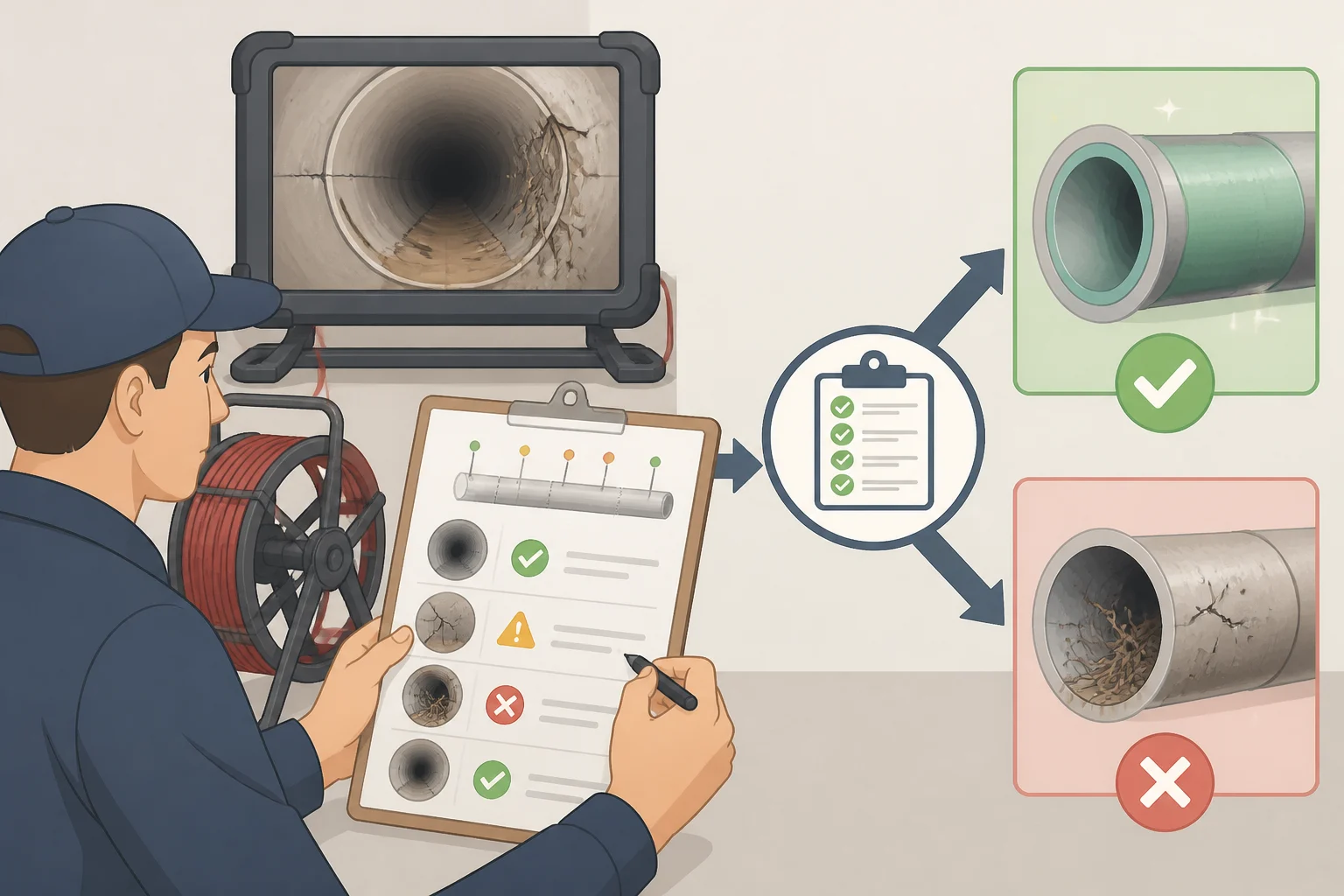
A camera run isn't a formality. A 2023 EPA overview of sewer inspection technology notes that closed-circuit television has long been the industry standard for assessing pipe condition, and newer digital, electrical, and laser-based scanning tools are now adding more detail to that process. A contractor should use that inspection to assess the pipe's condition before recommending any rehabilitation method, not after.
The findings determine which repair options are even on the table. NASSCO's installation requirements specify that a pipe being considered for CIPP must be clear of obstructions, free of crushing or collapse, and not narrowed by more than 40% of its original cross-sectional area. The inspection also establishes how many bends the line has, how severe they are, where access points sit relative to the damaged section, and whether the pipe needs to be larger to meet current capacity needs.
Comparing your trenchless sewer line replacement options
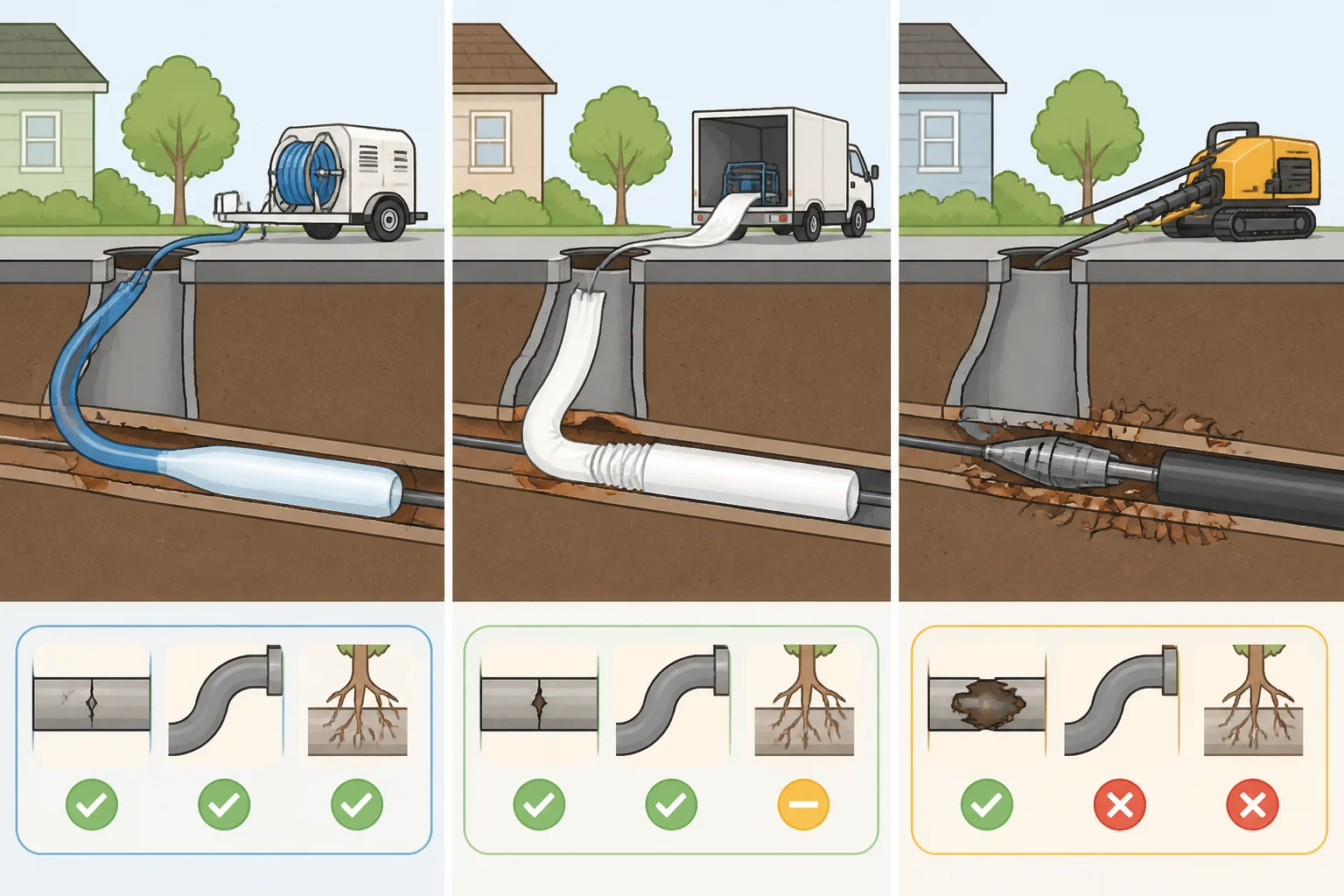
Not every damaged pipe qualifies for every method. Here's how the main options differ, based on NASSCO's published specifications:
- CIPP lining: Forms a new liner inside the existing pipe. Requires a host pipe free of obstructions, collapse, or crushing, with no more than 40% loss of cross-sectional area.
- Fold-and-form lining: Another close-fit liner, installed through existing manholes or small access points. Stricter tolerance than CIPP, requiring no more than 16% loss of cross-sectional area, and limited to bends up to about 30 degrees.
- Pipe bursting: Fractures the old pipe while pulling a new one into its place. The only trenchless method that can upsize a pipe's diameter to meet greater capacity needs, but runs are typically limited to 300 to 600 feet with bends restricted to a long radius of roughly 15 degrees or less. A sharply angled residential lateral can rule out pipe bursting specifically, even when lining is also unavailable.
- Open excavation: Often the fallback when a pipe's condition, alignment, access, or capacity needs don't fit any of the trenchless options above.
Two other trenchless methods are worth asking about if service interruption is a concern. Sliplining, which threads a smaller-diameter pipe inside the damaged one, may require flow diversion or bypass pumping during installation, per NASSCO. Spiral wound lining, by contrast, often eliminates the need for bypass pumping altogether, according to the same source. That difference matters if a household can't afford to be without sewer service for long.
Matching a pipe to the right method is a judgment call a licensed technician makes using the inspection footage and the specifications above, not a guess made on the spot.
Other trenchless options worth asking about
If the inspection turns up a larger-diameter pipe or an unusual repair scope, a contractor might mention a few additional trenchless methods that don't typically apply to standard residential laterals but are worth understanding if they come up.
Spray-in-place polymer (SIPP) lining sprays or spincasts a polymer onto the inside of a pipe, bonding to the host pipe to seal off corrosion and wear, per NASSCO. It's generally limited to pipes 30 inches and larger, which puts most home sewer laterals well outside its range.
Fiber-reinforced polymer (FRP) lining is a wet-layup method typically used for localized damage or larger-diameter sections: resin-saturated fabric is applied by hand to a cleaned pipe wall in overlapping layers, according to the same source. Spray-applied cementitious lining can cover extended distances, up to 6,000 feet through manholes or access shafts, which makes it more of a municipal-scale solution than something a homeowner would need.
None of these are likely candidates for a typical single-family sewer line. If a contractor brings one up for a residential job, it's worth asking directly why it fits the situation better than CIPP, fold-and-form lining, or pipe bursting.
What to ask before you sign
Before authorizing any CIPP sewer pipe repair, ask the contractor to walk through:
- Can I see the camera footage and the specific condition findings behind this recommendation?
- Which trenchless method are you proposing, and why does it fit this pipe's obstruction level, diameter, bends, and capacity needs?
- What resin type and curing method will be used?
- Will any access pits be needed, and where will they be located?
Get the full scope in writing before work starts. A solid written scope should cover the pipe segment and length being repaired, the proposed method, access locations, any bypass or flow-diversion requirements, the resin and curing method if applicable, who's responsible for restoring the yard afterward, the warranty terms, and any permits required locally.
Getting to a decision
Success looks like a contractor who can explain, footage in hand, exactly why a specific method fits the pipe's condition, and who hands over a written scope covering access, bypass needs, and warranty.
If a contractor recommends lining before running a camera through the line, or can't explain why their chosen method suits the pipe's bends and diameter, treat that as a reason to pause and get a second opinion. Footage informs the decision, but it still takes a qualified professional to interpret it and match it to the right repair.
None of the research behind this guide includes consumer pricing, so cost comparisons between lining, pipe bursting, and traditional replacement need to come from local contractors directly. A practical sequence to follow:
- Get the inspection video and written condition findings.
- Ask the contractor to explain why the proposed method fits the pipe's obstruction level, diameter, bends, and capacity needs.
- Confirm access points, bypass needs, resin and cure method, restoration responsibilities, and warranty in writing.
- Compare itemized proposals only for the methods the inspection shows are actually feasible.
- Get a second opinion if a contractor skips the inspection or can't explain the method choice.





Comments
Be the first, drop a comment!