



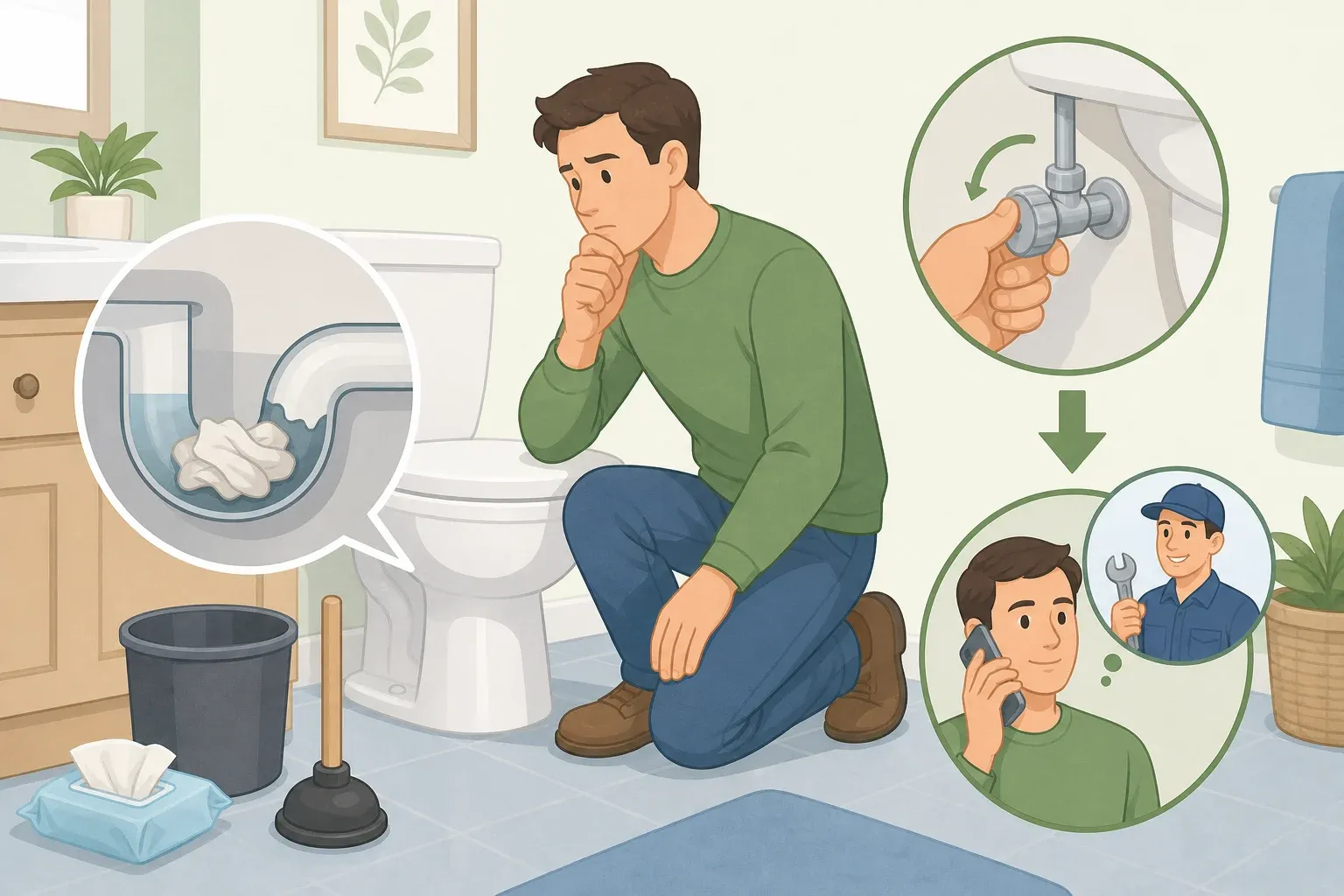
Common Plumbing Mistakes Homeowners Should Avoid: 7 Fixes
This guide walks through the seven most common plumbing mistakes homeowners should avoid, the kind that licensed plumbers and consumer-safety researchers keep flagging: flushing wipes marketed as flushable, over-tightening fittings, misapplying tape and sealant, patching a burst pipe with duct tape instead of shutting off the water, skipping the shutoff before any repair, dumping chemical drain cleaner into a drain that's fully blocked, and brushing off slow leaks. Most of these are simple habit changes. A few aren't DIY fixes at all, and for those the right move is to stop, contain the damage, and call a licensed plumber instead of pushing forward.
Master plumber Dave Yates has pulled a sewer auger out of a clogged line "blanketed in wipes," he told Consumer Reports, with a tough, balled-up mass tangled through the cable. That's the kind of service call that starts with a habit, not a mystery.
The stakes are real without being catastrophic for most households. In a 2024 survey of more than 2,000 U.S. homeowners, 27% who dealt with a summer plumbing issue reported property damage, and 37% paid more than $500 for their last plumbing emergency, Hippo Insurance found. Hiring a plumber to fix a problem outright costs a national average of $331, Bob Vila reports. These seven habits are recurring mistakes named by licensed plumbers and consumer-safety guides, not a ranked list of what causes the most damage.
Before you start
Gather a few tools before touching anything. An adjustable wrench, a plunger, and a hand-crank drain snake handle routine clogs and minor leaks, per Bob Vila. Keep Teflon tape and pipe joint compound (pipe dope) on hand too, but only for threaded connections; tape has no place on a compression fitting, which seals differently. If you're ever unsure which type you're working with, check the parts list that came with the fixture or ask at the hardware store before reaching for tape. A bucket, some rags, and a flashlight make shutoff checks and under-sink inspections easier.
Most routine fixture repairs here are beginner-friendly: replacing a faucet washer, swapping a toilet flapper, tightening a loose under-sink connection, or clearing a minor clog with a plunger or hand snake, according to Bob Vila. Stop and call a licensed plumber instead of troubleshooting further when the job involves a burst or inaccessible pipe, any plumbing behind a wall or under the foundation, sewer or gas lines, water heater repair or replacement, persistent low water pressure, work that needs a permit, or a drain that's still fully blocked after a plunger and hand-crank snake have both failed, per Bob Vila and Consumer Reports.
One thing worth setting up before an emergency forces the issue: find the main water shutoff valve and test it now, not while water is spreading across the floor. Label every valve in the house while you're at it, not just the main one, so anyone in the household can find and shut off the right one without guessing.
1. Stop flushing anything labeled "flushable"
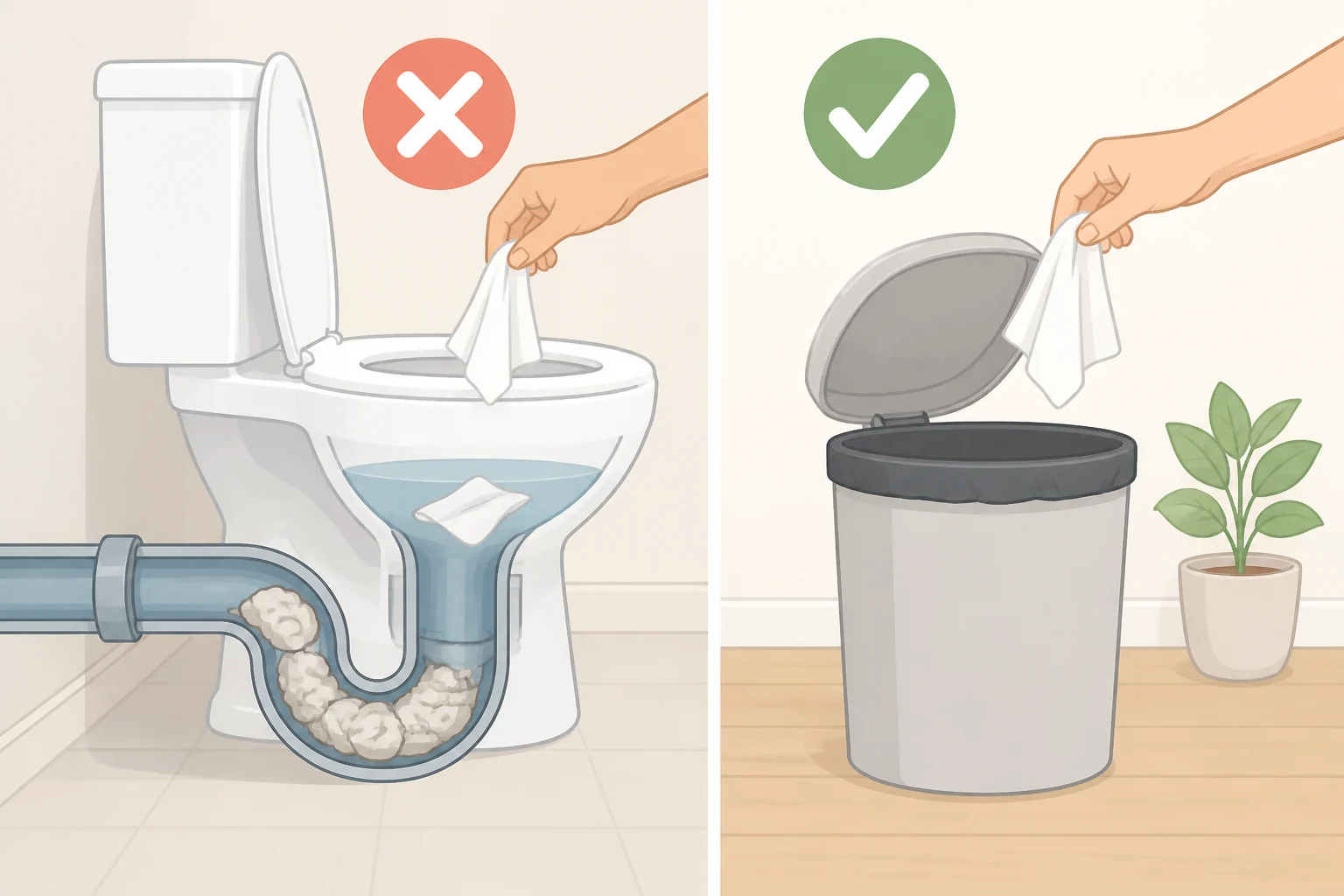
Wipes marketed as flushable are the easiest fix on this list: stop flushing them. Consumer Reports lab-tested 11 flushable-labeled wipe brands and found none clogged a toilet or drainpipe in a single-flush test, but that result says nothing about what happens after months of repeated flushing. Yates told the outlet that wipes "attract and collect" in sewer pipes regardless of how any single wipe performs on its own.
For the roughly one in five U.S. households on a septic system, a leach field damaged by accumulated wipes can cost $15,000 to $20,000 to excavate and replace, Consumer Reports notes.
The fix is just as simple as the habit is: keep a small lidded trash bin next to every toilet. Wipes, paper towels, feminine products, diapers, and cat litter all belong there, not in the bowl, since none of them break down the way toilet paper does.
Watch for one early warning sign: a toilet that bubbles when another fixture or toilet elsewhere in the house is flushed. Yates calls this the biggest tell that a sewer line is heading toward trouble, so treat it as a reason to get a plumber out soon rather than wait for a full backup.
2. Stop cranking fittings tighter to chase a leak
A lot of homeowners assume more torque means a better seal. It usually means the opposite. Plumber Al Fagundes told Bob Vila that over-tightening plastic fittings cracks them, and doing the same to metal fittings can strip the threads, turning a minor leak into a full replacement job.
Tighten a connection until it feels snug, then add no more than a quarter turn beyond that, Fagundes advises. The goal is a seal, not maximum force.
After tightening, run water past the connection for a minute and feel around the joint with a dry hand or paper towel. Dry means you're done. If you find dampness, don't just crank it tighter: shut off the water, take the connection apart, and look at the washer and the threads for damage. A worn washer needs replacing; stripped threads or a cracked fitting mean the part itself gets swapped, not retightened. If that's beyond what you're comfortable doing, that's a reasonable point to call a plumber rather than keep working a joint that's already failed once.
3. Match tape and sealant to the right connection
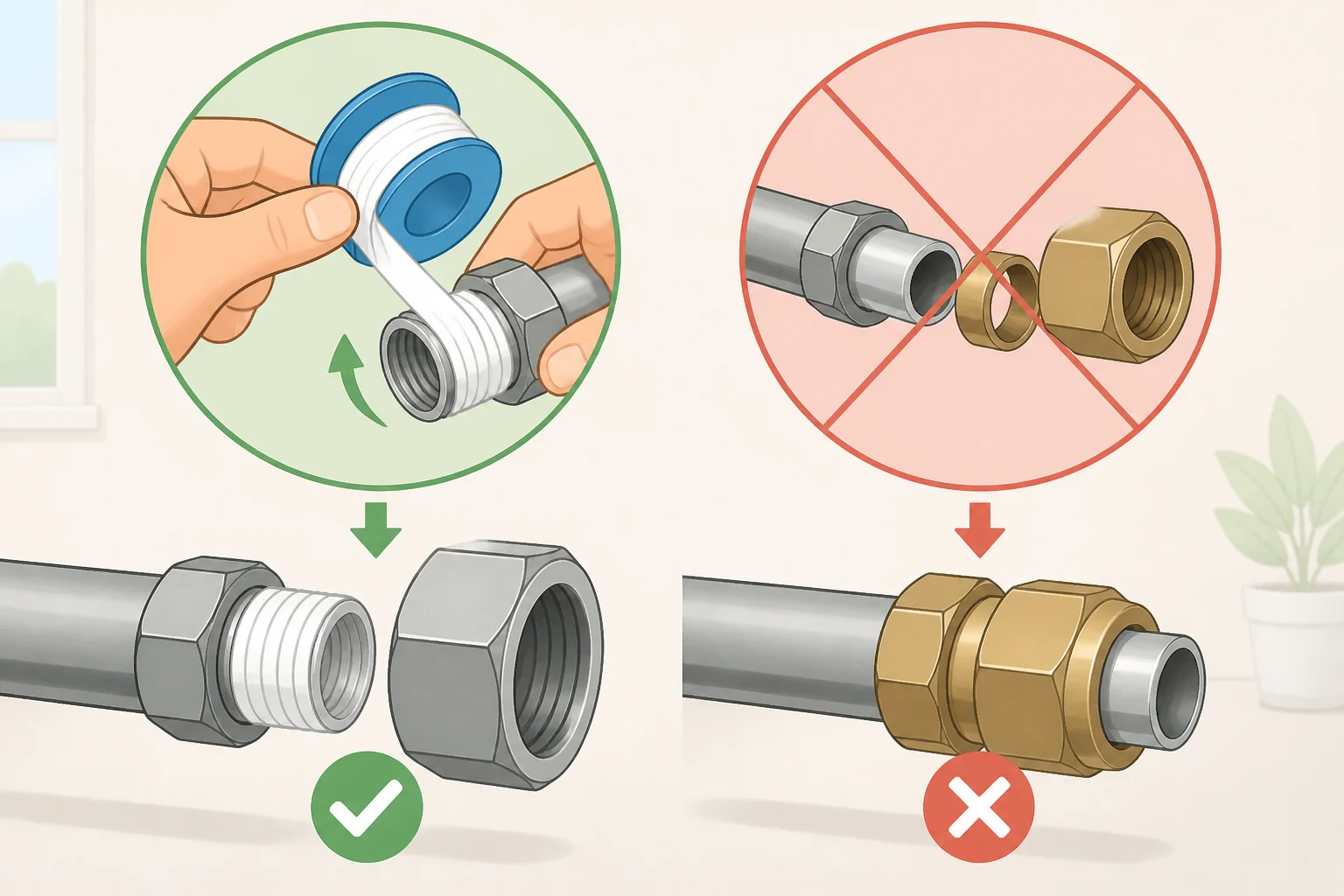
Teflon tape wrapped backward, applied too thick, or used on the wrong fitting causes the exact leaks it's supposed to prevent. Contractor Danny Pen told Bob Vila that tape should never go on a compression fitting; it belongs only on threaded connections. Excess pipe joint compound causes its own problem: squeezed into the pipe interior, it can create a new obstruction.
On threaded connections, wrap tape clockwise two to three times so it tightens along with the fitting instead of against it, Pen recommends. If you're unsure whether you're working with a threaded connection or a compression fitting, check the fixture's parts list before you reach for the tape roll. Guessing wrong here is a common way to turn a quick job into a leak.
4. Don't treat duct tape or epoxy as a pipe repair
A pipe that's actively leaking or burst is not a duct-tape job, no matter how well the patch holds at first. Plumber Alex Atkinson told Bob Vila that these fixes may seal a pipe briefly, but they aren't permanent, and when they fail, homeowners often end up replacing entire sections of drywall or flooring because of the water damage that followed.
Before anything else, shut off the water supply. Only add an external patch if a plumber or the product's own instructions specifically call for it, and treat it strictly as containment while you line up a professional repair, not as the fix itself.
Any burst pipe, any repair that involves cutting into a pipe, or any leak you can't fully access and shut off locally is professional-only work, according to Bob Vila. Confirm you're not in one of those categories before you pick up the tape at all.
5. Shut off the water before you start any repair
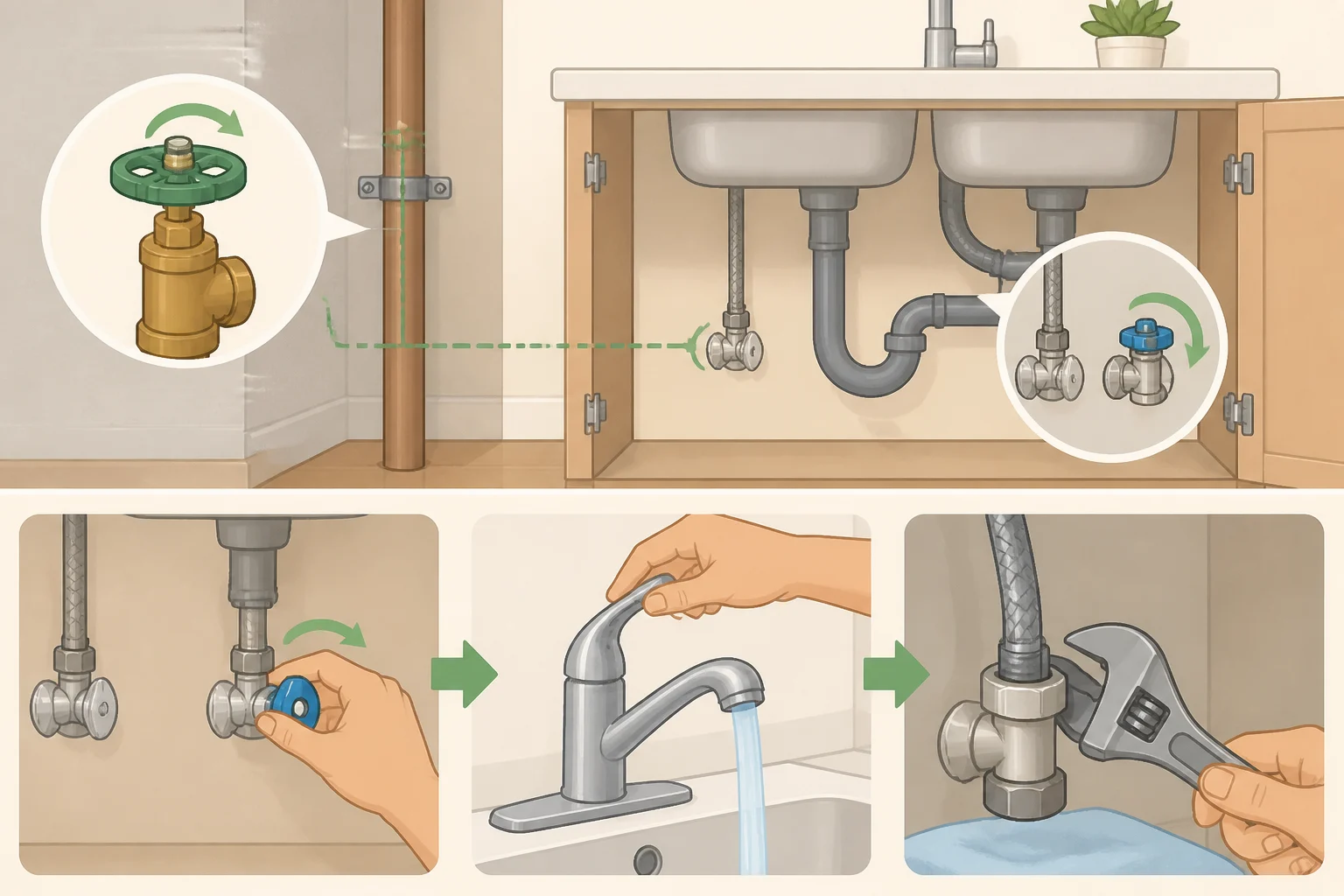
Loosening a connection before killing the water supply is one of the most common mistakes Fagundes sees. He told Bob Vila it's common for homeowners to forget, or not know how, to shut off water before a repair, which leads to water spraying everywhere, soaked drywall, flooded cabinets, and a shock risk if the spray reaches nearby wiring.
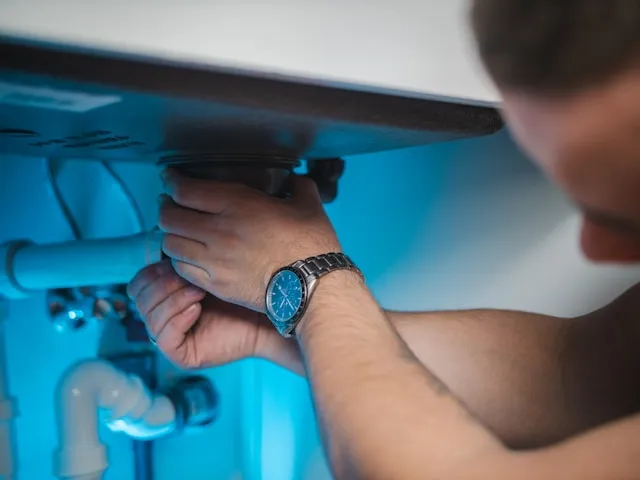
For small fixture jobs, close the shutoff valve under the sink or toilet first. For anything larger, close the main shutoff, then open a faucet downstream to relieve pressure in the line before loosening any fitting.
Before disconnecting anything, confirm the downstream faucet has stopped running. If it's still trickling, the valve hasn't fully closed. That can mean you've closed the wrong valve, but it can also mean the valve itself is old and no longer sealing all the way. Either way, don't proceed until you've found a shutoff that actually stops the flow.
6. How to prevent clogged drains and toilets without making it worse
A chemical drain cleaner is the wrong first move for a drain that's completely stopped up. Poured into a drain with nowhere to go, the cleaner mostly just sits there as a pool of caustic liquid, and it can make the blockage bigger instead of clearing it.
That caution is specific to a drain that's fully stopped, not one that's merely draining slowly. If you do use a cleaner on a slow drain, follow the package directions and the warning label exactly: these products are dangerous regardless of how clogged the drain actually is.
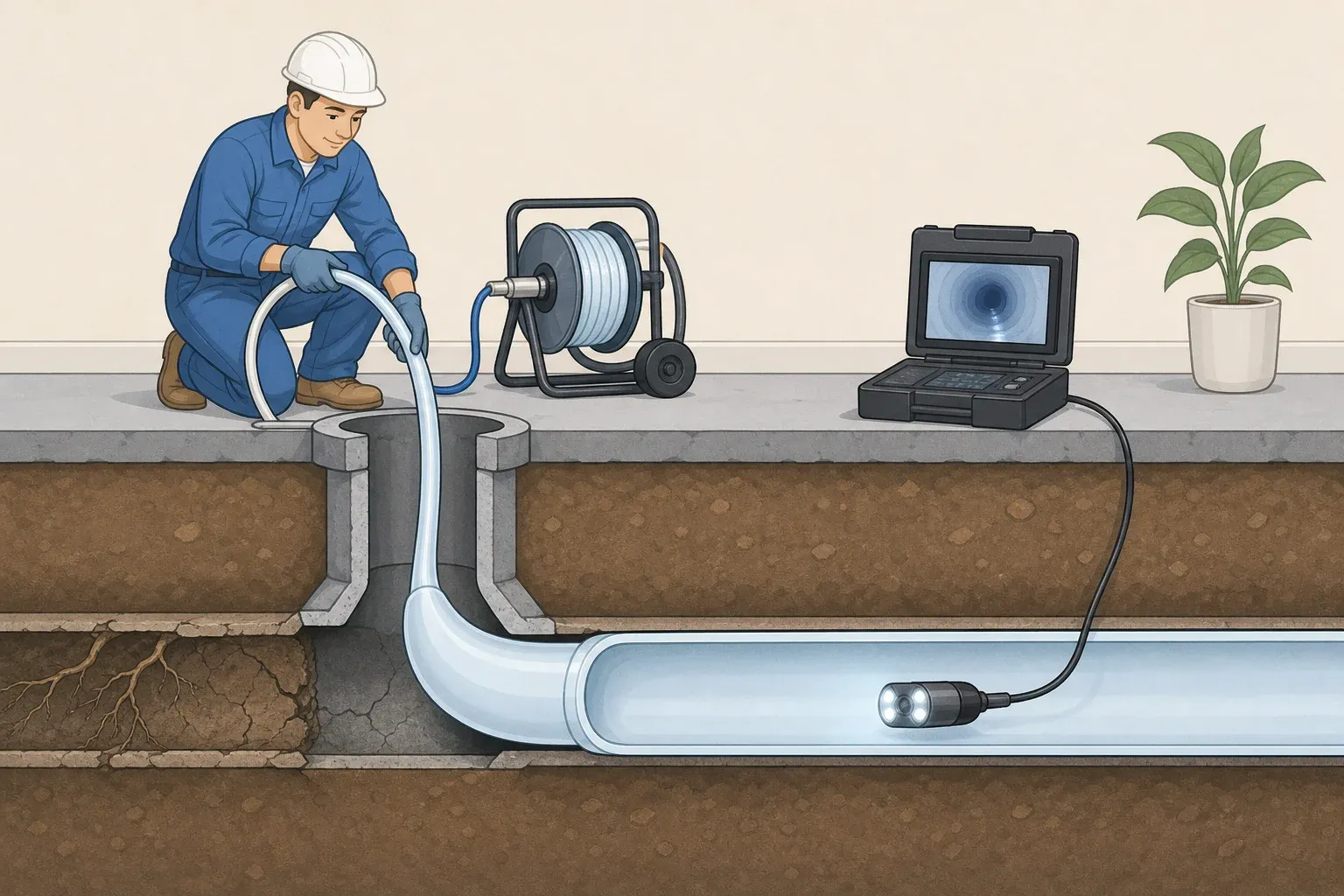
For a fully blocked drain, try a plunger first, then a hand-crank drain snake. If either one clears it, the job's done. If both fail, stop there and skip the chemical cleaner. Consumer Reports points out that what looks like a local stoppage can actually sit in a larger branch or building drain, and recommends calling a plumber once mechanical methods and a cleaner have both come up empty, since a plumber will typically run a pipe inspection before bringing in heavier equipment like a motorized snake or hydro-jet.
7. Stop ignoring slow leaks and early warning signs
A damp spot under a sink, a toilet that runs a little long, a shutoff valve that feels stiff: none of these look urgent, which is exactly why they get ignored. Homeowners who skipped summer plumbing maintenance in a 2024 survey most commonly paid between $200 and $499 to fix what went wrong, per Hippo Insurance.
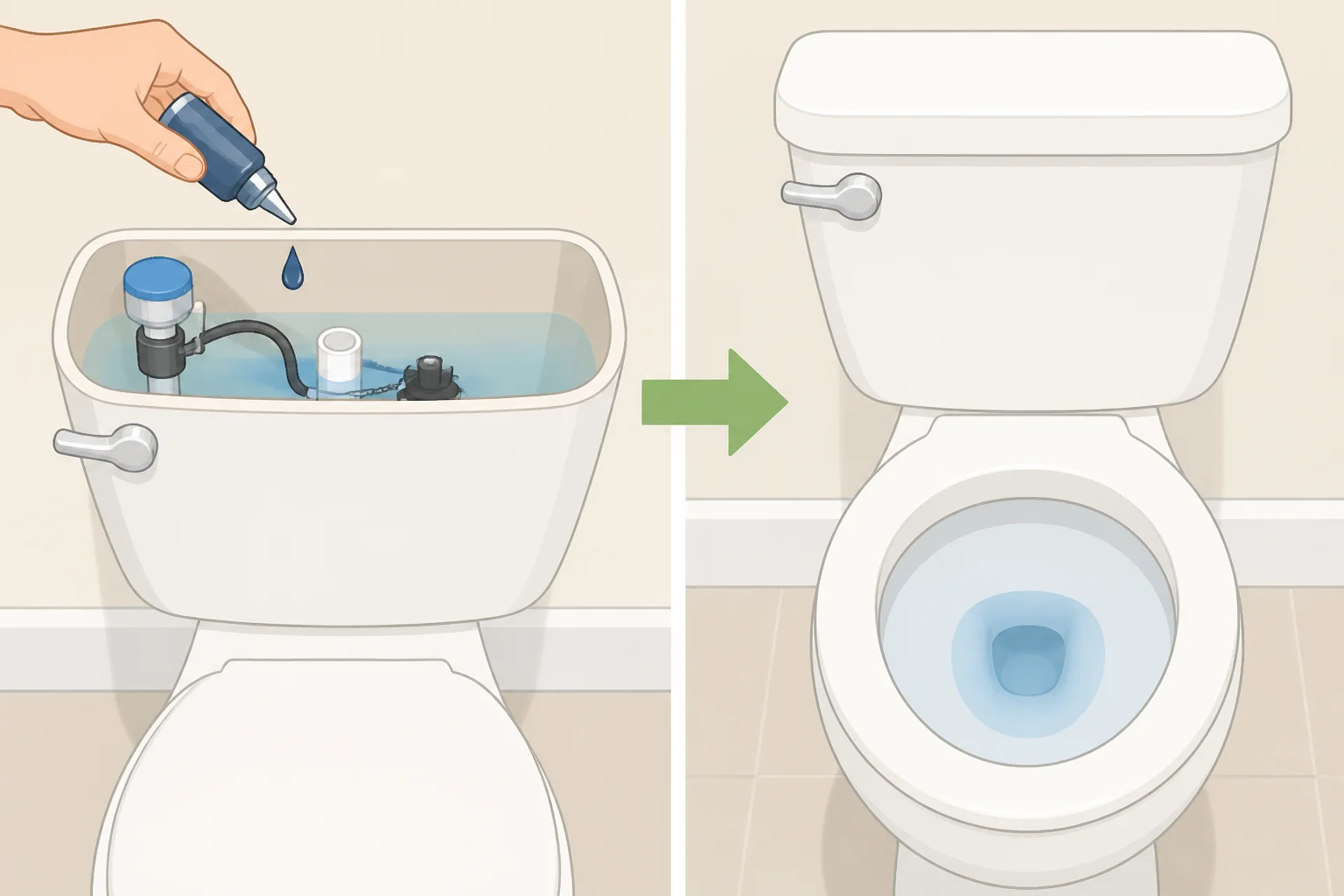
Test for a running toilet with a simple dye check: add about a dozen drops of food coloring to the tank, wait an hour, then look at the bowl. Color showing up in the bowl means the tank is leaking into it, wasting water the whole time it goes unnoticed.
Every few months, clear the clutter out from under your sinks, run the taps, and watch for moisture while you're down there. Walk the house at the same time and check ceilings and walls for staining or soft spots.
What you find determines the next move. A positive dye test often points to a worn flapper, which Bob Vila lists as one of the typical DIY-friendly fixes for a running toilet. Moisture near a wall or ceiling with no obvious source, or a shutoff valve that won't fully close, is a different situation: that's a sign of a hidden leak or failing hardware, and it calls for a plumber rather than more monitoring.
Finish line: keep the checklist short
Success looks like these habits becoming automatic instead of something to remember mid-repair:
- Wipes go in the trash, not the toilet.
- Fittings get snug, plus a quarter turn, and nothing more.
- Tape goes only on threaded connections, never compression fittings.
- The water's off and pressure's relieved before any fitting gets loosened.
- The dye test comes back clean.
Three situations always mean picking up the phone instead of pushing further: a drain that's still fully blocked after a plunger and hand-crank snake, a burst pipe that needs the water shut off and a professional called rather than taped over, and a bubbling toilet or unexplained wall moisture with no obvious source.
Don't overthink small variations in fittings, fixtures, or home layout; these seven fixes hold up across standard residential plumbing. Save the deeper diagnosis, and the bigger invoice, for a licensed plumber once a job involves pressurized lines behind walls, sewage, gas lines, or anything requiring a permit.




Comments
Be the first, drop a comment!