



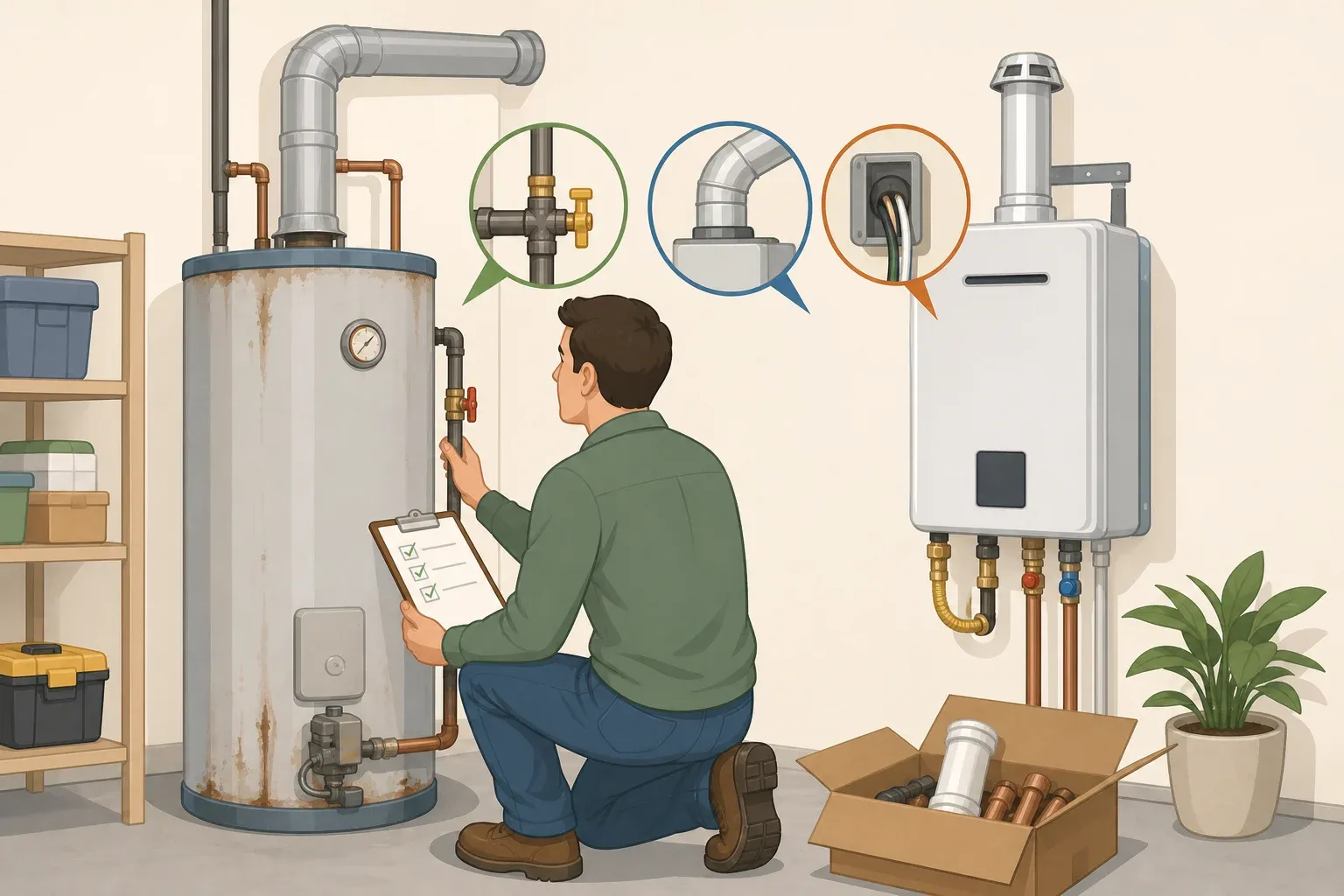
When to Install a Tankless Water Heater: What to Check First
Deciding when to install a tankless water heater really comes down to two narrower questions, not one big one: has your current water heater reached the age where you should start shopping, and does your home's fuel, venting, and electrical setup actually support a tankless unit? This guide is mainly about the first question, when to start that search, rather than pinpointing the exact week a new unit needs to go into the wall. If your water heater is more than 10 years old, the University of Florida IFAS Extension recommends starting to compare replacement options now, before a leak or failure forces a same-day decision.
A tankless water heater, sometimes called a "demand" or "instantaneous" unit, heats water directly as it passes through instead of storing and reheating a tank full of it. The burner or electric element only fires when a hot-water tap is actually open, per the IFAS Extension. Think of it less like a kettle that stays warm all day and more like an on-demand coffee maker that only heats what's about to be poured.
That sounds like a simple swap, but it isn't a drop-in replacement. Storage, instantaneous, and heat-pump water heaters are different equipment types, with different fuel, space, venting, and electrical questions attached to each, according to the U.S. Department of Energy. A cost and performance comparison highlighted by ENERGY STAR shows each type trading off upfront cost, running cost, and capacity differently, which is exactly why "just go tankless" isn't a safe blanket recommendation for every home.
This guide walks through whether a tankless unit is worth requesting a quote for, based on your home's fuel and electrical setup, your household's hot-water habits, and how the real costs stack up against storage and heat-pump alternatives. It ends with a short checklist to bring to that first conversation with an installer.
Tankless water heater replacement timing: when to start shopping
Once a water heater passes the 10-year mark, the IFAS Extension says it's a good idea to start shopping for a new one rather than waiting for it to fail outright. There's a practical reason to get ahead of it: a tank that fails on a Tuesday afternoon doesn't leave room to weigh tankless against storage or heat pump. A homeowner in that spot ends up reacting instead of choosing.
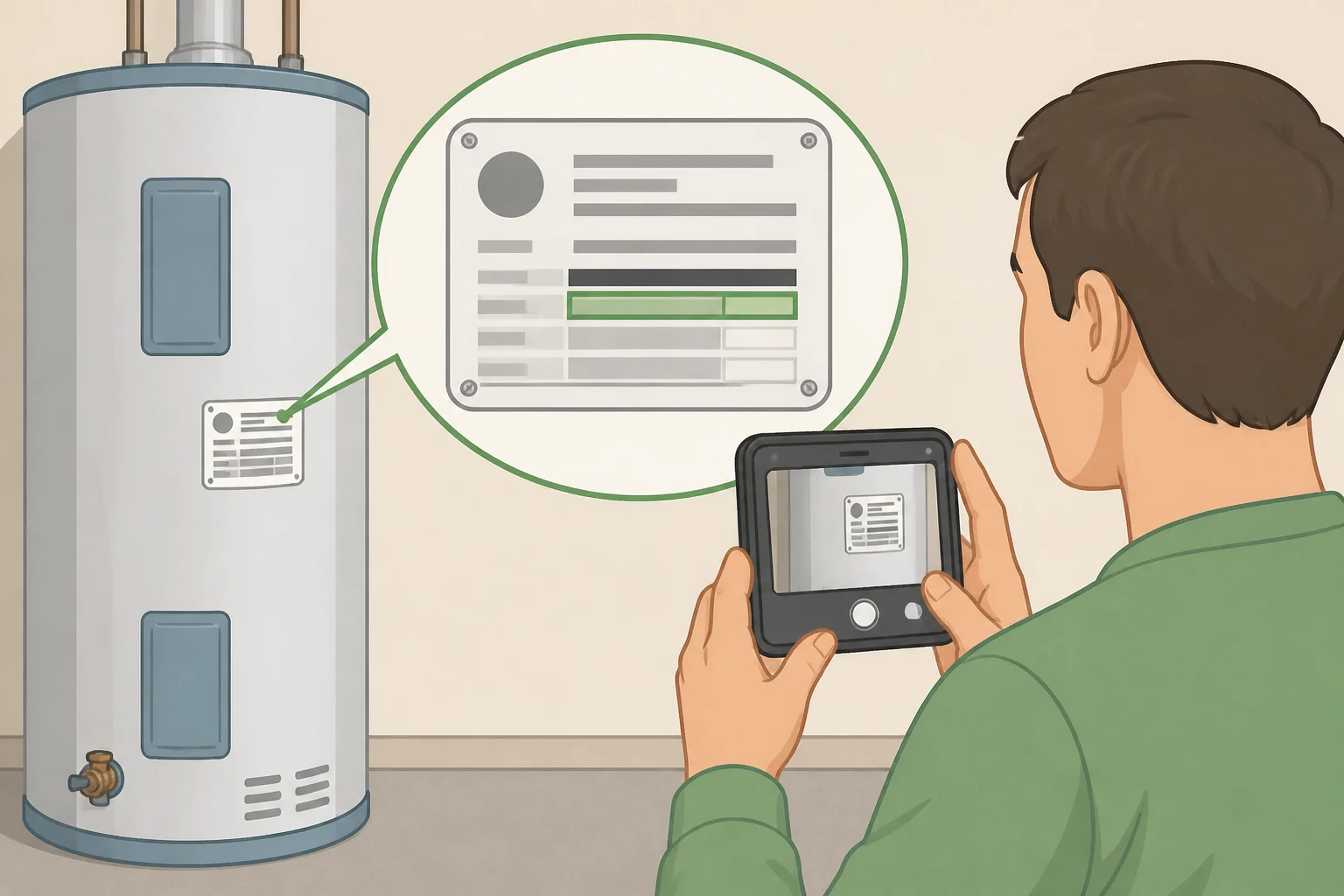
Start by finding the identification plate on your current unit, usually near the serial number, and take a photo of it. It lists the manufacturer and model, and often a production date code. If the age isn't obvious from that code, an installer or the manufacturer's customer service line can confirm it, and it's useful information to have either way once you're ready to request quotes.
Finding out your heater is 11 or 12 years old doesn't mean it has to come out this weekend. It means it's time to start researching and lining up quotes before a rush decision gets made for you.
A few observations are worth raising with a plumber sooner rather than later, even before the 10-year mark: rust or corrosion near the base of the tank, an active leak, more than one repair call in a short stretch, or a household that keeps running out of hot water. None of these are formal replacement rules. They're common red flags that a plumber can look at in person and help you decide whether a repair or a full replacement makes more sense.
Once it's clear you're in the market, the next question is whether your home's fuel and electrical setup can even support a tankless unit in the first place.
Tankless water heater requirements: does your home support gas or electric?
A gas tankless swap and an electric tankless swap are different projects, with different safety requirements and different capacity questions. It helps to know which one is actually being priced before calling anyone.
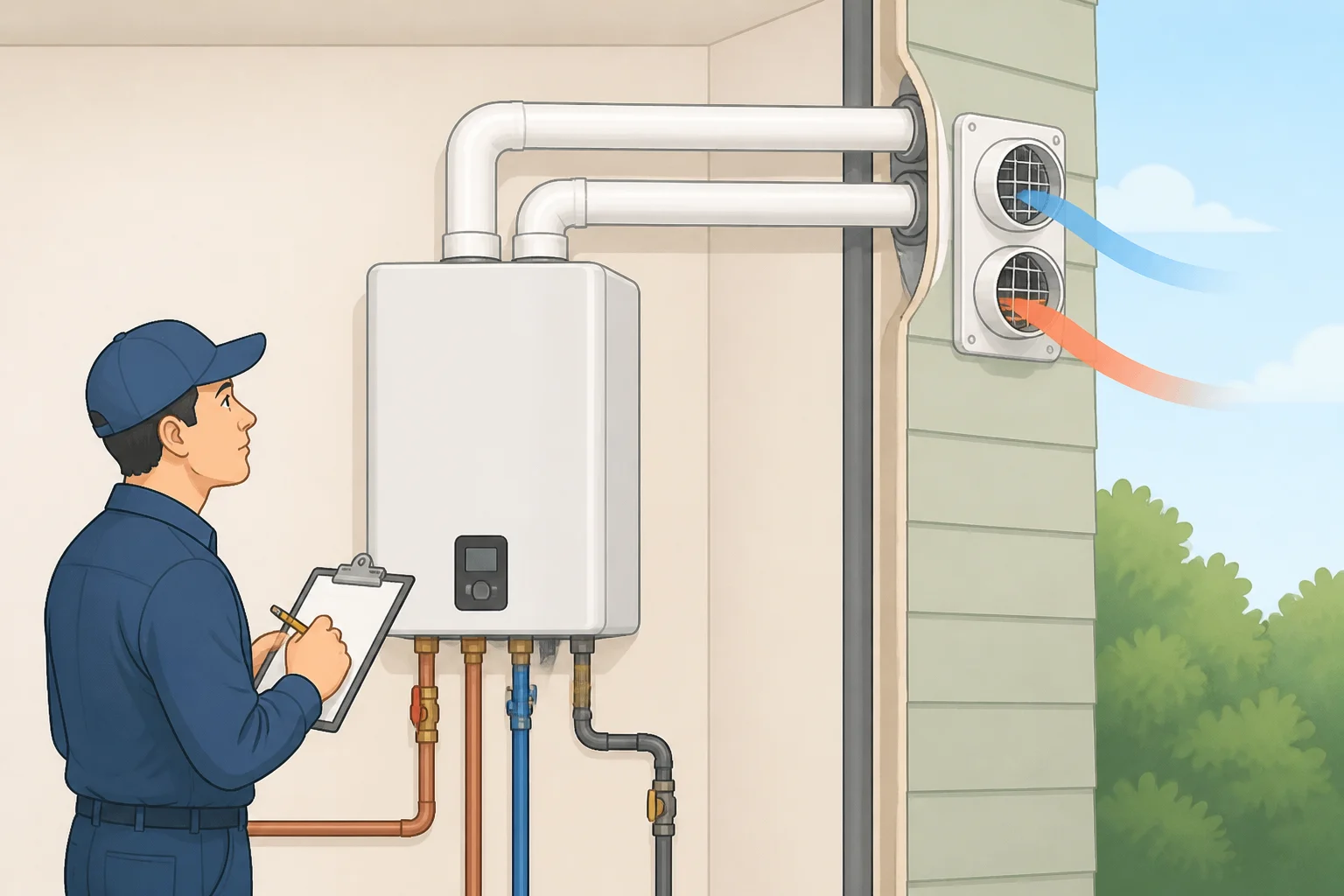
For gas-fired units, the IFAS Extension recommends looking for models with sealed combustion or power venting, features designed to help prevent combustion gases from backdrafting into the house. If the unit sits in an interior mechanical room or laundry room, it needs a provision for outside combustion air. A hardwired carbon monoxide alarm with battery backup near the unit is also recommended.
If a home already has gas service and a plumber or HVAC contractor confirms there's a workable vent route to the outside, gas tankless is reasonable to put on the quote list. If venting looks awkward, no clear exterior wall nearby, a long interior run, or a shared chimney, flag that early. Adding new venting adds real cost and can tip the decision toward storage or heat pump instead.
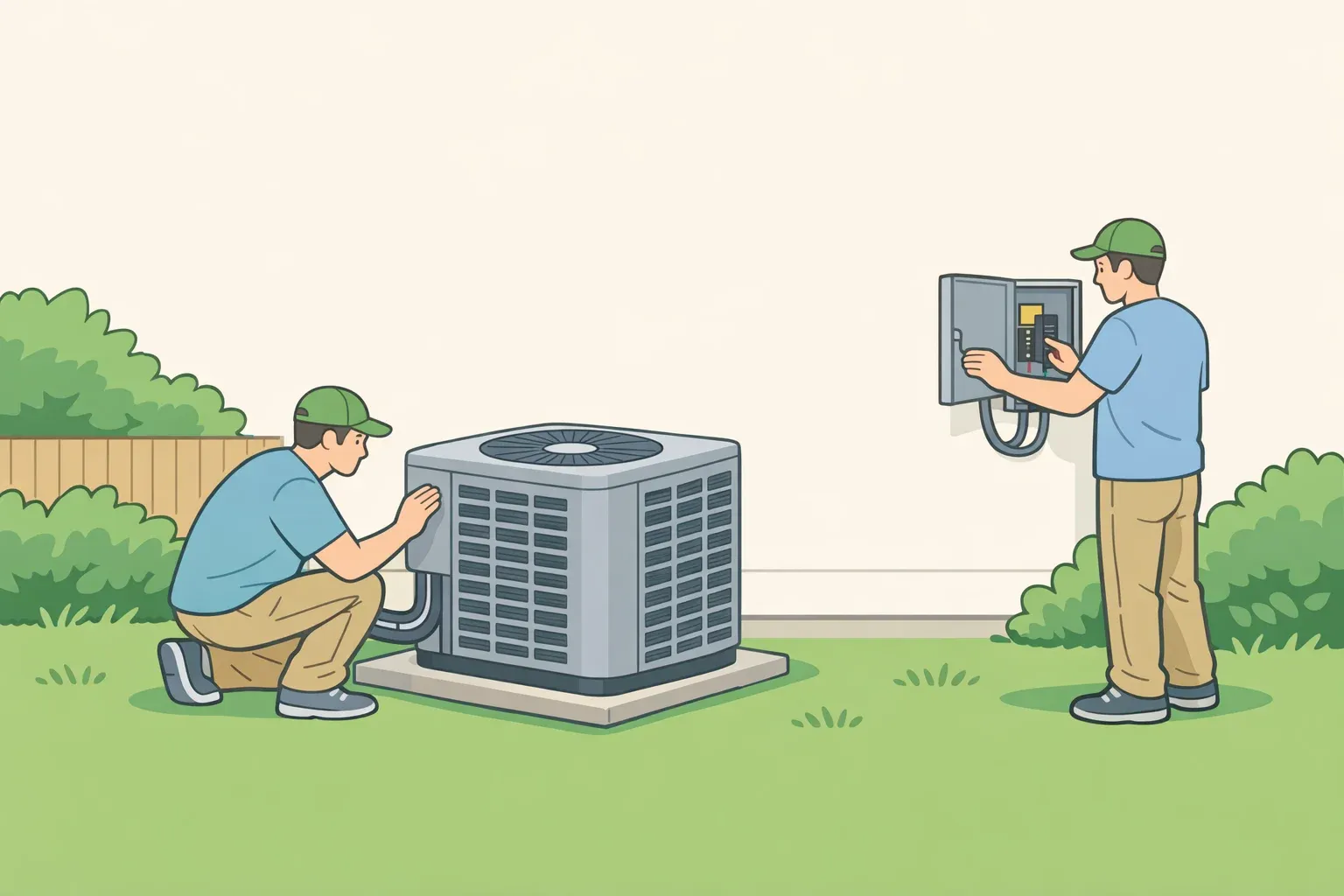
On the electric side, converting to or replacing an electric tankless unit calls for a qualified professional to assess whether the home's panel has enough available capacity before any equipment gets ordered. That's an on-site evaluation, not something to estimate from the breaker panel on your own.
Running a new gas line, adding venting, or upgrading electrical service are licensed-professional jobs no matter which direction this goes. Setting that expectation before shopping for equipment keeps it from showing up later as a surprise line item on a quote.
Tankless water heater installation considerations before you request a quote
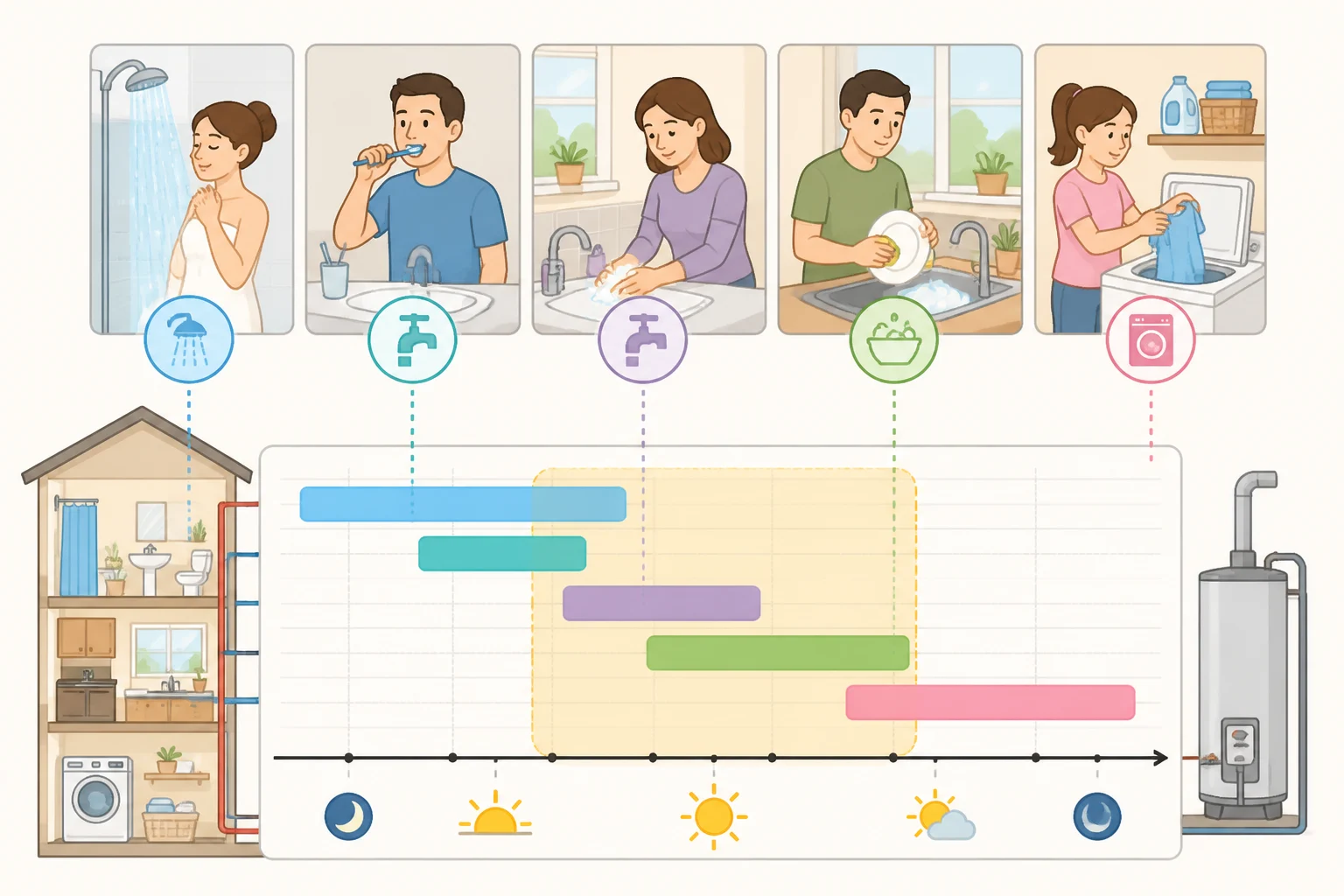
Before calling an installer, build a peak-use snapshot instead of a gallon guess. Write down the busiest realistic moment in your household: one shower running while the dishwasher is going, or two showers plus a load of laundry. That's the information an installer needs to size flow rate and output correctly, and it's their calculation to make, not yours.
One thing worth understanding going in: the comparison referenced by ENERGY STAR lists tankless units with a first-hour recovery rating over 100 gallons, higher than any of the storage options in the same table. That number gives a rough sense of output, but it isn't a substitute for an installer running the actual flow-rate math against your household's peak simultaneous use. Bring your peak-use snapshot to the quote conversation instead of trying to match spec sheets on your own.
What you can reasonably document yourself: where the new unit would go, whether that space is interior or exterior, and your area's general freeze pattern. In hard-freeze conditions, leaving a faucet trickling is a standard safeguard against burst pipes, according to the IFAS Extension, and it's worth knowing regardless of which water heater ends up in the house.
Venting route feasibility, gas line capacity, and electrical capacity all need a licensed plumber, HVAC contractor, or electrician to evaluate in person. Raise these in your first conversation rather than trying to resolve them through research alone.
Should I replace my water heater with a tankless model? Comparing the real costs
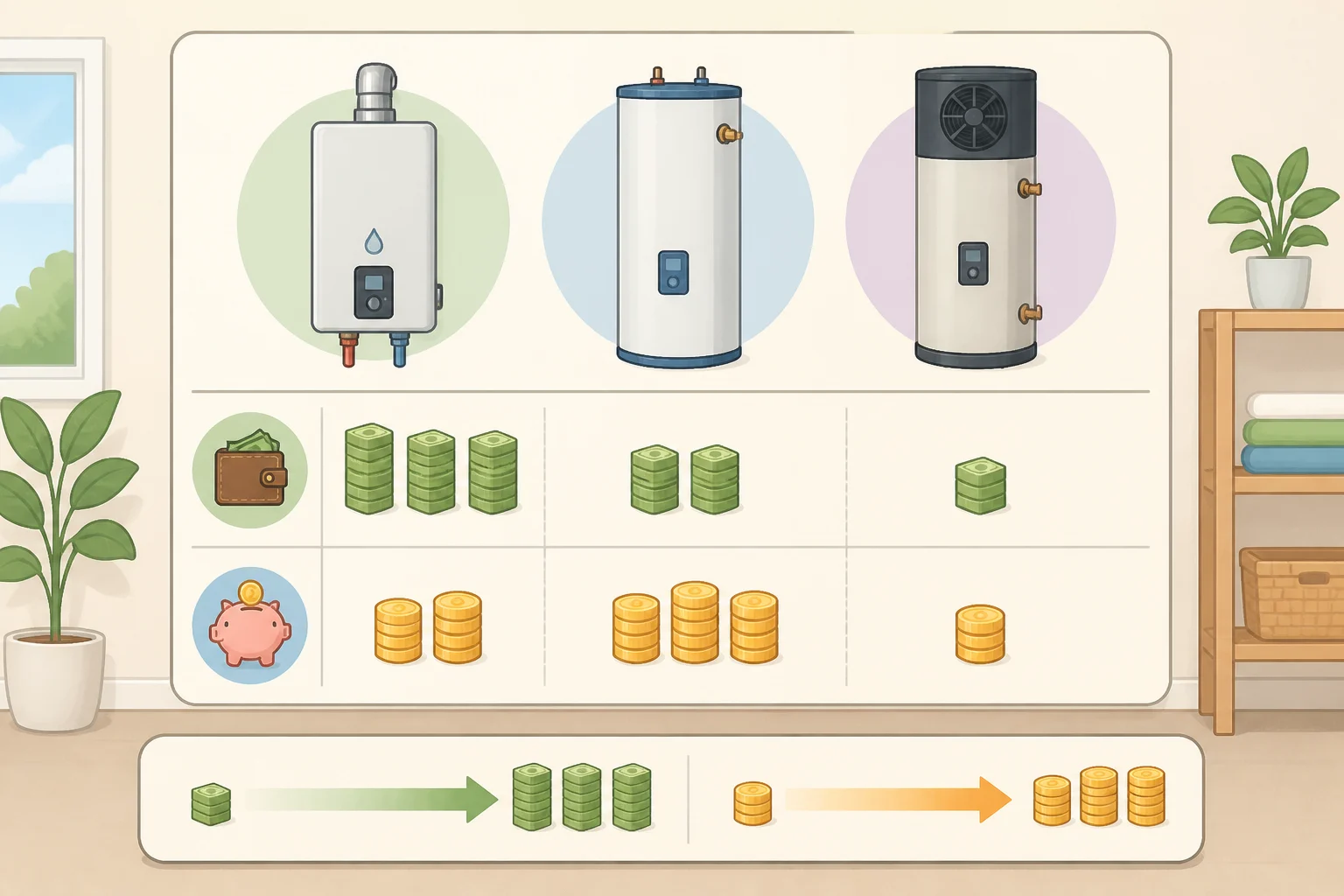
A cost comparison referenced by ENERGY STAR puts tankless units at roughly $800 to $2,000 installed, versus about $450 to $1,200 for standard electric storage, $500 to $1,500 for gas storage, and $1,500 to $3,000 for heat-pump units. Those figures come from a general comparison and don't include local labor rates, permits, venting changes, or electrical upgrades, all of which can move the real installed price quite a bit.
Running costs can flip that math. The same comparison lists approximate annual fuel costs of $175 to $225 for tankless units, compared with $400 to $600 or more for standard electric storage, $200 to $300 for gas storage, and $104 to $160 for heat-pump units. A cheaper unit upfront can still cost more every year to run, so weigh both numbers together rather than just the sticker price.
Heat-pump water heaters come up often in this comparison because ENERGY STAR identifies them as the most efficient current option, with estimated savings of $550 a year and more than $5,600 over the unit's lifetime compared to standard electric storage. They come with their own requirements, though. ENERGY STAR points to an EPA recommendation of about 700 cubic feet of surrounding air, roughly a 10-by-10-foot room with a 7-foot ceiling, because efficiency drops in a confined closet. Most models also need a dedicated 240-volt outlet, though 120-volt models are now available in many markets for homes without that service.
Cold weather matters here too, but the details differ by model. Heat pump water heaters, also called electric hybrid models, generally work best with surrounding air at or above 40 degrees Fahrenheit, and hybrid units will keep making hot water even when the air dips below that, according to ENERGY STAR. Split-type heat-pump models, which pair an indoor tank with an outdoor compressor, can work in temperatures as low as negative 25 degrees Fahrenheit.
If the checks in the previous section ruled out a workable vent route, a storage replacement is usually the better-supported path, since it doesn't add new combustion-air or venting requirements. If limited electrical capacity is the issue instead, keep in mind that most heat-pump water heaters also need a dedicated 240-volt circuit, so that limitation doesn't automatically point toward a heat pump either. A qualified electrician needs to weigh in on what the panel can actually support before any electric option gets locked in. If a home clears the fuel and electrical checks, the cost and space tradeoffs above help decide whether tankless is worth the higher upfront price for generally lower day-to-day running costs, keeping in mind that a tankless unit still needs wall or equipment space, clearances, and often its own venting. It skips the bulky storage tank, not the space requirement entirely.
Before you request a tankless water heater quote
Walk into that first installer conversation with a specific list, not a vague sense of wanting to go tankless. Bring:
- A photo of the current unit's identification plate, showing fuel type and capacity, plus whatever age information an installer can confirm from it
- The location and rough dimensions of where the new unit would go, and whether that space is indoors, outdoors, or a confined closet
- The busiest realistic moment of simultaneous hot-water use in your household
- The last few months of utility bills as a cost baseline
When quotes come in, ask each installer to spell out whether the price includes permits, venting changes, gas-line work, electrical upgrades, disposal of the old unit, and startup, not just the equipment itself. Ask about the proposed model, the warranty length, and what operating-cost assumptions the installer used. Comparing total installed cost, not sticker price, is the only real way to tell a gas tankless quote apart from a gas storage quote, or an electric tankless quote from a heat-pump quote.
Don't let tax credits or rebates drive the decision early. Incentive programs for water heaters change over time, and an ENERGY STAR summary referenced a federal tax credit tied to rules that took effect in 2023. That detail needs to be reverified against current IRS guidance and an installer's knowledge of local utility programs before it gets built into any budget.
The clearest rule to walk away with: request tankless quotes only after a licensed plumber, HVAC contractor, or electrician has confirmed the fuel source, a workable vent route, available electrical capacity, and the right model size for your household's peak hot-water use. Flow rates and temperature rise are the installer's math to run once they have that information, not something to work out in advance. Showing up with the checklist above, knowing which technologies your home can actually support, and comparing real written estimates side by side is what actually moves this decision forward.





Comments
Be the first, drop a comment!