



Difference Between Air Conditioner and HVAC System Explained
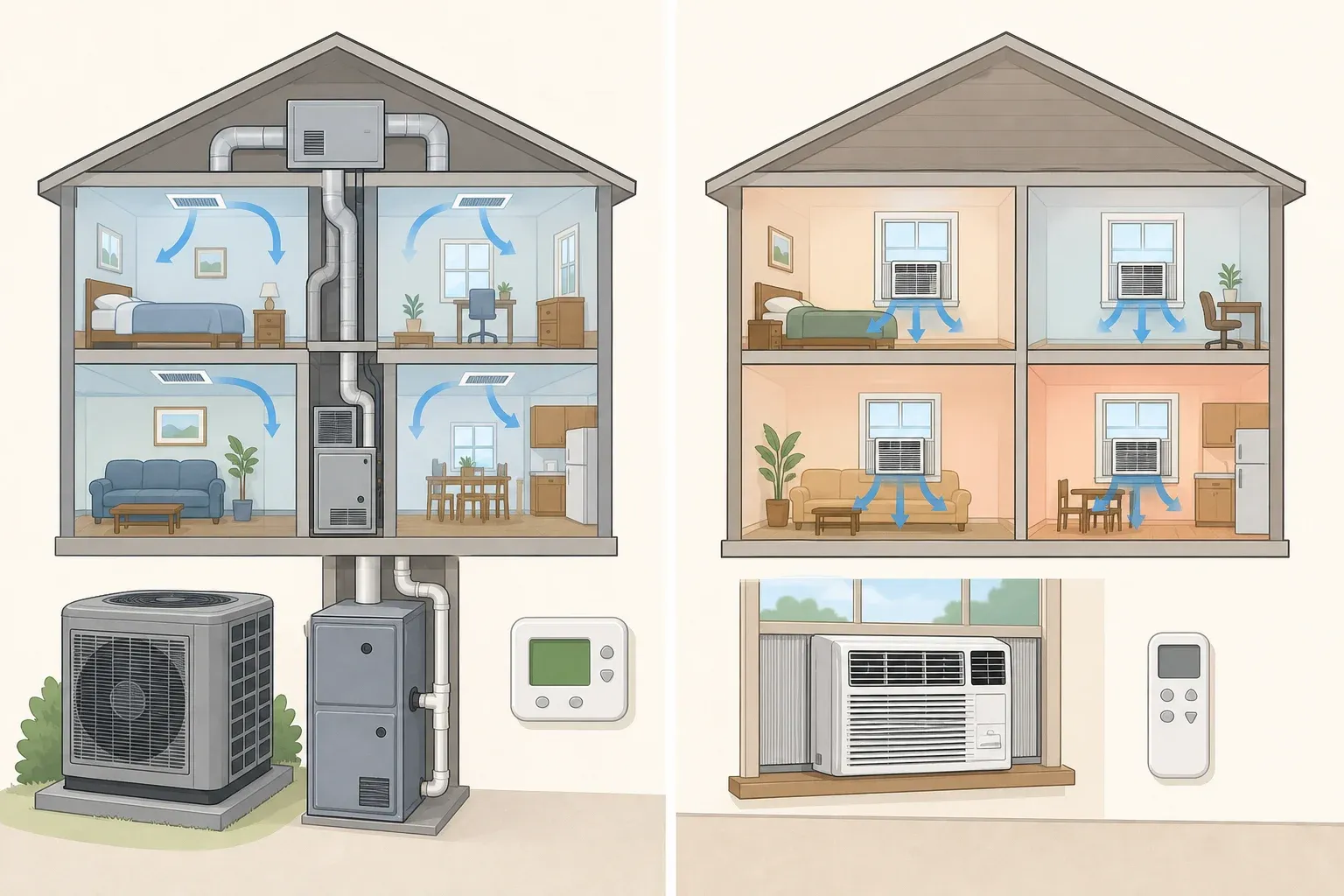
One real-world setup looks like this: a furnace for heat plus a window unit or two running every summer. That's not a single air conditioner, and it's not a complete HVAC system either, not in the way most people picture one. The difference between air conditioner and HVAC system labels comes down to scope. An air conditioner is cooling equipment. HVAC, short for heating, ventilation, and air conditioning, is the broader term for whatever mix of equipment a home actually uses to manage temperature, humidity, and air quality together, according to the Department of Energy.
So is an air conditioner part of an HVAC system? Sometimes. A central air conditioner wired into ductwork and a thermostat is one piece of a larger HVAC setup. A window unit humming away in a bedroom is not. It's a standalone air conditioner with no connection to anything else in the house.
This guide walks through how to identify what's physically installed in a home, what that equipment can and can't tell you about its own capabilities, and what to write down before calling an HVAC contractor. It's an identification checklist, not a repair guide. Some of what's described below is safe to look at directly. Some of it isn't, and that line gets called out clearly when it comes up.
Air conditioner vs HVAC system: what does HVAC include?
"Air conditioner" and "HVAC" get used interchangeably in everyday conversation, even though they describe different things. An air conditioner is cooling equipment, built to transfer heat out of an indoor space. HVAC is the umbrella term for heating, ventilation, and air conditioning combined, whatever mix of equipment a home uses to control its indoor environment, as the Department of Energy defines it. A full HVAC setup often combines heating equipment, ductwork, filtration, and cooling equipment, but the DOE definition itself is about the function, controlling temperature, humidity, and air quality, not a fixed list of required parts.
One nuance worth flagging early: a room air conditioner, as federally defined, isn't necessarily cooling-only. The regulatory definition covers an encased, single-phase unit built for a window or through-wall opening that includes a refrigeration source and may also include basic ventilation or heating features, per the Department of Energy. So "air conditioner" doesn't always mean a device that only cools.
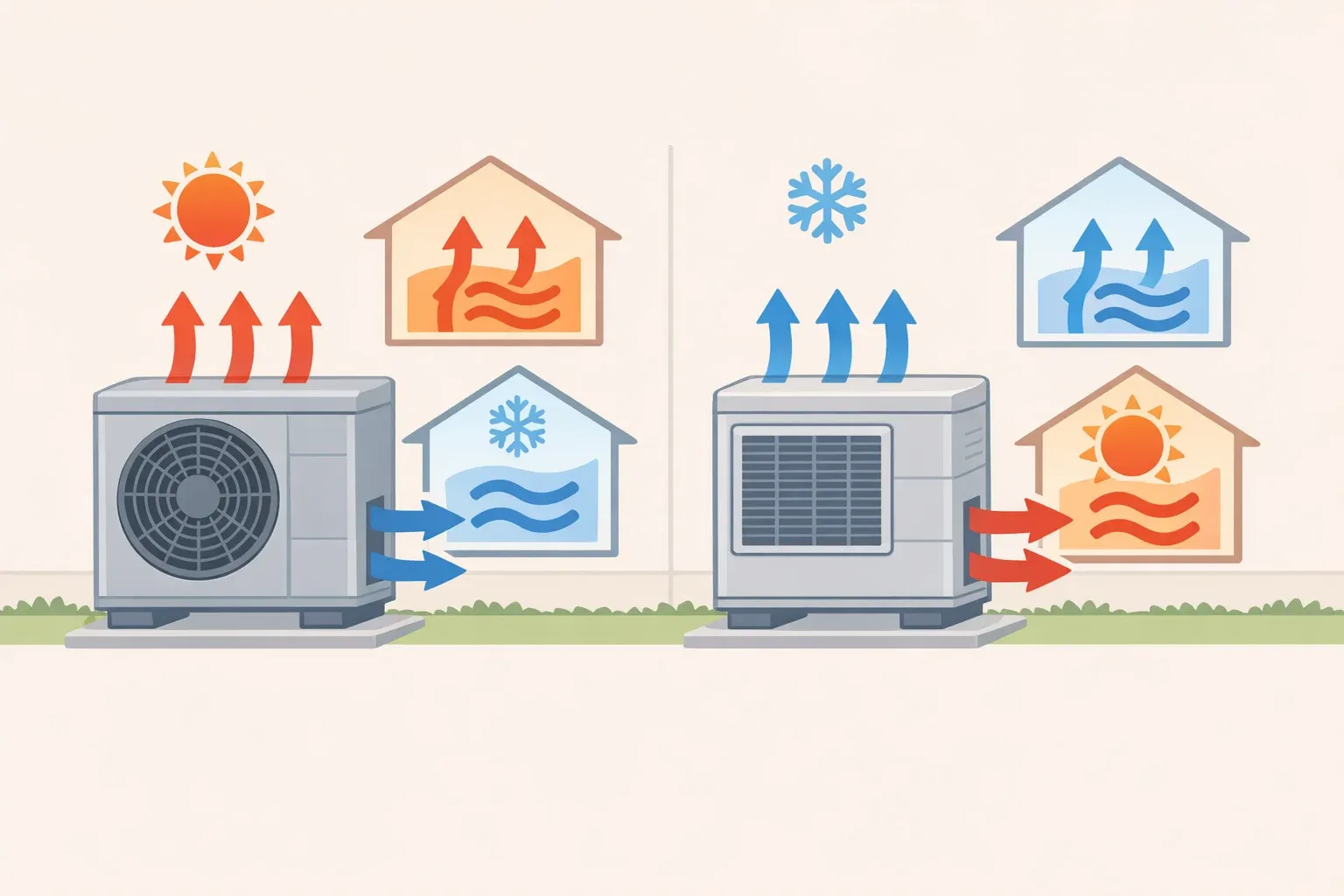
According to the Department of Energy, the fundamental principle behind both heating and cooling is the transfer of heat from a warmer space to a cooler one. That principle fits air conditioners and heat pumps closely, since they move existing heat rather than generating cold air from nothing. Other heating equipment, like a standard furnace, works through a different process, so it doesn't fit the same "moving heat" description quite as neatly.
One classification trips people up: ductless mini-splits and multi-splits, the kind with an outdoor compressor and one or more wall-mounted indoor heads, don't use any ducts at all. Because they're installed as split systems, the Department of Energy classifies them as central air conditioners and heat pumps rather than room units. That's a federal efficiency-labeling distinction, not a reflection of how most homeowners would describe a wall unit in a bedroom. For figuring out what's actually in a house, the physical walk-through matters more than the regulatory category, which is where the next section picks up.
How to identify what's actually installed in your home
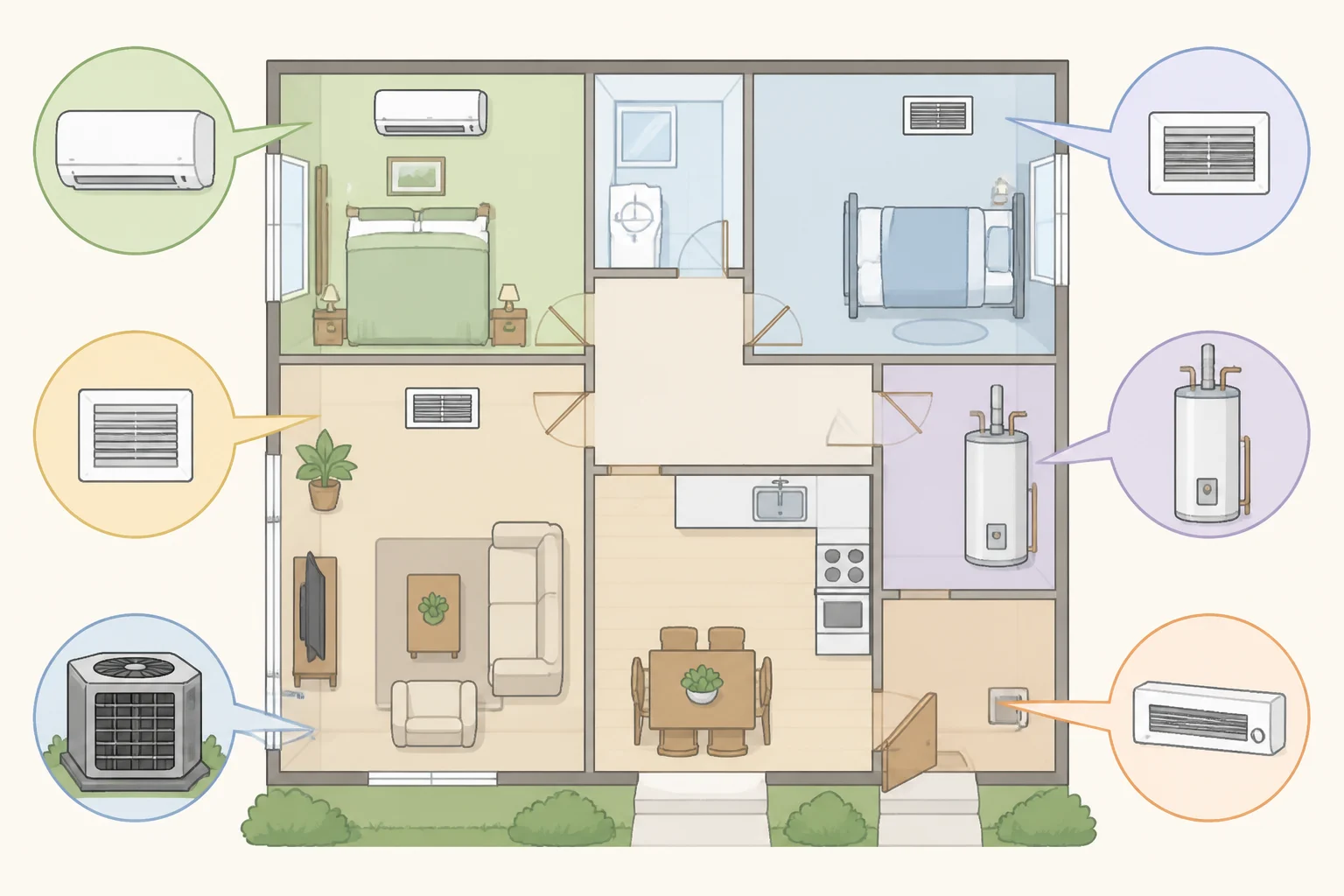
Grab a notebook or the notes app on a phone. Before touching anything, walk through the house room by room and work through these checks in order.
1. Look for window, through-wall, and portable units
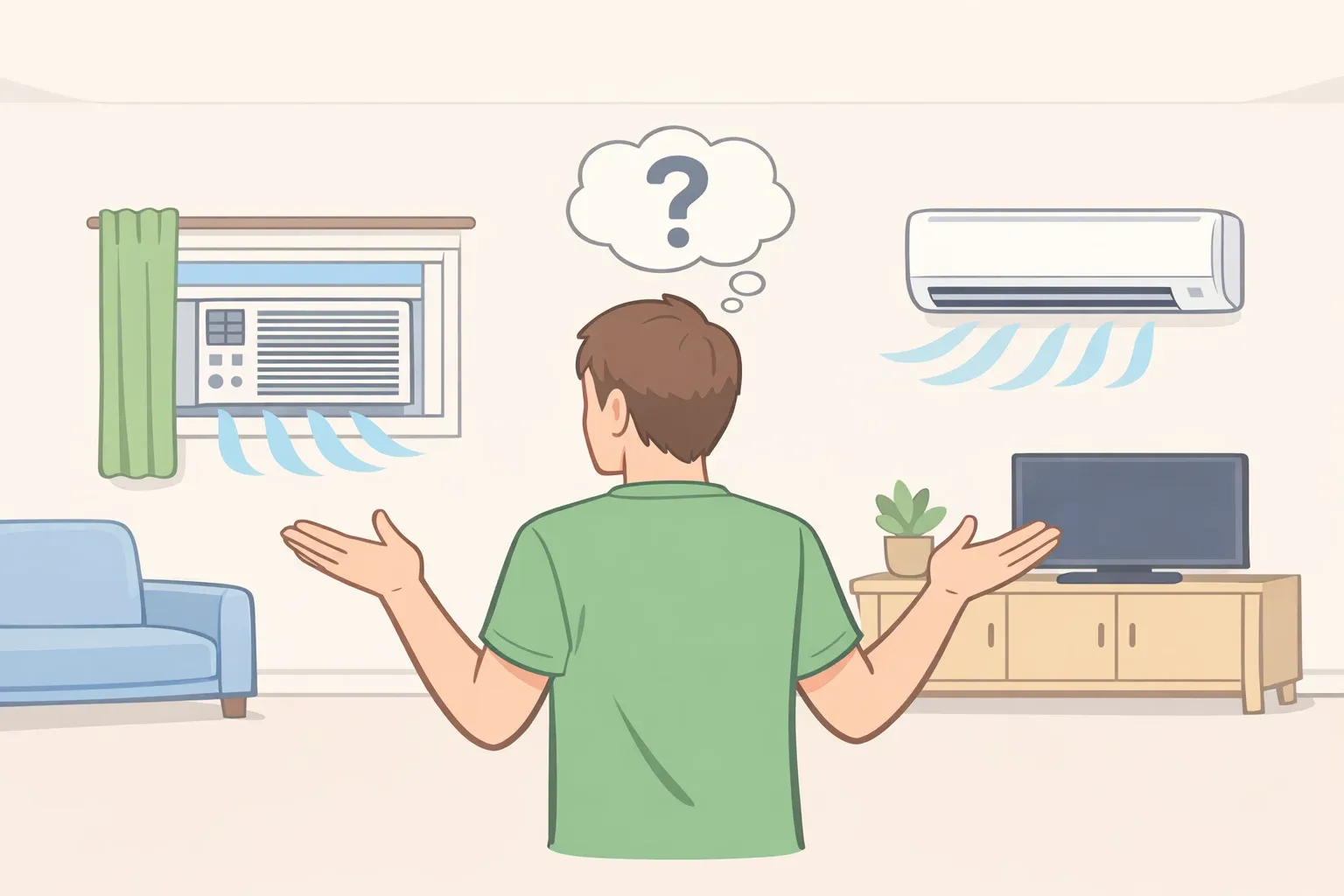
Any unit mounted in a window or wall opening, with no connection to ductwork or a furnace, is a self-contained cooling unit. Federally, that's a room air conditioner: an encased, single-phase unit built specifically for a window or through-wall opening, with its own refrigeration source.
A portable floor unit vents its exhaust hose out a window instead of mounting in the opening itself, but it works the same way at a basic level: a self-contained unit cooling the room it sits in, with no tie-in to anything else in the home.
Check the nameplate, usually a metal or sticker label on the side or back of the unit, and write down the model and serial number. A model number can help a technician identify the exact equipment later, which is faster and more reliable than describing it over the phone.
2. Check outdoor equipment and what it connects to
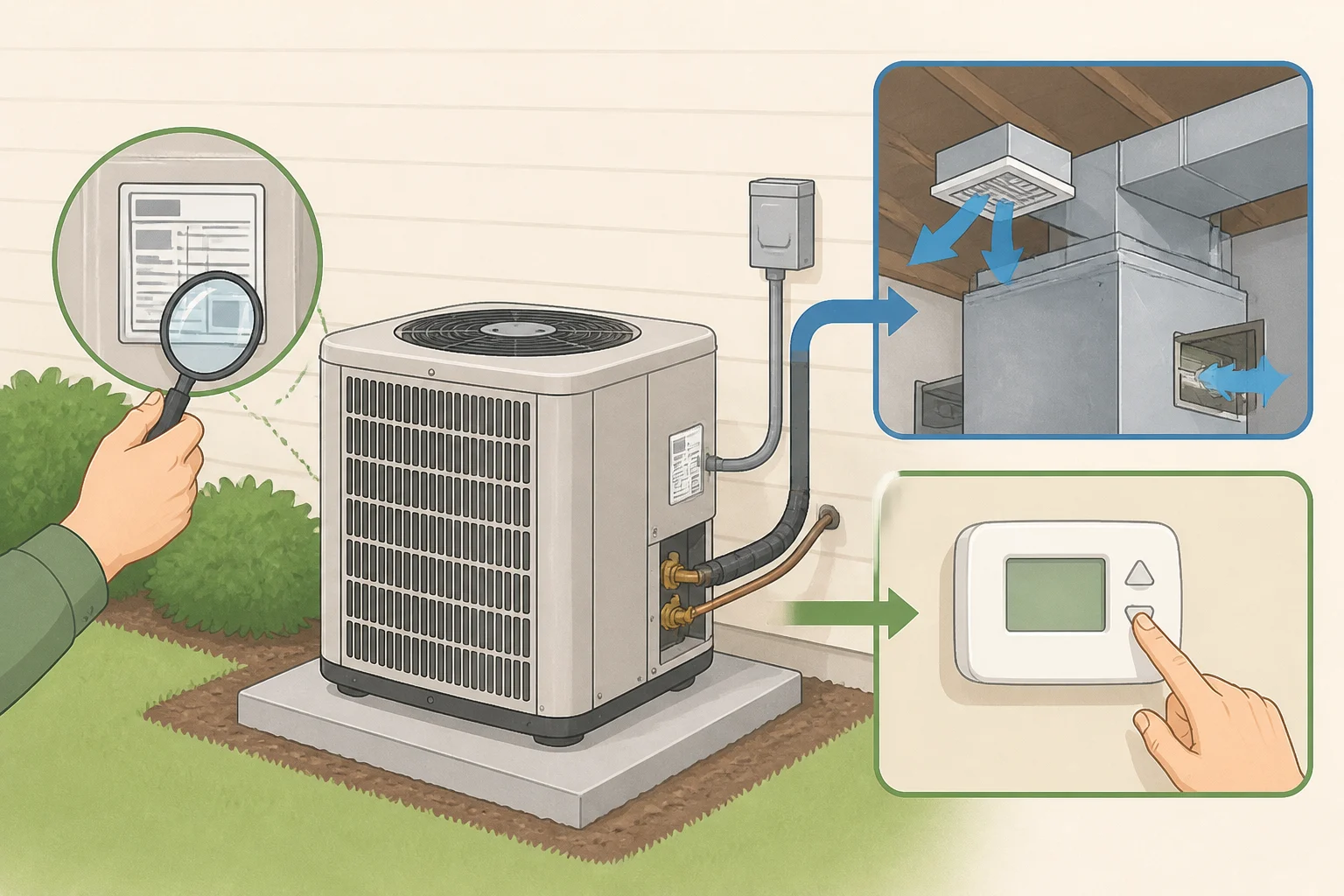
An outdoor condenser or compressor is the clue that points toward a larger system. If it's connected to ducts and vents running through the house, that's likely a central air conditioner or heat pump, installed as part of an indoor climate-control system. These systems may or may not use ducts to move cooled or dehumidified air to more than one room, so an outdoor unit alone doesn't confirm ductwork exists one way or the other.
An outdoor unit by itself also doesn't say whether it's an air conditioner or a heat pump. The difference lives in the internal refrigerant cycle, not in anything visible from outside. Check the nameplate model number, or ask a technician to confirm which one is installed.
3. Identify whether cooling or heating serves one room or the whole house
An outdoor compressor paired with one or more wall-mounted indoor heads and no ductwork is a ductless mini-split or multi-split. These get classified the same way as central systems, but they cool, and sometimes heat, only the specific rooms where the indoor heads are mounted. Finding a head in the living room confirms the living room. It doesn't confirm whether the rest of the house has any heating or cooling of its own.
4. Trace ducts only as far as safely visible
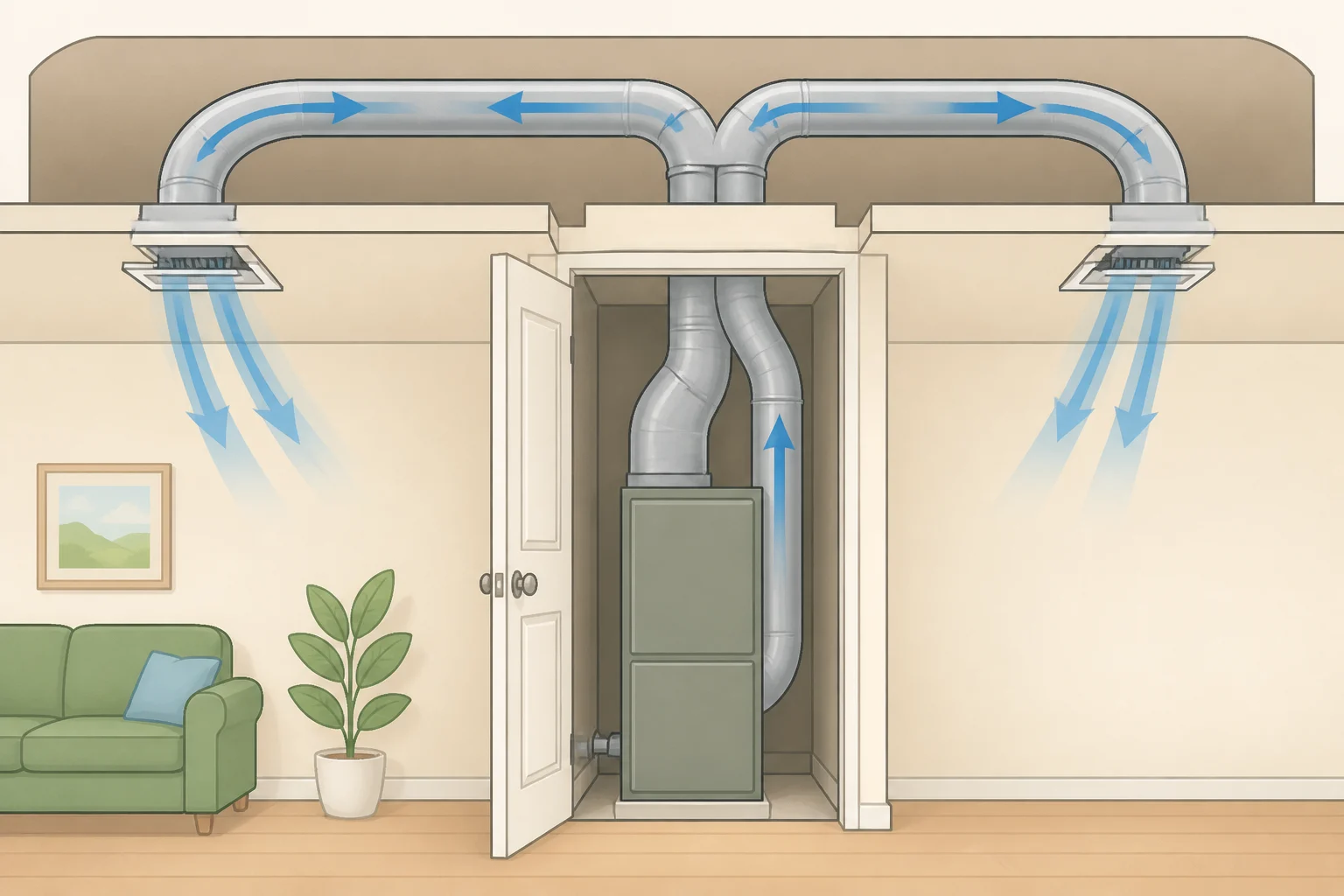
Vents in the ceiling, floor, or walls usually mean a ducted system is distributing air somewhere in the house. But ducts alone don't confirm what's generating the air moving through them, that could be a furnace, a heat pump, or something else entirely. The ducts are a distribution path, not proof of what's attached on the other end.
Follow the vents back toward a utility closet, basement, or attic to find the furnace or air handler they connect to. Stop at the outside of the unit. Opening it up to see what's inside isn't part of this check.
5. Find the furnace, boiler, or air handler
A furnace or boiler with no outdoor condenser and no window or portable units anywhere in the house points toward heating-only equipment. If a walk-through turns up no cooling equipment anywhere, including less obvious spots like a single mini-split head tucked in a back bedroom, it's reasonable to conclude the home currently has no air conditioning installed.
6. Check the thermostat and the filter slot
A thermostat with both heating and cooling modes may indicate equipment for both exists somewhere in the house, though it's still worth confirming what that cooling equipment actually is using the steps above. A thermostat with heating-only settings lines up with a heating-only setup.
Also find where the air filter goes, whether that's a slot near the furnace or air handler, or a filter built into a window or portable unit. What that filter actually does depends heavily on which kind of system it belongs to, which is the next thing worth checking.
What each setup actually tells you
| What's visible | Likely setup | What it confirms | What it doesn't confirm |
|---|---|---|---|
| Window or wall unit, no ducts | Room air conditioner | Self-contained cooling in that spot | Heating or cooling anywhere else in the house |
| Portable floor unit with exhaust hose | Room air conditioner (portable) | Cooling for one room | Same as above |
| Outdoor condenser plus ducts throughout | Central air conditioner or heat pump | Whole-home air distribution | Whether it's AC-only or a heat pump |
| Outdoor compressor plus wall-mounted heads, no ducts | Ductless mini-split or multi-split | Cooling (and maybe heating) in specific rooms | Coverage anywhere else in the house |
| Furnace or boiler, no outdoor unit, no window or portable units | Heating-only equipment | No active cooling found during the walk-through | Whether a hidden mini-split head exists elsewhere |
| Furnace plus window or portable units | Mixed setup | Separate heating and cooling equipment | Whether the two are integrated, they generally aren't |
That last row covers a setup worth naming directly: heating equipment and cooling equipment installed separately, with no connection to each other. Asking "do I have an air conditioner or HVAC" doesn't have a clean yes-or-no answer in that case. The honest answer is often both, running independently.
Filtration is a real, measurable difference
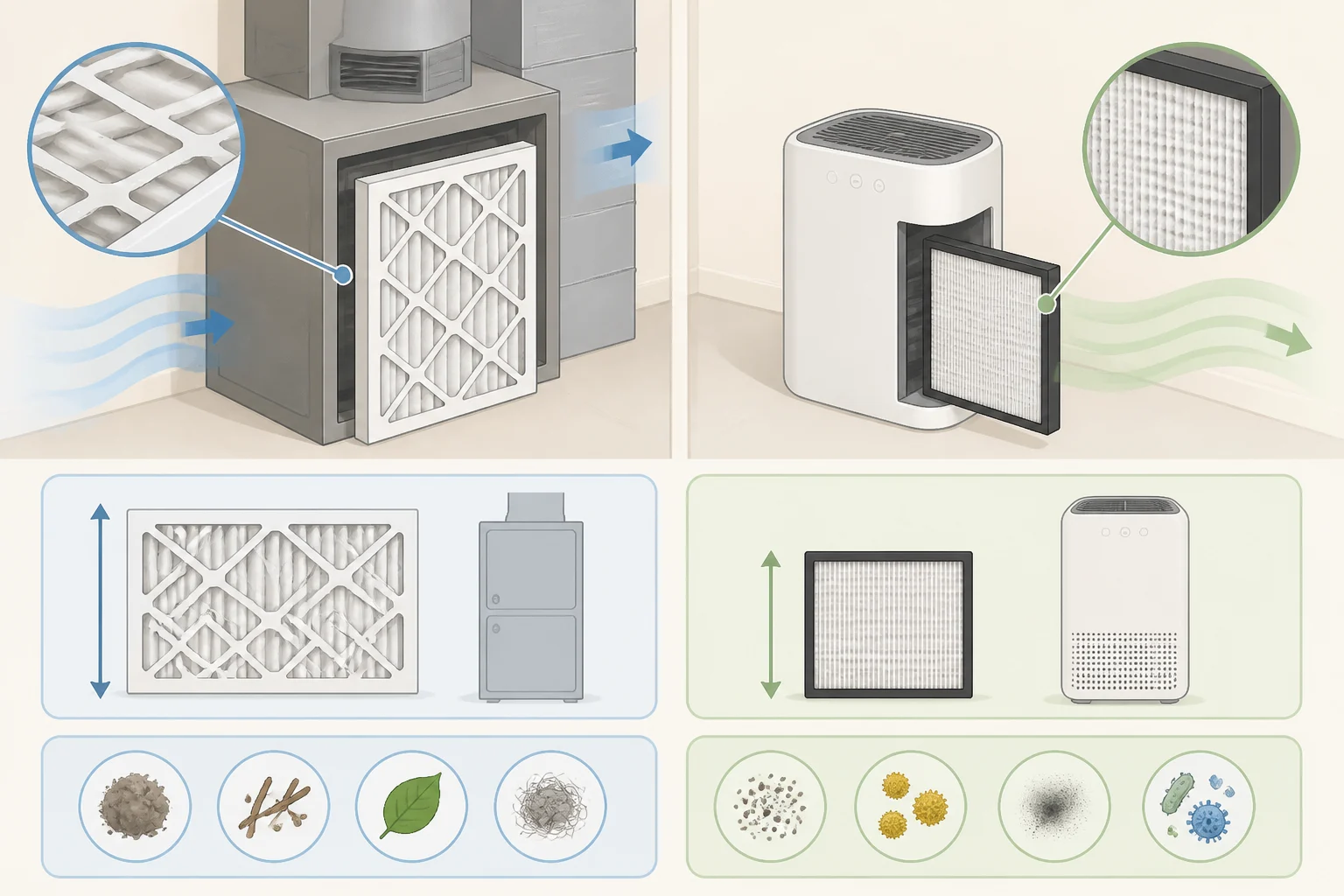
One difference between these setups isn't just conceptual, it's something readable on the filter itself. Central furnace or HVAC filters are built to filter air throughout the entire home, while window and wall-mounted units carry only limited filtration meant to keep the unit's own internal parts clean rather than capture fine particles from the surrounding room air.
That central filtration only works while the system is actively running, and the EPA notes that most HVAC systems operate less than 25% of the time during heating and cooling seasons. So a central filter isn't constantly scrubbing the air the way a dedicated portable air cleaner would. For a central furnace or HVAC filter, the EPA recommends a rating of at least MERV 13, or as high as the system's fan and filter slot can handle, replaced on the manufacturer's recommended schedule, typically every 60 to 90 days. A dirty, overloaded filter stops working effectively no matter its rating.
What to tell an HVAC technician, and where to stop
Hand over what the walk-through turned up:
- Indoor equipment type: window, portable, wall-mounted heads, or ducted vents
- Whether there's an outdoor condenser or compressor, and how many
- Model and serial numbers from any nameplate labels
- How many rooms or zones each piece of equipment appears to serve
- Whether the thermostat has heating and cooling modes
- Where the filter slot is located and what rating it currently holds
These notes give a technician a real starting point instead of a vague description over the phone. They don't replace an in-person inspection, and they don't confirm a system is actually working, only that it's there.
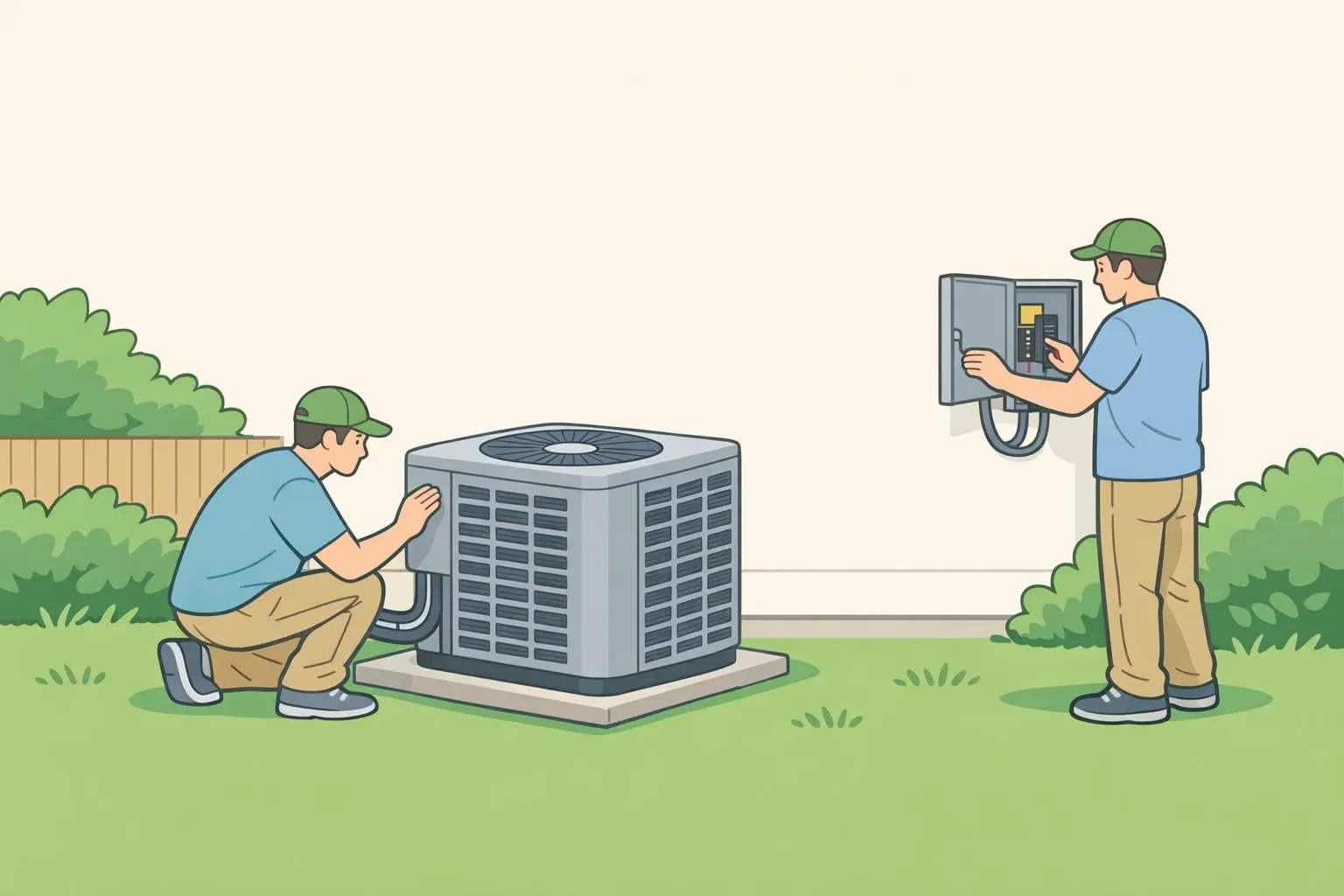
Inspecting labels, vents, filter slots, and the outside of indoor or outdoor units is a reasonable homeowner check. Opening an electrical panel, accessing refrigerant lines, or taking apart sealed equipment to see what's inside goes past that line. Stop at the nameplate and the filter slot, and leave the rest, confirming refrigerant type, diagnosing a compressor issue, opening equipment housings, to a licensed HVAC technician.
If the walk-through turns up a mixed setup, a furnace with no clear cooling, or an outdoor unit that won't identify itself from the label, that's normal. Write down what's visible, bring it to a technician, and let the inspection confirm the rest.



Comments
Be the first, drop a comment!