



A roof's hardest job isn't curb appeal. It's holding the line after wind and hail have already found a weak spot, because once the roof cover is breached, that damage can cascade into water intrusion, and the repairs that follow often get expensive.
The scale of that risk is real. In 2024, severe-storm losses reached $54 billion, the second-highest total on record, spread across 17 separate billion-dollar events, IBHS reported. Hail alone accounts for 50 to 80% of annual severe-storm damage in the U.S.
Here's the plain-language answer before the details: a durable roof isn't defined by one premium material. It's a system where wind rating, impact rating, deck sealing, and flashing details all do their job together. Knowing what to look for in a durable roof means checking all five, not just picking the shingle with the flashiest warranty.
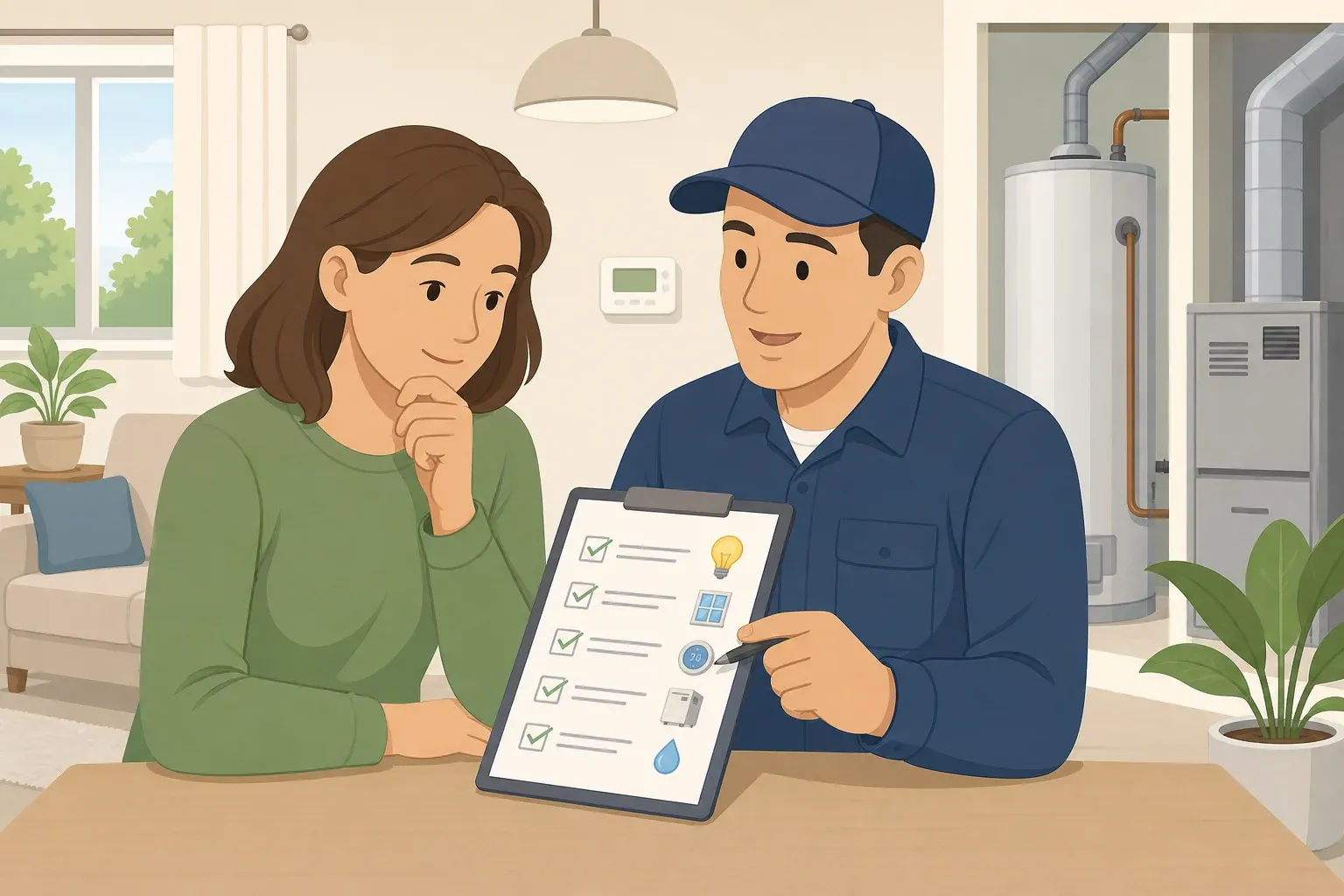
Bring this checklist to a roofing quote
Whether a contractor's quote is sitting on the kitchen table or a re-roof is still in the shopping phase, ask for these weather-resistant roof features in writing, not just verbal assurances:
Documentation of the wind-test standard and classification the roof covering carries
The impact-test standard and class, whether that's UL 2218, FM 4473, or IBHS's own Impact-Resistant Shingle Performance Ratings
The specific method used to seal the roof deck against water intrusion if the covering fails
The roof-deck and underlayment fastening pattern, plus any testing on roof-mounted vents
A material choice matched to the home's actual weather exposure, not a generic "durable" label
The next five sections walk through why each of these matters and what a satisfactory answer sounds like.
A wind-uplift rating that matches your local conditions
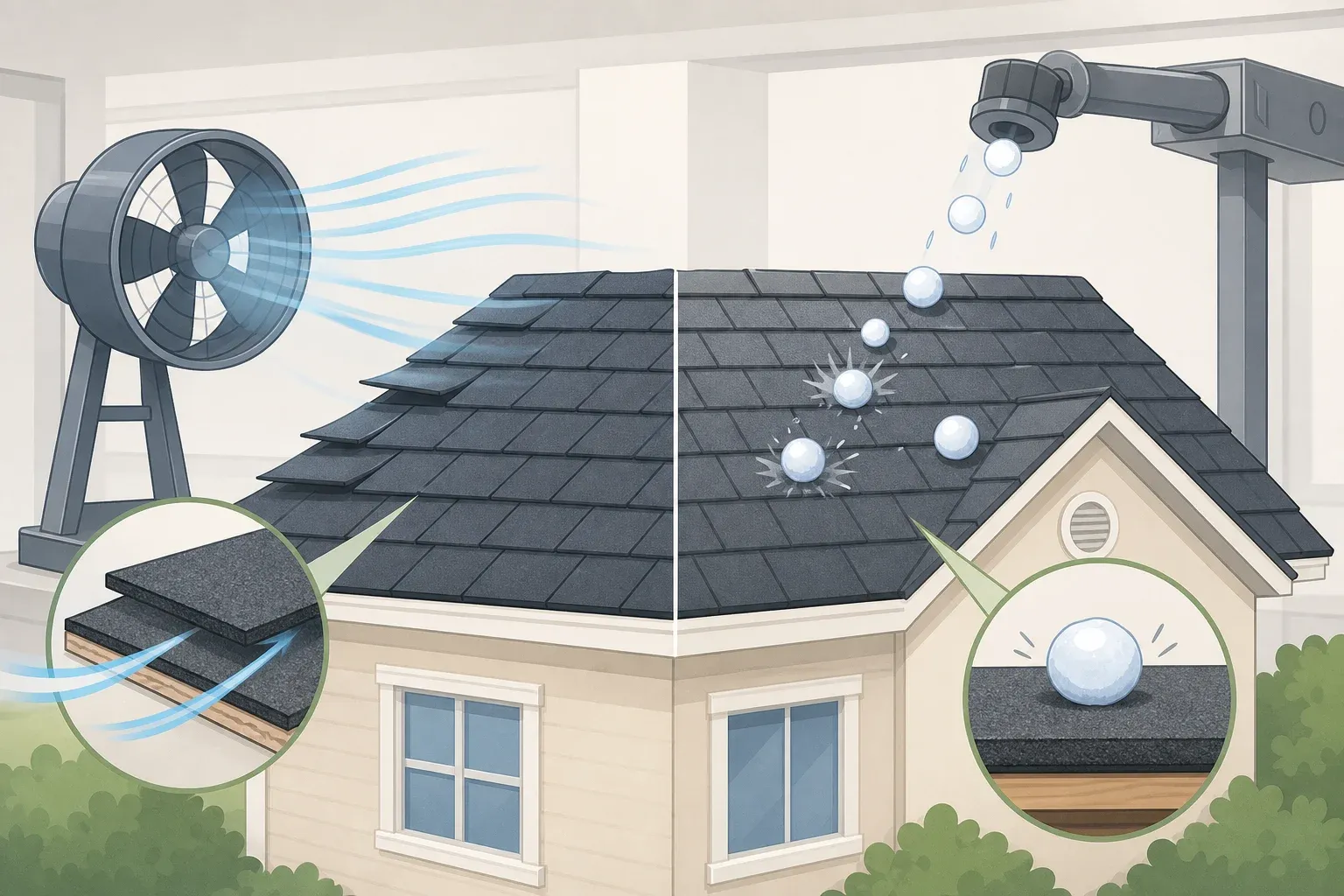
When wind blows across a roof, it creates suction trying to peel the covering off the house, and every material resists that pull differently. For asphalt shingles specifically, that resistance depends heavily on one detail: the self-sealing strip bonding each shingle to the one below it.
That strip is temperature-sensitive. Manufacturers recommend installing in 70 to 80°F weather for proper sealing and warn that temperatures below 40°F may prevent sealing from happening at all. In good summer conditions, full sealing can take one to two weeks. In poor conditions, it can take one to two months or longer.
Ask any contractor quoting a reroof for the specific wind classification, not just a verbal "it's wind-rated." The relevant test is ASTM D7158, which sorts sealed shingles into Class A (60 mph), Class D (90 mph), or Class F (110 mph).
Age changes the math too. After 7 to 10 years, shingle sealant weakens enough to meaningfully cut wind resistance, and some tabs can become fully unsealed with no resistance left at all. Worth remembering on an older roof even if it looks fine from the ground.
Tile and metal roofs resist uplift differently from each other, and from asphalt. Modern building codes require tile to be mechanically fastened to the roof deck instead of set in adhesive or mortar, which is why current tile installs hold up against wind better than older adhesive-set tile roofs.
Metal roofing resists uplift through its own mechanical fastening to the roof structure, though a metal panel that does lift can expose a much larger section of deck to water than a few missing shingles would, according to IBHS's weathering research. Either way, ask for the exact wind classification number and confirm the installer followed sealing-temperature guidance rather than trusting generic "wind-rated" marketing copy.
An impact rating you actually understand: how to choose impact-resistant roofing
Two test standards show up on shingle and tile packaging, and both use the same four-tier scale. UL 2218 and FM 4473 classify products Class 1 through 4, with Class 4 defined by resistance to a 2-inch steel- or ice-ball impactor.
That label is useful, but it has a known limitation. Those older standards were built on hail research from the 1960s, and IBHS developed its own Impact-Resistance Test Protocol using real hail-field measurements because the older tests may not reflect realistic hailstone energy.
That gap is why the 2025 FORTIFIED standard's hail supplement sets a tighter bar. To qualify for this optional add-on, steep-slope asphalt roofs must use shingles rated "Excellent" or "Good" on IBHS's Impact-Resistant Shingle Performance Ratings, meant to give property owners confidence their roof can hold up against hail up to 2 inches in diameter. That's a narrower, more specific standard than a generic Class 4 sticker, though it's a confidence builder, not a guarantee against every hailstorm.
Damage also looks different depending on material. Hail can dent, tear, or strip granules from asphalt shingles; crack or shatter tile; and dent metal, though IBHS says it currently has no evidence that denting alone affects a metal roof's performance, according to its weathering data.
One caveat is worth keeping in mind: IBHS notes it doesn't yet know how often hail strikes a roof at the straight-on angle used in standardized testing. A high impact rating narrows the risk of failure. It doesn't erase it, which is part of why the next feature matters just as much as the shingle itself.
A sealed roof deck and properly secured underlayment
For every inch of rain that hits an exposed roof deck, roughly nine bathtubs of water can pour into the home.
The fix is concrete and measurable. Sealing the seams of the roof deck can reduce that water intrusion by up to 95%.
A sealed deck matters even when the roof covering itself gets damaged, because it functions as a backup barrier against water intrusion for exactly those cases. Wind and hail can still tear shingles or crack tile. A sealed deck is designed to limit how much of that damage reaches the inside of the house.
The 2025 FORTIFIED standard gives homeowners two separate benchmarks to ask about here, not one. It calls for a tighter nailing pattern on the roof deck itself, plus a distinct enhanced nailing pattern for the underlayment layered on top of it, both meant to better resist wind loads, and it requires roof-mounted vents to be tested against wind-driven rain. Confirming the deck-sealing method and both nailing patterns in writing beats taking a warranty brochure's word for it.
Flashing, vents, and fasteners that don't quietly fail
Every penetration through a roof, every pipe boot and vent stack, creates a vulnerability regardless of roof type, and the flashing around those areas needs regular inspection. These spots deserve routine checks because flashing problems aren't always obvious from the ground.
Metal roofs come with their own maintenance checkpoints. Exposed fasteners and the rubber gaskets around them deteriorate with age and can back out of the roof over time. A loose fastener with a cracked gasket is an easy, overlooked entry point for water.
Asphalt has a less obvious failure mode tied to the wood deck underneath it. As that deck expands and contracts with temperature swings, nails can back out, and the deck itself can buckle, creating visible ridges across the roof surface. Those ridges reflect the deck moving underneath, not just surface wear, and they're worth having a roofer look at rather than writing off as cosmetic.
Debris accelerates all of this. Trapped debris, especially in roof valleys and in the ridged profile of metal roofing, holds moisture against these vulnerable points and speeds up deterioration. IBHS recommends regular clearing along with trimming any branches overhanging the roof ahead of storm season.
One clear stop point: tile roofs should not get a casual DIY walk-around. Walking a tile roof without proper foot placement can crack individual tiles, so inspections there are better left to someone trained in how to move across that surface safely.
A material and maintenance plan matched to your climate: best roofing materials for extreme weather
Asphalt has a built-in vulnerability tied to basic chemistry. It's a thermoplastic material, meaning it softens in heat and hardens in cold, and ultraviolet exposure steadily degrades it over time. Roof surfaces in direct sun can exceed 200°F, and a sudden rain shower can drop that same surface temperature by as much as 60°F within five minutes.
Orientation makes a measurable difference in how often shingles get stressed by these swings. One IBHS test roof recorded 623 rapid temperature changes of at least 25°F in a single year on its south-facing slope, compared with just 39 such swings on the north-facing slope of the same roof structure. That's useful context when comparing durable roofing materials: orientation alone can multiply the thermal stress shingles absorb, independent of which brand is on the roof.
Other roofing materials hold up differently under this kind of everyday weathering. IBHS reports that clay, concrete tile, slate, and metal change very little under routine weather exposure compared with asphalt, though each comes with its own upkeep item: tile needs careful foot traffic and offers easy tile-by-tile repair, while metal needs periodic fastener and gasket checks.
Maintenance has limits worth knowing, too. IBHS is clear that ordinary weather permanently changes some roof covers in ways upkeep cannot reverse. Maintenance extends a roof's service life. It doesn't substitute for planning a timely replacement once a material has run its course.
What to look for in a durable roof when comparing quotes
Durability comes from the whole assembly working together: wind rating, impact rating, a sealed deck, solid flashing and fastener detailing, and a material matched to the local climate. No single feature on that list compensates for a weak link elsewhere, which is exactly why the checklist earlier in this guide asks for five separate answers, not one.
There's a concrete way to verify this rather than take a contractor's word for it. As of a late-2024 update to the program, roughly 70,000 properties across 31 states had been built or reroofed to the FORTIFIED standard, which bundles several of these roof features for severe weather — a sealed deck, enhanced nailing, and rated impact resistance — into one verifiable spec. The current 2025 FORTIFIED Home standard requires certified FORTIFIED roofing contractors for new compliance work. Older properties in that count may have been built under earlier versions of the standard.
When collecting reroofing quotes, go back to the checklist above and get the answers written into the contract itself: the wind classification, the impact rating, the deck-sealing method, the fastening and vent details, and how the material matches local weather exposure. A verbal promise isn't the same as a spec sheet.
Readers who want material-by-material detail on wind and hail test standards for their specific roof type can go deeper with IBHS's Roof 101 and Roofing Roadmaps series. For the day-to-day stuff, clearing debris, checking gutters, and trimming overhanging branches are reasonable homeowner tasks. FORTIFIED compliance work, deck sealing, and re-fastening should go to a certified FORTIFIED roofing contractor. Any other re-roofing work still calls for a qualified, properly licensed roofer, not a weekend DIY project.




Comments
Be the first, drop a comment!