



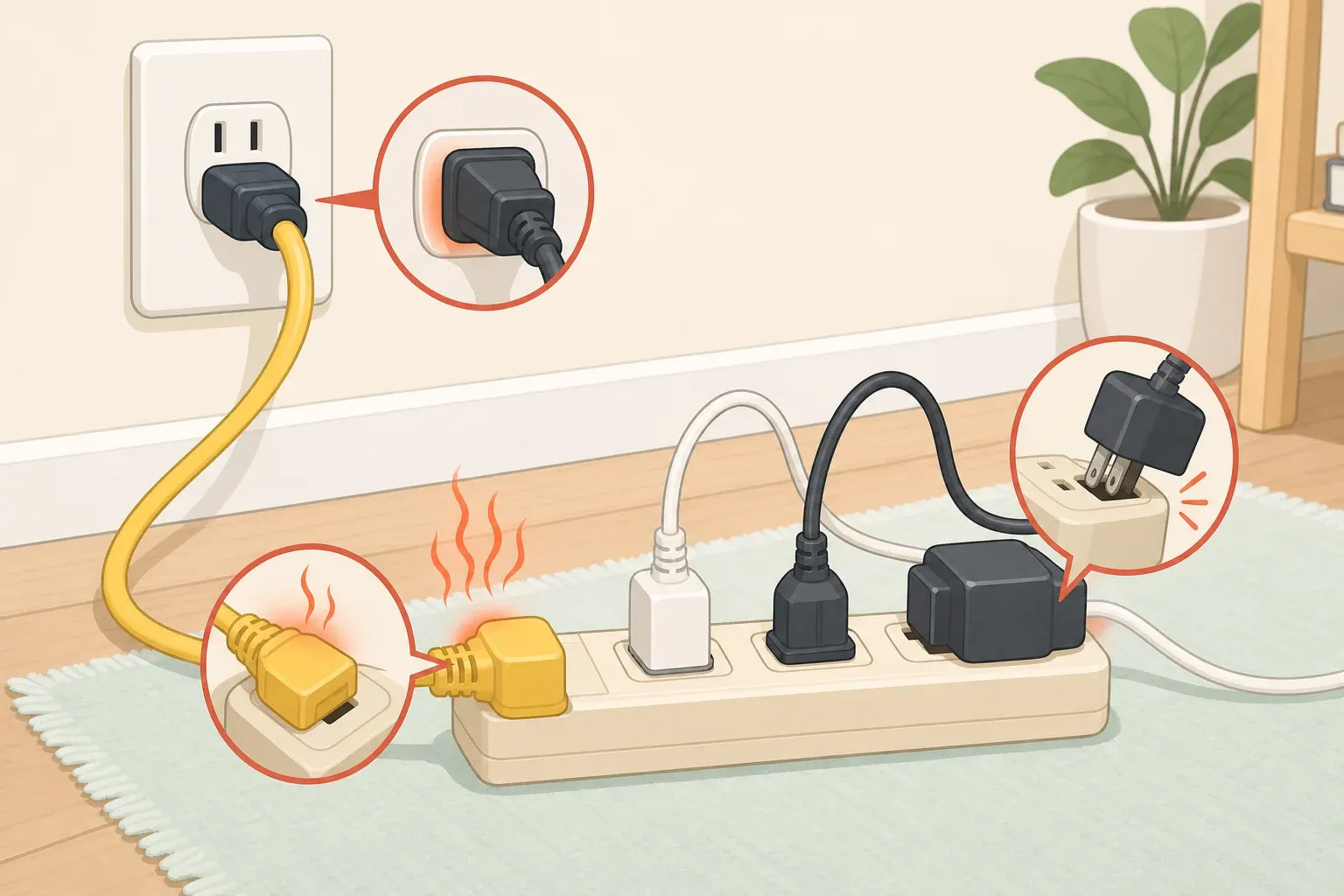
Is it safe to leave an extension cord plugged in all the time?
Is it safe to leave an extension cord plugged in all the time? The honest answer depends on five things, not on whether it's plugged in at all: the cord's condition, whether the appliance it powers actually allows an extension cord, whether the cord is rated for that appliance and that spot, whether the setup is genuinely temporary, and whether anything about it feels warm, loose, or quick to trip a breaker. Extension cords are built for short-term, specific-purpose power. They were never meant to replace a wall outlet or stand in for wiring a room doesn't have.
OSHA's Dollar General report found exactly that substitution happening in a commercial setting: cords and power taps doing a job fixed wiring was required to do, at a company cited for similar electrical violations at other locations in 2020 and 2022. That's a retail stockroom, not a living room, but the habit it shows, a "temporary" cord quietly becoming permanent, is the same one worth catching at home. The rest of this guide covers how to check any cord currently in the house, how to match a cord to the job it's doing, and what the risks of leaving an extension cord plugged in actually look like once a cord stops behaving.
What to check before you leave a cord plugged in
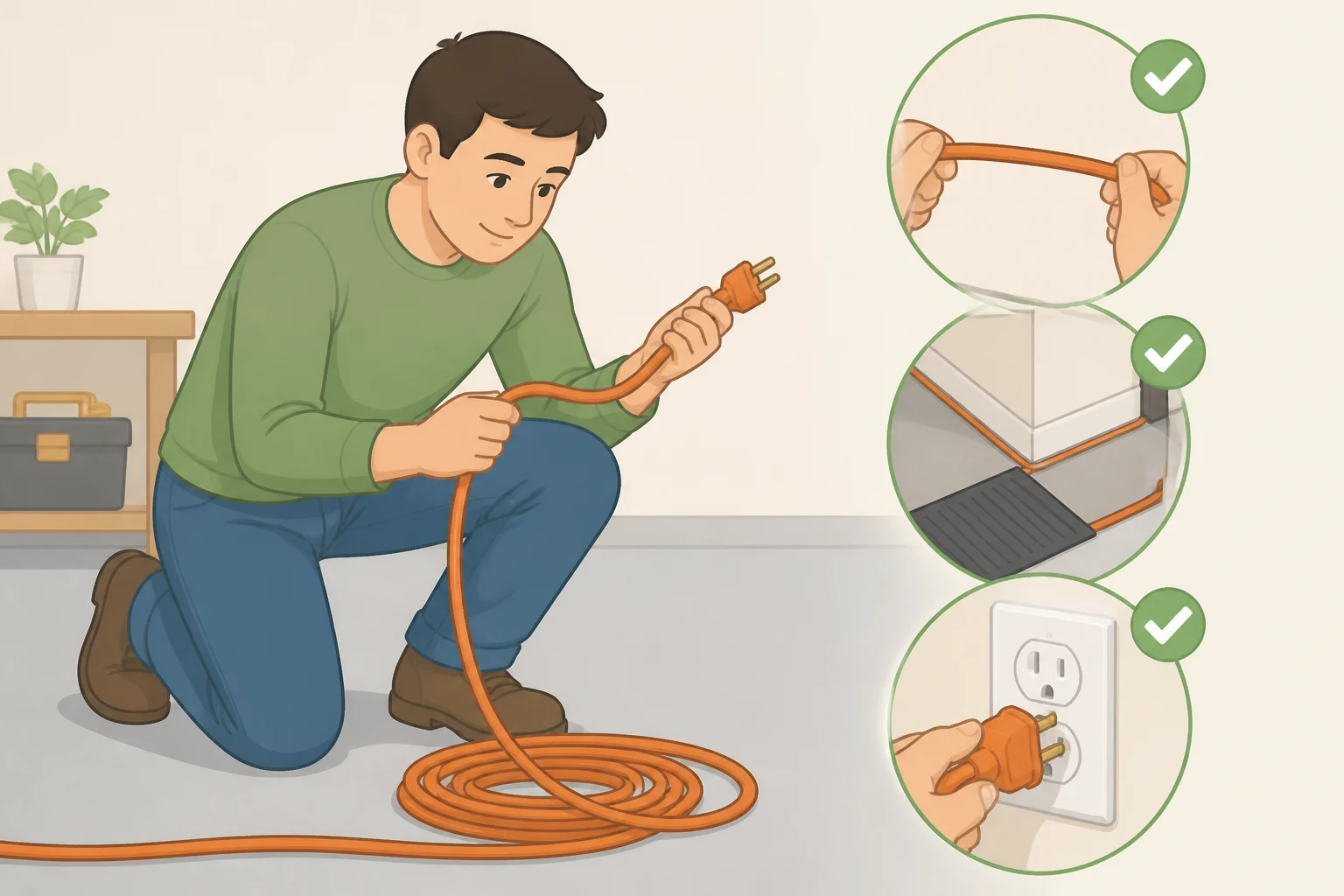
Before deciding whether a given cord is fine to leave connected, run through five quick checks.
- Condition and routing. Walk the full length and look for cracks, cuts, discoloration, or a bent or loose prong. Notice whether it's pinched under furniture, run through a doorway, or buried under a rug, all spots where it gets more wear than one lying flat.
- Appliance instructions. Check the manual for whatever is plugged into the far end. Some appliances specifically warn against extension cord use.
- Rating match. Compare the amperage or wattage printed on the cord's own tag or jacket to what the appliance needs, and use an outdoor-rated cord outside.
- How temporary is it, really? A cord powering a lamp for the evening is a different situation than one that's become the only way power reaches a corner of a room.
- Any warning signs? Warmth, looseness, discoloration, sparking, or a breaker that trips repeatedly.
A cord with nothing plugged into it skips most of this list. With nothing connected, it isn't carrying an appliance load, but it's still energized while it sits in the wall. Unplug it once you're done with it, and definitely before moving it, coiling it, or looking it over closely.
Extension cord vs. power strip vs. surge protector
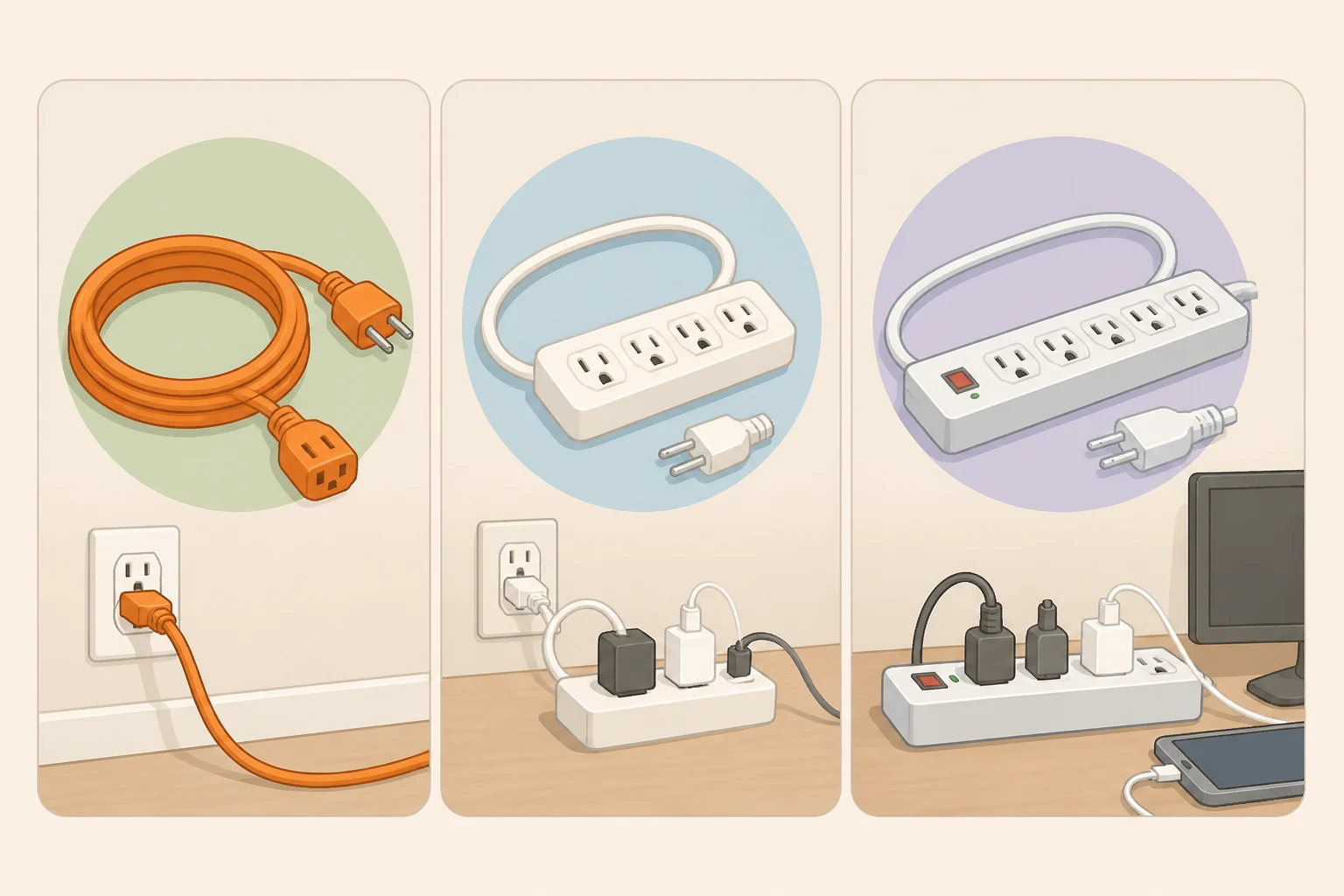
These three get used interchangeably around the house, but they aren't the same tool.
An extension cord is a single length of cord that moves a plug from one spot to another. Whatever is plugged into the far end draws its full load through that one cord.
A power strip, which OSHA refers to as a movable power tap, is a block with multiple outlets meant to plug directly into the wall rather than being chained into a second strip for more outlets.
A surge protector looks like a power strip and adds protection against voltage spikes, but it still carries the same load limit as any other strip.
That distinction mattered at a Dollar General store in Wisconsin. OSHA's inspection there found two movable power taps connected together in a way not recommended by their own UL listing and safety label, an outlet missing its cover plate, and extension cord wiring used where fixed wiring was required, during an inspection opened in 2023. OSHA found similar violations at other company locations in 2020 and 2022.
How to use extension cords safely: match the cord to the appliance
Matching a cord to the job it's doing is the single most useful habit for keeping a cord out of trouble.
- Check the load before the convenience. Compare the wattage or amperage on the appliance's label or manual with the rating on the cord's own tag. A cord rated for a lamp isn't rated for a space heater.
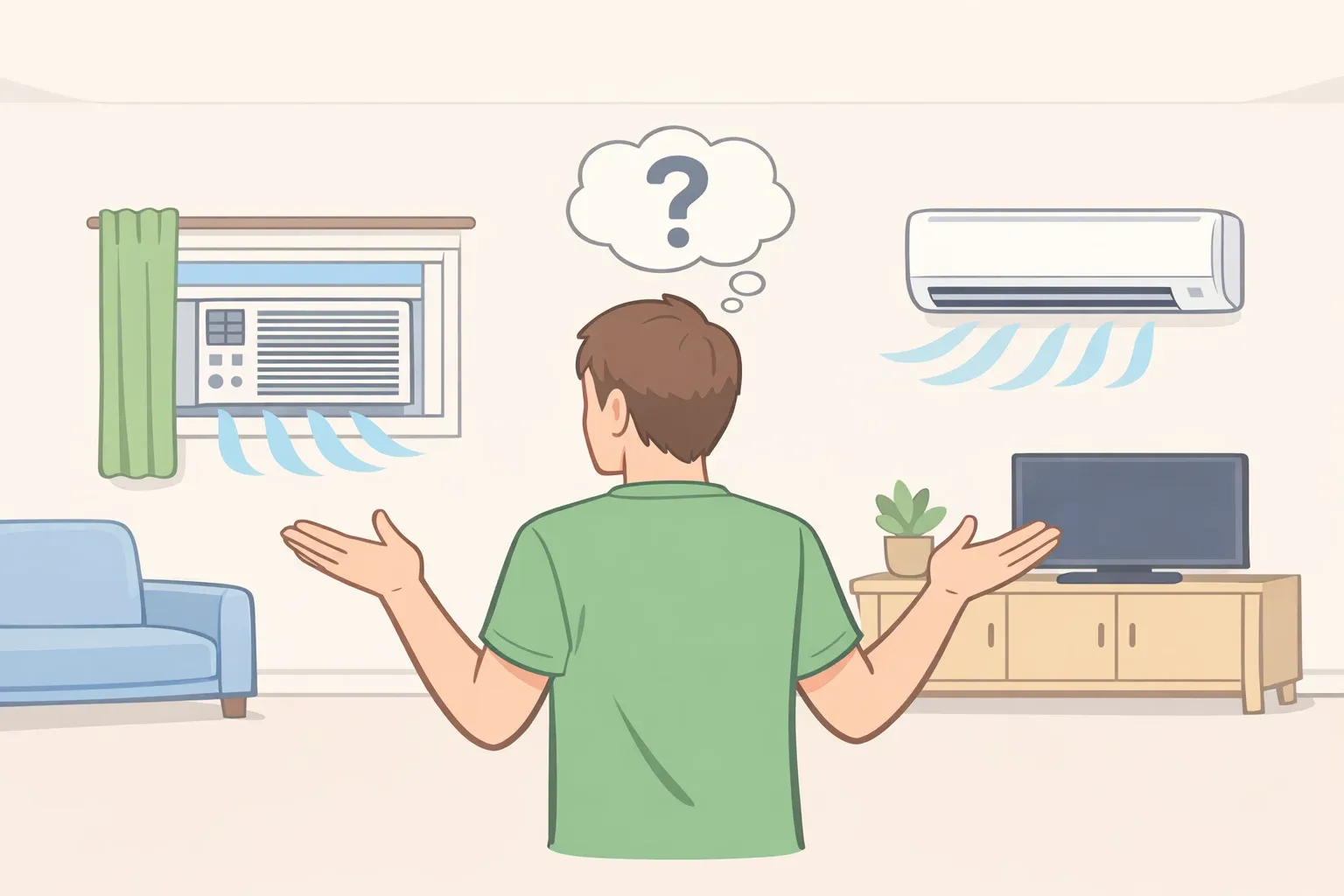
- Treat a manufacturer's warning as final. Some appliance manuals, including certain space heaters and window air conditioners, specifically warn against extension cord use. That instruction means plugging directly into the wall or adding a real outlet, not working around it.
- Keep indoor and outdoor cords separate. An indoor-rated cord isn't built for the moisture and temperature swings outside, even if the plug happens to fit.
- Don't chain power strips or extension cords together just to get more outlets. If a configuration isn't listed on the label, don't build it.
Can extension cords cause fires?
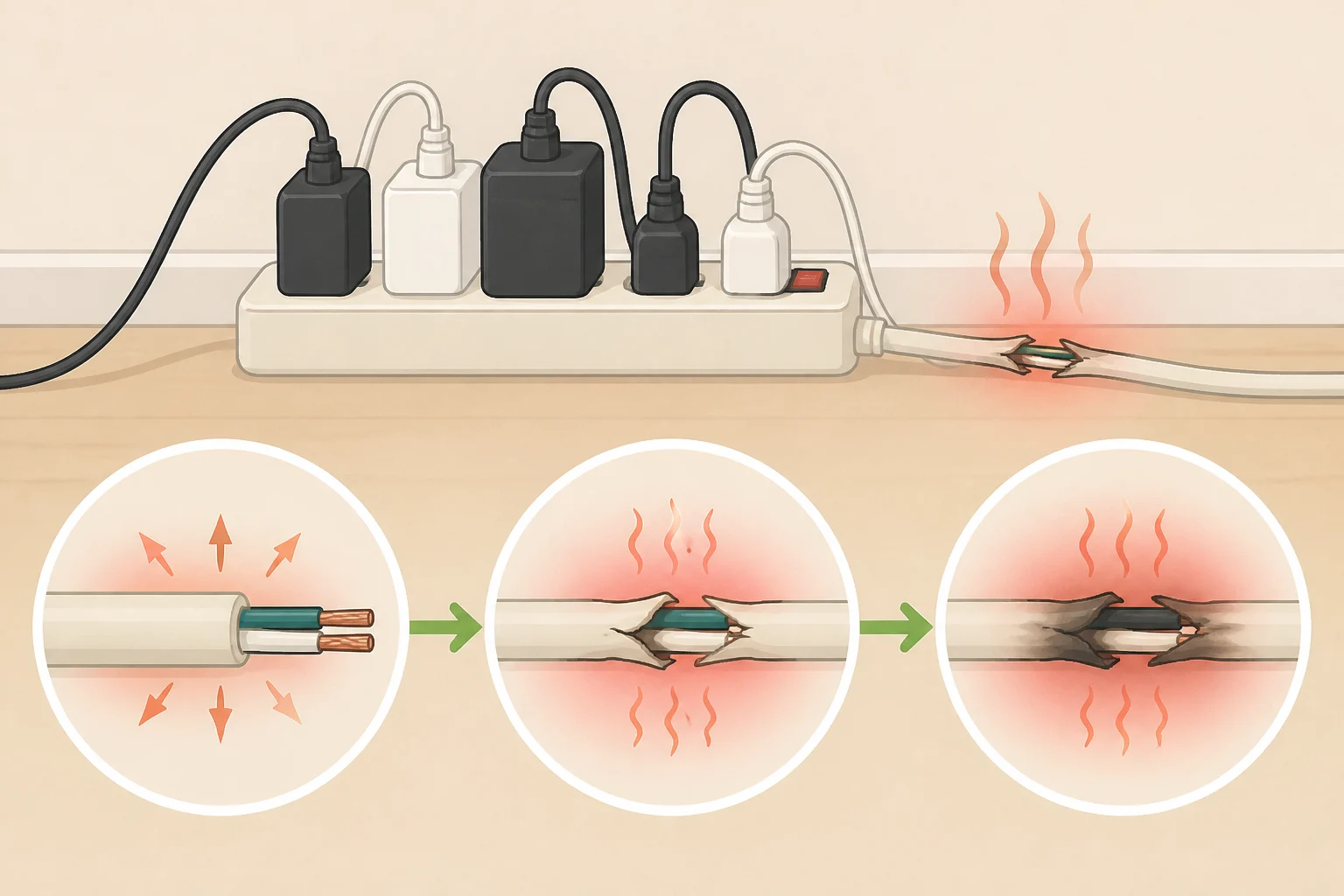
A cord sitting quietly in an outlet isn't what starts a fire. Damage, a load heavier than the cord can carry, and heat that has nowhere to go are the actual ingredients, and they tend to show up together.
Cracked insulation or exposed wire can give electricity a path it isn't supposed to take, which is why a damaged cord shouldn't go back into service, taped over or not. A cord coiled tightly, pinned under a couch leg, or buried under a rug has less room to shed heat than one lying flat and open.
OSHA's Kansas City investigation into a 2022 fatal electrocution at a repair site found a damaged extension cord still in use there. Investigators also found the company had skipped hazard assessments and hadn't followed lockout and tagout procedures before the work began. OSHA called the death avoidable, identifying several failures rather than a damaged cord alone. That case happened on a job site, not in a living room, and nothing in the record quantifies residential fire risk. The detail worth carrying home from it is simpler than the whole case: a damaged cord was still plugged in when it shouldn't have been.
When you should unplug extension cords when not in use
A few situations call for unplugging a cord outright, rather than leaving it as a background convenience.
- The task it was powering is finished, so there's no reason to keep it live.
- The cord is about to be moved, coiled, or inspected, so it isn't energized while being handled.
- It's been sitting unused for weeks with nothing drawing power through it, which usually means it can come out of the wall until it's needed again.
Warm plugs, hot outlets, and breaker trips: how to respond
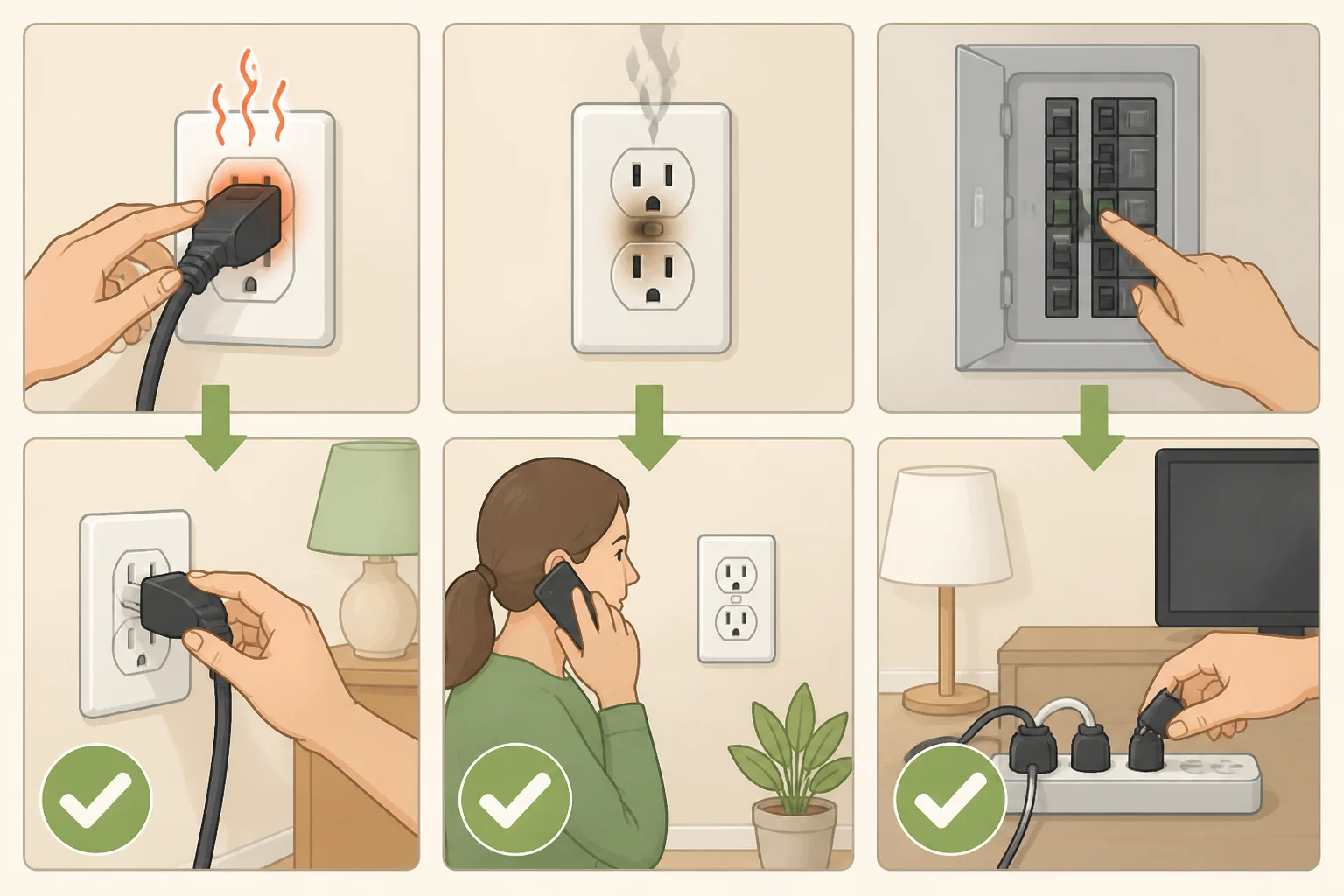
Not every warning sign calls for yanking the plug immediately, and in a couple of these cases that's actually the wrong move.
If the cord or plug feels warm, stop using it and let it cool before handling it. Figure out why, an overloaded circuit, a damaged cord, a loose connection, before plugging it back in.
If the outlet itself is hot, smoking, sparking, scorched, or smells burnt, don't touch it. Turn off the circuit breaker only if that can be done safely, leave the area if there's smoke, and call an electrician or emergency services.
If a breaker trips repeatedly whenever that cord is in use, don't keep resetting it and testing the cord again. Disconnect the load if it's safe to do so, then have the circuit and the appliance checked before using that outlet again.
If a plug fits loosely in the outlet, stop using that outlet. A loose receptacle isn't something a different extension cord fixes.
Replace the cord, or call an electrician
Replace the cord outright if there's cracked insulation, exposed wire, a bent or loose prong, or discoloration anywhere along its length. Don't plug it back in until it's been swapped for a new one.
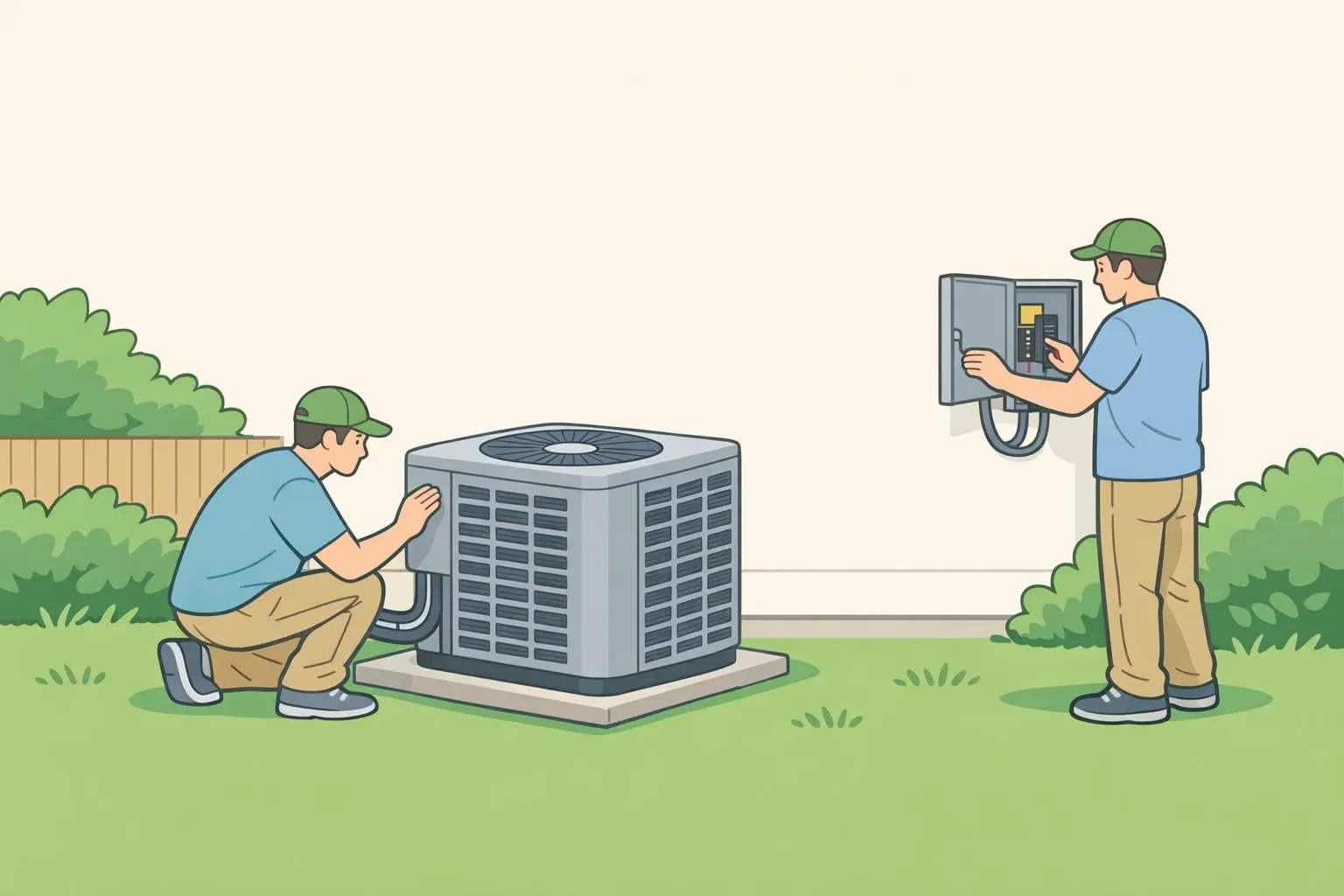
Call an electrician instead of adjusting the cord setup if an outlet stays warm or loose no matter which cord is in it, if there are scorch marks around a plug or receptacle, or if the same spot in the house keeps needing extension-cord power month after month. That last one usually means the room needs its own outlet, not a longer cord.
Unplugging a cord doesn't make it safe to open an appliance, a wall outlet, or household wiring. OSHA's Alabama investigation found that investigators later learned a switch believed off was actually energized when the incident occurred, alongside expired protective equipment and missed safety briefings. That case, involving high-voltage line work from 2024, isn't about a household outlet, but it's still a reason wiring and outlet repairs belong to a licensed electrician rather than a weekend project.
What to do with your cords today
Walk the length of every extension cord currently in use around the house. Check for cracks, discoloration, bent prongs, and loose plugs, and compare each cord's rating to whatever it's powering.
If the cord is intact, correctly rated, properly routed, and allowed by the appliance's instructions, ordinary temporary use is the situation to keep, whether that cord has been in the wall for an afternoon or several months. If it's warm, damaged, overloaded, improperly routed, or quietly standing in for wiring the room doesn't have, stop using that setup. Replace the cord, switch to equipment that plugs straight into the wall, or call an electrician to add the outlet that's actually missing.
Don't overthink a lamp cord that's been behind the couch for months if it passes every check above. Do take seriously any cord that's cracked, warm to the touch, or doing a job that belongs to wiring the room doesn't actually have.



Comments
Be the first, drop a comment!