



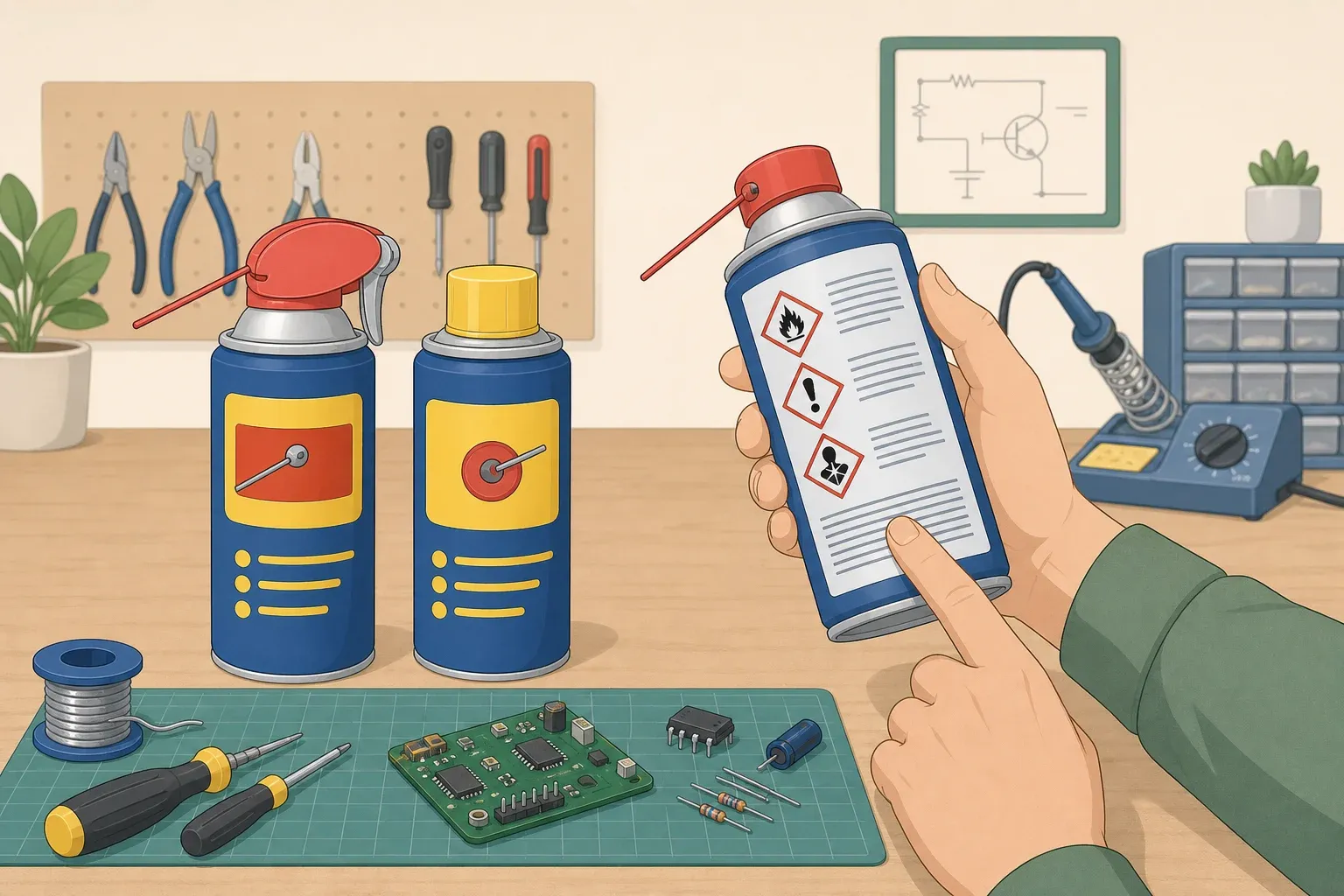
Grabbing "the WD-40 can" for an electrical cleaning job can make the problem worse instead of fixing it. Original WD-40, the classic blue-and-yellow spray, is a light lubricant and water-displacement product that leaves an oily film, the opposite of what a clean electrical contact needs.
Knowing what not to use WD-40 contact cleaner on matters just as much as knowing when to grab it, and the product actually built for the job is WD-40 Specialist Fast Drying Contact Cleaner: a fast-evaporating solvent made to clean switches, relays, connectors, and electronic assemblies without leaving conductive or insulating residue behind.
Even the right can has limits. Most modern contact cleaner formulas are flammable hydrocarbon-based solvents that can damage certain sensors or attack materials they weren't built to touch, per the guide. Contact cleaners can be flammable, so check the hazard warnings on the exact WD-40 Specialist can and SDS before spraying, since formulas and country-specific rules can differ. This guide covers five specific things to keep contact cleaner away from, plus a safe method for using it correctly, so a routine cleaning job doesn't turn into a fire hazard or a repair bill.
Confirm you have the right can
Before anything else, check the label. Original WD-40 leaves a residue that attracts dust and dirt, which makes it a poor choice for cleaning electrical contacts, while WD-40 Specialist Fast Drying Contact Cleaner is formulated to evaporate quickly and clean switches, relays, and connector pins without that residue. Treat the label and SDS on the exact can in your hand as the authority for this job, not general advice found online.
When contact cleaner is the right tool for the job
Contact cleaner is designed for cleaning switches, relays, connector pins, and other electronic assemblies, according to AIMS Industrial. That covers plenty of ordinary jobs: a sticky lamp switch, a game controller's connector, a small appliance's exposed contacts, as long as the part is unplugged first and made of a material the product is rated for.
The five situations below are the exceptions worth knowing before reaching for the can, even though it sprays the same way every time.
How to use contact cleaner safely on an approved part
Once a part qualifies, follow this order rather than improvising one.
Confirm the exact product and read the label. Check that the can is WD-40 Specialist Fast Drying Contact Cleaner, not original WD-40, and read the label and SDS for the approved uses and hazard warnings specific to that product.
Disconnect the device using its normal power-off or unplug procedure. In countries like Australia, the AS/NZS 3000:2018 wiring rules require electrical work to be carried out on de-energized equipment in most circumstances, and contact cleaner SDS documentation from major brands states the same for their product. Wherever you live, the documentation on your own can requires de-energized equipment, so treat that as the non-negotiable first step.
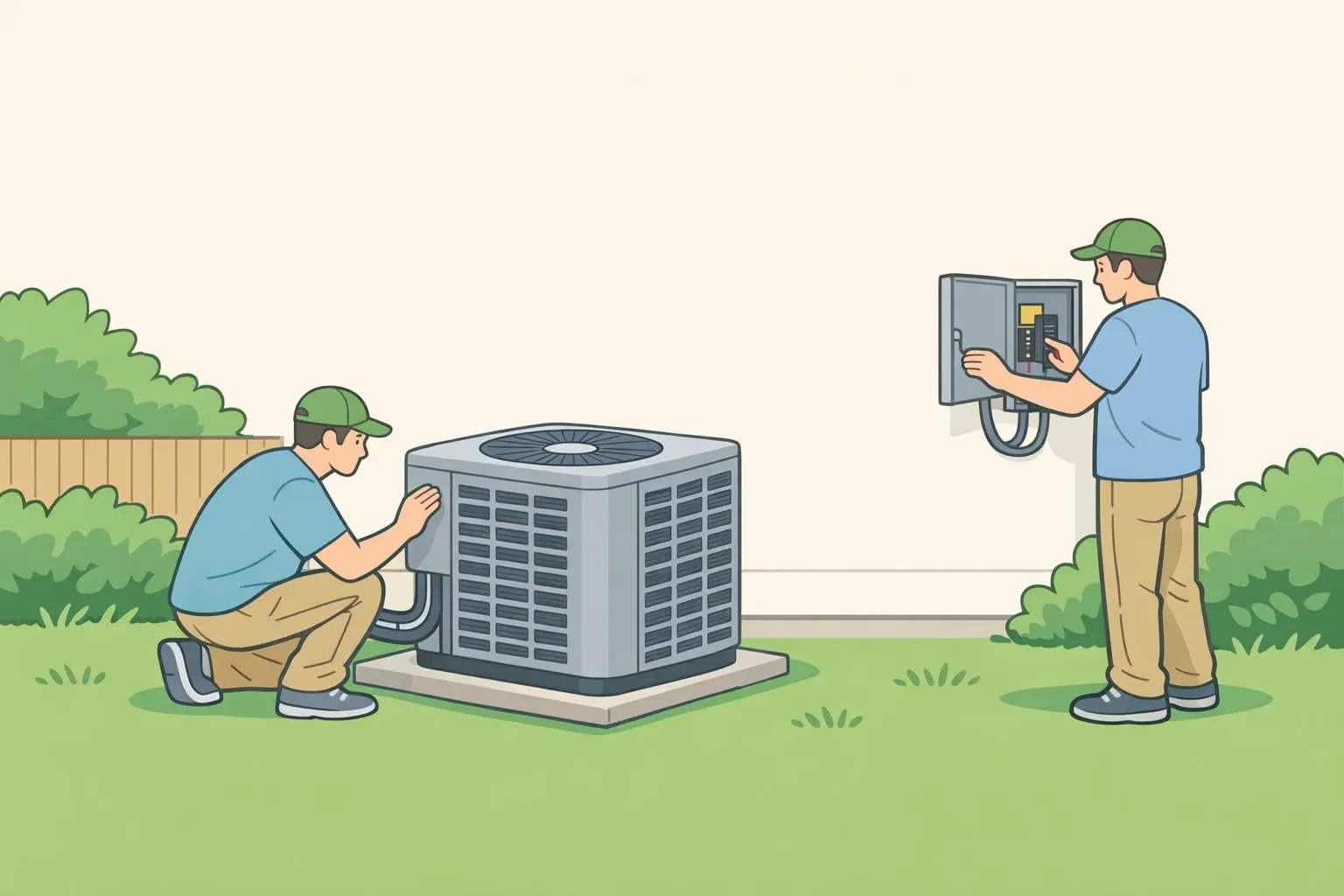
Work only on the part you can see and reach without opening anything up. If the equipment is hardwired, sits inside a breaker panel or sealed enclosure, or you can't confirm it's fully de-energized, that's outside ordinary DIY scope. Call an electrician instead.
Let hot equipment cool first, and clear the area of flame or spark sources. Flammable contact cleaner should never go near heat, sparks, or open flame, according to the guide.
Skip spraying if anything nearby can't be confirmed solvent-safe, such as an unmarked plastic housing. Move it out of the way or choose a different cleaning method rather than spraying around it.
Apply only the amount and method stated on the product label. Do not soak the assembly, and don't spray materials whose compatibility you can't confirm.
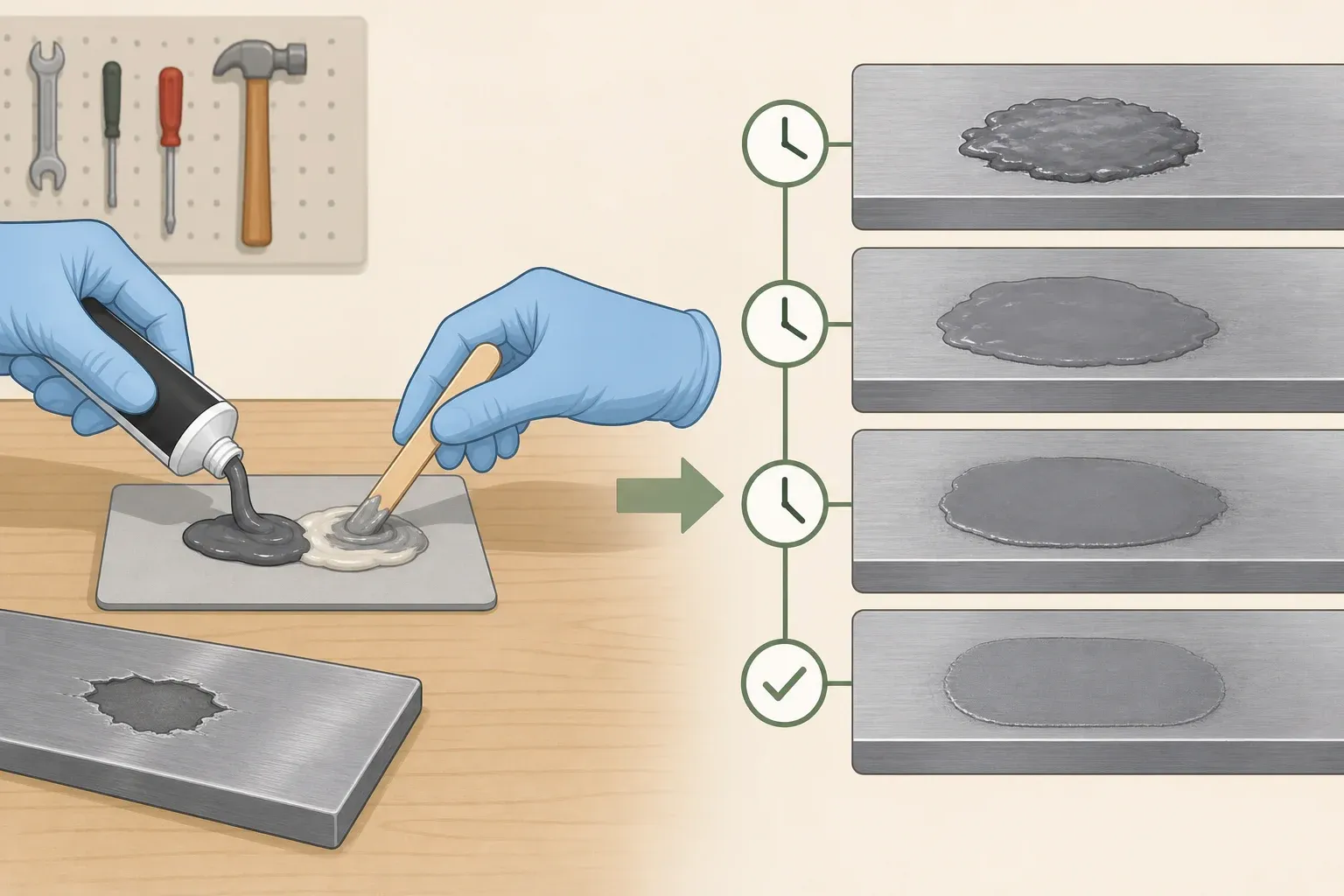
Let the solvent fully evaporate before restoring power. As a general reference only, light residue on small contacts may clear in as little as two minutes, while heavier application or cool, humid conditions can take five to 15 minutes. Follow your own can's label or SDS for the actual time, since that documentation governs your job.
Do not restore power until the label or SDS conditions are met and no liquid remains. If the product's instructions don't give a re-energizing time, contact the manufacturer rather than relying on smell or a visual guess.
What not to use WD-40 contact cleaner on
Where not to use electrical contact cleaner splits into two kinds of warnings: conditions where you shouldn't spray at all, and specific materials or parts to keep the spray off of.
Unsafe conditions
Live or energized circuits
There's no lighter-touch way around this one. Contact cleaner is for de-energized equipment only, covered in the de-energizing step above, and wiring rules back that up for local electrical work.
Unplug the device or use its normal shutoff before spraying anything. If you can't verify a circuit is off, that's outside ordinary DIY scope, and calling an electrician is the right move instead of guessing.
Hot equipment, open flame, sparks, or high-current arcing areas
Most modern contact cleaners are flammable hydrocarbon-based solvents, and spraying near heat, sparks, or a connection where arcing is possible can create a fire hazard. Check the hazard warnings on your exact can and SDS before working anywhere near these conditions, since flammability details can vary between products.
Let equipment cool before spraying, and clear the area of flame or spark sources first. Follow the label's instructions for drying and re-energizing rather than restoring power on a guess.
Materials and parts to avoid
MAF sensors, and a caution on O2 sensors
A mass air flow sensor's heated platinum-wire or hot-film element is destroyed by the hydrocarbon solvent in general contact cleaner. Use a cleaner labeled specifically for MAF sensors instead; it's chemically distinct from contact cleaner and leaves no propellant residue or oily film, per the same source.
Oxygen sensors are a different case. The guide notes most contact cleaners are fine to use near them, but warns that silicone-based aerosols should stay away entirely, since silicone vapor contaminates the ceramic element and platinum catalyst layer. Check your vehicle's or sensor manufacturer's guidance before spraying anything close to an O2 sensor.
Unidentified or solvent-sensitive plastics and housings
Contact cleaner's solvent can attack certain plastics, and it isn't safe to assume every housing can handle it. Check the equipment's label or manual before spraying directly onto plastic housings or unmarked components.
If you can't confirm what a housing is made of, skip it. Spray only the component the product instructions identify as suitable, and use a cleaner rated for that material instead of guessing.
Brake components, not a substitute for brake cleaner
Contact cleaner and brake cleaner aren't interchangeable. Brake cleaner is more aggressive on plastics, while contact cleaner is formulated for dielectric strength rather than heavy-duty degreasing.
For caliper rebuilds, brake dust removal, or weld prep on brake-related parts, reach for a dedicated brake cleaner instead of whatever solvent can is closest at hand.
What to do if the problem doesn't clear up
If a fault, sensor light, or performance issue continues after a proper cleaning, stop spraying and move to diagnosis instead. A multimeter check, a diagnostic code scan, or a call to an electrician or mechanic are reasonable next steps, separate from anything the contact cleaner label covers.
Do not keep reapplying the cleaner without checking the component and the manufacturer's instructions. Once a part is clean and past its label's evaporation time, spraying the same spot again isn't a diagnostic step, it's a sign to test the part or call in a professional.




Comments
Be the first, drop a comment!