



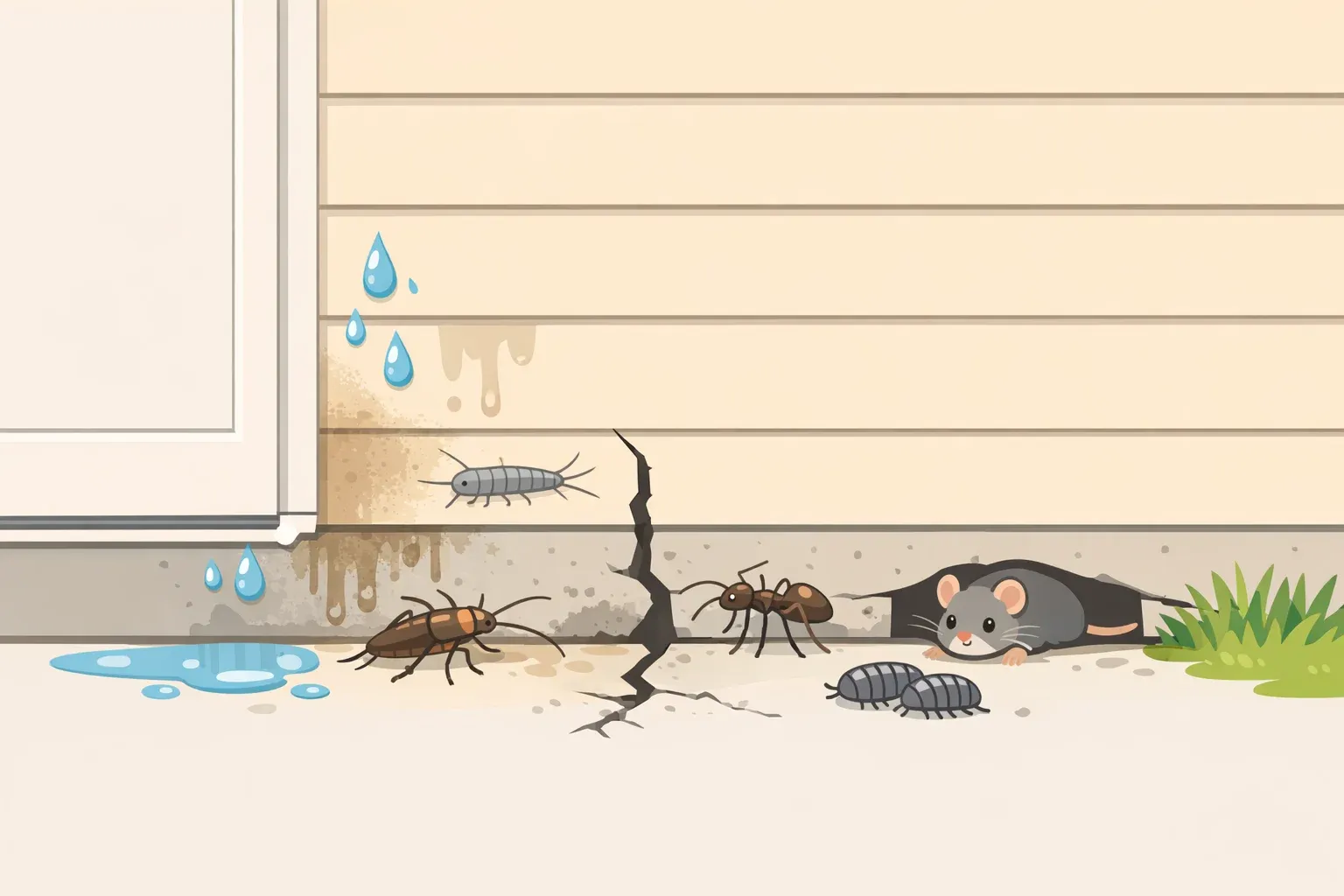
Most people's first response to a pest problem is a spray can. That's treating the symptom. What attracts pests to your house is almost never random bad luck; it's a set of structural conditions that were already in place long before anyone noticed an ant trail or heard something moving in the walls. Fix those conditions, and the pest problem typically follows.
The EPA puts the logic plainly: pests settle wherever they can satisfy four basic needs: air, moisture, food, and shelter. That four-part list explains why spraying is so often a temporary fix. The pest returns because the home still has what it needs.
The framework pest control professionals and university extension programs now treat as standard is called integrated pest management, or IPM. Penn State Extension describes the approach simply: start by asking why the pest is there, then remove the underlying conditions that allow it to enter and live. The EPA's IPM principles go further, explicitly categorizing broadcast pesticide spraying as a last resort.
Food waste, clutter, and poor sanitation also attract pests, and they matter. But those are well-documented and relatively obvious. This piece focuses on two structural conditions that are far easier to miss: one gives pests a reason to stay, the other gives them a way in. They're maintenance problems first, and pest problems second, and a home that has both is far more vulnerable than one with either alone.
Hidden condition #1: moisture you might not know is there
Most homeowners associate a damp basement with mold. The pest angle goes unnoticed until something is already living there.
The EPA is explicit: even dampness and elevated humidity can attract pests, not just visible standing water. Its guidance lists fixing leaky plumbing and removing water-damaged materials among the primary structural actions homeowners should take. Penn State Extension names water access as one of the foundational conditions pests seek when entering homes and buildings. Moisture isn't a secondary concern; it's a primary draw.
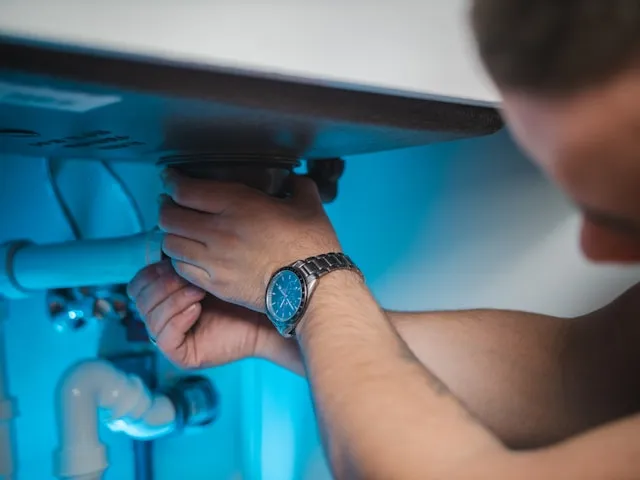
The particular danger is how long it can go undetected. A slow drip under a sink rarely pools visibly. It shows up instead as a soft cabinet floor, a faint mineral ring around a fitting, or discoloration on the back wall of a cabinet. Condensation on cold-water pipes in crawl spaces or garages behaves the same way, wetting surfaces gradually and never dramatically.
Water-damaged insulation or subfloor material left in place after a minor leak stays damp long after the leak itself is fixed. Crawl spaces and basements can sustain elevated humidity with no active leak at all, just poor ventilation and ground moisture wicking up through the structure.
For wood-destroying insects, this is where the real damage begins. A peer-reviewed overview of common household insect pests published earlier this year found that termite infestations can remain undetected long enough to threaten a building's structural integrity. The damage accumulates quietly, behind walls and under floors, in exactly the places that never get inspected. Moisture-compromised wood is what draws them there.
Addressing hidden moisture is straightforward in concept, less so in practice. The places to check are the places nobody looks: under-sink cabinets, behind dishwashers, along refrigerator ice lines, in crawl spaces, and around the base of any exterior wall that faces consistent weather exposure.
A hygrometer, an inexpensive tool at any hardware store, can tell you whether humidity in a basement or crawl space has climbed into ranges that support pest activity, without requiring any visible evidence of a problem. Any water-damaged material found during inspection should be removed or fully dried. Leaving damp wood or wet insulation in place to dry on its own is how the problem persists.
How moisture and entry points work together
Moisture gives pests a reason to stay. Entry points give them a way in. These are separate problems, but they compound each other; a home with both is significantly more hospitable than one with either alone. Treating them as a single issue, or fixing one while ignoring the other, is why many pest problems recur after what seems like a resolution.
Pest control professionals distinguish between attractants and access. Moisture, food, and shelter are attractants; they determine whether a pest, once inside, has what it needs to survive and reproduce. Entry points are access points: they determine whether the pest can get inside at all.
A perfectly sealed building with a moisture problem will have fewer invaders than a leaky one. A dry building with gaps everywhere will still get invaded, just perhaps less persistently. Close both vectors, and the calculus changes entirely.
Signs your home is attracting pests through overlooked entry points
Mississippi State Extension is direct on this point: exclusion physically preventing pests from entering is the single most important element of household insect control. Insecticides, the same source notes, are useful tools but not substitutes for a properly sealed building. Penn State Extension lists sealing entry points and repairing cracks in walls, screens, and window frames as the top prevention priority in its IPM guidance.
A house isn't a sealed box. It's a structure with hundreds of intentional and unintentional penetrations, most of which never get inspected. Utility penetrations where pipes, conduit, and cables pass through exterior walls or floors almost always have gaps around them. Floor drains in basements, laundry rooms, and garages are routinely left open and unscreened. Weatherstripping at exterior doors deteriorates over years and rarely gets replaced until a draft is felt. Foundation cracks at the base of basement walls, including hairline cracks, are stable enough to ignore for structural purposes but large enough for insects to use. Window screens develop small tears. Seams where different building materials meet brick to wood siding, concrete slab to framing shift seasonally and open over time.
Pests don't knock. They find the gaps that were always there.
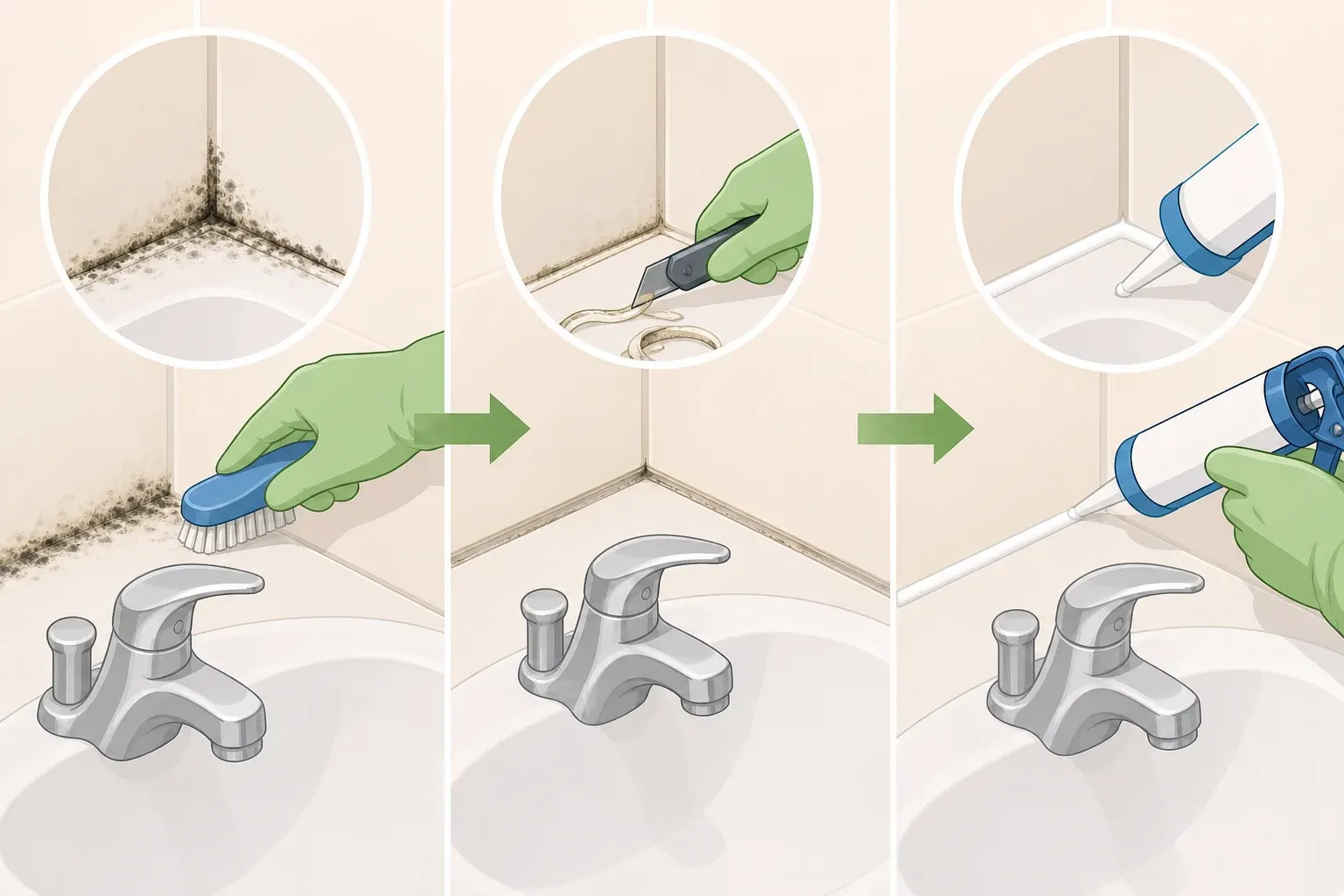
The EPA recommends screens on all floor drains, weatherstripping on doors and windows, caulked wall openings, and blocked floor penetrations. Walking the exterior perimeter slowly, with attention to where different materials meet and where utilities enter the structure, turns up more than most people expect. The interior side of those same penetrations often shows gaps that aren't visible from outside. Penn State Extension includes silicone caulk, copper mesh, and a flashlight among the basic items in a standard IPM toolkit all of it available at any hardware store. The materials are cheap. The work is mostly a matter of doing the walk.
Home repairs to prevent pests: what to do before you reach for a spray
Structural repairs come first. That's the argument, and it's the one the EPA, Penn State Extension, and Mississippi State Extension all make independently and consistently. The EPA's IPM framework treats prevention and exclusion as the first line of defense, with chemical pesticides reserved for when preventive methods haven't been sufficient. A pest sprayed today comes back tomorrow if the moisture source and the entry point are still there.
Penn State Extension also notes that seeing a single pest doesn't automatically mean a full response is required a principle the EPA's IPM framework echoes by establishing that a lone sighting doesn't always warrant intervention. That's a useful check on the reflex to escalate immediately.
When structural repairs are warranted, a practical sequence holds:
Inspect for moisture sources and fix any identified leaks or damp materials
Walk the structure for entry points and seal what's found caulk, mesh, screens, weatherstripping
Monitor. Give repairs time to work before concluding they haven't
If activity continues, identify the species before choosing any treatment. Traps and sticky monitors help here. Mississippi State Extension notes that treatment strategies vary significantly by species what works for one type of ant may not work for another, and misidentification leads to wasted effort
If chemical treatment becomes necessary, Penn State Extension recommends starting with traps, baits, and lower-toxicity options like boric acid before moving to conventional pesticides
Step three deserves more than a passing mention. Monitoring means returning to the areas where activity was observed checking for new droppings, disturbed material, or live pests on a consistent schedule, perhaps weekly, for a few weeks after repairs are complete. It's how you confirm whether the structural fix resolved the problem or whether something else is sustaining the activity. Skipping this step is how people end up back at the spray can before the underlying issue is actually resolved.
Some situations call for a licensed professional. The clearest triggers:
Visible structural wood damage: soft spots, tunneling, or frass (fine sawdust-like powder) near baseboards, joists, or window frames
Recurring activity after entry points have been confirmed sealed
Any suspected termite or carpenter ant activity both cause damage that's difficult to assess without inspection equipment
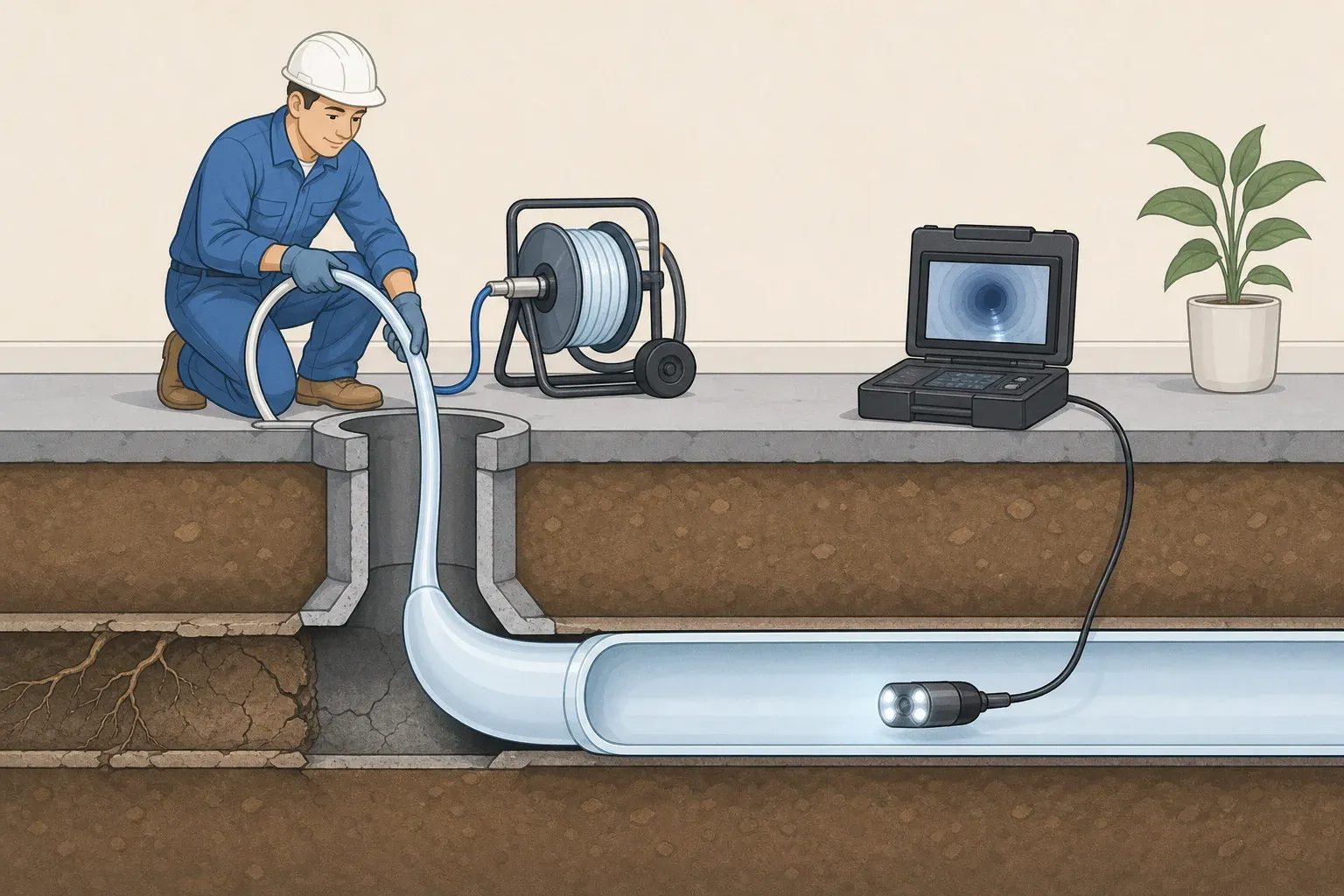
Moisture sources in inaccessible areas, such as inside wall cavities or under concrete slabs, where DIY repairs aren't feasible
Any case where the pest can't be identified Penn State Extension notes that proper identification and management sometimes require a licensed pest management professional
Pest control is home maintenance
A house that stays dry and well-sealed doesn't offer much to a cockroach or a mouse. The EPA frames fixing leaks and sealing gaps as foundational pest prevention not optional improvements, not reactive measures, but baseline upkeep that determines how hospitable the structure is in the first place.
The spray can isn't useless. Insecticides have a role, particularly once a pest is identified and the structural conditions have been addressed. But they fill gaps rather than replace the underlying work. That's the consistent position across the EPA, Penn State Extension, and Mississippi State Extension and it reflects something straightforward: a home that removes the conditions pests need doesn't require repeated treatment.
Not a glamorous conclusion. But it's the one that holds.





Comments
Be the first, drop a comment!