



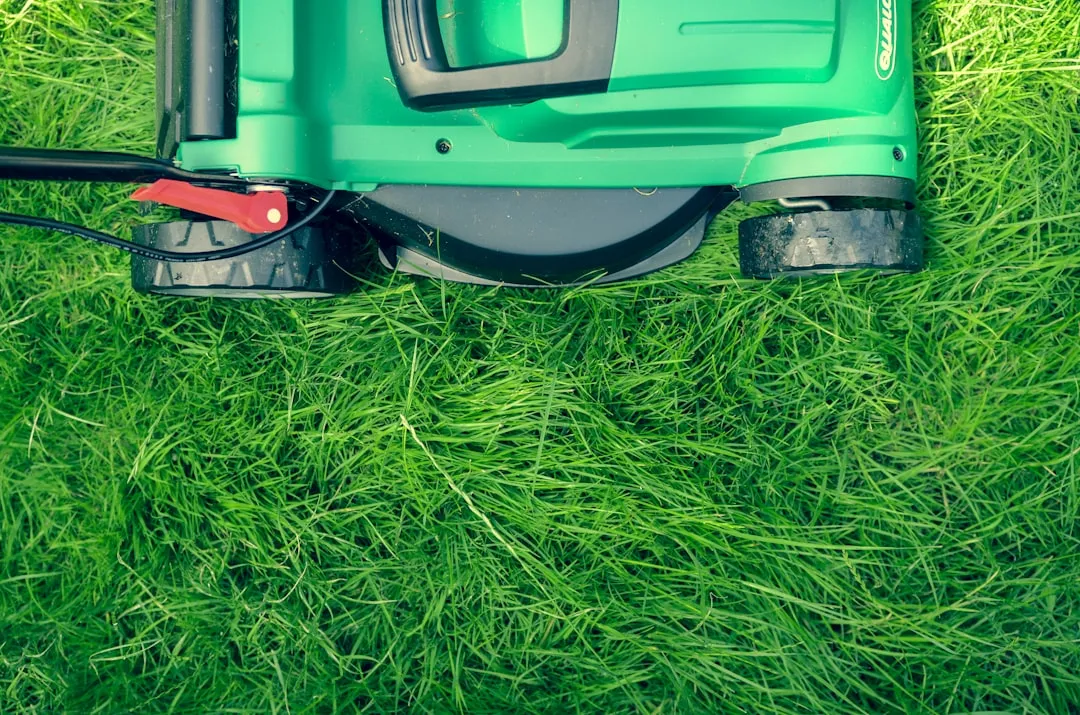
A mower blade's cutting edge can move at speeds up to 200 mph, fast enough to turn a rock, a toy, or a stray stick left in the grass into a projectile traveling at up to roughly that speed, according to Penn State Agricultural Safety and Health via eXtension.
That's the core reason things you should never mow over with a lawn mower deserve a real look before you turn the key, not a glance on your way to the ignition.
Loose objects aren't the only hazards worth checking. People in the mowing area, terrain beyond your mower's limits, and not knowing exactly how your mower shuts down can make mowing unsafe even when the grass itself looks perfectly mowable.
Penn State's riding-mower guidance says most fatalities involve a machine rolling over or running over someone, or a person being thrown from or falling off the mower. A walk-through before you start the engine can help you catch many preventable hazards, even though it can't eliminate every risk.
Your pre-mow safety checklist
Before the blade ever turns, confirm these four things:
The discharge deflector is down, intact, and hasn't been tied up or removed.
You've walked the mowing path and cleared hard, loose objects.
People, pets, and bystanders are out of the area, with a plan to keep it that way for the whole session.
The terrain ahead is within your mower's slope and operating limits, and you know its full shutdown procedure.
Check your owner's manual before the first mow of the season for your specific model's slope guidance, discharge-guard details, and shutdown steps.
What not to mow over with a lawn mower: loose debris comes first
Walk the full mowing path before you touch the ignition, and treat it as a deliberate pass rather than a glance on the way to the mower.
Pay closest attention to the edges: the strip along a driveway where gravel migrates onto grass, garden beds where border rock and edging drift into the lawn, and anywhere kids or pets play, since that's where loose gear tends to collect.
Objects worth picking up include toys and balls, rocks and stones, sticks and fallen branches, garden stakes, hose fittings, and anything else rigid enough to be struck or thrown by the blade.
Confirm the discharge deflector is in place before the engine starts. Objects struck by a mower can travel at speeds up to 200 mph, and the deflector is intended to slow or contain debris leaving the discharge area. It can only do that properly while it stays in position.
Skipping the walk-through, or tying the deflector up to "improve grass flow," defeats a safeguard built specifically to reduce projectile hazards.
That shortcut has real consequences. In 2023, OSHA cited a landscaping contractor for allowing workers to operate mowers with discharge guards tied up, exposing them to laceration and serious eye-injury hazards.
The case involved a commercial worksite, but a tied-up or missing guard creates the same kind of projectile hazard in a home yard.
If you spot a missing, cracked, or tied-up guard, don't mow that pass. Repair or replace it according to the manufacturer's instructions before using the mower again.
Never mow with people, pets, or bystanders in the area
Clear children, other bystanders, and pets from the mowing area before starting, and keep it clear for the entire session.
If someone enters the area while you're mowing, stop the mower and wait until the area is clear before resuming.
Penn State reports approximately 10,000 mower injuries to children and youth each year, with about 5% resulting in an amputation. On riding mowers, runover incidents can happen when an operator backs up without seeing a child behind the machine.
Two rules apply regardless of mower type: never point the discharge chute toward people, pets, homes, structures, streets, or vehicles, and never allow extra riders, even when you're not actively mowing.
Backing over a bystander is tied particularly to a riding mower's limited rear visibility, but debris and blade-contact hazards apply across mower types. Clearing the area for the full session matters either way.
If you can't keep the area clear, such as with a young child nearby or a loose pet, postpone mowing until you can.
Never mow terrain that exceeds your mower's rated limits
Before mowing a slope, embankment, or pond edge, follow the slope and terrain limits in your owner's manual. Treat wet, muddy, or unstable ground as a reason to avoid that section until conditions are safe, because reduced traction can increase the risk even on terrain the mower can normally handle.
Riding-mower rollovers can happen on steep slopes or embankments, where the operator may be pinned under the machine or come into contact with the blades. Speed, slope, poor terrain, wet surfaces, and proximity to water can all contribute to rollover risk.
If your riding mower has a rollover protection structure and seatbelt, use them together as the manufacturer directs. Those protections don't make an over-the-limit slope safe to mow.
OSHA reported in 2022 that 35 workers nationwide had died in lawn mower rollover incidents since fall 2019. In a separate 2023 case, the agency cited a lawn service contractor at Fort Campbell, Kentucky, for allowing workers to operate zero-turn mowers on slopes steeper than 15 degrees.
Those figures come from commercial workplaces and don't establish a universal residential slope limit. Check your own mower's manual rather than borrowing the 15-degree figure as a personal cutoff.
Rollover risk is specific to riding equipment, but that doesn't make a walk-behind mower automatically safe on the same grade. A steep or unstable slope can still create slip, fall, and loss-of-control hazards.
If your equipment isn't rated for the grade, or the ground is wet or unstable, don't mow that section with it. Use a method specifically suited to the terrain or call a landscaping professional equipped to handle steep slopes and pond edges safely.
Know your mower's shutdown procedure before you start
Know how to stop and secure the mower before mowing so you're never tempted to reach toward a clogged chute while the machine is still running.
Some mower injuries occur when operators perform maintenance or clear a discharge chute while the engine is running.
Stop the mower, follow the shutdown instructions in your owner's manual, and wait until the blade and every other moving part have completely stopped before clearing a clog or performing maintenance. Use only the clog-clearing method the manufacturer specifies.
For gas mowers, maintenance instructions commonly require disconnecting the spark-plug wire and keeping it away from the plug before working near the blade. Battery and electric mowers have different lockout procedures, which can include removing the battery or safety key.
Follow the procedure for your specific model rather than applying a gas-mower step to electric equipment.
"Fully stopped" means the engine or motor is off and the blade and other moving parts have come to a complete stop. Don't rely on how quiet the mower sounds.
Other lawn mower safety hazards worth knowing
A few more habits reduce risk around the mower:
Never leave a running mower unattended.
Let a gasoline engine cool before refueling, following the waiting period in your owner's manual.
Run gasoline-powered mowers outdoors, not inside a garage, shed, or other enclosed space where carbon monoxide can accumulate.
Treat a hot muffler or engine as a burn hazard as well as a refueling hazard.
The Consumer Product Safety Commission warns against operating gasoline engine-powered tools in or near enclosed spaces such as garages because of carbon monoxide.
If gasoline spills, turn the engine off and don't restart it in the spill area. Clean the spill according to the manufacturer's instructions, keep ignition sources away, and wait until gasoline vapors have dissipated before starting the mower again.
When to stop, and what to do instead
Guards, deflectors, seatbelts, and rollover protection only reduce risk when they're intact and used the way the manufacturer describes. They can't compensate for a tied-up guard, terrain beyond the mower's limits, or someone entering the mowing path.
Some conditions mean the answer is simply not yet:
The discharge guard is cracked, missing, or tied up and hasn't been restored.
You can't keep people and pets clear of the mowing area.
The terrain exceeds your mower's rated slope or operating limits, or the ground is wet, muddy, or unstable.
You're not certain how your specific mower fully shuts down, including its clog-clearing procedure.
Any one of those is a reason to fix the problem, choose equipment or a method suited to the conditions, or call a landscaping professional rather than start mowing and troubleshoot as you go.
Start the mower only once the guard is in position, the path is cleared, the area is free of people and pets, the terrain is within your mower's limits, and you know the shutdown sequence for your specific model.






Comments
Be the first, drop a comment!