



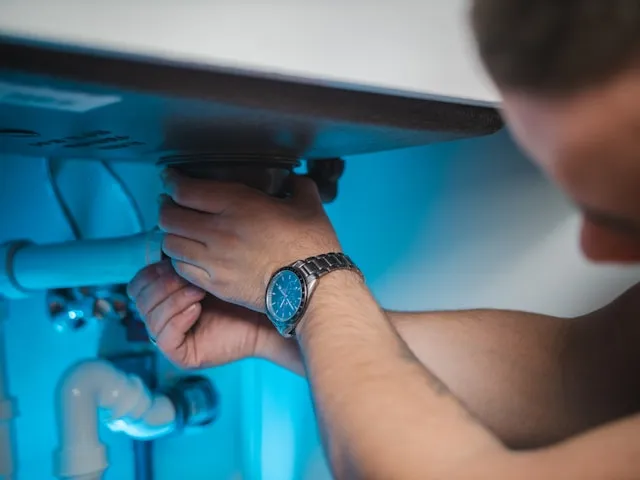
A toilet that keeps refilling when nobody's touched it, or a showerhead that drips just enough to go unnoticed, can waste thousands of gallons before it ever shows up on a bill. Catching what a homeowner's eye tends to miss is one of the real benefits of hiring a local plumber, but before that call is even necessary, three simple checks can tell you whether you have a leak, where it's coming from, and whether it's something you can fix yourself.
The average U.S. household loses more than 9,300 gallons a year to leaks that go unnoticed, and nationwide, household leaks add up to nearly 1 trillion gallons wasted annually, according to EPA WaterSense. These kinds of leaks are often easy to fix with a few tools and inexpensive hardware, which is exactly what the checks below are built to find.
Three checks cover most of what you need to know before deciding what to do next: a water-meter test to confirm a leak exists at all, a toilet dye test to catch one of the most common hidden leaks, and a visual check of pipes and fittings to spot the rest. A worn flapper or a loose hose washer is a repair an ordinary homeowner can handle.
Anything concealed, recurring, or tied to a shower valve calls for a licensed, local plumber instead of more guesswork. Fixing easily corrected leaks can lower a water bill by about 10 percent, and roughly 9 percent of homes have a leak wasting 50 gallons or more every day, according to EPA WaterSense.
This guide walks through the checks in order, flags which repairs are safe to handle without help, and covers what to look for when hiring a local plumber for home maintenance issues you can't fix yourself. It also marks the point where an irrigation-system leak needs a different kind of professional entirely.
What you'll need
Access to your water meter; check with your water utility if you're not sure where it is
A way to record two readings, ideally a photo of the meter face each time
Food coloring or a dye tablet for every toilet in the house
A flashlight for checking pipe fittings under sinks and at outdoor hose bibs
A wrench, a replacement washer, and pipe thread tape, often sold as Teflon tape, on hand in case an easy fix turns up
A notebook or phone note to log what you find; a plumber will want the meter readings, which fixtures you tested, and where you saw color or moisture
The diagnostic checks below don't require shutting off the main water supply or touching anything electrical or gas-related. It's an observation process: read a meter, watch for color, look for moisture. A repair afterward, like replacing a flapper, may require using a fixture-level shutoff valve; don't force one that's stuck, corroded, or hard to reach.
Skip the checks below if water is actively pooling on a floor, dripping through a ceiling, or you notice mold or a musty smell near a wall. Do not continue testing if water is entering a ceiling, wall, or occupied space, or if it's anywhere near an outlet, panel, or other electrical equipment. Call a licensed plumber right away instead.
Plan on a little more than two hours if you run the tests back-to-back. Nearly all of that is passive waiting during the meter test; the toilet and visual checks each take only a few minutes.
Step 1: Run the water-meter test
Most meters sit near the street, in a basement, or in a utility closet. Whether the face is a dial, a digital readout, or a row of odometer-style wheels, photograph the reading rather than just writing down a number; a small dial is easy to misread later, and a photo settles any argument with yourself an hour from now.
Find your water meter and record the reading.
For the next two hours, don't use any water in the house: no laundry, no dishwasher, no flushing. EPA WaterSense uses this two-hour no-use window as the standard test.
After two hours, check the meter again and compare it to the first reading.
A few things can throw this test off without meaning there's a leak at all. Check whether any automatic appliance, like an ice maker or water softener, or an irrigation cycle ran on a timer during the window. If so, wait and rerun the test at a time when nothing else is scheduled to use water.
If the number changed at all, EPA WaterSense says you probably have a leak somewhere in the system. That wording matters: the test confirms a leak is likely, not where it is. Even a reading that barely ticked forward counts as movement and is worth chasing down with Step 2.
It's also worth glancing at a recent water bill. A household of four using more than 12,000 gallons in a month may be dealing with a serious leak worth investigating, per EPA WaterSense.
If the meter didn't budge, there's likely no active leak right now. Recheck periodically, especially after a jump in the bill, since leaks can start small and grow. If it did move, move on to Step 2.
Step 2: Find the source with a dye test and visual check
Check the tank in every toilet in the house, not just the one used most. A leak can be isolated to a single toilet, and testing only one lets a second leak go unnoticed.
Lift the tank lid on each toilet and add a few drops of food coloring, or drop in a dye tablet.
Wait 10 minutes without flushing.
Check the bowl. If any color shows up, that's a leak, and a worn or old flapper — the rubber seal that releases water into the bowl on a flush — is a common cause.
While the dye sits, grab the flashlight and check under every sink and at outdoor hose bibs. Look at the slip-nut fittings where supply lines connect and at faucet gaskets for water sitting on the outside of a pipe rather than the fixture itself, which is how EPA WaterSense describes a surface leak.
Dry the fitting off, then check again after running water through the fixture. Moisture that returns at that one connection points to a leak there; if the whole pipe just looks damp and doesn't get worse, it may just be condensation.
Two everyday drip points are worth a look too. A faucet dripping once a second can waste more than 3,000 gallons a year, and a showerhead leaking 10 drips a minute wastes over 500 gallons a year, according to EPA WaterSense.
What you find points to the next move:
Color in the bowl: the flapper is likely the culprit.
Moisture on a fitting or connection: that specific joint is leaking.
No color, no moisture, but the meter still moved: the leak may be concealed. Stop guessing and move to the decision framework below.
Fixes you can handle yourself
A couple of the most common culprits are simple, low-tool jobs. These are homeowner-safe checks and minor repairs, not instructions to open a wall, work on supply piping, or take apart a shower valve. Only replace a hose washer or a flapper if the leak is isolated to that one connection or that one tank.
If moisture is coming from the wall behind a fixture, from the spigot body itself rather than the hose connection, or from a pipe under pressure that keeps dripping even with the water off, stop and call a licensed plumber instead of forcing a fitting loose.
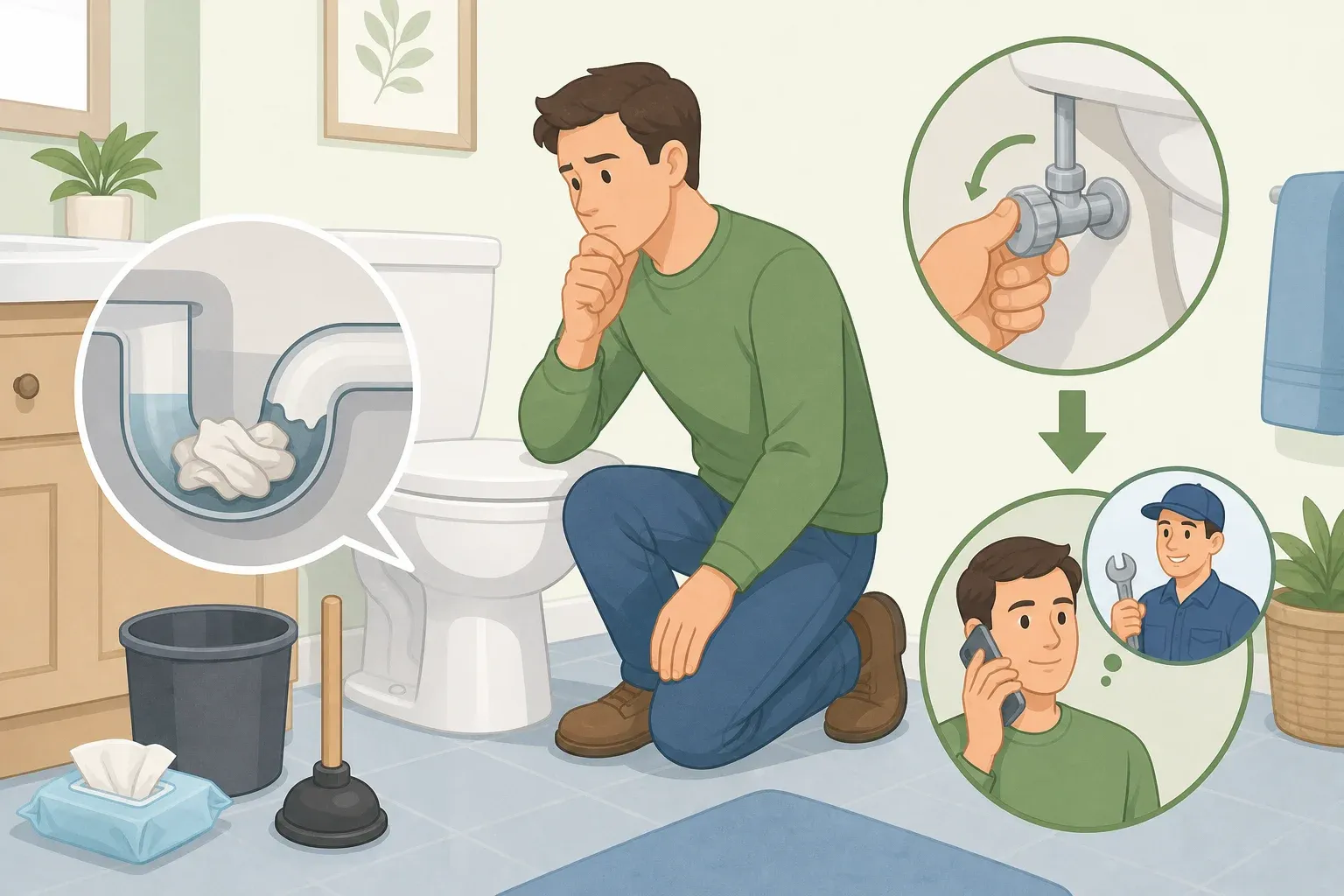
Worn toilet flapper. EPA WaterSense recommends checking a flapper periodically and replacing it at least every five years to keep a good seal, since a worn one can silently waste thousands of gallons a year or cause a toilet to flush on its own. Before swapping it, look for the toilet's shutoff valve, usually on the wall behind the tank. Turn it only if it moves by hand without force; if it's stuck, corroded, or you can't find it, don't fight it. Call a plumber instead, since a broken shutoff turns a simple repair into a bigger one.
Dripping hose bib. If the leak only shows up while the hose is running, replace the rubber or nylon washer and wrap the spigot threads with pipe thread tape before tightening the connection with a wrench.
Pipe thread tape is inexpensive and sold at any hardware store, and EPA WaterSense points to it specifically for this hose-connection scenario, not as a catch-all fix for every threaded fitting in the house.
After either repair, retest. Rerun the dye test for a new flapper, or run the hose again and recheck the connection for moisture. If the same symptom comes back, the part probably isn't the real problem, which is a sign to stop replacing it and call someone rather than try a second time.
Why hire a local plumber for hidden or recurring leaks
Some of what these checks turn up isn't a fix for a homeowner's toolbox. This is the point where a licensed, local plumber should handle it instead of another repair attempt.
Call a plumber for a shower valve that drips only when the fixture is off. EPA WaterSense recommends an experienced handyperson or licensed plumber specifically for this repair, since it involves internal valve components rather than a washer or a wrap of tape.
The same goes for installing a new WaterSense-labeled toilet, faucet, or showerhead. EPA WaterSense suggests consulting a plumbing professional for these installs.
Concealed and recurring leaks belong on this list too. A leak that returns after a repair, or a meter that keeps moving with no visible source anywhere in the house, may mean water is traveling somewhere a flashlight can't reach: behind a wall, under a slab, or inside a fixture. Finding that source without opening up a wall or floor is a job for a professional, not a second attempt with the same washer.
Call a licensed plumber right away, instead of working through the rest of these checks, if:
Water is actively pooling, running, or dripping through a ceiling or wall
A leak has returned after a repair that seemed to hold
The meter keeps moving, and no toilet, faucet, or fitting shows a visible source
Water is anywhere near an outlet, panel, or other electrical equipment
Before that call, write down the two meter readings, which toilets and fixtures were tested, and where color or moisture showed up. That record can help the plumber start with the most relevant checks instead of repeating ones already done.
Irrigation systems call for a different kind of specialist. EPA WaterSense says an irrigation leak measuring 1/32 of an inch in diameter can waste about 6,300 gallons of water a month. For that, hire an irrigation professional certified through a WaterSense-labeled program, since that certification covers water-efficiency diagnostics for irrigation systems specifically.
Choosing local plumbing repair services for the job
Comparing local plumbing repair services before an emergency happens beats scrambling for a name while water is already pooling. A few basic checks help before handing over a repair:
Confirm the plumber holds a current license for plumbing work in the state, and ask to see the number if it isn't already listed.
Ask whether they carry liability insurance, in case a repair damages a floor, wall, or cabinet.
Get a written estimate before work starts, including whether a diagnostic visit fee applies if the leak turns out to be minor.
Ask if they offer emergency service, since an active leak near electrical equipment or a ceiling shouldn't wait for a scheduled appointment.
Leak-detection devices as an early-warning layer
Once the visible leaks are handled, a leak-detection or flow-monitoring device can catch the next one sooner. These devices work one of two ways: moisture sensors that flag unexpected dampness, or flow monitors that track water use and flag patterns that look off. EPA WaterSense also publishes a consumer guide covering device options on the market along with tips for selecting and maintaining one, worth a look before buying.
An alert from one of these devices isn't a diagnosis on its own. Treat it as a reason to rerun the meter and dye tests above and confirm where the water is actually going before calling anyone in.
What to do next
If the meter reading didn't change, record the result and recheck it after a noticeable jump in the water bill.
If the reading moved and a flapper or hose washer is clearly responsible, repair and retest it before considering the leak resolved.
If the source is concealed, recurring, actively pooling, or anywhere near electrical equipment, stop testing and call a licensed plumber.
Treat irrigation systems separately: a leak in a sprinkler or drip line calls for an irrigation professional certified through a WaterSense-labeled program, not a general plumbing call.



Comments
Be the first, drop a comment!