




"How many amps does a dryer use?" usually turns out to be two questions tangled into one. One is what size circuit the dryer needs to run safely. The other is how many amps it's actually pulling while it tumbles a load of towels. This guide answers the first question, because it has a documented answer you can check at home with no tools beyond a flashlight. The second requires a clamp meter and training to use one near a live circuit, not an article.
For one documented GE electric dryer configuration, the required setup is a dedicated 208V or 240V branch circuit protected by a 30-amp breaker or time-delay fuse. A separate documented GE gas dryer configuration calls instead for 120V power on an individually grounded 15- or 20-amp branch circuit.
Those are circuit-protection ratings, numbers describing what the wiring and breaker are built to handle, not a live reading of what the dryer draws mid-cycle. Actual running amperage varies by model, so there's no single figure worth memorizing. The reliable source for your specific machine is its installation manual, whether that's the paper copy that came in the box or a PDF pulled from the manufacturer's site.
This article covers how to find the circuit requirement for your own dryer, what you can safely check yourself, and exactly where that check ends and a licensed electrician or gas utility takes over. It won't walk through measuring live amperage or estimating household energy use. Neither is necessary to confirm whether your dryer's circuit matches what the manufacturer specifies.
Dryer amp requirements: electric vs. gas circuits
Before comparing any numbers, sort the dryer into one of two categories: electric or gas. That single fact determines which range even applies, since the two fuel types run on very different circuits.
Dryer typeVoltageCircuit breaker/fuse sizeElectric208V or 240V30 ampsGas120V15 or 20 amps
Both rows come from one manufacturer's installation manual, so treat them as a solid reference point for a typical dryer of each type, not a rule enforced across every brand on the market. The gap between them exists because gas supplies the heat, while household current on a gas model only has to run the motor, timer, and controls. The only way to know what your specific dryer requires is to check that model's own manual.
Circuit rating vs. what a dryer actually draws
A breaker or fuse rating, like the 30 amps listed for the GE electric configuration, is a number the manufacturer builds into that model's installation requirements. It sets the size of breaker and wiring needed to run the dryer safely. It isn't a live measurement of what the dryer pulls once a cycle starts.
The manual for the exact model in question, not a general rule of thumb, is where the manufacturer states the required voltage, circuit rating, and receptacle configuration. A different model, even from the same brand, can call for different numbers. That's normal, and it's why the manual matters more than a figure remembered from a previous dryer or a neighbor's laundry room.
Don't try to settle any of this with a clamp meter on a live circuit. Reading the manual is both the safe way to confirm requirements and the sufficient one. Opening a panel or probing energized wiring isn't a homeowner task, and nothing about checking a circuit's rating requires it. That's what turns "how many amps does an electric dryer draw" into a question with a documented answer: check the manual, not the wire.
Electric dryer amperage: the 30-amp, 208/240V circuit
For the GE configuration cited here, an electric dryer needs an individual 208V or 240V branch circuit protected by a 30-amp breaker or time-delay fuse. Worth knowing if drying times seem to have changed after a move: a dryer running on 208V takes longer to dry a load than the same dryer running on 240V, even with an identical 30-amp breaker on both circuits. That's a difference in the power supplied to the circuit, not a sign anything is wrong with the machine.
This 30-amp, 208/240V setup is the one most people picture when they hear "dryer circuit," but it's one documented configuration, not a guarantee for every electric dryer built. Compact, ventless, and heat-pump electric dryers work differently from a standard vented model, so don't assume the 30-amp figure applies to one of those until its own manual confirms it.
Gas dryer amp requirements: lower amperage, more to plan around
The electrical side of a gas dryer is the simpler half of the appliance: 120V through a 15- or 20-amp circuit instead of 30 amps at 208V or 240V, since gas handles the heat while household current only runs the motor, timer, and controls. Installation is where the simplicity often ends, because a gas dryer brings in a second utility an electric model never touches.
Self-installation can be realistic if the laundry room already has the correct gas connections in place and at least one other person on hand to help. Without those existing connections, the job calls for a professional installer.
Installing a gas dryer typically costs somewhere between $125 and $2,000, according to Whirlpool, with labor, materials, a new gas line if one's needed, old-unit removal, and drywall repair all factoring into where a given job lands in that range. Extending or modifying a gas line should go to a qualified professional or the local gas company, and whoever does the work should follow that model's specific manufacturer instructions rather than general steps. Whirlpool's advice on this is direct: if a step feels unclear, that's the moment to call in help rather than guess.
Venting is a separate issue from amperage entirely, but worth handling correctly while the dryer is already out. Whirlpool recommends the shortest practical vent path for faster, more effective drying, foil tape rather than duct tape at vent connections since duct tape isn't rated for dryer heat, and nothing protruding into the vent itself. Local fire codes and the product manual may also require the dryer to sit elevated, worth confirming before installation day rather than after.
Finding your dryer's model number and manual
Every check in this guide starts from the same document: the installation manual for the specific model in the laundry room. Finding it starts with the model number, not the brand name. Look for a label inside the door frame, along the inner door well, or on the back panel near the power cord or gas connection.
That number, not "GE dryer" or "Whirlpool dryer," is what to search on the manufacturer's site or support page. This matters most for a secondhand or inherited machine with no paper manual on hand, since searching by number instead of brand pulls up the correct manual rather than a generic one for a similar-looking model.
Once the manual is open, three details matter for a circuit check: the required voltage (120V, 208V, or 240V), the branch-circuit amp rating, and the receptacle or cord configuration the manufacturer specifies. A manual listing different numbers than what's currently installed isn't necessarily a sign something's wrong with the dryer. It's a sign the existing circuit may not be the one that the model needs.
What you need before checking your dryer's circuit
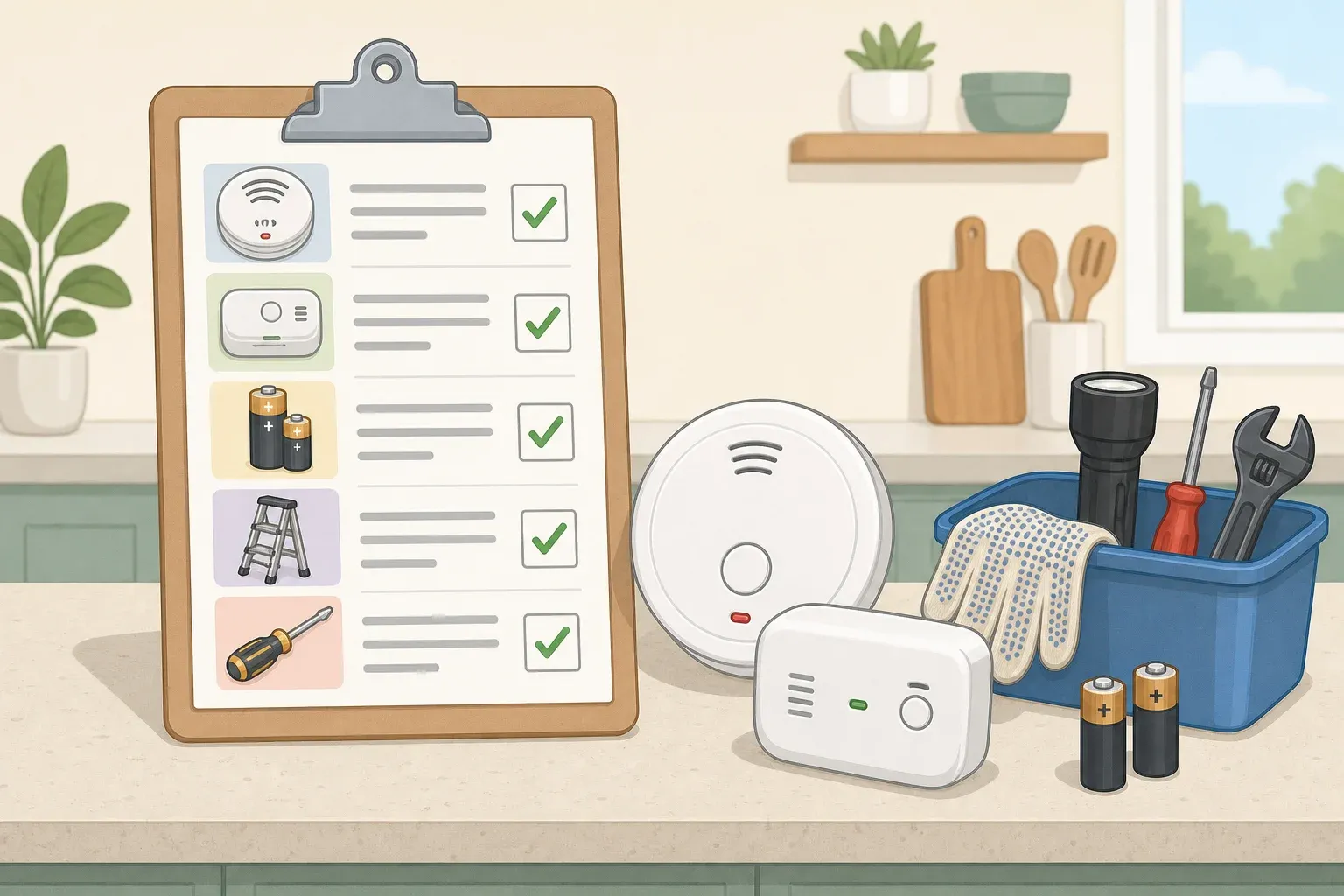
This part of the process is a visual check, not a repair, so the list is short:
The dryer's installation manual, either the paper copy or a PDF from the manufacturer's site
A flashlight or phone light to read the model label clearly
A notepad or phone notes app to record the voltage, amp rating, and receptacle configuration
A clear view of the electrical panel's breaker labels and the dryer outlet, without removing any panel covers
Nothing here calls for a screwdriver at the panel. Reaching for one is the point to stop and call a qualified electrician instead.
How to check your dryer's circuit breaker size
Identify the fuel type. Gas or electric determines which voltage and circuit range even applies, so start here before comparing any numbers.
Find the model number, then the manual. Locate the required voltage, circuit amp rating, and receptacle or cord configuration listed for that exact model.
Compare visually, and only visually. Check whether the outlet's shape and the panel's breaker label appear consistent with what the manual specifies. This confirms nothing about wiring condition, grounding, or voltage under load, only whether the visible pieces look like a match.
Treat a mismatch as a stop point, not a puzzle to solve. If the outlet doesn't match the manual's configuration, or the breaker label shows a different amp rating than the manual calls for, that's a question for a qualified electrician, not something to fix by swapping a cord or forcing a plug to fit.
Leave gas-line work to a professional. If a gas dryer's connection needs to be extended or modified to fit the setup, that step goes to a qualified professional or the local gas company, not a DIY attempt.
What this check can't tell you
A matching outlet shape and breaker label are a good sign, but they don't confirm everything. Comparing the visible pieces won't reveal:
Whether the wiring behind the outlet is in good condition
Whether the circuit is properly grounded
What voltage the circuit actually delivers under load
Whether the home's panel has spare capacity for the circuit
Any of those requires equipment, training, or both, and all of them belong to a qualified electrician.
Does your home's panel have room for a new dryer circuit?
A dryer's dedicated circuit is one piece of a much larger picture: the home's total electrical service, which varies by house. One NFPA example describes a 200-amp, 120/240V residential service, while some developments have specified 150-amp service instead. Neither figure says anything, on its own, about whether a particular panel has room for an added 30-amp dryer circuit.
That depends on the panel's age, its current load, and local code, and it belongs to a qualified electrician, not a subtraction problem solved by eyeballing the main breaker.
When to stop and call a professional
A breaker that trips repeatedly on a dryer circuit is a signal for a qualified electrician, not a cue to install a larger breaker. A bigger breaker doesn't fix whatever is causing the trip; it removes the safeguard meant to catch the problem in the first place.
The same boundary applies to gas connections. Extending a line, adjusting a fitting, or handling any installation step not clearly spelled out in the manufacturer's instructions belongs to a qualified professional or the local gas company.
Pull the dryer's model number, find its installation manual, and compare the required voltage, circuit rating, and receptacle configuration against the outlet and breaker label already in place. A match confirms the documentation lines up for that machine, which is the extent of what a visual check can do. A mismatch, a breaker that won't stop tripping, or a gas connection that needs work beyond what the manual describes are all the same kind of signal: hand it to a qualified electrician or the local gas company rather than trying to close the gap alone.






Comments
Be the first, drop a comment!