



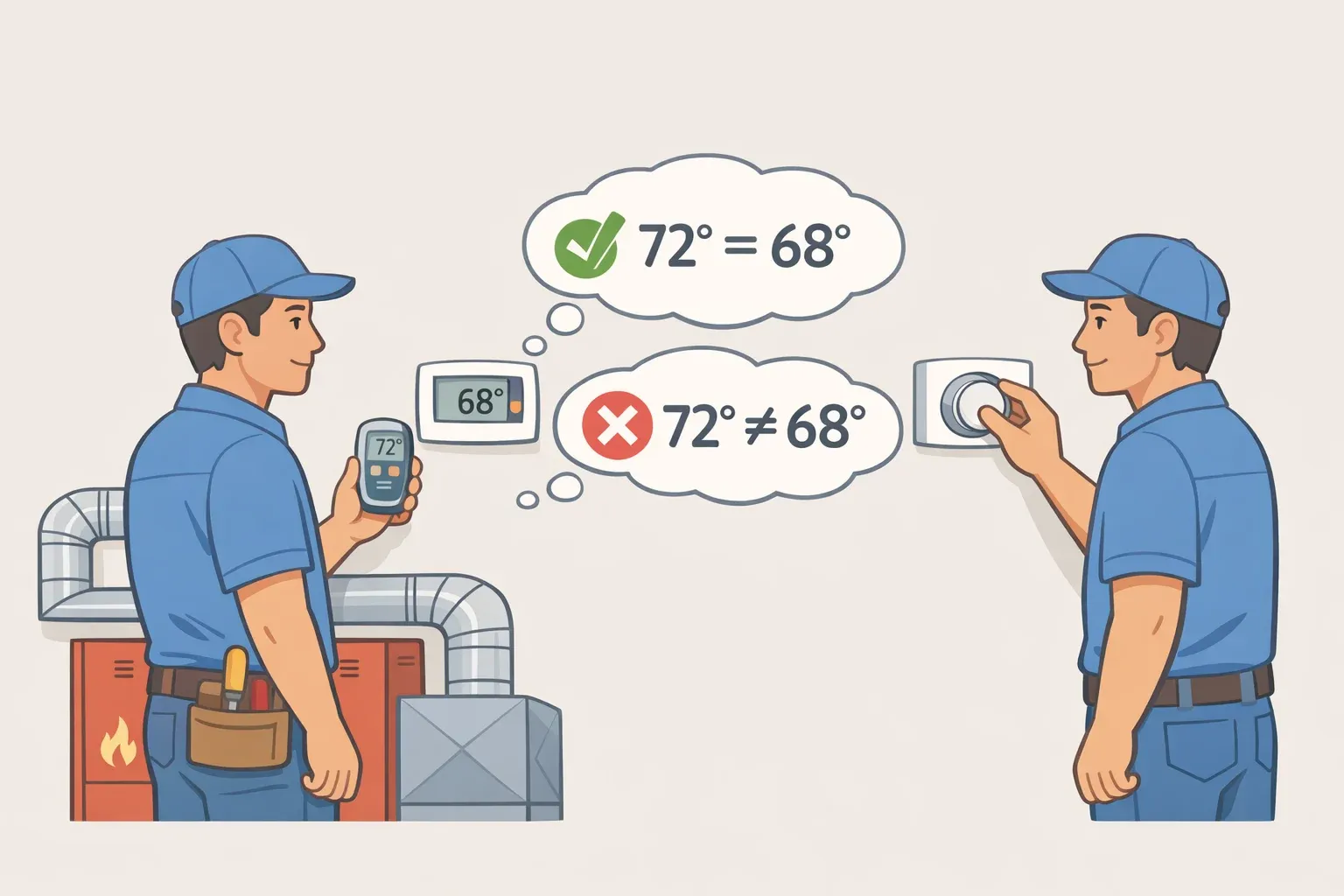
Deciding whether a thermostat needs calibration is simpler than most homeowners expect. A thermostat accuracy check is a smart addition to a seasonal HVAC tune-up, especially when there are comfort complaints, recent remodeling, a new thermostat, or a noticeable mismatch between the wall display and the room. An actual calibration or offset adjustment belongs in far fewer situations.
The difference matters because changing offset settings without confirming the cause can make the thermostat less reliable over time. Most modern consumer thermostats do not need routine recalibration in ordinary homes. When the reading seems off, the first step is usually to verify the temperature and check the thermostat's location, not change the settings.
The practical framework is simple: verify the reading, check the thermostat's placement, adjust only if the mismatch is consistent and unexplained, monitor the result, and call a technician if the problem continues.
Check the reading before changing the settings
Before peak heating or cooling season, a basic accuracy check is worth asking for during a routine HVAC service visit. It is especially useful after a new thermostat installation, thermostat relocation, home remodeling, or a major power disruption.
You can do a basic check without opening the thermostat or touching HVAC equipment. Place a reliable digital thermometer close to the thermostat, at about the same height, away from direct airflow, sunlight, lamps, electronics, and exterior doors or windows. Do not hold the thermometer in your hand while checking it, because body heat can affect the reading.
Give both devices time to stabilize before comparing them. Use the same thermometer for repeat checks when possible, and avoid comparing the thermostat with a thermometer that has been sitting in direct sun, near a vent, or in your hand. A quick side-by-side glance can be misleading because thermostats and thermometers may update at different speeds. Check again later in the day if the first reading looks suspicious. The goal is to identify a pattern, not react to one number.
Small differences are normal. ENERGY STAR's programmable thermostat guidance describes qualified programmable thermostats as accurate within about plus or minus 2 degrees Fahrenheit, and real-world accuracy still depends on where the thermostat is installed.
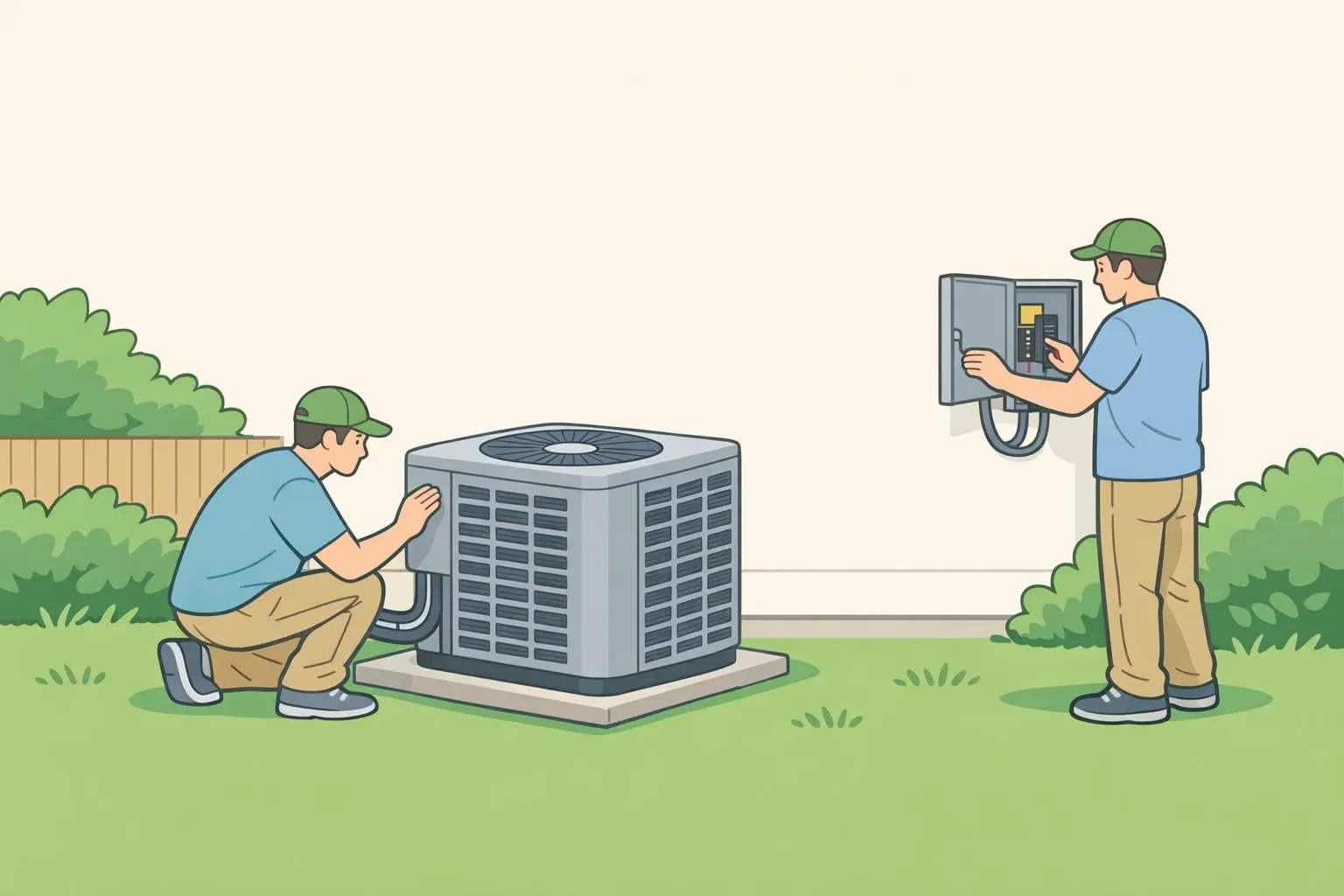
Do not remove thermostat wiring, open HVAC equipment panels, or bypass controls to troubleshoot a temperature mismatch. Those checks belong to a qualified technician.
Verification and adjustment are different steps. The check tells you whether there is a real mismatch. The adjustment changes how the thermostat interprets the room temperature, so it should come only after the mismatch is confirmed.
Check the thermostat's location first
When the accuracy check shows a discrepancy, the first response should not be changing the offset. It should be looking at where the thermostat is installed.
An offset correction changes the temperature the thermostat uses or displays. It does not fix a thermostat that is sitting in the wrong spot. If the thermostat is warmed by afternoon sun or cooled by a nearby vent, changing the offset may only hide the real problem until conditions change again.
Common culprits include direct sunlight, nearby supply or return-air vents, drafts from windows or exterior doors, walls with ductwork, lamps, electronics, and heat from cooking. A thermostat on an exterior wall or in a hallway with poor airflow may also read differently from the spaces where people actually spend time.
The pattern helps narrow the cause. A stable, consistent gap — for example, a thermostat that reads about 3 degrees high at different times of day — may point to sensor drift or an offset issue. A reading that changes sharply by time of day, spikes after cooking, or normalizes after a door closes usually points to environmental interference instead. The pattern is a clue, not a diagnosis, but it helps determine whether the right fix is an offset adjustment, a setting change, or a better thermostat location.
For homes where good placement is difficult, a smart thermostat with remote sensors may help, but the behavior depends on the model. Google Nest Help says the Nest Temperature Sensor can help the thermostat heat or cool based on a specific room, but it also notes that some Nest setups use only one active sensor at a time, while the 4th-generation Nest Learning Thermostat can average selected sensors. Check your thermostat's manual or app before changing offset or sensor settings, because remote sensor behavior depends on the model.
When an offset adjustment makes sense
Residential thermostats are control devices, not lab instruments, so some small variation is expected. A difference of about 1 degree Fahrenheit between the thermostat and a reference thermometer generally is not worth acting on if the reading is stable, comfort is normal, and the HVAC system is operating properly.
A consistent gap above about 2 degrees Fahrenheit is more meaningful. If the mismatch remains after both devices have stabilized, placement issues have been ruled out, and there are no obvious system faults, a small offset adjustment may be worth trying.
Manufacturer instructions matter here. Sensi's official support page says its Temperature Offset feature lets users adjust the room temperature reading by plus or minus 5 degrees Fahrenheit, but it also notes that poor thermostat location or improperly sized HVAC equipment can be the real reason a digital thermostat does not read accurately.
A thermostat reading the wrong temperature does not always show up as a simple display problem. Short cycling — when the HVAC system turns on and off more frequently than normal — can look like a thermostat problem, but it can also point to airflow, sizing, wiring, control, or equipment issues. Unexplained increases in energy bills can also be a clue, especially when usage habits and weather have not changed much.
Use this as a practical guide during or after a service visit:
Gap of about 1°F or less, consistent: This is likely normal variation. No adjustment is needed.
Gap changes by time of day: This likely points to environmental interference. Check placement before changing settings.
Gap above about 2°F, stable, with no obvious placement issue: This may point to sensor drift or an offset issue. Apply a small offset if the thermostat allows it, then monitor.
Thermostat reads accurately but short cycling continues: This likely points to a system-level issue. Schedule technician assessment.
Readings stay unstable after adjustment: This may point to aging hardware, poor placement, or a deeper HVAC problem. Consider professional review or replacement.
After an adjustment, watch what happens next
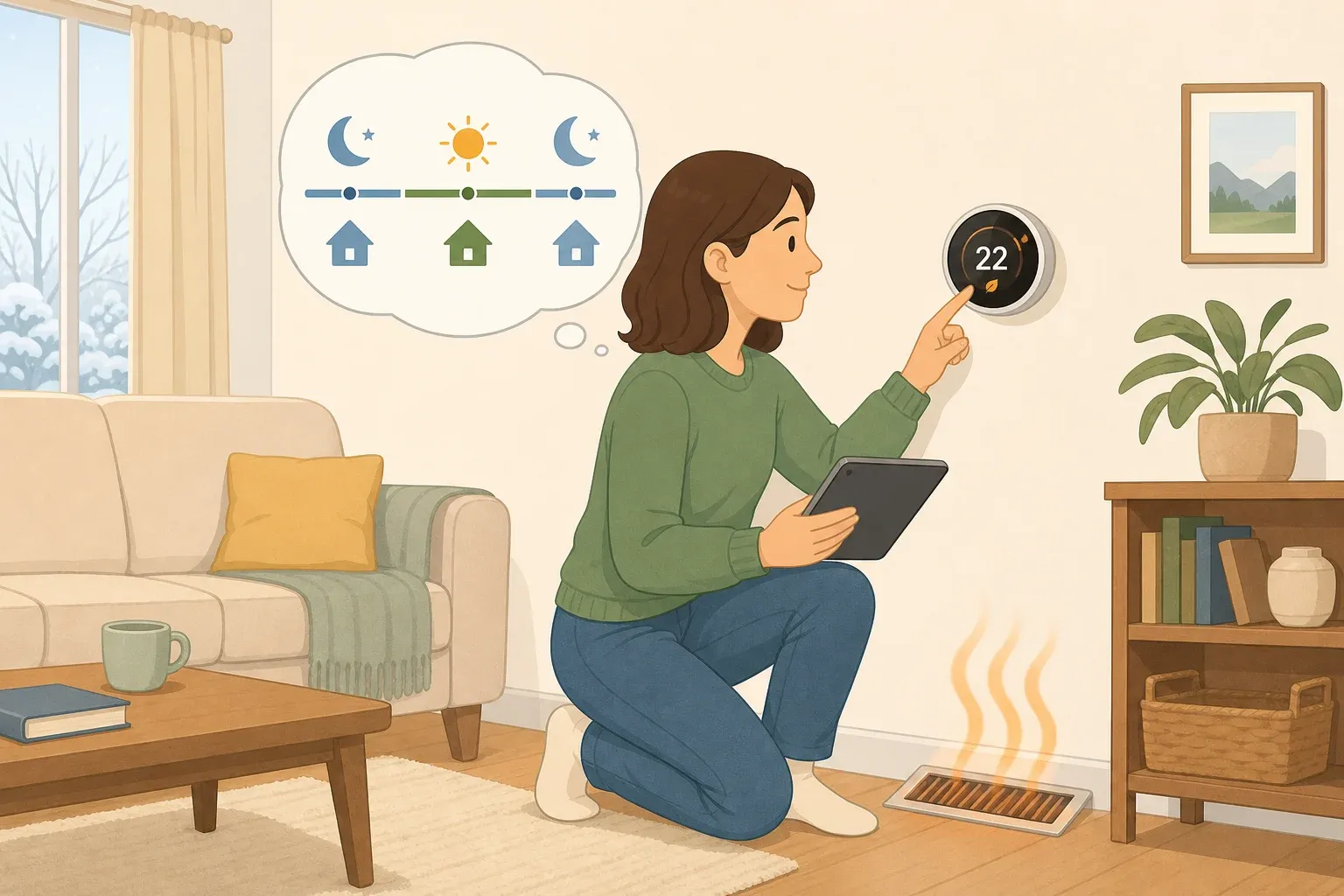
After any offset is applied, do not judge the result immediately. Check the reading again over the next day or two, ideally during normal heating or cooling cycles. An adjustment that looks right while the system is idle may behave differently once the HVAC system starts cycling.
If the thermostat reads accurately after adjustment but short cycling, high bills, or comfort complaints continue, the thermostat may not be the real problem. A certified technician can check wiring, controls, equipment sizing, airflow, thermostat compatibility, and whether the thermostat should be replaced.
Replacement may be the better call when the thermostat is older, unsupported, physically damaged, incompatible with the HVAC system, or still unstable after a careful offset adjustment. Repeatedly changing offsets on unstable hardware can make future service visits harder to interpret.
What to ask your HVAC technician
At your next tune-up, treat the thermostat as part of the diagnosis. Ask the technician to verify the thermostat reading against a reliable thermometer, review the installation location before changing any settings, and apply an offset only if a persistent mismatch remains after placement has been checked.
That sequence — verify, check placement, adjust only if needed, then monitor — keeps the fix tied to the evidence. A reference thermometer check before heavy heating or cooling use can catch sensor drift, placement problems, and early comfort issues before they become harder to diagnose.
The check is valuable even when no adjustment is needed, because it confirms whether the thermostat is actually part of the problem.




Comments
Be the first, drop a comment!