





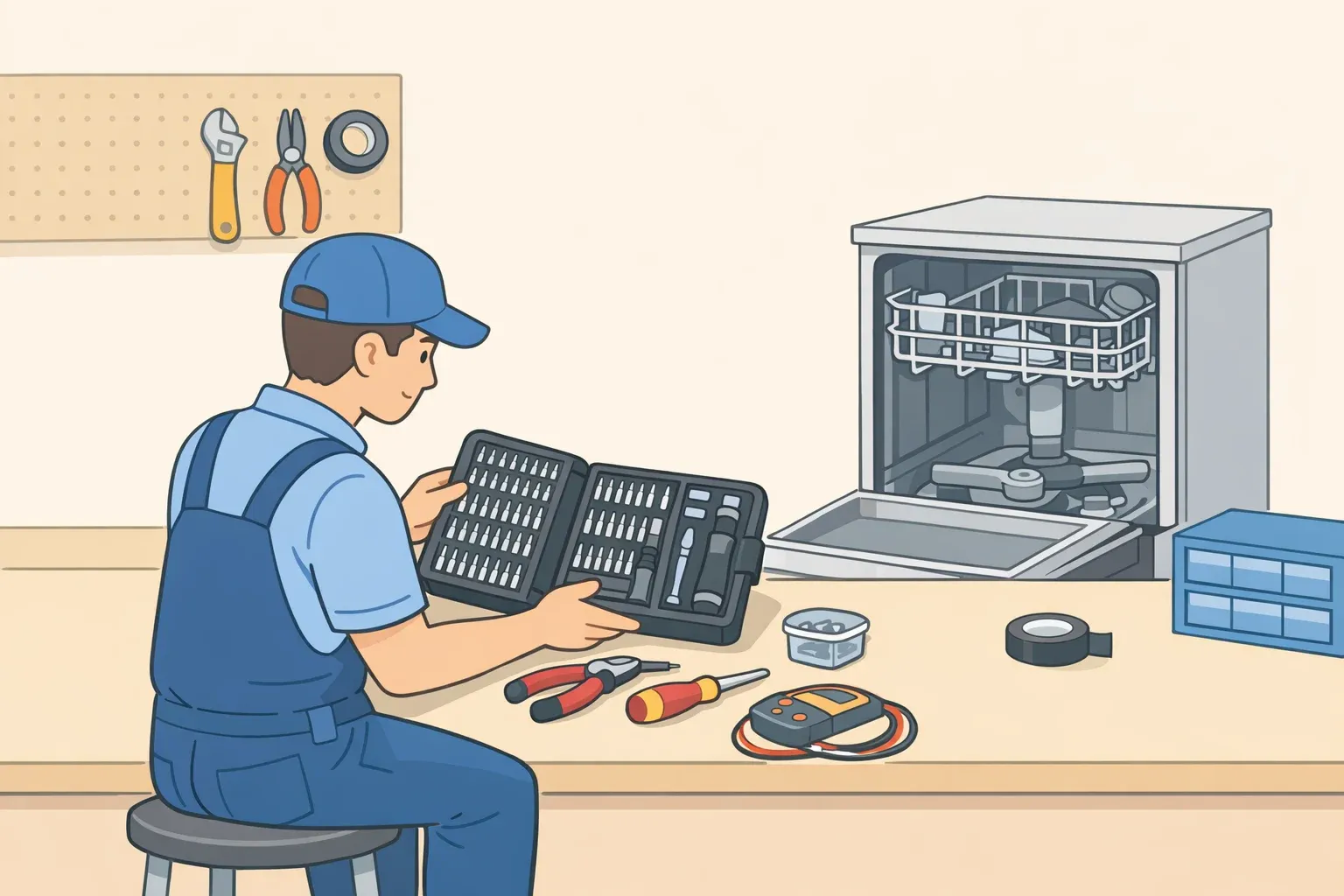
iFixit Megalodon Driver Kit Targets Home Appliance Repair
iFixit released the $34.95 Megalodon Driver Kit this week, its first toolkit built explicitly for household appliances, flat-pack furniture, and general home repair. The launch lands the same week the FTC published an advance notice of proposed rulemaking that could require appliance manufacturers to publish consumer repair information for the first time, as iFixit reported. iFixit says most major appliance manufacturers still withhold repair documentation a problem a better screwdriver cannot fix on its own.
Three things are happening in parallel, and they pull in different directions: purpose-built consumer repair tools now exist for this category; right-to-repair laws covering appliances have passed in a handful of states; and federal documentation requirements remain a proposal under consideration, not a rule.
What the iFixit Megalodon Driver Kit is actually for
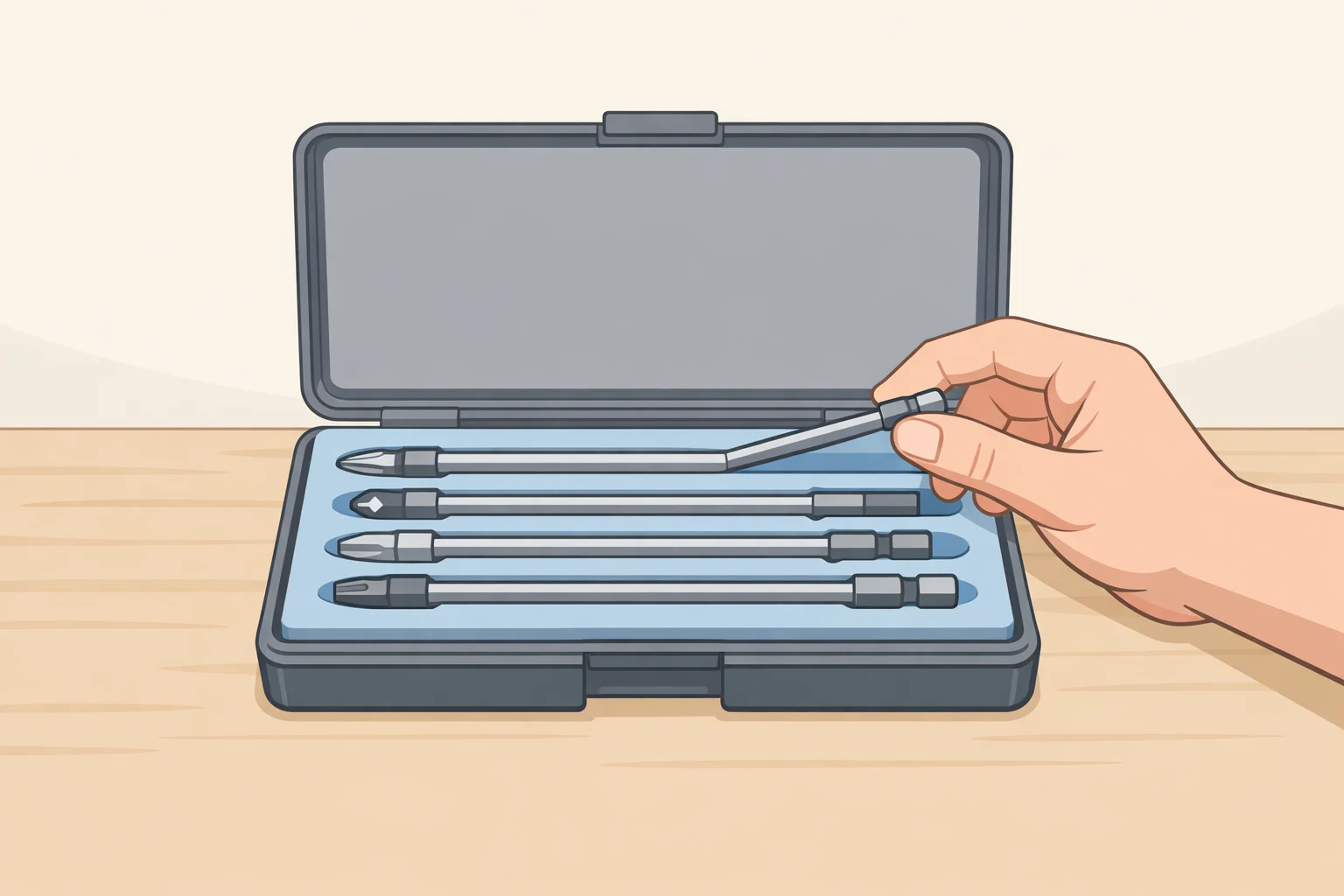
The kit centers on a redesigned screwdriver paired with 16 extended-reach bits, packed in a drawer-sized plastic case. The foam tray inside is labeled with large white print for each bit position, so finding a TR20 mid-disassembly doesn't require squinting at unmarked slots. The case lid is magnetic and doubles as a screw-sorting tray during disassembly, useful when you're midway through pulling apart a dishwasher and need fasteners to stay put, per The Verge.
The 2-inch bit shanks are where the kit earns its price. Standard 1-inch bits routinely fail to reach fasteners set deep inside appliance cavities or recessed behind access panels. iFixit designed the extended reach to address what it calls "the pain points of home repair," according to its launch post. Reach is the kind of problem that doesn't announce itself until you're already inside a machine with a bit that's two inches too short.
The driver's Swivel Grip Cap handles two distinct modes without a ratchet mechanism. Hold the cap steady and the driver spins freely for fast screw removal; push the cap down to lock it and the handle applies torque as a unit. The result is a single tool that functions as both a swivel driver and a static driver, as The Verge reported.
The bit selection was curated for household fasteners rather than electronics work. The full lineup covers Phillips 0, 1, and 2; Flathead 6mm; Torx Security TR10, TR15, TR20, and TR25; Hex 4, 5, and 6mm plus 1/8-inch; Square 1 and 2; a 5/16-inch nut driver; and a 1/4-inch socket adapter, per iFixit. Torx Security and Hex bits appear constantly in appliance access panels. This isn't a generic bit sampler padded out with sizes nobody uses. iFixit describes the selection as covering "the fasteners people actually run into during household repair, furniture assembly, automotive tinkering, and general DIY."
iFixit also notes that a set of fixed-blade drivers in the same form factor, using the same Swivel Grip Cap design, is next in the product lineup, per iFixit. The Megalodon appears to be the opening move in a broader home repair product category, not a standalone release.
One caveat worth stating plainly: all product specs and use-case claims come from iFixit and from The Verge's coverage of the launch announcement. No independent testing or price-point comparison with competing home repair kits was available at publication.
Why iFixit is moving into appliances now
iFixit's entry into this category has a paper trail. The FTC previously asked the company to investigate appliance repair, which led to a joint study with PIRG. That history makes the Megalodon something more than a product line extension: iFixit has been building the case for appliance repairability for years before building a tool for it, per iFixit's launch post.
That study found only 7 of 50 appliance manufacturers made service manuals publicly available, according to iFixit and PIRG's findings. iFixit has an obvious advocacy interest in that figure, but the research was conducted at the FTC's request, which gives it more standing than a self-published marketing claim.
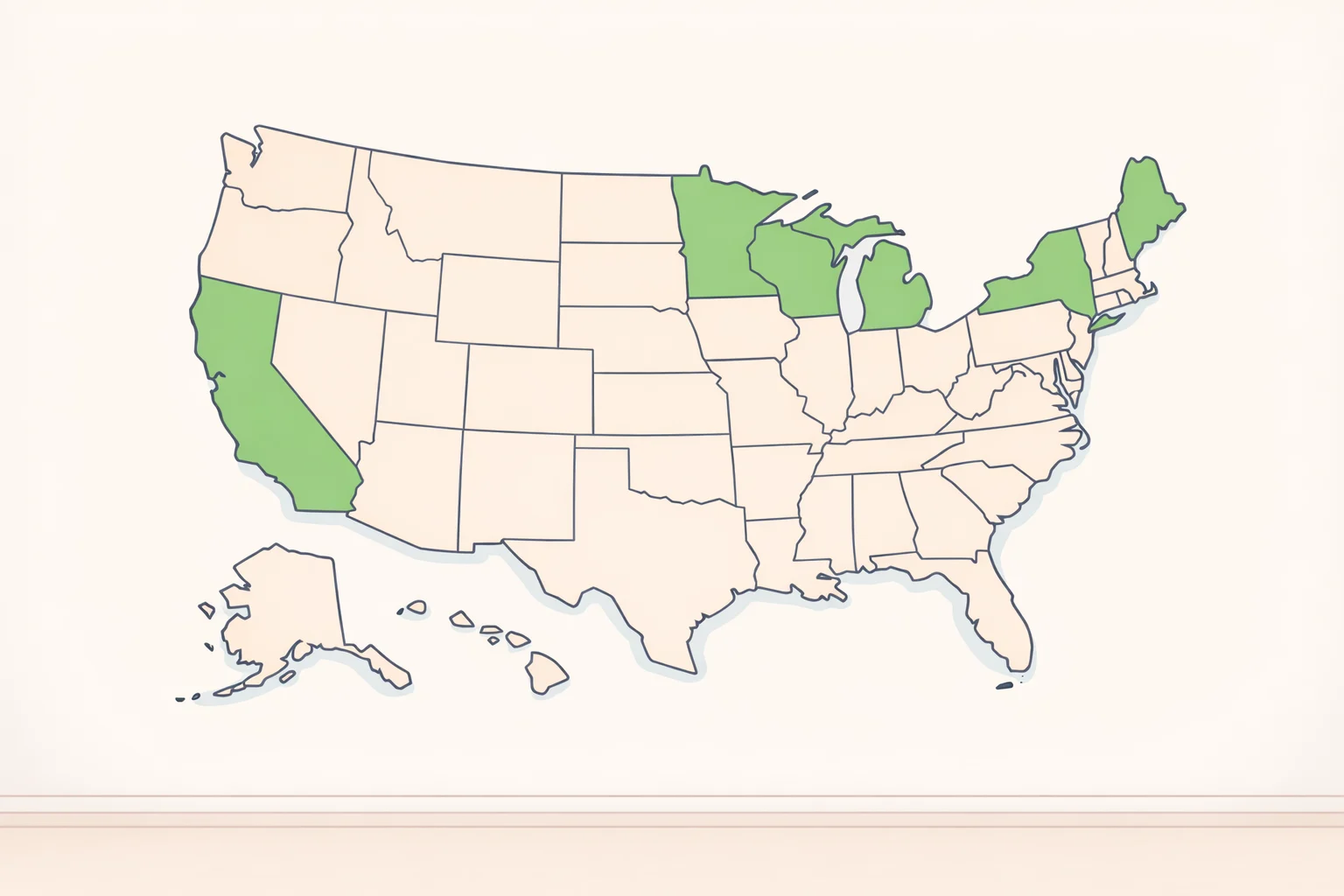
The regulatory picture has been shifting in parallel. At least four US states, Minnesota, Oregon, Washington, and Colorado, have passed right-to-repair laws that explicitly cover appliances alongside consumer electronics, per iFixit. Those laws represent real legal frameworks. They do not yet solve the documentation problem for the 46 other states, or for consumers whose appliance manufacturer hasn't complied in the states where laws exist.
This week the FTC went further. It published an advance notice of proposed rulemaking that would require appliance manufacturers to include consumer-accessible repair information for refrigerators, dishwashers, washing machines, air conditioners, water heaters, and televisions. The commission framed the proposal as giving consumers lower-cost repair alternatives without requiring them to return to the manufacturer, as iFixit reported. This is a proposed amendment to the Federal Energy Labeling Rule, which already covers the product categories listed. That's a meaningful detail: the FTC isn't proposing an entirely new regulatory structure. It's proposing to extend an existing one.
Still, an advance notice of rulemaking is early in the process. A final rule requires a formal comment period, agency review of industry responses, and a separate rulemaking action. The regulatory and market context in this section flows primarily through iFixit's newsroom. iFixit is both the product maker and the primary right-to-repair advocate cited here, and readers should weigh that accordingly.
The information gap that no toolkit closes
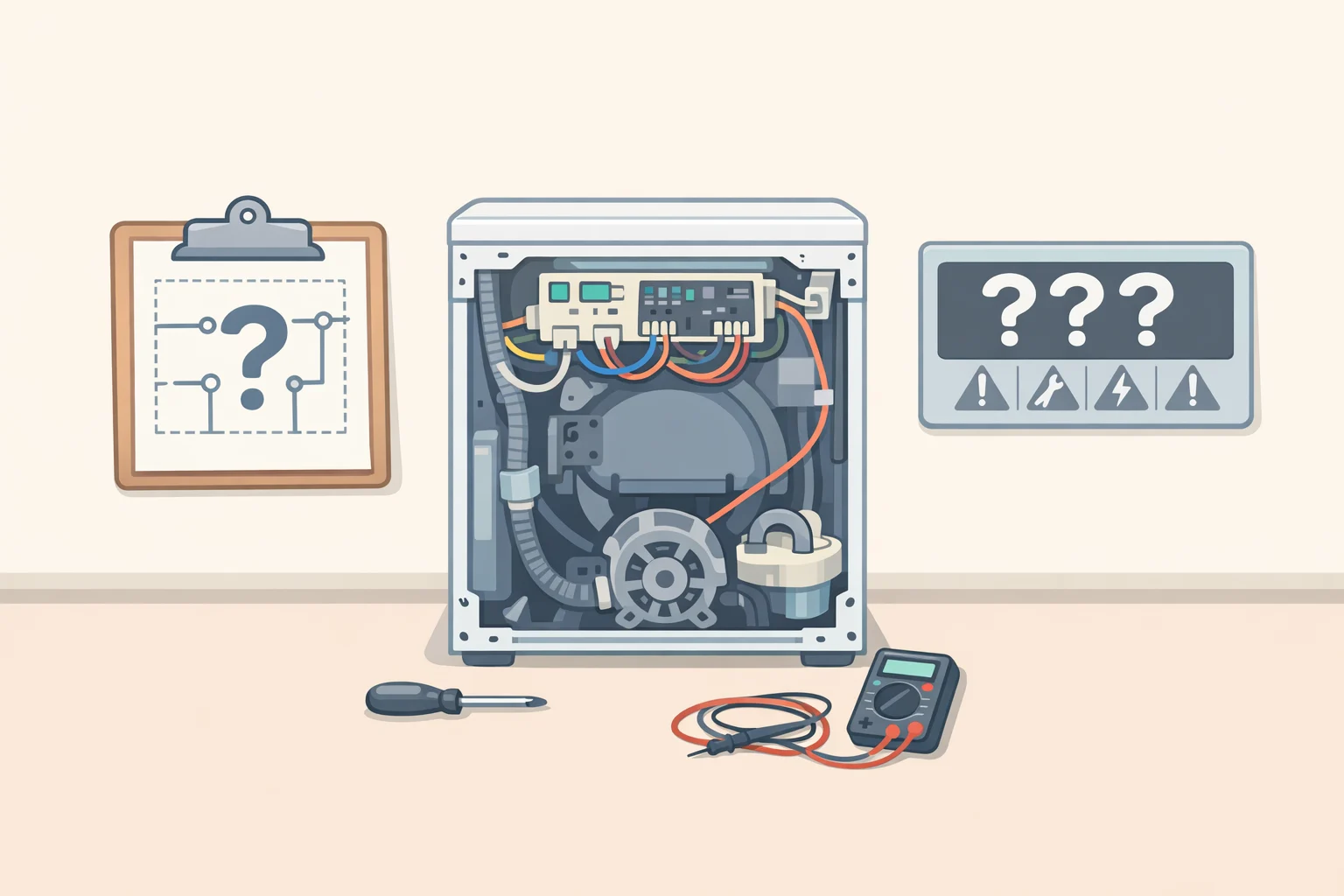
Even with the right tools in hand and a legally protected right to repair in your state, attempting to fix a washing machine without a service manual means working largely without guidance. Wiring diagrams, fault code definitions, disassembly sequences, component specifications: this is the procedural information authorized repair technicians use as a matter of course. As iFixit put it, "there just isn't widespread consumer access, on iFixit or anywhere else on the internet, to the sort of information that authorized appliance repair technicians take for granted," per iFixit.
The demand is clearly there when documentation does exist. Dyson vacuum repair guides are among the most-visited content on the platform, according to iFixit. When people can find a clear guide, they attempt the repair. The bottleneck isn't willingness, and it isn't tools.
iFixit acknowledges its own coverage is thin. The company notes it still has significant ground to cover building out free appliance repair guides for the products the FTC proposal targets, per iFixit. That's a notable admission from a company that has spent over a decade building what it describes as a free repair manual for everything. Appliances, it turns out, are a harder category than smartphones.
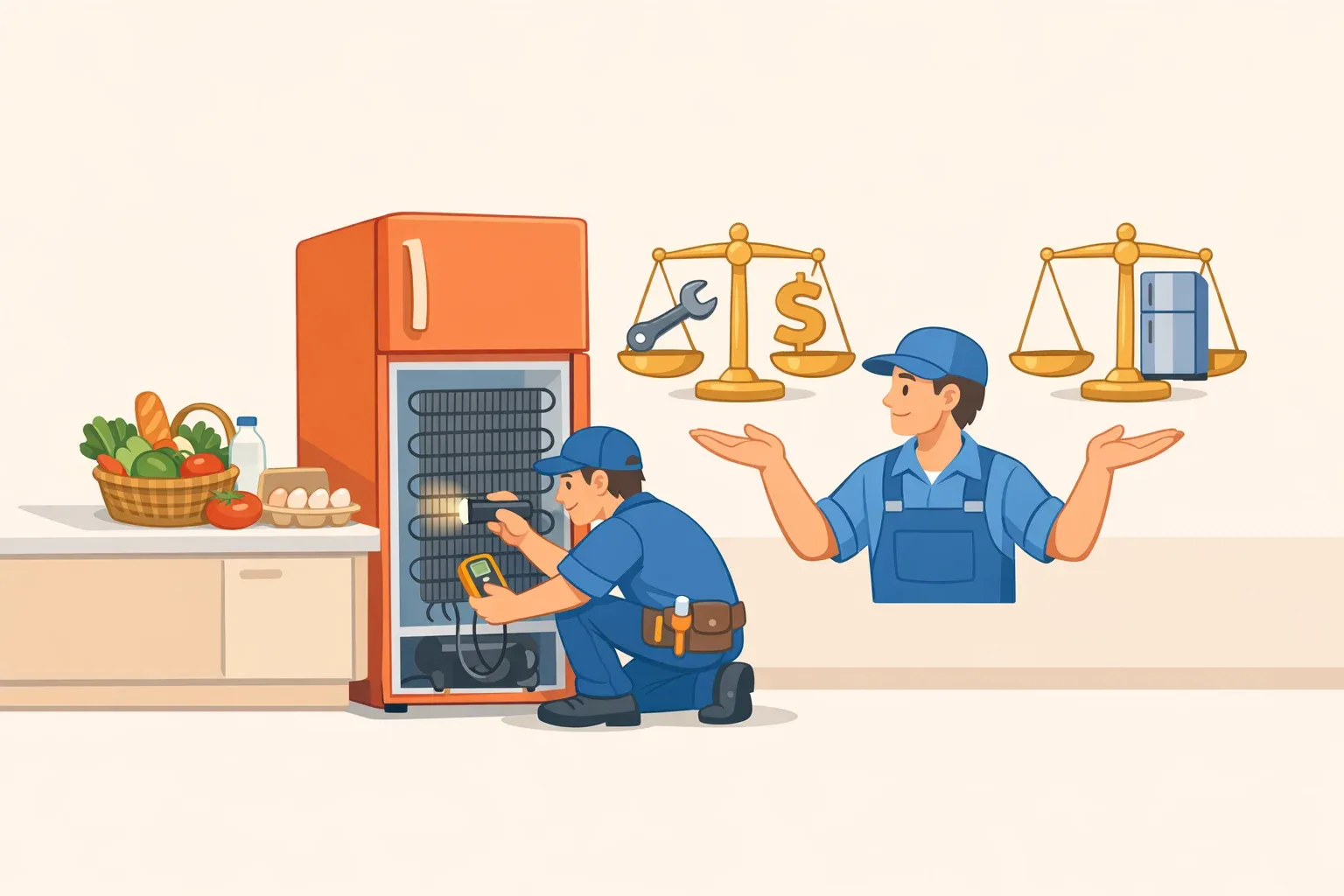
Part of what makes appliances harder is the documentation structure itself. For electronics, third-party teardowns and community-written guides can partially substitute for official service manuals. Appliance repair is more consequential: a miswired dishwasher is a different kind of mistake than a cracked phone screen. Fault code definitions and wiring diagrams aren't nice-to-haves. For many repairs, they're the difference between a successful fix and a second service call.
Three things that are true right now
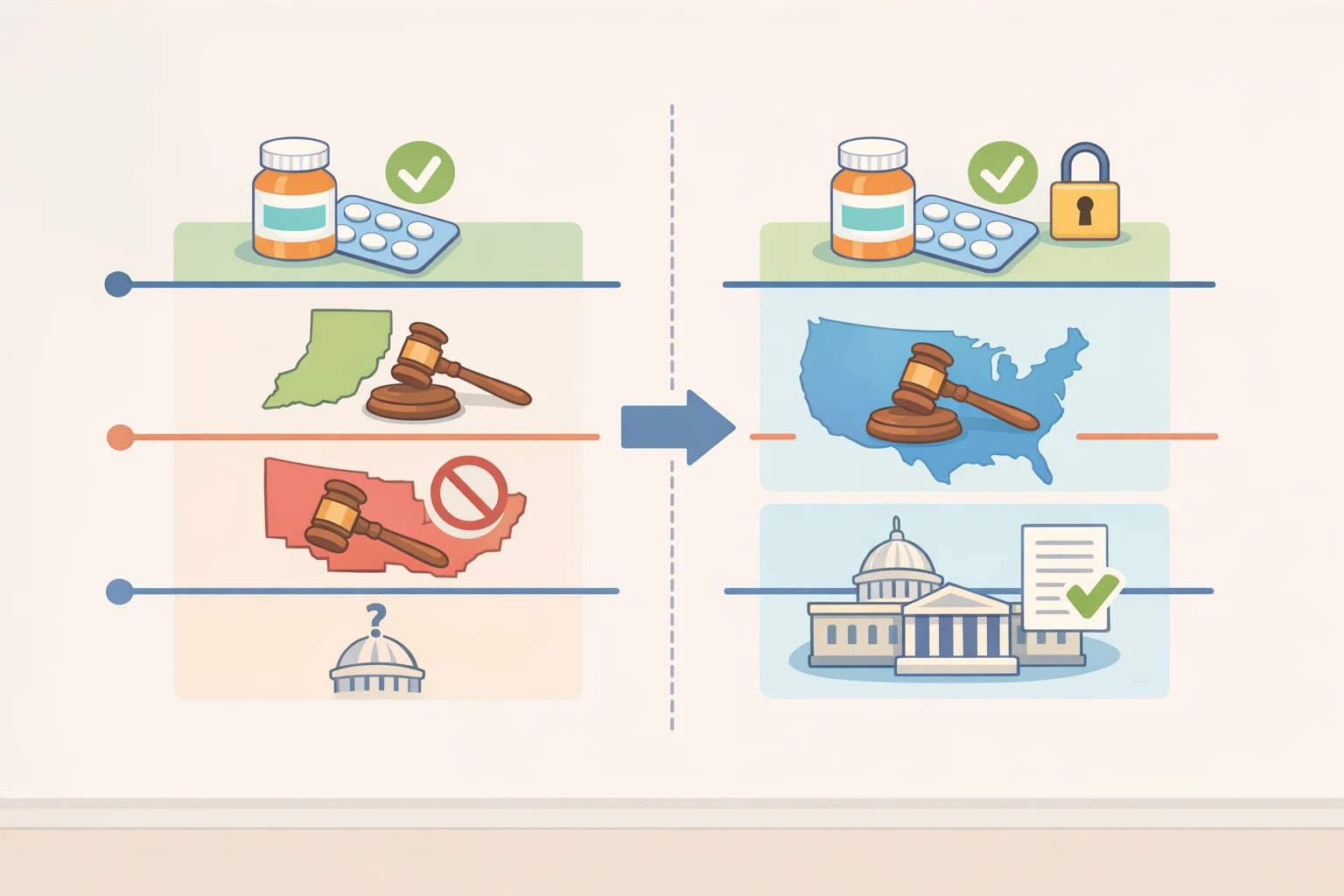
The state of appliance repair in mid-2026 is not a single story. It's three stories running at different speeds.
The Megalodon is a concrete product, available now, purpose-built for the physical demands of appliance access and home repair. At $34.95, it sits at a price point where consumers already attempting these jobs might actually buy it rather than improvise with a general-purpose kit. That's not nothing, per The Verge.
The state-level right-to-repair framework is real but incomplete. Four states have laws covering appliances, per iFixit, but iFixit and PIRG's survey found that only 7 of 50 major manufacturers made service manuals public. Legal requirements and actual manufacturer compliance are different things.
The federal picture remains open. The FTC's proposed amendment to the Federal Energy Labeling Rule could shift the baseline for every covered product category, but the comment period and industry response will determine how far it goes, and how fast, as iFixit reported.
The FTC comment period is the next concrete milestone. It's where appliance manufacturers will make their case for why documentation requirements are impractical, proprietary, or both. Whether that opposition narrows the rule, delays it, or fails to stop it will shape what the iFixit appliance repair toolkit market looks like two years from now. iFixit is building the tools and the repair guides in parallel. The second half of that project still depends on cooperation from manufacturers who have spent years providing exactly the opposite.





Comments
Be the first, drop a comment!