



Reviewed by: Y. Garcia
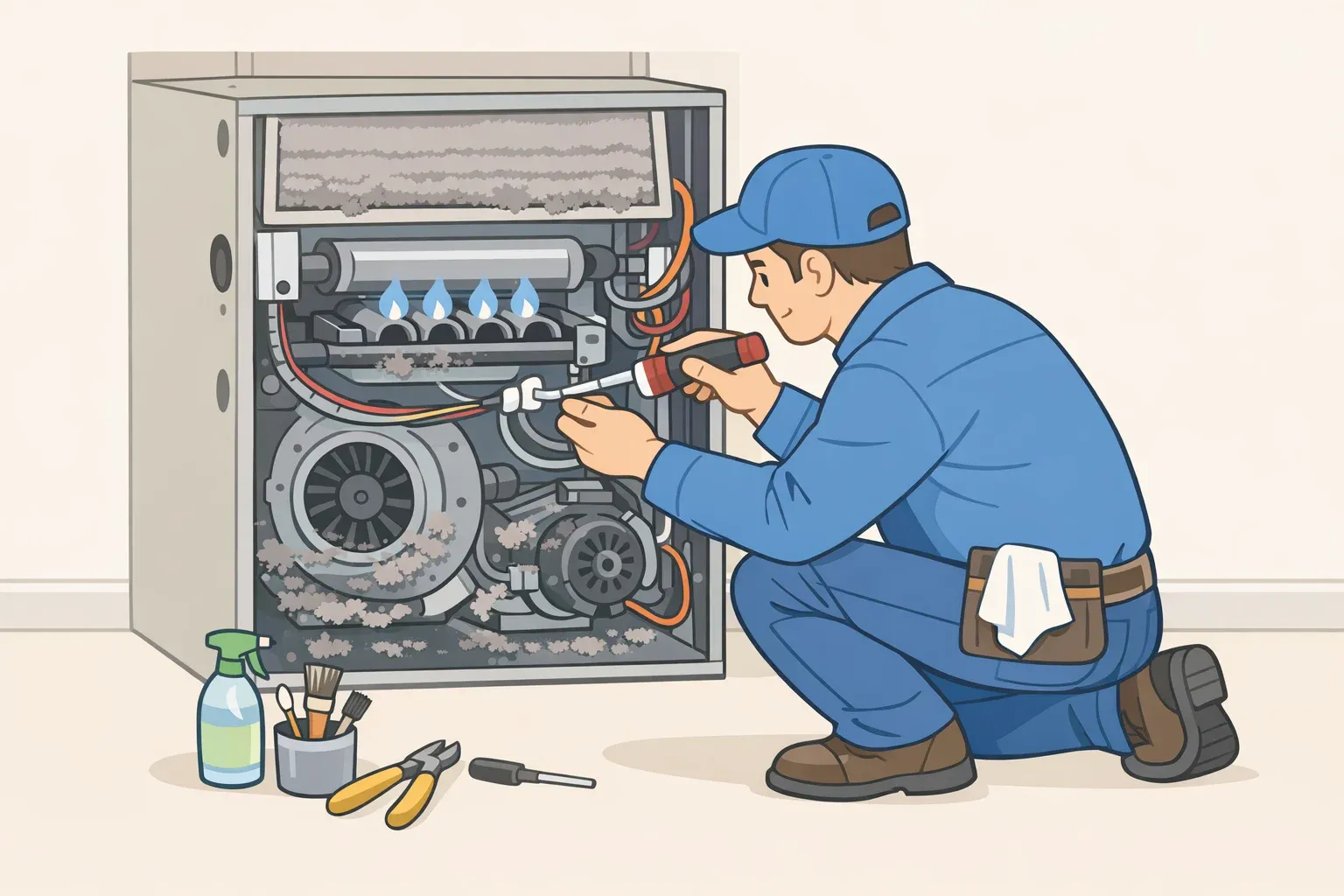
Every October, the same thing happens. Furnaces that sat idle through four months of summer dormancy fire up for the first time, and a small ceramic rod coated in accumulated dust fails to ignite. The system shuts down. A technician gets called.
The homeowner pays $150 to $275 for a service call to replace a component that costs $18 at a parts supplier.
Flame sensors account for nearly a quarter of all heating-season replacement-part orders, the largest single failure category in winter. Orders for that component spike 220% in October, which National HVAC Parts attributes to dirty sensors after summer dormancy, according to their July 2026 analysis of 45,247 OEM part orders.
That timing is predictable, which makes it easier to catch with a pre-season inspection. A summer HVAC tune-up isn't the fix; it's what gets you positioned for one.
Three facts that set the stakes:
ENERGY STAR recommends scheduling heating system checkups in fall, before contractors become overwhelmed with emergency calls, noting that service availability tightens once cold weather arrives
The U.S. Department of Energy identifies neglected maintenance as the leading cause of furnace failures, with dust buildup, blocked airflow, and worn components compounding quietly during months of inactivity, per Anthem Home Comfort
Heating accounts for roughly 29% of a home's total energy consumption, per DOE figures, meaning a degraded system runs up costs for months before it fails visibly
This guide covers what to do right now, in summer, so your furnace gets a professional inspection before the fall booking window closes and the first cold snap arrives.
One clarification up front: summer is the planning and scheduling window. The professional tune-up itself belongs in early fall, ideally late September to mid-October, before technician demand spikes. The summer move is securing that appointment and completing four homeowner tasks that give you better information going into it.
Summer HVAC tune-up planning: what to book now, what happens in fall
These are not the same thing, and conflating them leads to either inaction or the wrong action at the wrong time.
Late September to mid-October is the optimal window for a professional furnace inspection, according to Van Bremen's Heat & Air. That timing gives technicians enough runway to identify problems and source parts before cold weather arrives. It also puts the inspection during a period when the system can be tested under mild conditions without making the house uncomfortable.
Most homeowners don't think about this until the schedule is already full. Once temperatures drop, service calls back up, parts may need to be rushed, and the homeowner has no say in the timing. Booking from mid-July means that fall slot is locked while contractors still have flexibility.
One thing to get right when booking: many summer HVAC visits focus on cooling equipment, capacitors, contactors, and refrigerant checks. A generic appointment scheduled in July may not include the heating system at all. When calling to book, ask explicitly for a furnace or heating system inspection. Confirm the visit will cover these specifics:
Burners, flame quality, and gas pressure
Ignition system and safety controls
Venting and flue conditions
Blower function and airflow
Thermostat calibration
Condensate drain (for high-efficiency units)
Also ask whether the company can source parts in advance of cold weather if anything needs replacing, and mention the furnace's age along with any symptoms from your test cycle (more on that below). The distinction between a cooling-season service call and a proper heating inspection matters, and the contractor needs to know which one you're booking.
What tends to fail and what a professional inspection catches
Understanding the failure sequence helps clarify why inspection timing is what it is.
Flame sensors and igniters are the two primary failure points during the heating season. Beyond the October flame sensor surge, igniter orders climb 170% in November as heating demand increases, then climb 140% again in February due to thermal cycling fatigue.
Pressure switch failures follow in March, rising 90% as temperature swings produce condensation in flue lines, per the National HVAC Parts failure index. A professional fall inspection covers all three, as well as combustion components, safety systems, and airflow, according to Van Bremen's Heat & Air and Precision Air.
A cracked heat exchanger can pose a combustion safety concern and should be evaluated promptly by a qualified technician. A preseason inspection may identify warning signs before heavy heating use begins.
Routine maintenance can also restore furnace efficiency by 5% to 15% through burner calibration, leak correction, and fan adjustment, per Precision Air.
Age changes the calculus. Furnaces 15 to 20 years or older fail significantly more often during cold snaps, per Anthem Home Comfort. For an older system, the pre-season inspection isn't routine seasonal HVAC maintenance; it's a reliability assessment that may also inform a replacement decision before winter forces one.
None of the above is a homeowner job. Inspecting and cleaning the flame sensor, testing combustion and flue gas conditions, measuring gas pressure, checking the heat exchanger for cracks, and verifying safety controls and limit switches these require a licensed technician. Errors on gas-connected components can create carbon monoxide or fire hazards.
What to do right now: four homeowner steps before the pro arrives
These four tasks don't replace the professional inspection. They catch obvious symptoms early, establish a baseline, and give the technician better information when they arrive.
1. Check and replace the air filter. Pull it and hold it up to a light source. If light doesn't pass through clearly, replace it. ENERGY STAR recommends inspecting filters monthly; a clogged filter can reduce system efficiency by up to 15% and accelerate component wear. During active heating season, replace it every 30 days, per Anthem Home Comfort citing DOE guidance. Do this now, regardless of when the professional visit happens.
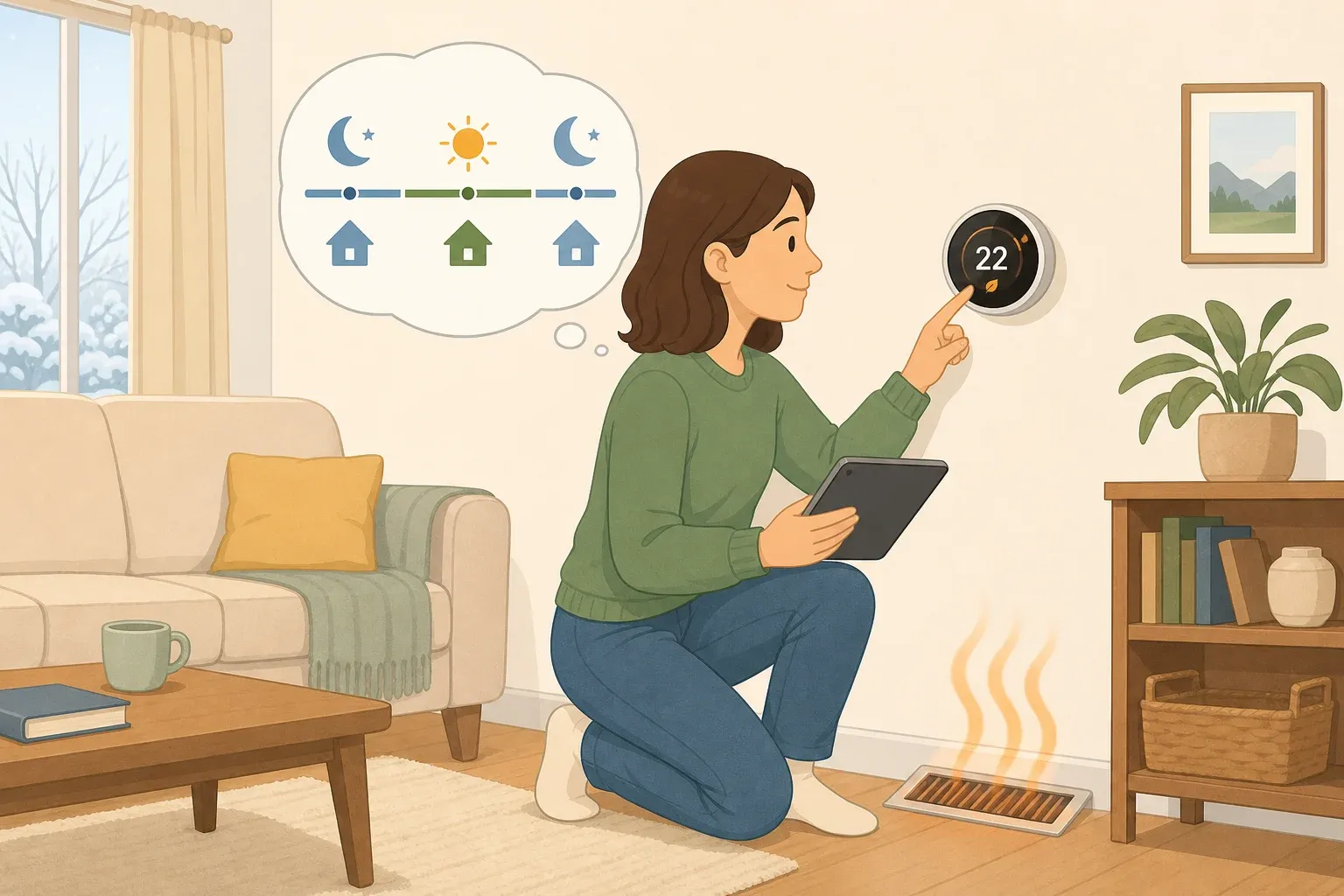
2. Run a brief test cycle. Switch the thermostat to heat mode and set it five degrees above the current room temperature. The furnace should respond within a few minutes: a startup sequence, then warm air from the registers. Note any unusual sounds (banging, rattling, rapid on-off cycling) and any rooms that seem to receive less heat than others. These symptoms tend to worsen under real winter load, per Van Bremen's Heat & Air. Write them down; they're exactly what to tell the technician.
3. Test carbon monoxide detectors and check batteries. Press the test button on every CO detector in the house. Replace batteries annually and replace any unit that's 5 to 7 years old or older, per the manufacturer's guidance. This step costs nothing and takes five minutes, per Season Control. Non-negotiable for any home with a gas furnace.
4. Book the inspection now, and specify what you need. Call an HVAC contractor today and secure a fall furnace inspection for late September or early October, before the first cold snap, before the schedule fills. Use the checklist from Section 1 to confirm that the appointment specifically covers the heating system. If the furnace is 15 years or older, or if the test cycle surfaced any warning signs, ask about scheduling sooner.
Do not wait for fall if the test cycle reveals persistent burning odors, rapid on-and-off cycling, or weak or uneven heat. If a CO alarm sounds, leave the home and contact emergency services or the fire department.
If you smell sulfur or rotten eggs, and natural gas or propane may be present, leave immediately without operating electrical switches or igniting any flames, and call the gas utility or emergency services from outside.
The cost and safety case for not waiting
A professional annual furnace tune-up typically costs $100 to $300, depending on the system type and location, per Season Control. Compare that to the alternative: a service call for flame sensor replacement runs $150 to $275; igniter replacement, $200 to $350; control board replacement, $450 to $800. These are components that a pre-season inspection might catch before failure, per National HVAC Parts.
Emergency timing amplifies every cost. A furnace that quits at midnight in January competes for technician time with dozens of other no-heat calls in the same weather window. Longer waits, limited scheduling flexibility, no ability to plan parts orders in advance all of it avoidable with a fall booking.
The plan, in order
Start with four homeowner tasks this week: check and replace the filter; run a brief test cycle and note any symptoms; press the test button on every CO detector in the house; and call a contractor to book a fall furnace inspection for late September or early October.
Use the booking checklist above to confirm the appointment specifically covers heating, not just the cooling equipment that a summer service call typically addresses.
The decision framework from here is simple. If the system is under 15 years old and the test cycle came back clean, book the fall inspection and move on. If the furnace is older, or if the test cycle surfaced warning signs, treat this as higher urgency: schedule sooner, and go into the appointment prepared to discuss whether repair or replacement makes more sense before winter removes that choice.



Comments
Be the first, drop a comment!