



Pressure Washer Buying Mistakes: 4 Decisions to Get Right
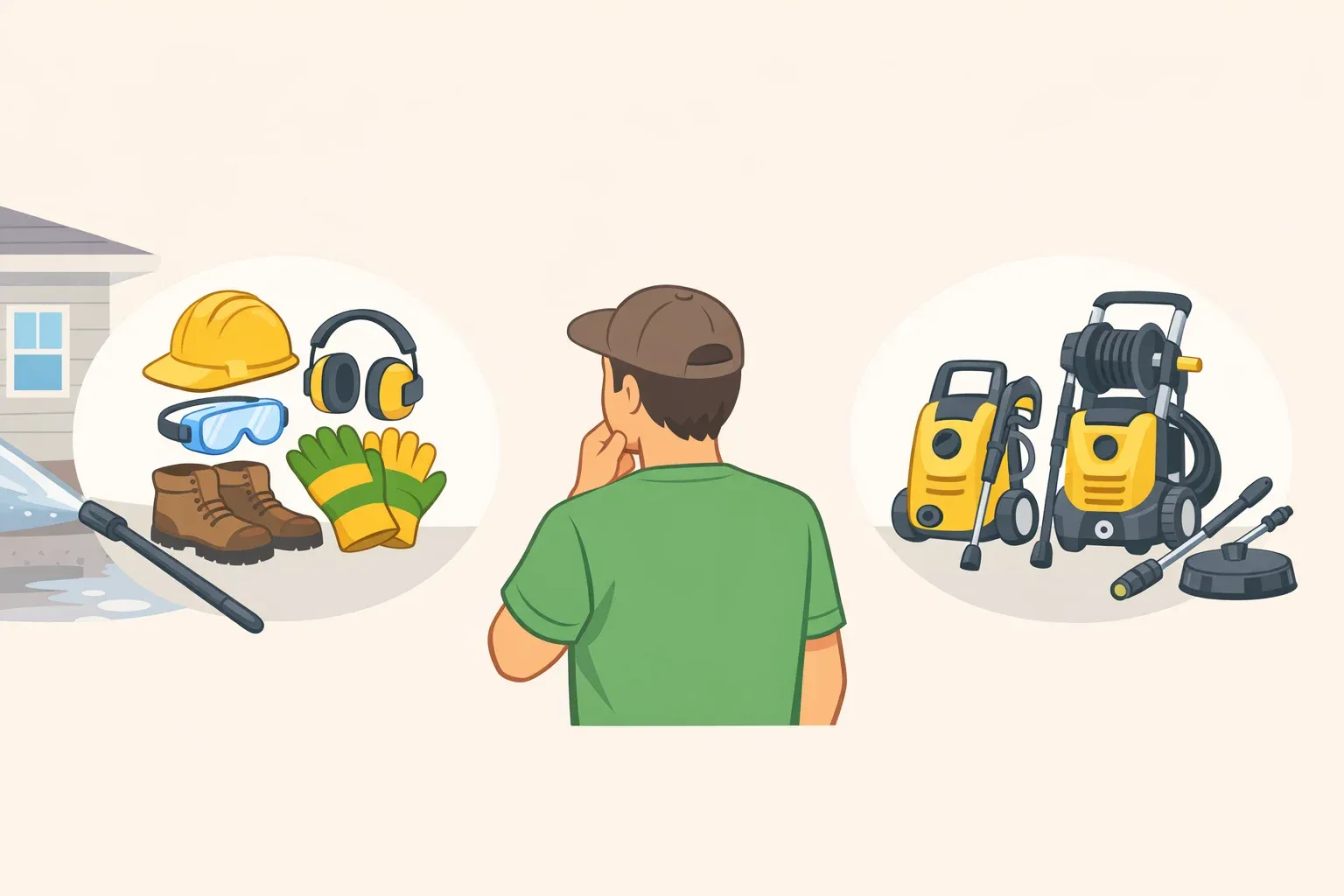
Most people shop for a pressure washer the way they'd buy a power drill: check the specs, read a few reviews, pick a price point. That approach is how they end up with a machine that sits in the garage for three years, or one that puts them in the emergency room.
The most common pressure washer buying mistakes happen before the first spray. Buyers skip four foundational decisions, in order: Should I own this at all? What type fits my actual situation? Is this machine safe to operate? And am I prepared for what ownership actually requires? Work through those questions as a sequential decision funnel, and by the end you'll have either a clear purchase to make or a solid reason not to make one.
The stakes are worth stating plainly. Pressure washer nozzles shoot water at 30 to 80 times the pressure of a standard garden hose, with enough cutting force to land a bystander in the emergency room regardless of spray setting, per Consumer Reports. HiLow Solutions puts the number of ER-treated pressure washer injuries in 2021 at 7,047. The machine you choose, and what nozzles it ships with, are not cosmetic decisions.
Mistake 1: Buying before you decide whether ownership makes sense

Before comparing models, answer a simpler question: do you actually need to own one?
Consumer Reports draws the ownership threshold at roughly three uses per year. Below that, the combined cost of buying, storing, and maintaining a machine typically exceeds what you'd spend renting or hiring out. Wash the driveway once a year and occasionally hit the patio furniture, and you're almost certainly below that line.
Professional pressure washing runs $0.15 to $0.40 per square foot, or roughly $300 to $600 for a 2,000-square-foot house, according to HiLow Solutions. For a homeowner who'd use a machine once annually, that fee is often less than the purchase price spread across ownership years, before accounting for storage and seasonal maintenance.
Some jobs are worth handing off regardless of frequency. HiLow Solutions notes that certain work is simply too complex or risky for DIY methods. Owning a machine doesn't change that calculus.
Count your realistic uses per year and list your typical jobs. Fewer than three uses annually: start at a rental counter, not a hardware store. Three or more, with routine household cleaning: read on.
Mistake 2: Choosing gas or electric based on hardware store shelf tags
Hardware store tags lead with PSI. That's not the most important buying decision for most homeowners. Machine type is.
Gas models clean about 50 percent faster than the average electric model, per Consumer Reports. For a large driveway, an extended deck job, or anything on a tight seasonal schedule, that speed advantage is real. For patio furniture, a car, or a small concrete pad, it isn't. Cold-water electric models handle the vast majority of household cleaning jobs without the trade-offs gas brings, according to Consumer Reports.
Those trade-offs are substantial enough to settle the question for many buyers. Gas models require more ongoing maintenance than corded electric or battery alternatives, typically need hearing protection during use, and emit carbon monoxide, making them genuinely dangerous in enclosed or semi-enclosed spaces, per Consumer Reports and HiLow Solutions. Electric models carry none of those risks.
There's also a noise-driven usability point worth knowing before purchase. Even a quiet electric model requires the user to stay at least 25 feet from the unit to work without hearing protection, which makes hose length a safety-adjacent spec, not just a convenience feature, per Consumer Reports.
For most homeowners with routine household jobs, electric should be the default. If the 50 percent speed advantage of gas appeals but the oil checks, fuel stabilizer, and seasonal winterization don't, settle that tension at the store. That trade-off has a way of feeling much less appealing six months into ownership.
Mistake 3: Evaluating cleaning power before checking whether the machine is safe to use
Zero-degree nozzles: the pre-purchase filter most buyers skip
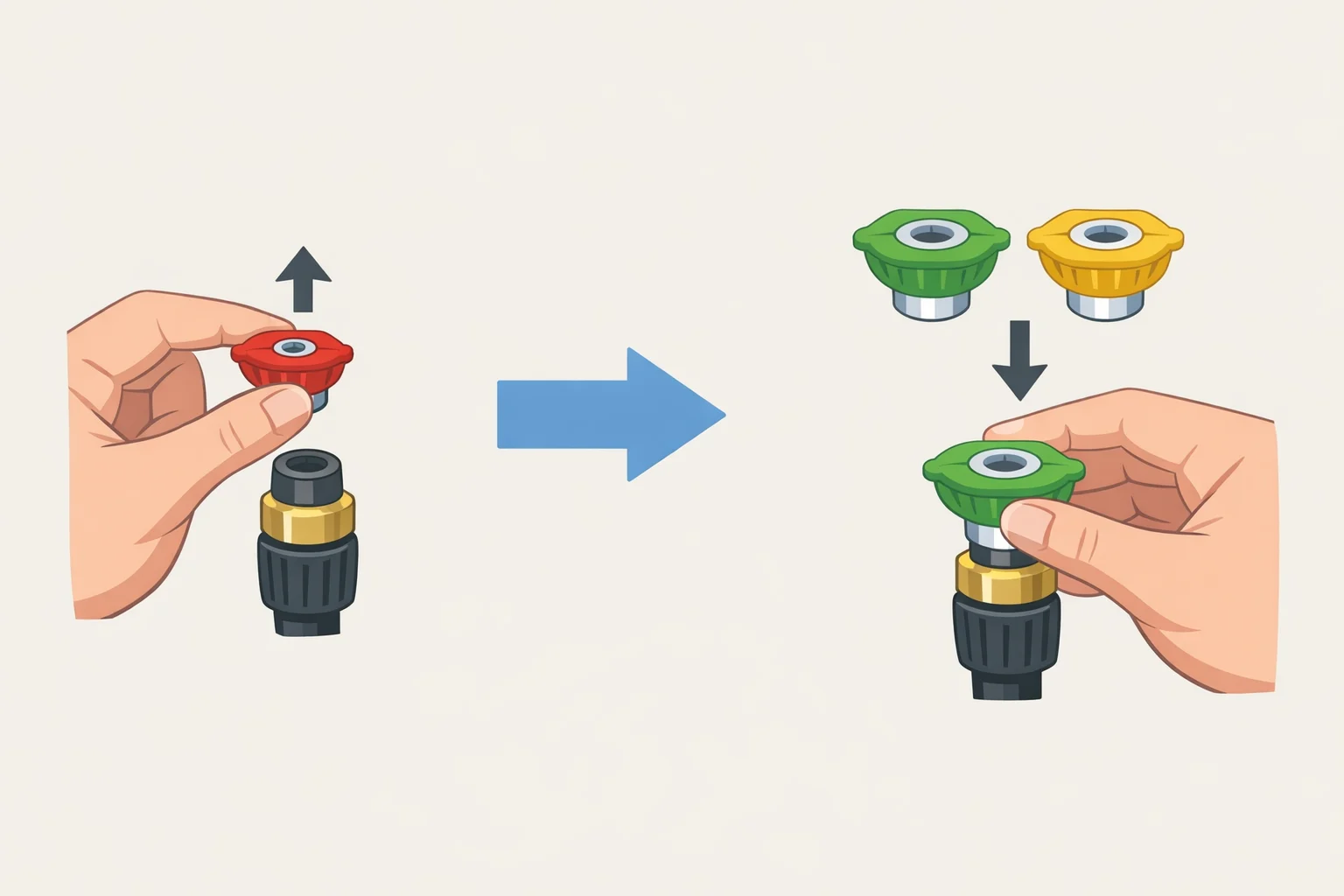
Zero-degree nozzles are the most dangerous feature on any residential pressure washer, and they ship with many models. At that spray angle, the jet can tear through skin and the tissue beneath it. That risk is serious enough that Consumer Reports withholds its Recommended designation from any washer that includes a zero-degree nozzle or setting, regardless of cleaning performance. This is a pre-purchase filter, not a usage caution.
If a model comes with the red zero-degree tip, remove it before first use. On adjustable nozzles, avoid the pinpoint end of the dial entirely. Wider spray angles take marginally longer but eliminate the laceration risk. A 25-degree tip handles general cleaning; a 40-degree tip suits vehicles and windows, per Consumer Reports and HiLow Solutions.
Replaceable nozzles make the active spray angle explicit and reduce the chance of accidentally dialing into a dangerous setting. Adjustable nozzles are more convenient, a single twist changes the pattern, but they require deliberate attention to where the dial sits, per Consumer Reports.
The practical specs buyers stop reading before they get to
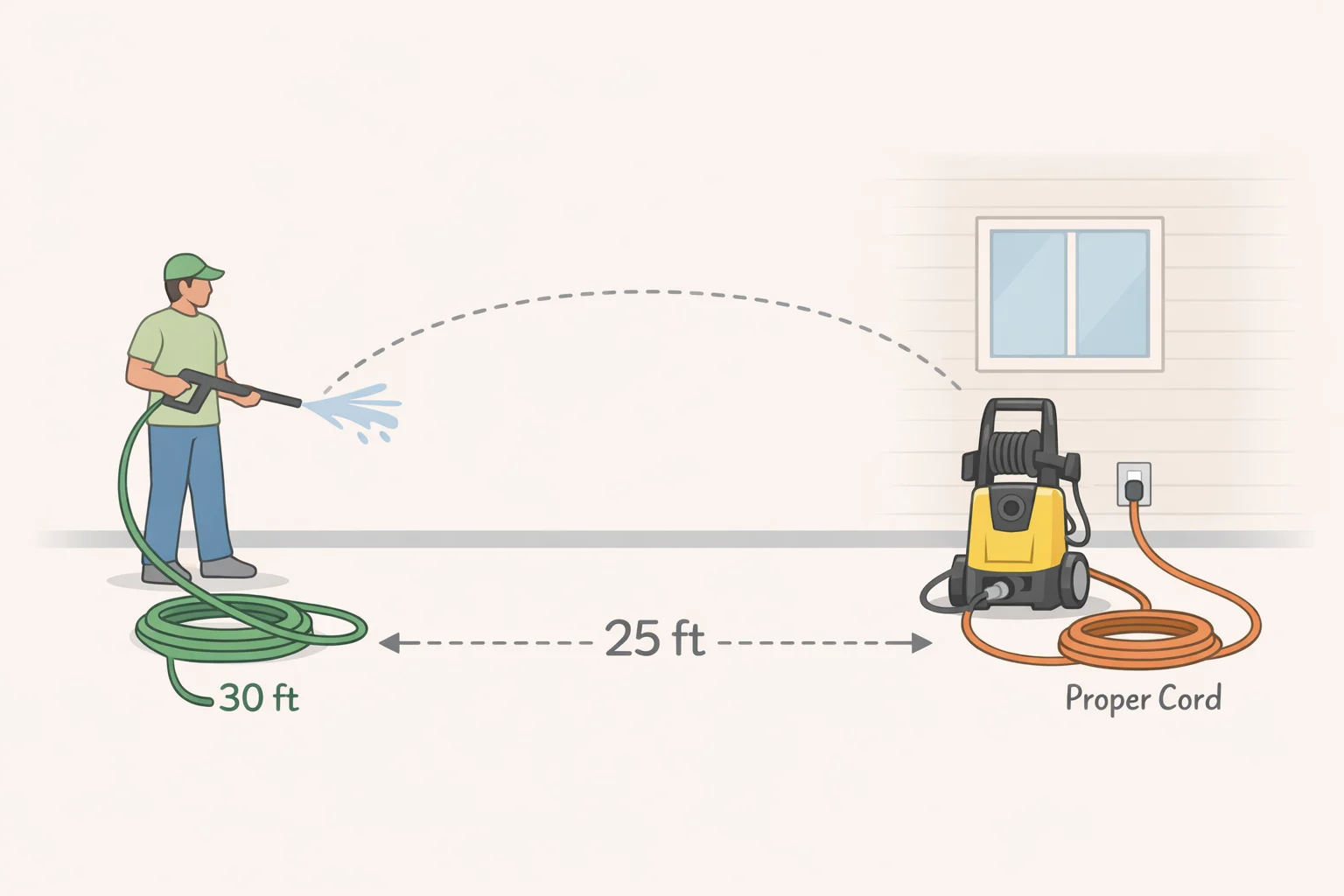
Hose and power cord length are dealbreakers, not conveniences. Consumer Reports recommends a minimum of 30 feet for both. That figure also reflects the 25-foot operating distance needed to work without hearing protection on quieter electric models. A short hose means constantly repositioning the machine or running an extension cord; either degrades usability fast.
For electric models, extension cord gauge is a hard requirement, not an approximation. An undersized cord starves the motor of power and can damage the unit, per HiLow Solutions. Verify the model's cord requirements before purchase and confirm you have the right gauge, or plan to buy it.
Wheels and integrated storage matter on heavier machines. A gas model without proper wheels becomes a two-person repositioning job. A machine without hose or cord storage creates a tangle hazard that reliably discourages use after the first season, per Consumer Reports.
Before comparing cleaning performance on any model, run through this list: no zero-degree nozzle, 30-foot minimum hose, 30-foot minimum power cord on electric models, adequate wheels on heavier units, integrated storage, confirmed extension cord compatibility.
Mistake 4: Treating maintenance as something to figure out after purchase
Choosing a machine based on speed and PSI, then discovering the maintenance gap six months in, is how a sensible purchase becomes a frustrating one.
Gas models require meaningfully more ongoing attention than corded electric or battery alternatives: oil checks, fuel management, and seasonal preparation come with the territory, per Consumer Reports. That workload belongs in the buying decision.
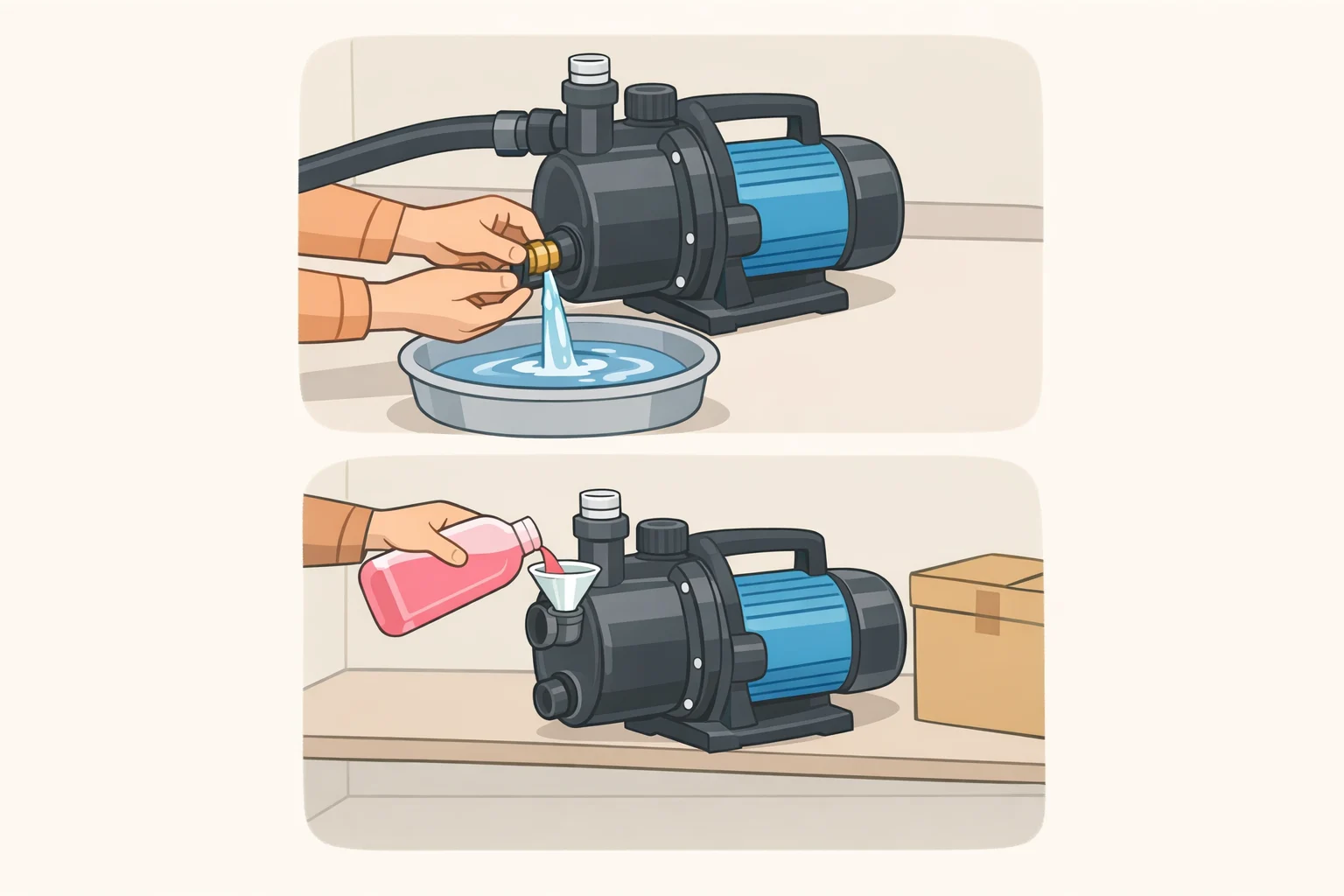
Seasonal storage requirements apply to every pressure washer, but the consequences of ignoring them are most severe on the pump. Water left sitting over winter can freeze and destroy it. Draining the pump fully and applying a pump-protection solution lubricates the seals and prevents mineral deposits that cause premature failure, per Consumer Reports. Running any model without water, even briefly, overheats the pump and damages the seals, according to HiLow Solutions.
Pre-use inspection is a recurring responsibility, not a one-time setup task. Damaged O-rings at connections can cause leaks and injury under operating pressure. Running a machine with a blocked nozzle builds pressure and can rupture the hose, per Consumer Reports. Neither failure announces itself in advance.
Three questions that cut out most bad purchases
The four mistakes above trace back to one pattern: buyers compare machines on power and price while skipping the decisions that actually determine fit. Reversing that order takes about five minutes.
Do you use a pressure washer three or more times a year? If not, rent or hire out. Ownership below that threshold rarely saves money, per Consumer Reports.
Are your jobs routine household cleaning: decks, driveways, siding, furniture? Default to electric. Cold-water electric models cover the vast majority of household jobs with less noise, no emissions, and lower maintenance overhead, per Consumer Reports. Gas is for the minority of buyers whose job scale or frequency genuinely justifies the speed advantage.
Does the model ship with a zero-degree nozzle? Consumer Reports won't recommend any machine that does. That single filter narrows the field to safer options before any other spec comparison begins.
Once machine type is settled, the productive next step is matching PSI and GPM to the surfaces you'll actually clean. Concrete, wood decking, painted siding, and vehicles each have different tolerances, and that's where spec comparisons earn their keep. That's also where a follow-up pressure washer buying guide picks up from here.




Comments
Be the first, drop a comment!