



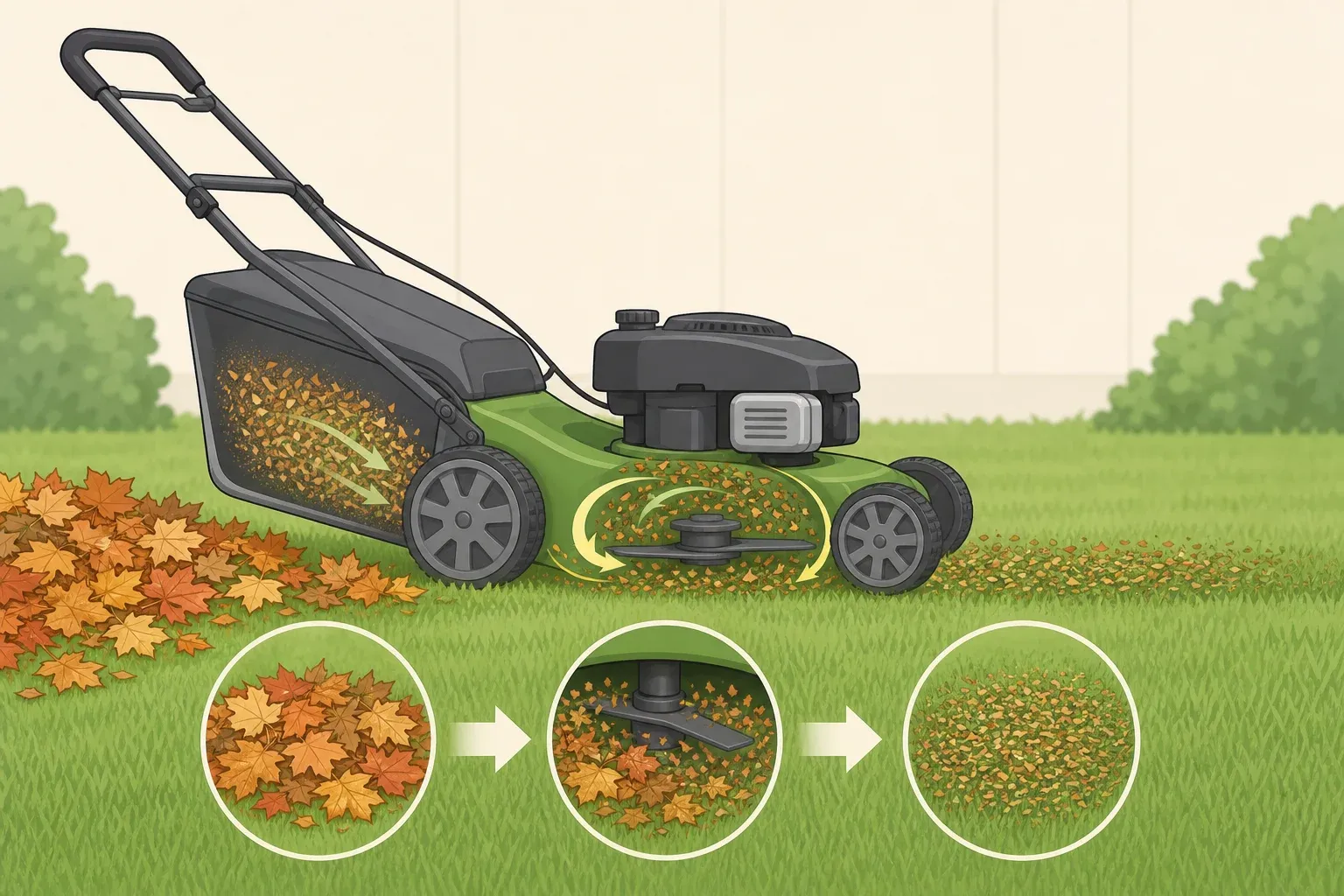
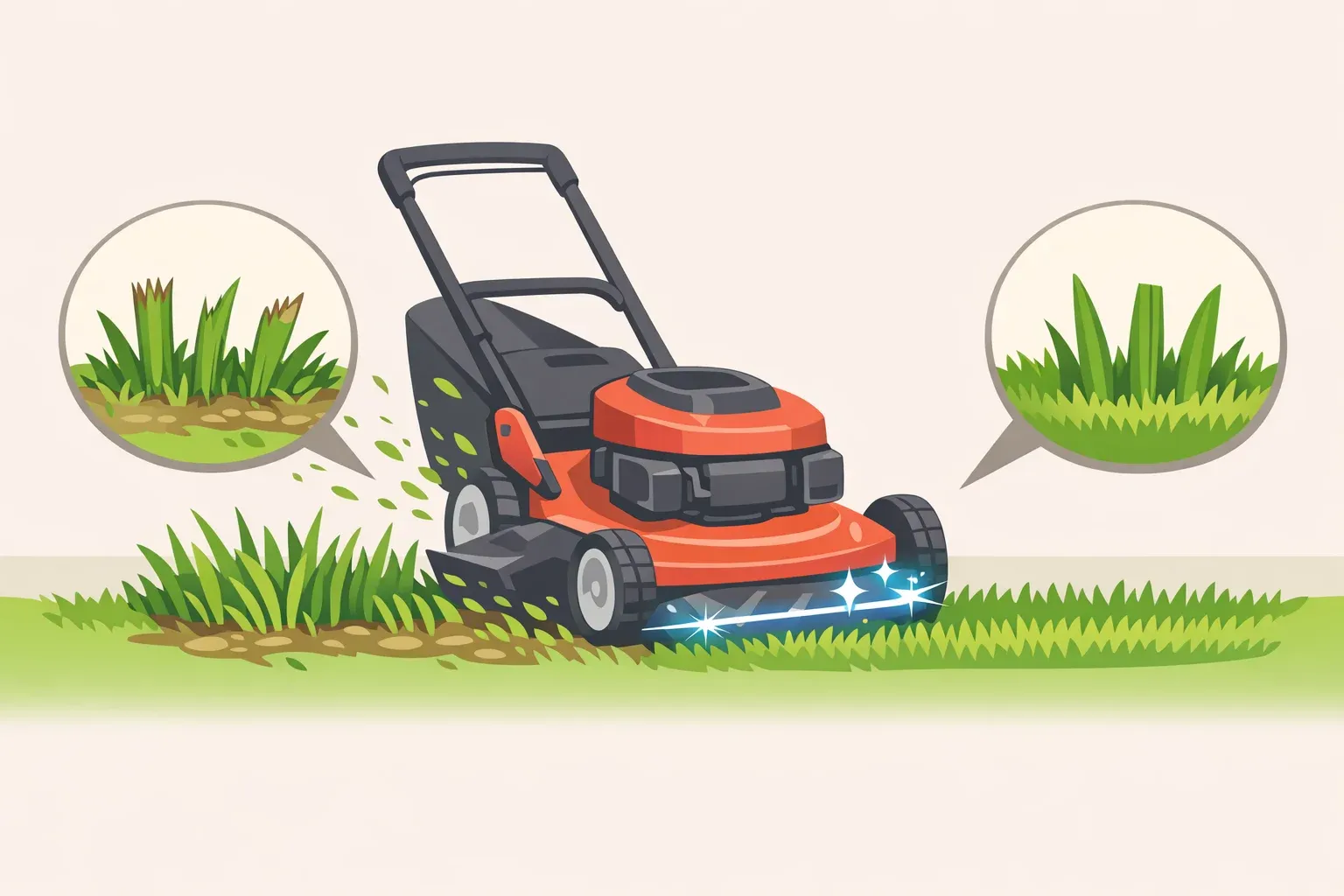
If the leaves covering the lawn are dry and thin enough that grass still shows through them, skip the rake and the bags. Learning how to mulch leaves instead of raking them comes down to running the mower over the yard so the blade shreds leaves into small pieces that settle between the grass blades instead of piling on top.
Finished compost adds nutrients and structure to soil. Freshly shredded leaves straight off a mower deck aren't finished compost, so it's worth keeping expectations modest. The clearest, most reliable benefit of mulching leaves with a lawn mower is simpler than a soil transformation: less raking, fewer bags at the curb, since the leaves stay on the property instead of leaving it. Any soil benefit beyond that builds slowly, and only if the layer stays thin enough for light and air to keep reaching the grass underneath.
This method works when the leaf layer is light and dry enough that grass or soil is still visible underneath it. A thick, matted layer of wet leaves calls for raking instead, covered further down in this guide.
This guide covers mower setup, the mowing method itself, what to do if the mower starts struggling partway through, when to switch to raking, what to do with leaves that get raked off, and how leaving shredded leaves on the lawn differs from turning fallen leaves into compost. It suits anyone already comfortable running their own mower, though it's not a great fit for mowers that can't take a mulching blade or plug, steep or slick yards, or anyone unfamiliar with changing a blade safely.
What you'll need
A mower set up to mulch. Some mowers are built for this already. Others need a mulching blade swapped in, a mulch mode switched on, or a mulch plug installed to block the side-discharge chute. Check the owner's manual to see which setup applies to the mower on hand.
The owner's manual. It's the reference for switching blades, activating mulch mode, installing a plug, and clearing the deck safely, and those steps vary enough by model that it's worth checking before assuming a setup will work.
A rake, for any spots that turn out too wet or matted to mulch.
A bag or tarp, only needed if leaves are getting moved to garden beds or a compost pile afterward.
Before you start: check the leaves and the lawn
Walk the yard before starting the mower and check a few things first.
Dry conditions. Damp or rain-soaked leaves tend to clump instead of shredding. If the leaves and grass still feel wet, wait until they dry out, or handle that section as described under raking below.
A thin layer, not a deep drift. Grass should still show through in patches underneath the leaves. If leaves have piled up deep, spread them out or rake off the excess first rather than mowing through a drift in one pass.
Whole leaves, not a soggy mat. If leaves have already matted into a wet layer that doesn't shift when nudged with a rake, mowing over it won't spread it out evenly. Rake that patch off instead.
Hidden obstacles. Leaves can bury sticks, stones, toys, and low branches that are easy to miss until the mower hits them. Walk the area first and clear anything that shouldn't go through the blade. If a section can't be checked safely, such as a slope with unsure footing, rake that spot by hand rather than mowing it blind.
Before the first pass, keep hands and feet clear of the mower deck at all times. If the deck needs to be checked or cleared, shut the engine off, wait for every moving part to stop completely, and follow the owner's manual's procedure for disconnecting the spark plug wire or removing the battery before reaching anywhere near the blade. Avoid mowing on wet grass or slopes where footing feels unstable, since leaves can hide uneven or slick ground until a foot slips on it.
Mulching leaves with a lawn mower: step-by-step
Confirm the mower is set to mulch. Attach the mulching blade, switch on mulch mode, or install the plug according to the owner's manual before starting the engine. A standard blade without a mulching setup often leaves bigger, unshredded pieces behind, so check the manual first.
Raise the deck height if leaf cover hides the grass. Leaves make it hard to judge how tall the turf underneath actually is. Check the manual for a higher deck setting to avoid cutting into grass that's out of sight.
Mow in slow, overlapping passes. Overlap each path so the mower catches leaves the previous pass missed. If the mower handles the material without laboring, a second pass over thicker patches breaks fragments down further instead of leaving big chunks on top of the grass.
Check the lawn after each pass. Success looks like small leaf fragments settled between the grass blades, with turf still visible, not a solid unbroken mat. That visual check matters more than any fixed mowing schedule.
Mow again before the layer builds up, rather than saving it for one big cleanup. Stop mulching a section once grass is no longer visible underneath the fragments, and switch to raking that spot instead.
If the mower struggles
Watch for signs that mean it's time to stop rather than push through. If the engine labors, the deck clogs repeatedly, or large leaf pieces keep coming out unshredded, stop mowing that spot.
Turn the mower off and wait for every moving part, including the blade, to stop completely. Follow the owner's manual's procedure for disconnecting the spark plug wire or removing the battery before inspecting or clearing the deck. Never reach under the deck while the mower is connected or could restart.
Once the mower is safely shut down, remove some of the leaves by hand or rake, then reassess. Don't keep running the mower over a spot that stays damp, clogged, or too deep; clearing material by hand works better than repeating passes over the same wet clump.
Should you mulch or rake leaves?
A few situations call for raking instead of mowing:
Dry and scattered leaves: mulch them.
Wet but loose leaves: wait until they dry, then mulch.
Deep, clumped, or matted leaves: rake off some or all of the layer first.
Mower struggling or leaves coming out in large pieces: stop and reduce the leaf volume before continuing.
Grass no longer visible under the fragments: rake that section clear.
A heavy leaf layer is one reason to switch methods. If leaves are piled deep across most of the yard, don't try to mulch that whole volume where it lies. Rake or blow off the excess first, then mulch whatever thinner layer is left so grass stays visible once the mower passes over it.
Wet or matted leaves belong in the same category. Leaves that are already clumping or partly broken down won't shred cleanly, and a soggy mat sitting on the grass keeps the lawn covered longer than a loose, scattered layer would. Rake these off instead of running the mower through them.
Check the lawn again after mowing, and again after each round of leaf fall that follows. If a patch shows a continuous mat, grass that's no longer visible, or leaf fragments still sitting in large clumps, rake that patch clear rather than mowing over it again.
Mulching vs. turning fallen leaves into compost
Leaving shredded leaves on the lawn is not the same as making finished compost. Mulching shreds leaves in place and leaves them on the grass the same day. Composting means raking leaves into a separate bin or pile, often mixed with other yard trimmings, and letting them break down over time into finished compost.
Composting diverts organic material like yard trimmings from landfills, where it would otherwise add to methane emissions. That's a real benefit of composting yard waste generally; it doesn't mean one season of mower-mulched lawn clippings delivers the same result. Anyone after the fuller soil benefits the EPA describes for finished compost is better off routing raked leaves into an actual compost pile rather than relying on mower mulch alone.
What to do with excess leaves
Leaves raked off the lawn don't have to end up bagged at the curb, though that's still an option where municipal yard-waste pickup is available. Many gardeners spread raked leaves over open soil in garden beds instead. As a general precaution, keep piled leaves off plant stems and tree trunks; piling organic material directly against bark can hold moisture there longer than a thin layer spread over open soil.
A third option is starting a compost pile with the leaves, layered with other yard trimmings or kitchen scraps, and letting it break down separately from the lawn.
Finish, use, and maintain
A mulched lawn is done for the day once fragments are scattered evenly and grass shows through them. Rake only the spots where shredded leaves are still sitting in clumps or fully covering the blades; the rest of the yard doesn't need more attention until the next round of leaves falls.
Once mulching is finished for the session, shut off the engine, wait for the blade to stop completely, and follow the manual's procedure before clearing the deck or storing the mower.
If leaves have matted together since the last mowing, remove the mat before running the mower over that spot again. Save full raking for leaf drops that are heavy, wet, or already matted, and mow the rest a little at a time as leaves keep falling through the season.






Comments
Be the first, drop a comment!