



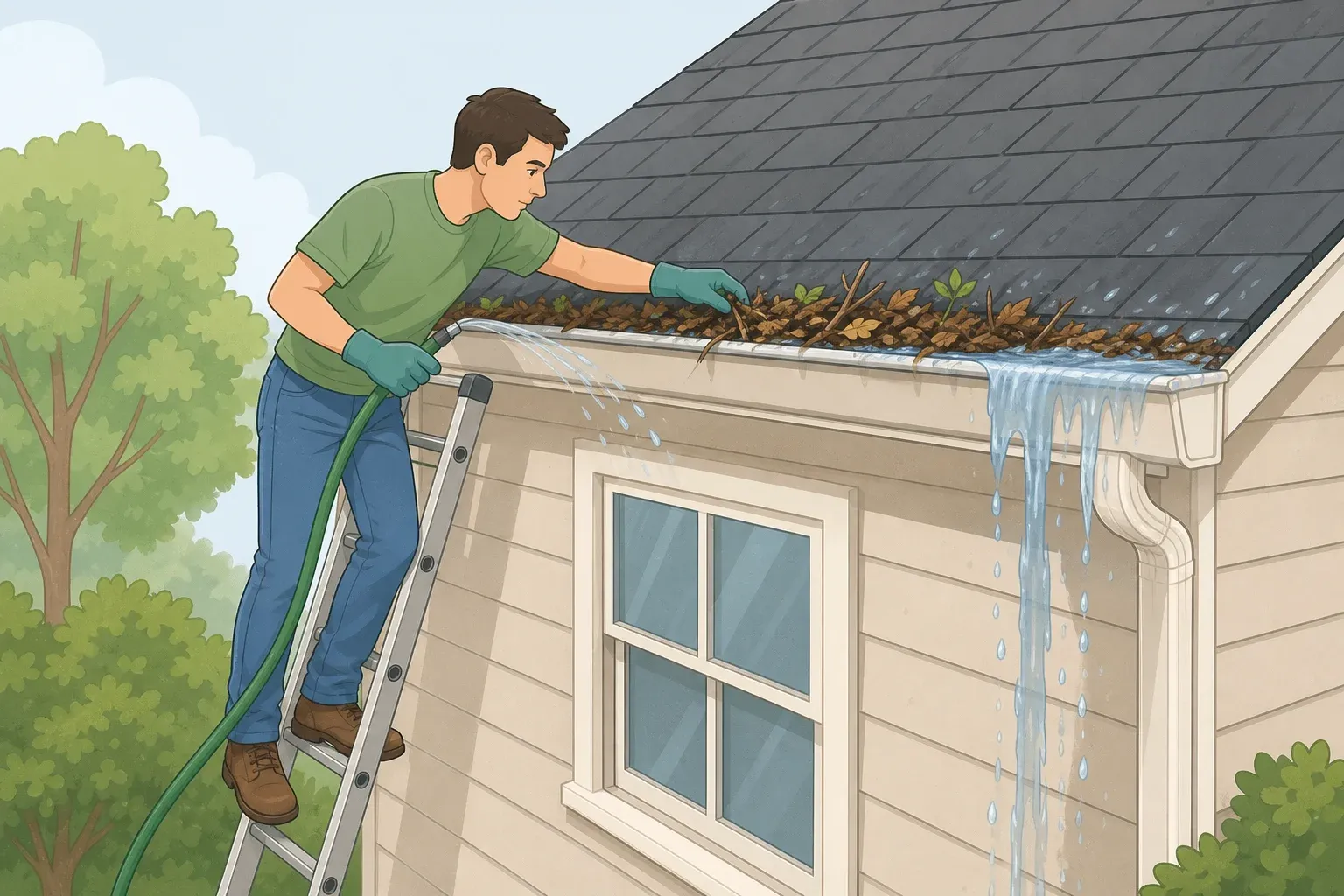
Before autumn leaf drop turns a small gutter problem into a bigger repair, walking the house with a ladder and a garden hose to check for the handful of gutter problems to check before fall is worth the half hour it takes. A loose hanger, a hairline crack, or a clogged downspout is easier to address before leaves and heavy rain put the system under additional stress. Wait until after the leaves pile up and the season's first hard rain hits, and the same small issue can turn into a soaked fascia board or water pooling against the foundation.
Gutters exist for one job: catch roof runoff and carry it away from the roof edge and the foundation. When that path gets blocked or broken, the water doesn't just disappear; it finds another route down the house, and that's rarely good news for siding, fascia, or a basement wall.
Overflow during ordinary rainfall isn't normal, and it's worth investigating, since a gutter that keeps overflowing can lead to water damage on the roof, walls, or foundation over time. Water that spills behind the gutter channel instead of dropping into the trough is one way a fascia board rots, a repair the same source lists among the gutter problems that can run into thousands of dollars.
This guide walks through five checks: clogs, sagging or bad pitch, rust and holes, bends and cracks, and a separate look at gutter guards if the home has them. Each one covers what to look for, what's reasonable to check without climbing higher than necessary, and when the smarter move is calling a gutter professional instead of pushing forward on a ladder.
What you'll need before you start
Settle the ladder question before gathering anything. Working from the ground, clearing debris near the downspout and running the hose test, is beginner-friendly. Standing at roof height to look closely at the trough, hangers, seams, or fascia board is a bigger step up, and planning the job at ground level first, laying out tools, checking footing, and clearing the area below before climbing anything is the standard way to cut down on risk during gutter work. If the home has steep rooflines, stands more than two stories, or the ladder work doesn't feel steady, stick to what's visible from the ground and bring in a professional for the rest.
Gather a sturdy extension ladder, work gloves, safety glasses, a garden hose, and a gutter scoop or small trowel. If a minor rust spot or hairline crack turns up, an exterior-rated gutter sealant is worth having on hand, though whether it's the right fix depends on the gutter material and what the product label allows.
Time this check for before peak leaf drop and before the season's first heavy rain. Home Inspection Insider recommends a gutter cleaning and inspection at least once a year even with guards installed, and separately notes that guard types like brush, mesh, and perforated styles typically need clearing once or twice a year on top of that.
Gutter problems to check before fall
The five checks below cover common problems homeowners run into heading into fall. Work through them in order, since a simple clog can look like a bigger issue, like bad pitch, until it's ruled out first.
1. Clogged gutters and downspouts
Check: Look inside the trough and at the downspout opening for leaves, roofing grit, shingle debris, or standing sludge. This is usually seasonal buildup, worse under overhanging trees or on gutters without guards.
Safe DIY move: Clear the trough by hand or with a scoop, working from the downspout outward so debris doesn't get pushed deeper into the pipe. Then run a hose into the gutter and check that water has a clear path through the downspout, the same clear-and-test method Home Inspection Insider recommends before any gutter work.
What success looks like: Water flows out the downspout steadily with no pooling or backup left in the trough.
If water still backs up: clear what's visible, then check that the downspout outlet itself is open at ground level. If it's still blocked, that's a job for a professional gutter cleaning rather than guessing at what's stuck further down.
Guard note: Don't skip this step because guards are installed. Small debris like pine needles can slip through mesh or screen guards and build up inside the channel, creating a blockage that isn't visible from above, Home Inspection Insider points out.
Call a pro if: the hose test keeps showing backup after clearing everything reachable and the obstruction can't be located. A professional gutter cleaning service can clear and check the full run without guesswork.
2. Sagging gutters or incorrect pitch
Check: Look for a section that sits visibly lower than the rest, gaps between the gutter and the fascia board, or water that sits in the trough after the hose test instead of draining toward the downspout.
What it may mean: A gutter that's clean but still holds water or overflows during ordinary rain isn't behaving normally, and it's worth investigating rather than something to wait out.
Safe DIY move: Note where the sag starts and ends, and take a photo from the ground if possible. That's useful information to hand a professional, since the actual fix, adjusting hangers or resecuring the gutter, depends on the condition of the fascia board underneath, which isn't something to judge from a quick look.
What success looks like: A gutter professional can confirm whether the slope, hangers, and fascia are sound and correct the pitch if they aren't.
Call a pro if: a section looks like it's pulling away from the house, more than one section sags, or the fascia underneath looks soft, spongy, or shows visible rot. Soft or rotted fascia moves the repair beyond the gutter itself.
3. Rust, corrosion, and holes
Check: Look for rust spots, flaking finish, or small holes along the trough and at the seams. Home Inspection Insider lists rust, holes, bends, and cracks as conditions to catch before wetter months set in.
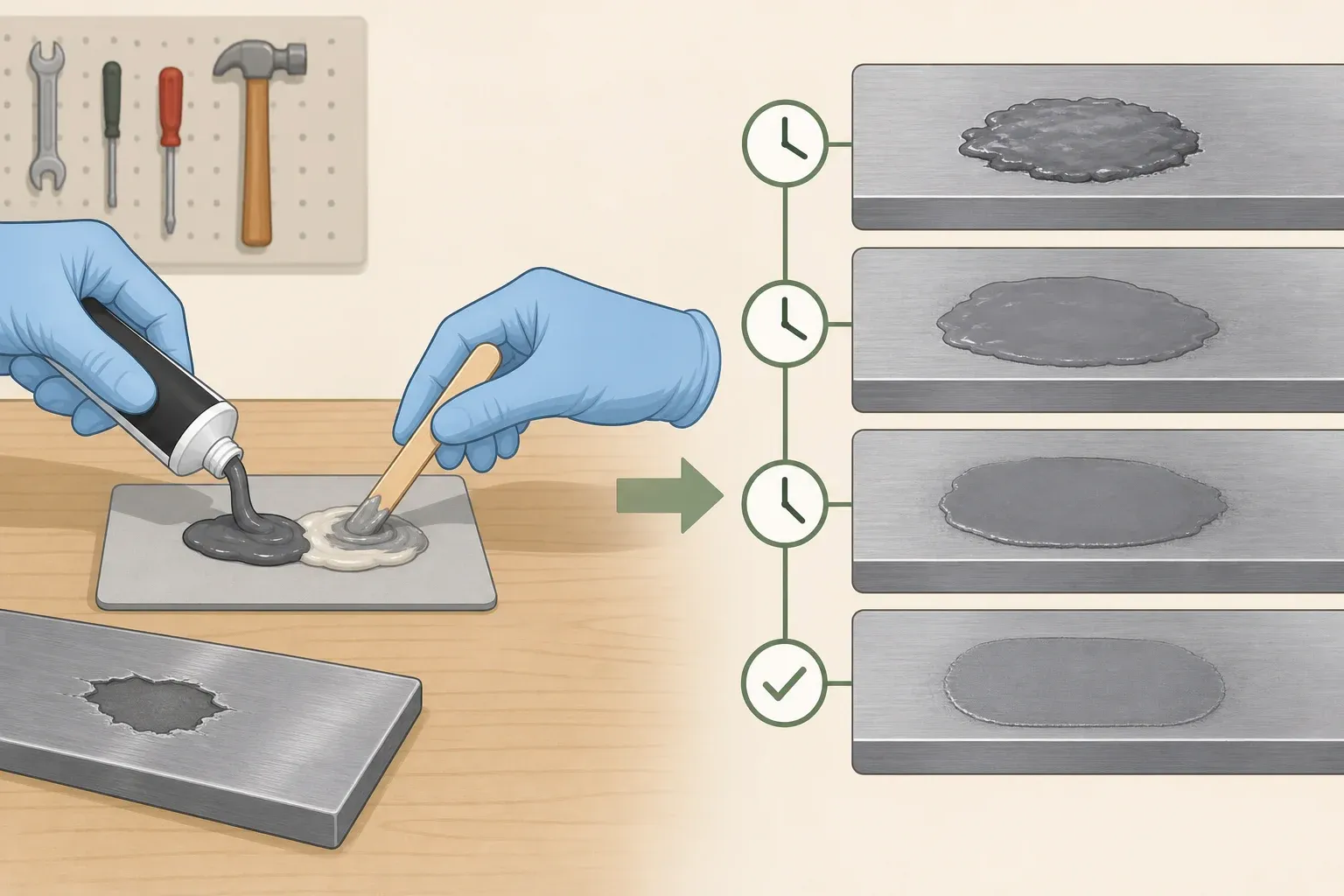
Safe DIY move: Photograph any rust or holes and note the gutter's material: aluminum, steel, or galvanized. For a single small pinhole on an otherwise sound section, an exterior-rated gutter sealant labeled for that material may be worth trying, following the product's instructions and cure time exactly. Anything beyond one isolated spot is better handed to a professional than patched on a guess.
What success looks like: After a label-directed repair cures, a hose test shows no drips from underneath the patched spot.
Call a pro if: rust or holes cover more than a small area, or a section flexes or crumbles under light pressure. Corrosion at that stage generally means the section needs replacing rather than patching.
4. Bends and cracks
Check: Look for dents, bent sections, or cracks along the trough, especially near corners, seams, or end caps.
Safe DIY move: Photograph the damage and note where it sits relative to seams or end caps. A short, stable hairline crack on a securely attached section is sometimes treated the same way as a small rust spot, using a sealant rated for the material and applied per the label. A bent or dented section is better left for a professional to assess than reshaped by hand, since forcing thin gutter material can crack it further.
What success looks like: After a label-directed repair cures, the section holds its shape under light pressure and a hose test shows no new leak point.
Call a pro if: a seam has split open, a bend is blocking water flow, or damage sits near a joint or end cap. Those situations usually call for replacing the section.
5. Gutter guard problems
Check: If the home has gutter guards, look for debris piled on top, water sheeting over the front edge instead of dripping through, and buildup inside the channel underneath.
What it may mean: Guards get marketed as low- or no-maintenance, but Home Inspection Insider notes that most guard types still need clearing once or twice a year, just less often than an unguarded gutter.
Safe DIY move: Clear debris off the top of the guard by hand, then watch how it performs during an actual rain, or run a hose test across the surface. Most gutter guard systems struggle to keep up with heavy rain or a large roof's volume of runoff, so a guard that passes a light hose test but sheets water during a real storm isn't necessarily broken. Check first for debris covering the mesh, a guard style that doesn't match the gutter, or a slope problem before assuming it's just a design limit.
Weight check: Pair this with the sagging check above. Ice sitting on top of a guard over winter adds weight that can pull the gutter away from the fascia and throw off its slope.
Metal roof note: On a metal roof, the guard should sit flat directly on the gutter rather than rising above the roof edge. A raised edge lets water back up behind the gutter, which can rot the fascia.
Call a pro if: the guard tucks under the first row of roof shingles and lifted or damaged shingles turn up nearby. That kind of installation can void a roof or shingle warranty if it damages shingles or contributes to a leak, so have a roofer or the guard installer look before touching anything.
Signs of gutter damage that need a pro
A fall-ready gutter system drains cleanly during the hose test, doesn't overflow during ordinary rain, and shows no active rust, holes, bends, or cracks anywhere along the run. Guard-equipped systems aren't exempt from any of that; cleaning and inspection are still expected on most guard types, just at a lighter once- or twice-a-year pace.
A hose test only confirms basic flow on a dry day. The next real rain shows how the system performs under actual runoff, so watch the gutters during and right after it for anything the drier check missed: overflow at a specific spot, water sheeting over a guard, or a section still holding water once the rain has stopped.
If any of these conditions persist after debris is cleared, stop testing fixes and arrange a professional inspection. Recurring overflow, a sag that keeps coming back, soft or spongy fascia, spreading corrosion, or a guard problem involving lifted shingles or metal-roof backflow all fall into that category.
Fall gutter maintenance checklist
Inspect and clean before peak leaf drop.
Run the hose test and confirm water clears the downspout.
Watch performance during the next real rain.
Recheck once most nearby trees are bare, since a clean September gutter can still get overwhelmed by a second wave of leaves in November.
Record any light surface dulling or trace rust with no holes and monitor it between checks; if it spreads, flakes, or opens into a hole, that's when to arrange an assessment.










Comments
Be the first, drop a comment!