



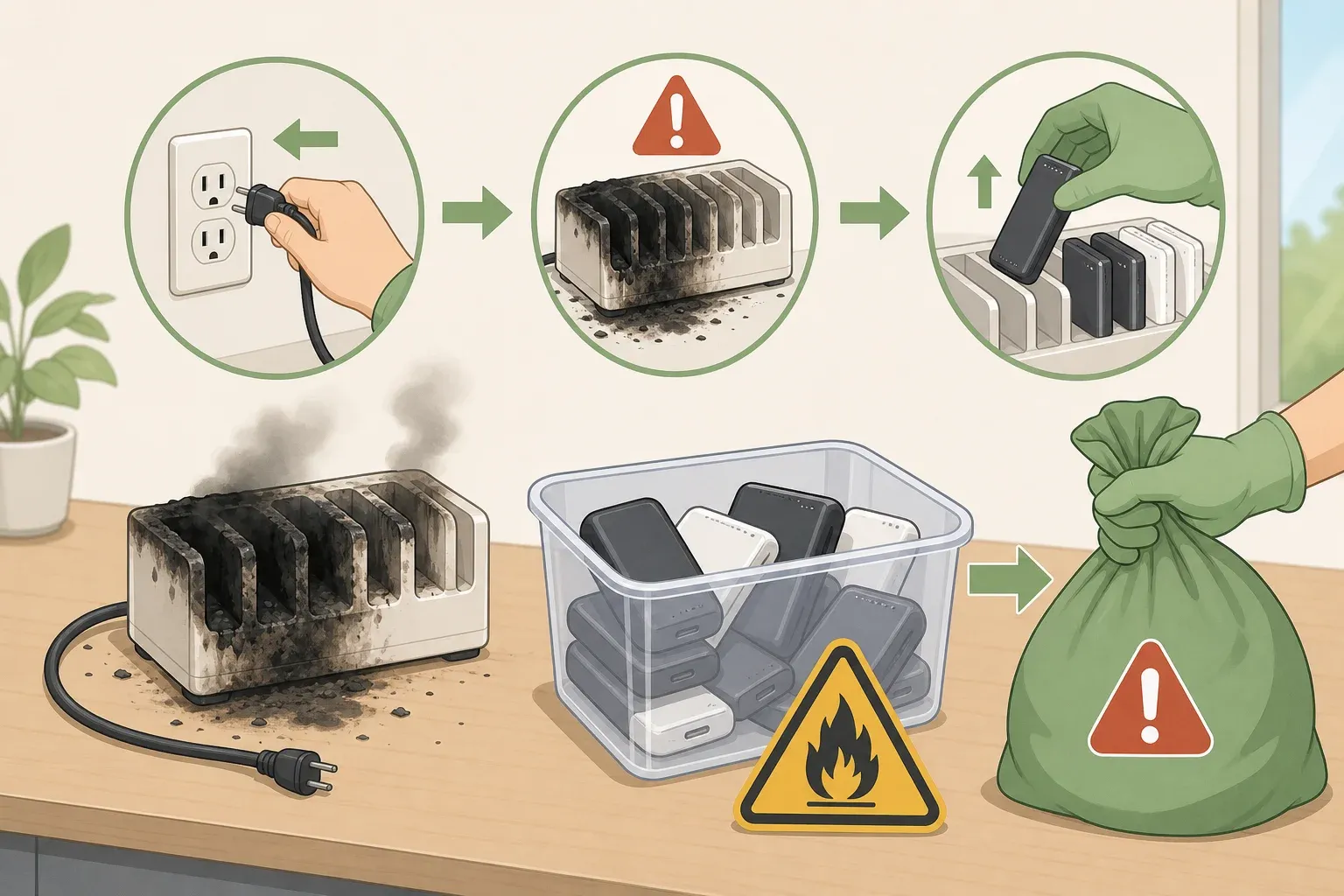
If you're building a list of things you should never leave plugged in, the Hererod PW40 and EW40 need stronger treatment than that. The U.S. Consumer Product Safety Commission says owners should stop using these jump starters and power banks entirely and dispose of them through appropriate hazardous-waste channels.
CPSC issued its warning on Sept. 17 after receiving 16 reports of fire involving the devices, including seven reports of property damage. About 12,500 units were sold through Amazon.com, CarKart.com, and eBay.com between August 2024 and August 2026.
The CPSC safety warning says the products' internal lithium-ion batteries can explode and ignite, creating a risk of serious injury or death.
This is not a formal recall. CPSC says the Chinese manufacturer, Qianjiang Simiaole Network Technology Co., Ltd., has been unresponsive to its requests for a recall or additional product information.
That means there is no repair, replacement, or refund program listed in the warning. CPSC's instruction is to stop using the affected devices and dispose of them properly.
For broader context, electrical failure or malfunction was associated with an estimated average of 46,700 US home fires per year from 2015 through 2019, causing 390 civilian deaths and $1.5 billion in direct property damage annually, according to the National Fire Protection Association.
Those figures describe electrical fires generally. They do not measure the risk from these Hererod devices specifically.
If a lithium-ion device is already smoking, popping, hissing, venting gas, or on fire, move away, get everyone out, and call 911. Do not try to carry a failing battery outside.
Step 1: identify a Hererod PW40 or EW40
Start with the brand and model details rather than assuming every jump starter or power bank is involved.
The warning applies specifically to:
Hererod PW40
Hererod EW40
CPSC says both models can charge small electronic devices and jump-start vehicles.
The PW40 also includes a tire-inflation function and has PW40 printed on the front.
The EW40 does not inflate tires and does not display its model number on the device.
If you're unsure, compare the unit with the photos on CPSC's warning page rather than charging or testing it to identify the model.
This warning does not apply to every portable charger, jump starter, or power bank.
What to do if you own one
If you confirm that the device is a Hererod PW40 or EW40, stop using it immediately.
That means:
Don't charge it.
Don't use it to jump-start a vehicle.
Don't use it as a power bank.
Don't use the PW40's tire inflator.
Don't test it "one more time."
If it is plugged in and appears completely normal, disconnect it if that can be done safely.
Then keep it out of use while you arrange proper disposal.
CPSC does not provide a repair or replacement procedure because the manufacturer has not cooperated with its recall requests.
If the battery looks damaged, don't keep handling it
Lithium-ion battery problems can escalate quickly.
The U.S. Fire Administration says warning signs include:
Excessive heat
Bulging or other shape changes
Leaking
Cracking
Popping or hissing
Visible gases
Smoke
Unusual odors
If a unit is smoking, venting, popping, hissing, or burning, evacuate and call 911.
USFA advises people not to try to extinguish a lithium-ion battery fire themselves.
If the unit is swollen, unusually hot, leaking, or otherwise damaged but is not actively burning, don't charge or continue using it.
Contact your local household hazardous-waste program and tell them specifically that you have a defective lithium-ion device before attempting to transport it.
Don't put a recalled Hererod unit in the trash
CPSC gives unusually specific disposal instructions for these products.
Do not put a PW40 or EW40 in:
Household trash
Curbside recycling
General recycling streams
Used-battery collection boxes at retailers
Home-improvement-store battery bins
CPSC says defective lithium-ion batteries require different disposal because they present a higher fire risk than ordinary used batteries.
Instead:
Contact your municipal household hazardous-waste collection center.
Tell them the device contains a defective lithium-ion battery.
Ask whether they accept it.
Follow their instructions for handling and transport.
If they don't accept it, contact your municipality for another disposal option.
Do not simply drive to a collection point without checking first.
Report a fire, injury, or product defect
If the Hererod unit caused a fire, injury, or other safety incident, CPSC asks consumers to report it through SaferProducts.gov.
A report can help CPSC track the scope of a product hazard even when the manufacturer is not cooperating with a recall.
Step 2: unplug countertop appliances when they're not in use
The Hererod warning is product-specific.
It does not mean every plugged-in appliance or charger poses the same kind of battery hazard.
But while checking the house for the recalled unit, it is a reasonable time to deal with a separate electrical-safety habit.
The Electrical Safety Foundation International recommends unplugging countertop appliances when they aren't being used.
Examples include:
Toasters
Coffee makers
Air fryers
Blenders
Electric kettles
Other small countertop appliances
Follow the manufacturer's instructions if a device is specifically designed to stay powered continuously.
A refrigerator, for example, obviously belongs in a different category from a toaster.
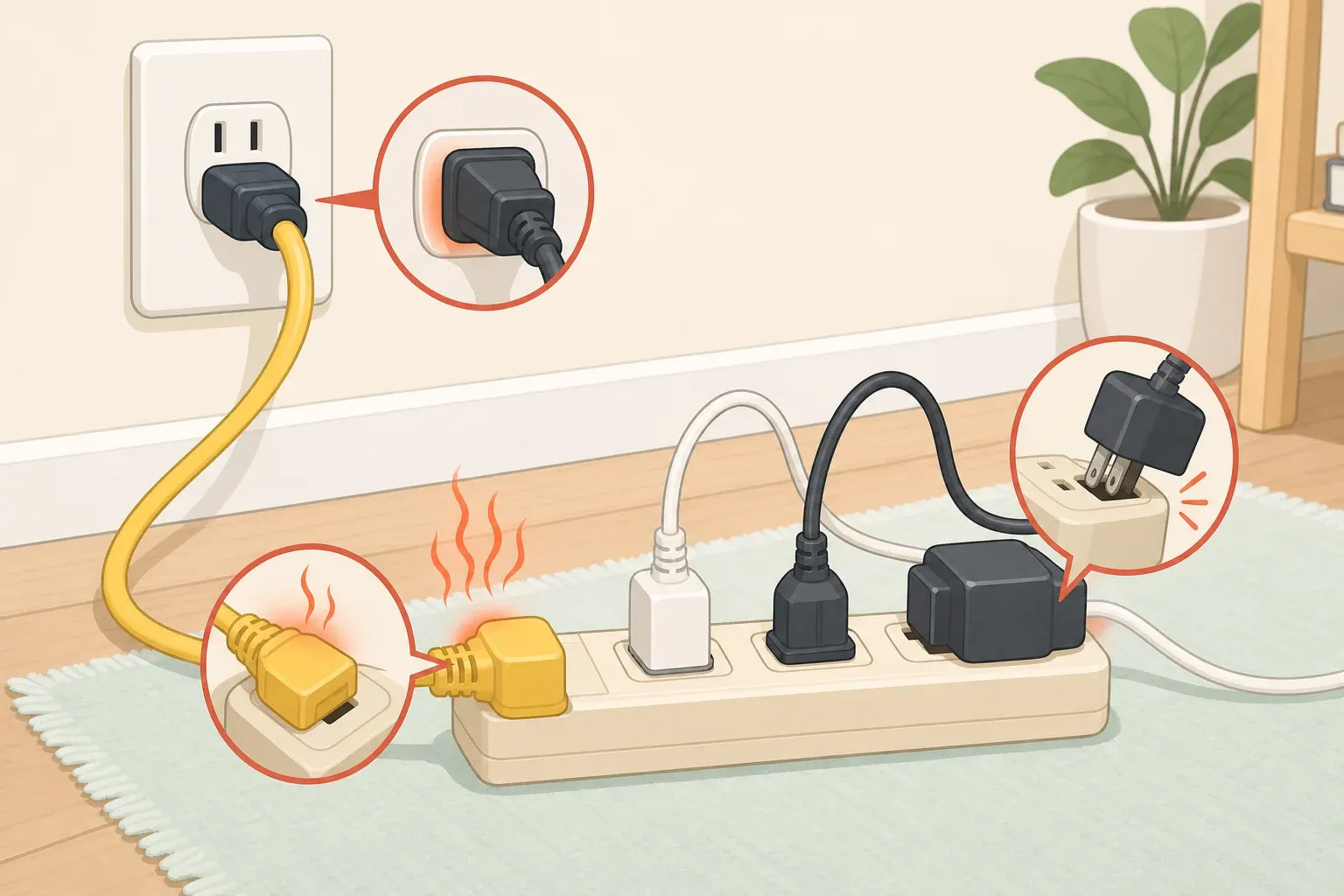
Check the cord and plug while you're there
When unplugging a small appliance, look at its cord and plug.
Watch for:
Fraying
Cracking
Exposed conductors
Melted or deformed plastic
Scorching
Loose plug blades
ESFI advises taking damaged electrical appliances out of use and having them repaired or replaced.
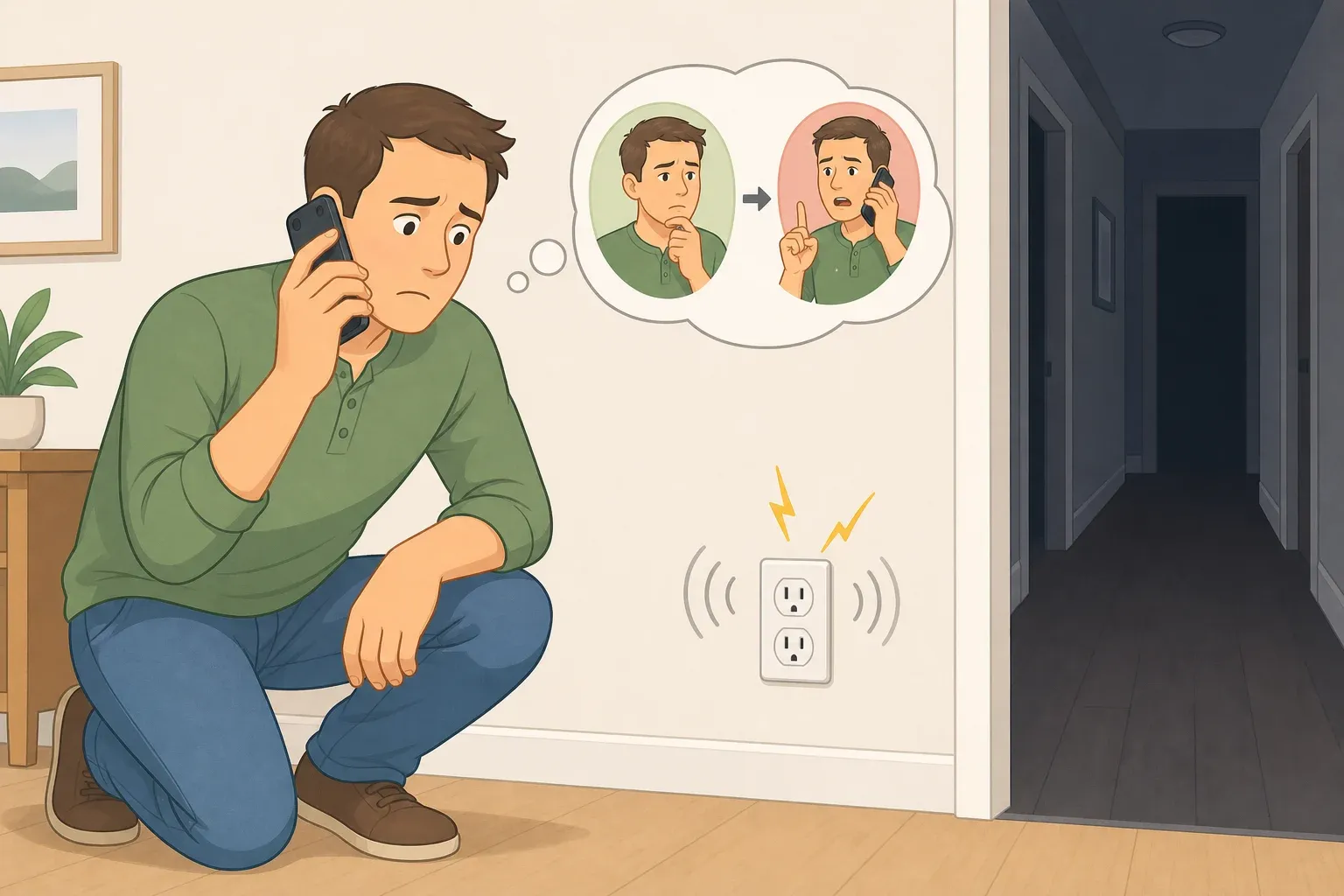
Also stop using an outlet that shows warning signs such as heat, discoloration, a burning odor, sparking, or unusual buzzing.
Have a qualified electrician investigate rather than repeatedly plugging something back in to see whether the problem returns.
If there is active smoke, fire, or dangerous sparking, leave the area and call the fire department.
Keep countertop appliances away from heat and water
ESFI also recommends:
Keeping combustible items away from the stovetop
Keeping appliance cords away from hot surfaces
Plugging countertop appliances into appropriate GFCI-protected outlets
Confirming appliances are off when cooking is finished
Never disabling a smoke alarm because cooking triggered it
Cooking remains the leading cause of reported home fires and home-fire injuries.
ESFI cites NFPA data showing ranges and cooktops account for 62% of home cooking fires.
That is a separate hazard from the Hererod battery warning, but it makes the kitchen a sensible place for a quick electrical check.
Don't leave active cooking unattended
Unplugging an idle toaster does not replace supervising cooking.
ESFI recommends staying in the kitchen while actively cooking and checking that appliances and burners are off when you're finished.
If you have to leave while frying, grilling, or broiling, turn the cooking equipment off.
And don't remove or disable a smoke alarm because it is inconvenient during cooking.
The U.S. Fire Administration recommends using the alarm's hush function and improving ventilation rather than defeating the alarm.
Step 3: check whether you can identify AFCI protection
A final look around the house can give you useful information about another type of electrical protection: the arc-fault circuit interrupter, or AFCI.
AFCIs are designed to detect hazardous electrical arcing and shut down the affected circuit before the fault starts a fire.
The Consumer Product Safety Commission estimates that proper AFCI protection could prevent roughly half of home electrical fires, according to ESFI.
That is a national estimate, not a prediction for any particular home.
Where current electrical codes call for AFCIs
Current National Electrical Code requirements include AFCI protection on specified branch circuits serving areas such as:
Kitchens
Family rooms
Dining rooms
Living rooms
Bedrooms
Closets
Hallways
Laundry areas
Recreation rooms
Similar living spaces
That does not mean every existing home must automatically be retrofitted to the newest NEC edition.
Electrical-code adoption varies by state and municipality, and requirements can depend on when a home was built, when electrical work was performed, and whether circuits were added, replaced, or extended.
An older home can therefore be legal under the code that applied when it was built while still lacking protection required in new construction today.
What you can check without opening the panel
This is a visual check only.
Do not remove the electrical panel cover or touch internal wiring.
From the outside, look for breakers labeled:
AFCI
Arc Fault
CAFCI
Combination AFCI
An AFCI breaker may also have a TEST button.
AFCI protection can also be provided through certain AFCI receptacles.
But seeing one AFCI breaker or receptacle does not tell you every room or outlet it protects.
Likewise, failing to see obvious labeling does not prove that a circuit has no AFCI protection.
Don't assume every TEST/RESET outlet is an AFCI
This is an easy point to confuse.
Many kitchen, bathroom, garage, and outdoor receptacles with TEST and RESET buttons are GFCIs, not AFCIs.
A GFCI is primarily designed to protect people from electric shock.
An AFCI is designed to reduce fire risk from dangerous electrical arcing.
Some devices provide both functions, but you need to read their markings rather than identifying them solely by the buttons.
If you're unsure what protection a circuit has, leave that determination to an electrician.
Write down what you find
For a basic look-only survey:
Read the breaker labels without removing the panel cover.
Note any AFCI or CAFCI markings.
Look for AFCI-marked receptacles in living areas.
Note rooms where you're unsure what protection exists.
Give that list to a licensed electrician when the home's electrical system is next inspected or altered.
Do not replace a conventional breaker with an AFCI yourself unless you're qualified to perform electrical-panel work.
ESFI recommends AFCI installation and replacement by a licensed, qualified electrician.
Existing homes may not match today's code
A lack of AFCIs does not automatically mean an older house was built illegally.
AFCI requirements have expanded over successive editions of the NEC.
Bedroom protection appeared first, with requirements later expanding into areas such as living rooms, dining rooms, kitchens, and laundry spaces.
Local jurisdictions also adopt different NEC editions on different schedules and can modify them.
If you want to know what your particular home should have, a qualified electrician can compare the installation with your local adopted code and the home's renovation history.
Finish line: what success looks like
By the end of this walkthrough:
Any Hererod PW40 or EW40 has been identified and taken completely out of use.
A household hazardous-waste program has been contacted before the device is transported.
The recalled device has not been put in household trash, recycling, or a retail battery box.
Small countertop appliances not in use have been unplugged where appropriate.
Damaged cords, plugs, or outlets have been taken out of service for professional attention.
You've noted any visible AFCI protection without opening or working inside the electrical panel.
The most important point is the Hererod warning itself.
A PW40 or EW40 that appears perfectly normal is still covered by CPSC's stop-use warning and needs proper disposal.
Don't charge it one last time, don't keep it in the garage as a backup, and don't treat simply unplugging it as sufficient.
Everything after that is ordinary home electrical maintenance: unplug idle countertop appliances where appropriate, pay attention to damaged cords and outlets, and let a qualified electrician determine whether your home's arc-fault protection matches its current needs.


Comments
Be the first, drop a comment!