



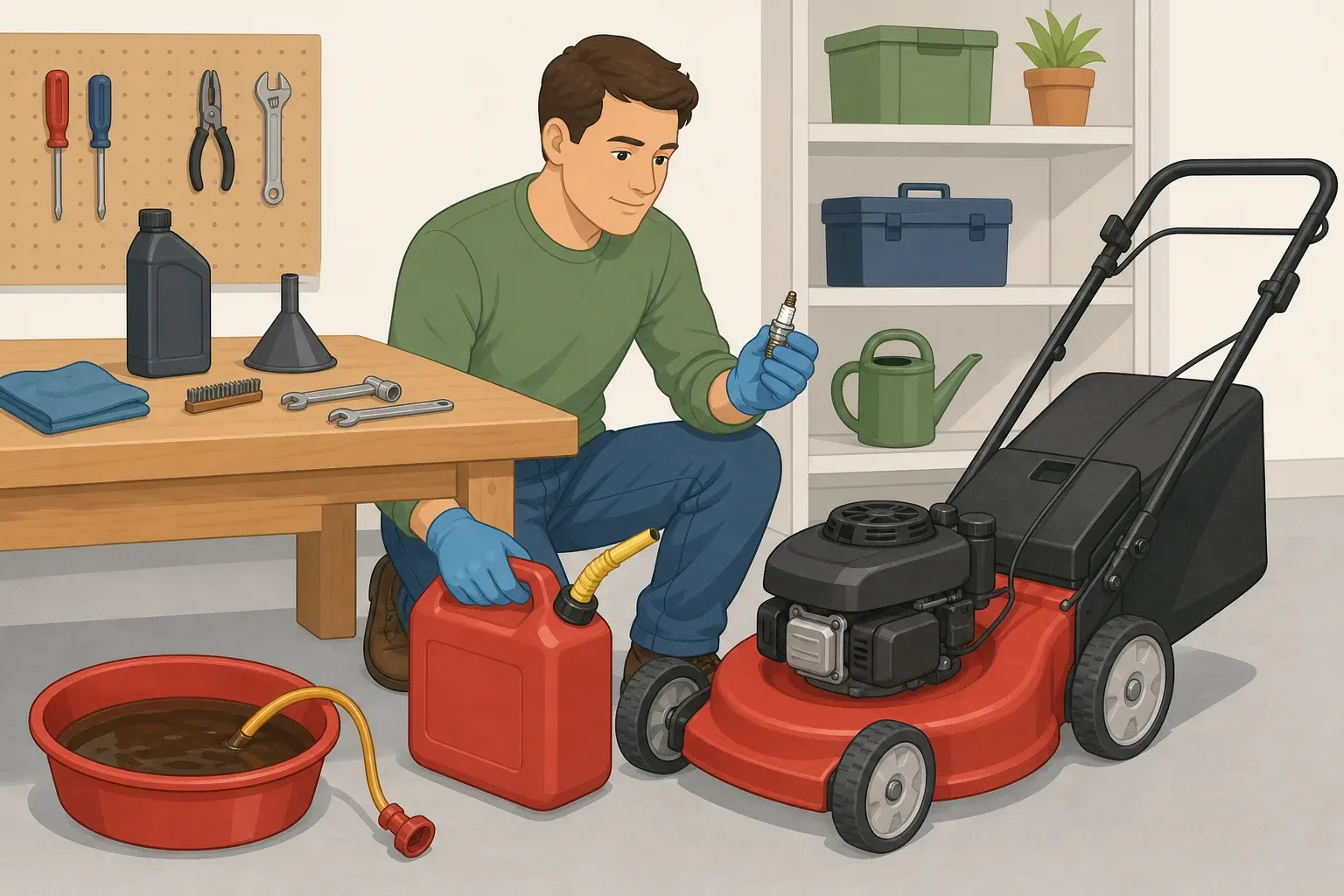
9 Common Push Lawn Mower Problems and Fixes Explained
Pull the cord and get nothing, or get a rough start that dies right back out, and it's tempting to assume the engine is failing. Usually it isn't. Briggs & Stratton identifies stale fuel, dirt, and debris as the most common reasons outdoor power equipment won't start, and those same three culprits sit behind most common push lawn mower problems and fixes covered in this guide.
This guide covers gas-powered walk-behind push mowers, including self-propelled models. It doesn't cover manual reel mowers, riding mowers, or electric and battery mowers, which use different parts and fail in different ways.
Two numbers make a lot of push lawn mower troubleshooting click into place. Untreated gasoline starts breaking down after about a month in the tank, and spark plugs typically need replacing every season or after 25 hours of use, according to Briggs & Stratton and Vanguard. Checking whether fuel and the plug have gone past those marks solves a surprising number of lawn mower engine problems before you touch anything else.
Nine symptoms are covered below, each labeled homeowner check (safe to inspect, no teardown), DIY fix (basic tools, but confirm the exact step in your model's manual), or dealer repair (specialized tools or diagnosis beyond ordinary-reader scope). One safety rule runs through all of them: any step near the blade or deck starts with the engine off and the spark plug wire disconnected, per Murray and Briggs & Stratton.
What you'll need before you start
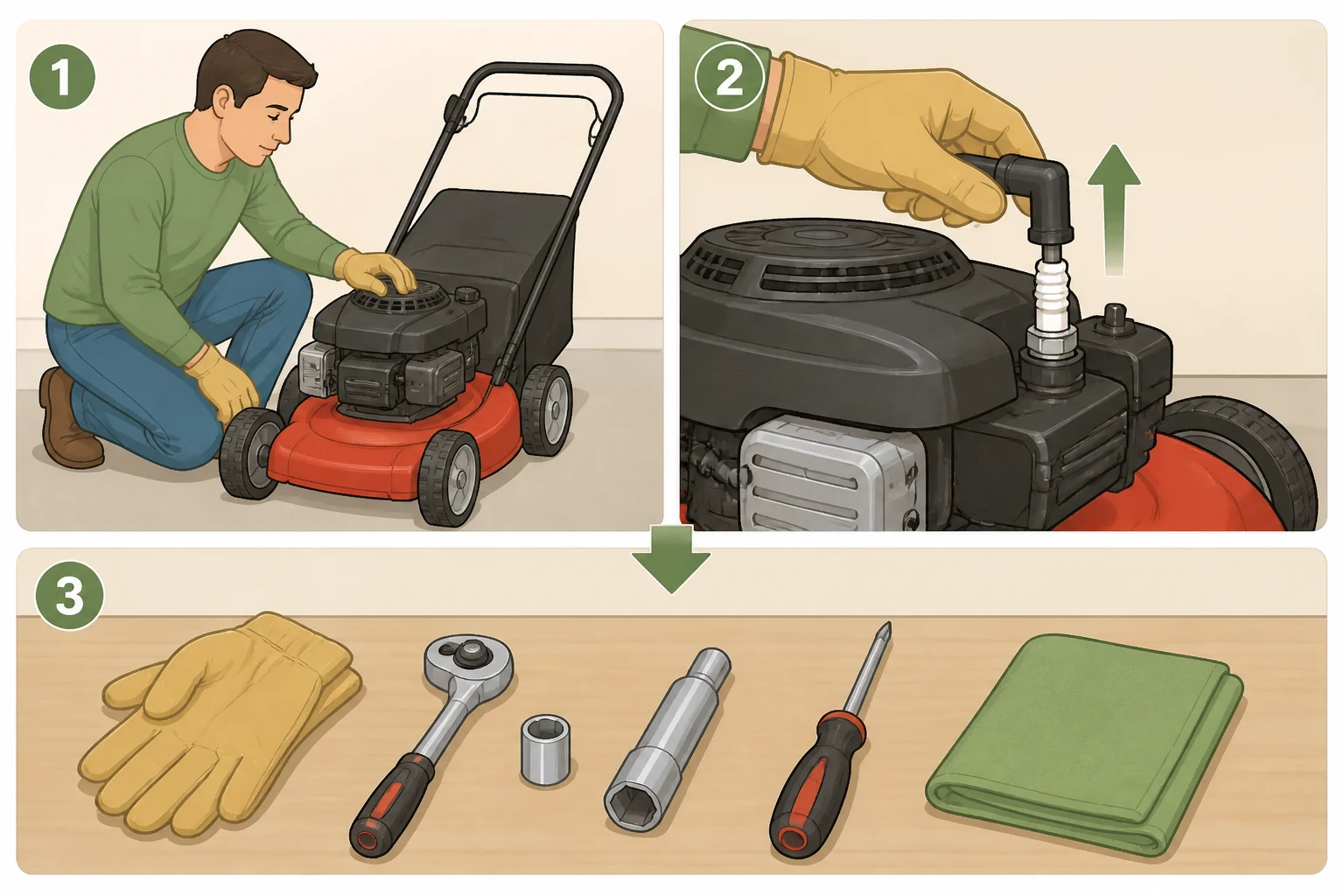
Gather these before you start troubleshooting so you're not stopping mid-repair to dig through a toolbox:
- Fresh gasoline, fuel stabilizer, and an approved fuel container
- A spark plug socket and gap tool
- A replacement spark plug and air filter matched to your model
- A blade wrench or socket, plus a block of wood to brace the blade
- Work gloves
Fuel, filter, and spark plug checks sit in beginner-to-intermediate DIY territory. Blade balancing, carburetor work, and drive-cable adjustment vary enough by brand that this guide treats them as manual-guided or dealer-level tasks, in line with Briggs & Stratton and Murray.
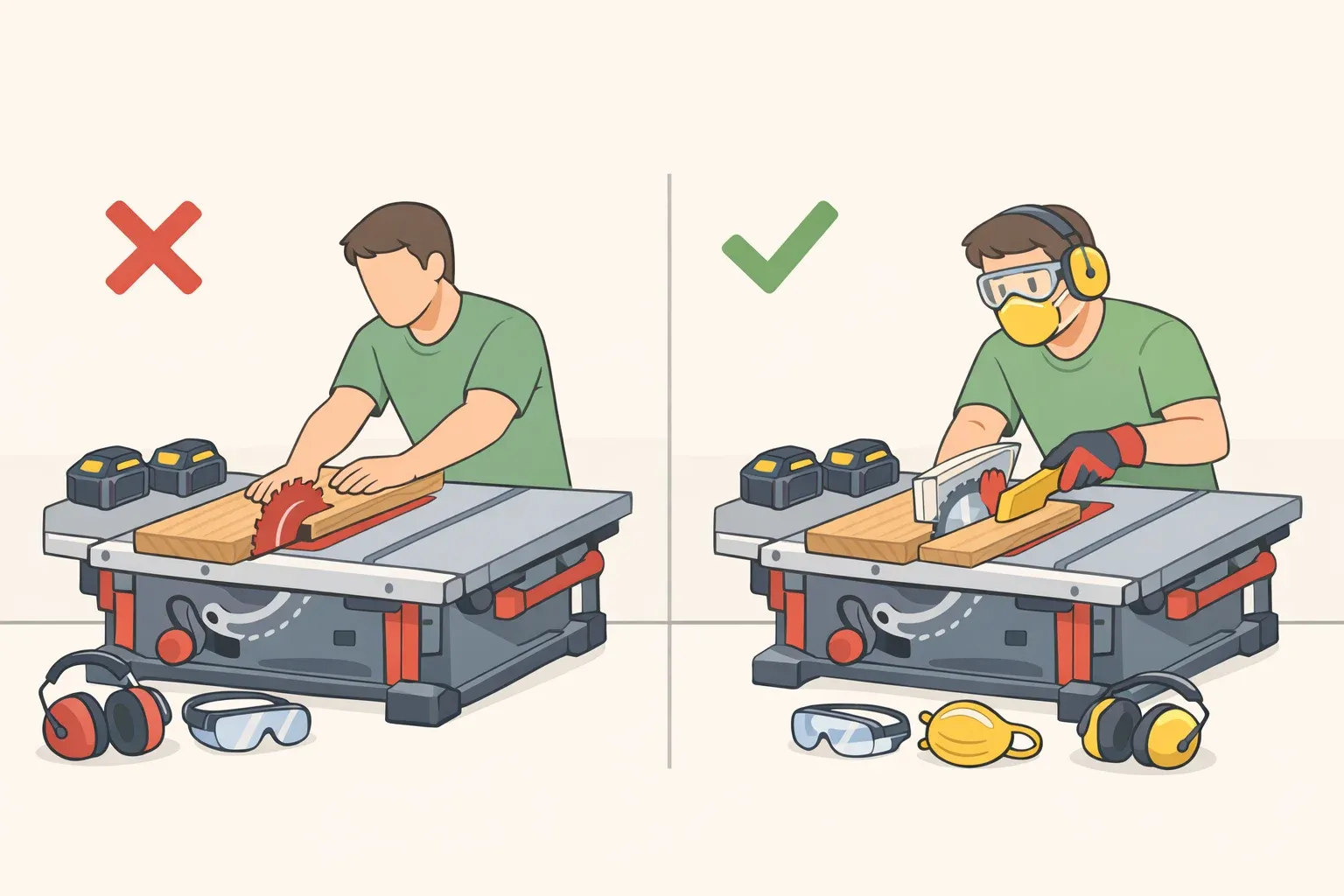
Before any hands-on step: disconnect the spark plug wire before touching the blade or reaching under the deck. Check your owner's manual for the mower's approved tipping direction before you reach underneath; tipping it the wrong way can flood the air filter or leak fuel.
Common push lawn mower problems and fixes: start with these checks
Work through the symptom that matches what your mower is doing. Each entry moves from the simplest check to the point where a dealer takes over.
1. Push mower won't start
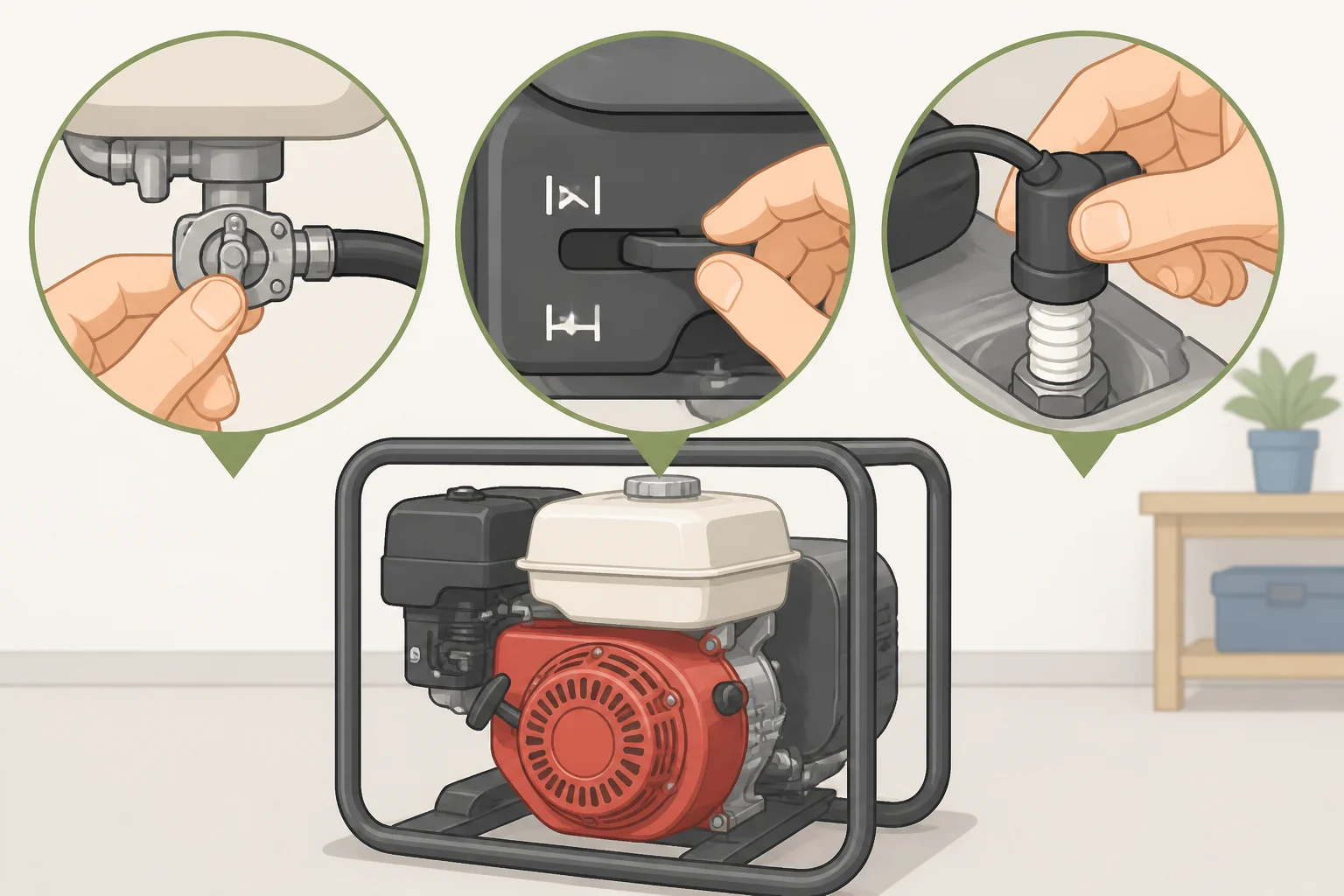
Homeowner check: Confirm the fuel valve is open if your mower has one, there's fuel in the tank, the choke is set for a cold engine if equipped, and the spark plug wire is seated on the plug. These are routine, no-tool checks.
DIY fix: If the engine was cranked repeatedly with the choke engaged, it may be flooded. Disconnect the spark plug wire, remove the plug, dry it off, reinstall it, reconnect the wire, and try starting with the throttle in the run position instead of choke, a sequence drawn from engine manufacturer troubleshooting guidance in a lawn mower troubleshooting guide.
DIY fix: Still nothing? Suspect stale fuel. Both Briggs & Stratton and Vanguard name old gas as a top cause of no-start problems. Work outdoors, drain the old fuel into an approved container, and refill with fresh gasoline treated with a stabilizer to help it last through the season.
DIY fix: Check the fuel tank vent and screen for blockage. Both sources list a clogged vent or screen as a cause of starting and running trouble, with cleaning as the fix (Briggs & Stratton; Vanguard).
DIY fix: Inspect the spark plug and replace it if fouled or worn. Plugs generally need replacing every season or 25 hours, with the gap set to the manual's spec (Briggs & Stratton; Vanguard).
Stop and get service if the engine still won't start after fresh fuel, a clear vent, and a good plug. A dirty carburetor, an ignition fault, or a compression problem are the usual culprits at that point, and all three go past basic hand tools into dealer-level diagnosis.
Success looks like this: the engine starts without repeated choking and settles into a steady idle.
2. Starts, then stalls or surges
Homeowner check the air filter first. Briggs & Stratton notes a clogged filter can restrict airflow enough to cause stalling or sluggish running. Check your owner's manual for how your specific filter should be cleaned or replaced, since the service method differs by mower.
Stop and get service if stalling or surging continues with a clean filter and fresh fuel. A dirty carburetor is often the next cause, per Briggs & Stratton, and cleaning or adjusting one typically requires removal and parts beyond a basic toolkit.
Success here means the engine idles smoothly without surging, sputtering, or dying on its own.
3. Loses power while cutting
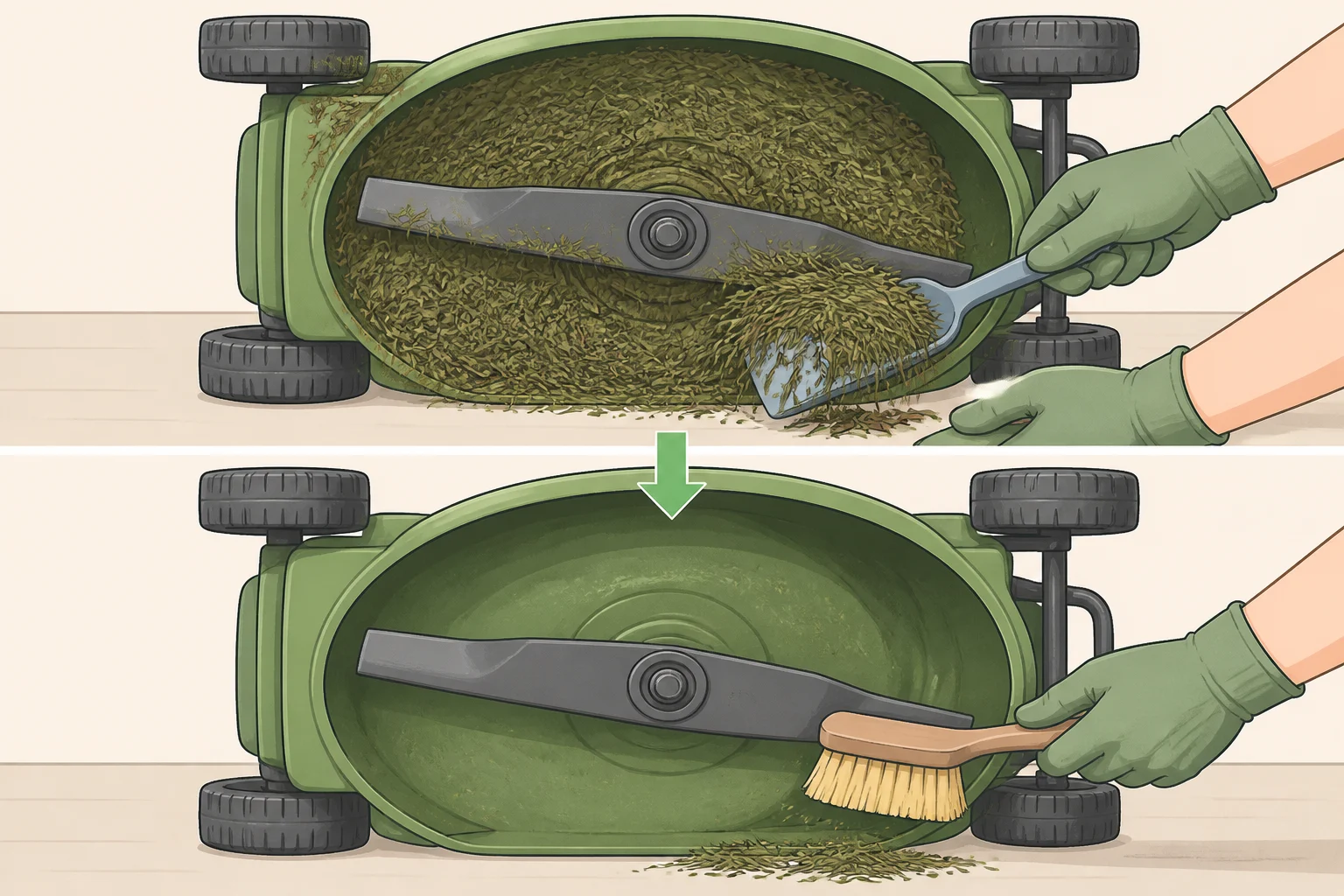
Homeowner check for grass or debris packed under the deck, or an overfull bag, both of which restrict blade speed even on a healthy engine. Clear it with the engine off and the spark plug disconnected. Thick or wet grass can bog down a mower that's otherwise in good shape, so rule that out before assuming a mechanical problem.
Success here means the blade holds a steady sound at a normal walking pace without bogging down.
4. Engine smokes
Smoke color points to a different cause. Homeowner check oil level first: Briggs & Stratton ties white or blue smoke to burning oil, often caused by an overfilled crankcase, tipping the mower too far, or worn rings. Correcting an overfull crankcase costs nothing beyond checking the dipstick and draining a little off.
For black smoke, run a DIY fix by rechecking the air filter and fuel quality. Briggs & Stratton links black smoke to a dirty filter, stale fuel, overfilled oil, or a flooded carburetor.
Stop and get service if smoke continues after correcting oil level and filter, or if it appears alongside knocking. That combination moves past routine maintenance into dealer-level engine work.
5. Mower vibrates or shakes
Engine off, spark plug wire disconnected, before touching anything here, per Murray.
Homeowner check for a loose blade or loose engine mounting bolts and tighten per the manual. If the blade itself is unbalanced or bent, that's a DIY fix with manual in hand: balance or replace it following the operator's exact procedure for removal and reinstallation.
Stop and get service if vibration persists after a blade and bolt check. Murray lists a bent or broken crankshaft as a lookalike cause, and that's service-dealer territory.
6. Mower cuts unevenly
Homeowner check that all four wheel-height adjusters sit at the same setting. Mismatched heights are a common and easily overlooked cause of striping, per Murray.
A DIY fix with manual covers sharpening and balancing a dull blade, or replacing a bent one, following the manual's procedure. One more homeowner check: clear grass or debris packed under the deck, which can drag or deflect the blade mid-cut.
Success on vibration and uneven cuts looks similar: the mower runs without wobble or thump at full throttle after blade work, and a test pass leaves an even cut across the full width of the deck.
7. Runs but won't self-propel
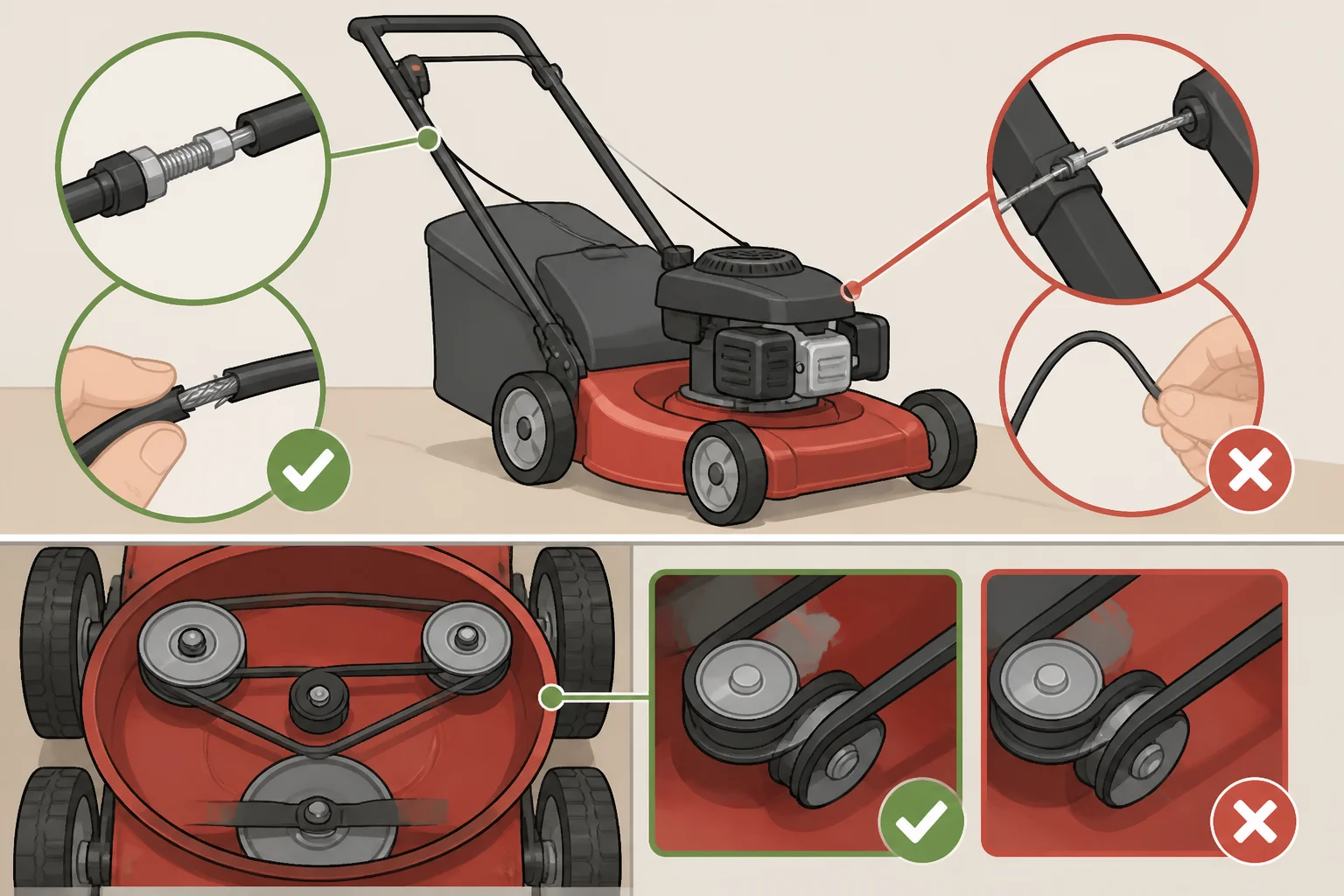
This and the next two problems apply only to self-propelled models. Belt and cable layouts vary by brand, so treat this as a diagnosis guide and a set of safe limits, not a universal repair procedure. Not every model has an adjustable cable or belt; where there's no adjustment point, replacement is the only fix, Murray notes. Confirm your model number and check the manual before removing any belt cover.
Homeowner check for a damaged or out-of-adjustment drive cable, and inspect the belt for wear, damage, or incorrect routing. This becomes a DIY fix with manual if your model has an adjustment point; otherwise it's dealer repair.
8. Drive won't disengage
Incorrect belt or cable tension is the usual culprit here. This is a DIY fix with manual only if your model has a tension adjustment point. Tensioning specs vary too widely across brands to generalize, so treat this as dealer repair by default unless your manual says otherwise.
A quick aside that isn't one of the nine main problems: a noisy drive system is often just debris caught in the drive components, which you can clear yourself, or damaged wheels and bent height adjusters, which are replacement parts rather than something to repair in place, per Murray.
Success for both drive problems: the drive engages without slipping and stops moving promptly when the control is released.
9. Won't shut off when the control is released
Stop using the mower immediately. This points to a damaged stop cable or stop lever, which controls engine shutoff and has nothing to do with drive movement, per Murray. Cable replacement may be manual-guided; lever replacement is dealer repair.
Success here means the engine itself stops when the stop control is released, which is a separate check from whether the wheels keep turning.
A maintenance routine to prevent common lawn mower repairs
Fuel care heads off several problems on this list at once. If the mower will sit idle for an extended stretch, drain the fuel system, including any fuel left in the carburetor float bowl, and refill with fresh gasoline treated with a stabilizer. That combined approach, not a choice between draining or treating, is what Briggs & Stratton and Vanguard recommend for extending fuel life.
Change the oil every 25 hours of use or once per season, and replace the spark plug on that same schedule (Briggs & Stratton; Vanguard). Clean or replace the air filter regularly and clear grass buildup from under the deck after mowing; both habits head off several of the problems covered above.
Season-end checklist and when to stop troubleshooting
Before storing the mower for winter, work through this short list:
- Drain and refill the fuel system, or treat a full tank with stabilizer if you're not draining it
- Change the oil if it's due
- Replace or inspect the spark plug
- Clean or replace the air filter
- Clear grass and debris from under the deck
Know where the stop points sit. A carburetor rebuild, ignition fault, compression problem, bent crankshaft, or a mower that won't shut off when the control is released all call for a manual check or a dealer visit rather than continued DIY troubleshooting.
Once the mower starts reliably, idles smoothly, cuts evenly, and shuts off promptly when released, stop adjusting. Further tweaks on a mower already running correctly tend to create a new problem instead of fixing an old one, so leave it alone and mow.









Comments
Be the first, drop a comment!